





Damascus Pattern Kitchen Knife Set with Decorative Handles
A Distinctive Kitchen Knife Collection with Patterned Blades
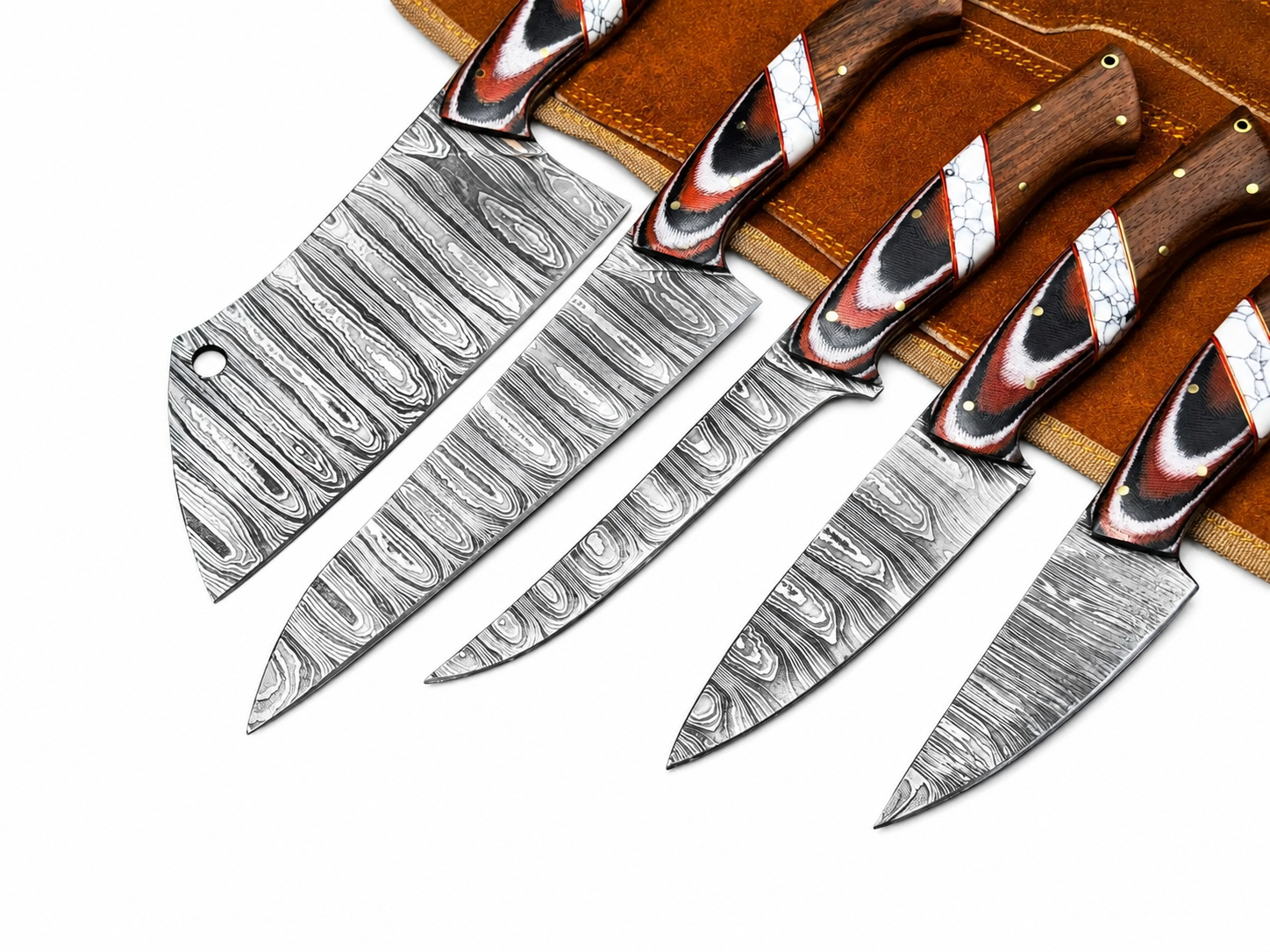
The Damascus Knife Set features beautifully patterned kitchen blades with decorative multicolor handles. This collection includes cleaver-style and chef-style knives with distinctive layered-looking blade patterns, woodgrain-style handle sections, red-and-black accents, and white marble-effect inlays. Designed for cutlery enthusiasts and collectors, the Damascus Knife Set offers a striking combination of traditional kitchen knife shapes and decorative styling.
The collection includes several knives with different blade shapes. Some have wide, cleaver-inspired profiles, while another features a pointed, gently curved blade resembling a chef’s knife. This variety gives the pictured assortment a distinctive appearance compared with a conventional matching knife set.
The handles are equally noticeable. They combine deep brown woodgrain-style sections with black, red, and white decorative elements. Thin copper-colored lines separate the contrasting materials, while small gold-colored pins add further detail.
A brown roll-style carrying case appears behind the knives, complementing their warm handle colors and traditional appearance.
This set may appeal to customers searching for visually distinctive kitchen knives, cooking enthusiasts who appreciate patterned blades, and collectors interested in decorative culinary cutlery.
Before using the knives for food preparation, buyers should verify their steel composition, food-contact suitability, dimensions, and intended cutting applications.
Damascus Knife Set with Decorative Multicolor Handles
The most recognizable feature of this knife collection is the intricate pattern visible across the blades.
The surfaces display flowing, layered-looking lines in silver-grey and darker tones. These markings create wave-like formations, elongated oval shapes, and irregular patterns that vary along the blade surfaces.
The pattern is especially noticeable on the broad cleaver-style knives, where the larger metal area provides more space for the decorative details.
On the pointed chef-style blade, the lines follow the elongated cutting profile, creating a visual connection between the blade’s shape and its surface finish.
This patterned appearance is commonly associated with Damascus-style kitchen cutlery.
However, there is an important distinction between a Damascus-like surface pattern and verified pattern-welded steel construction.
Genuine pattern-welded blades are produced through particular metalworking processes, while other knives may have decorative finishes designed to create a similar appearance.
The photograph establishes that these knives have a layered-looking surface pattern, but it does not confirm the manufacturing method.
Customers seeking authentic pattern-welded Damascus steel should request the manufacturer’s steel specifications and construction details.
Multiple Kitchen Blade Profiles
The photographed assortment includes more than one style of blade.
A broad cleaver-style knife is visible in the background, with a relatively tall blade and a wide cutting edge.
Another broad-bladed knife appears nearby, while the foreground knife has a narrower, tapered profile ending in a pointed tip.
The foreground design resembles a chef-style kitchen knife, with a gently curved cutting edge and an elongated blade shape.
Different kitchen knife profiles are developed for different cutting purposes.
For example, chef’s knives are commonly used for general food preparation, while various cleaver-style designs may be intended for chopping, slicing, or other specialized kitchen applications.
However, the photographed knives’ precise functions have not been verified.
A broad blade should not automatically be classified as a bone cleaver or heavy-duty butcher’s tool.
Actual suitability depends on blade thickness, steel hardness, edge geometry, and manufacturer recommendations.
Customers should confirm each included knife’s intended use before performing demanding cutting tasks.
Broad Cleaver-Style Kitchen Blades
The broadest visible knives provide a particularly striking example of the collection’s decorative appearance.
Their tall blade profiles feature large sections of patterned metal that create a dramatic visual effect.
The upper edges appear relatively straight or gently contoured, while the lower cutting edges extend across the front of the knives.
One of the broad knives also shows a circular opening near the upper blade area.
This detail adds to the design, although its precise purpose cannot be confirmed from the image.
The blade surfaces reflect light differently across the silver and dark patterned sections, making their layered-looking finish especially noticeable.
These knives may interest customers looking for cleaver-inspired kitchen cutlery with decorative surface detailing.
Before selecting them for chopping or cutting, customers should confirm the blade’s intended application.
Not every broad kitchen knife is designed to withstand chopping through bones or other hard materials.
Correct use is essential for maintaining the edge and reducing the risk of damage.
Pointed Chef-Style Knife Design
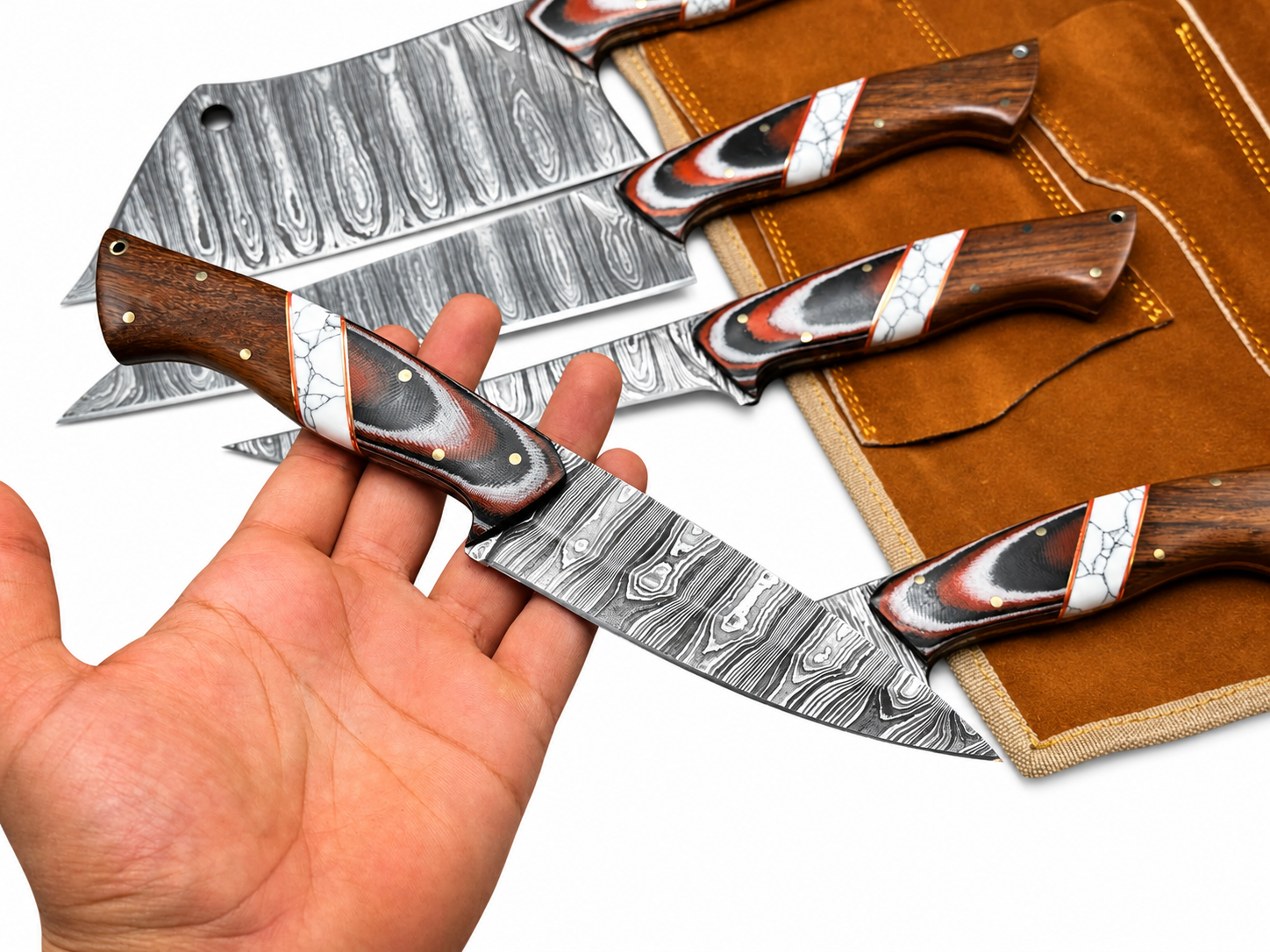
The foreground knife is shown resting across a person’s open hand, making its decorative handle and blade profile easy to examine.
Its blade is narrower than the large cleaver-style knives displayed behind it.
The cutting edge curves gently toward a defined point, producing a familiar chef-knife-style silhouette.
Across the metal surface, swirling Damascus-like lines create an elaborate pattern.
The blade is broad near the handle and gradually narrows toward the tip.
This profile is visually associated with multipurpose kitchen knives.
Properly designed chef’s knives may be used for everyday food preparation tasks, including slicing and preparing vegetables, fruit, and other ingredients.
However, the suitability of this specific photographed knife must be verified.
The image does not establish edge sharpness, hardness, blade thickness, or food-contact certifications.
Its practical capabilities should therefore be described according to the manufacturer’s verified specifications rather than assumed from appearance.
Multicolor Decorative Handle Construction
The handles are among the most distinctive aspects of the knife collection.
They use contrasting sections to create a layered and decorative appearance.
The rear handle portions feature brown woodgrain-style surfaces with darker natural-looking lines.
Near the middle, white marbled bands introduce a bright contrast.
The front portions contain black, red, and grey swirling patterns, separated by copper-colored borders.
Small gold-colored pins are visible in several places.
Together, these details create a sophisticated combination of warm and cool colors.
The handles visually complement the intricate blade patterns without relying on a single uniform finish.
Some sections resemble natural wood, while others resemble colored resin, composite material, or decorative stone.
These appearances do not establish the actual materials.
Customers who require genuine wood, particular synthetic materials, or natural stone should request written confirmation.
Brown Woodgrain-Style Handle Sections
The brown handle sections create a traditional appearance within the more elaborate multicolor design.
Their surfaces display visible grain-like markings in dark and medium brown tones.
These patterns complement the warm color of the knife organizer shown in the background.
The rear ends of the handles appear gently curved and rounded rather than sharply angular.
This creates a continuous visual line from the decorative central sections to the ends of the grips.
Small circular metallic pins add detail to the woodgrain-style surfaces.
Although the material resembles natural hardwood, the exact species and construction method remain unconfirmed.
The sections may be made from natural wood, stabilized wood, laminated material, or another material with a wood-like finish.
Material confirmation is important because different handle compositions have different maintenance requirements.
For online product descriptions, woodgrain-style handle is the most accurate wording until the supplier provides technical specifications.
Red and Black Marbled Handle Accents
Near the blades, the handles contain striking sections of red, black, grey, and white.
The colors form irregular curves and layered swirls, producing an appearance reminiscent of decorative composite materials.
These patterns provide a dramatic visual contrast to the quieter brown rear sections.
Thin copper-colored dividing lines frame the sections, creating a clear separation between the different handle areas.
The combination gives the knives a recognizable visual identity.
Unlike plain kitchen knives with black or brown grips, these handles display several decorative elements in one design.
The repeated color scheme also helps connect the different blade shapes into a coordinated collection.
While the pattern resembles layered resin or composite materials, this construction cannot be confirmed from the photograph.
The actual material should be verified before making claims about water resistance, durability, or grip performance.
White Marble-Effect Decorative Bands
The white sections are another distinguishing feature of the handles.
Each band has a light-colored surface with darker vein-like lines that resemble marble or crackled stone.
The white areas are positioned between the brown woodgrain-style sections and the darker red-and-black decorative portions.
This creates a strong three-part color arrangement.
Copper-colored lines outline the white bands and visually separate them from the surrounding components.
The result is a handle design with several textures and colors.
These details may appeal to customers who enjoy decorative culinary tools or knives with custom-inspired styling.
However, the photograph does not confirm that the bands are made from genuine marble, turquoise, bone, or another natural material.
They should be described as marble-effect or stone-look inserts until their composition has been verified.
Metallic Pins and Decorative Fittings
Several small metallic pins are visible across the knife handles.
Their warm gold-like color contrasts with the darker woodgrain-style surfaces and red-and-black sections.
The pins also contribute to the traditional appearance of the handle assemblies.
On the foreground knife, the decorative components are connected visually by these small round details.
The blade and handle meet through a compact transition, allowing the patterned blade and multicolor grip to remain the main focus.
The visible construction suggests multiple handle components, but the internal tang configuration cannot be determined.
It would be inaccurate to claim full-tang construction without supplier confirmation.
Similarly, the pin materials, handle attachment method, and mechanical durability have not been tested.
These details should be included in the technical product specifications only after verification.
Coordinated Knife Designs
The image suggests a coordinated collection rather than a group of unrelated knives.
Several features repeat across the visible pieces.
The knives share layered-looking blade patterns, woodgrain-style handle sections, white decorative bands, red-and-black accents, and small metallic pins.
This consistency makes the collection visually cohesive despite the different blade profiles.
For customers comparing kitchen knife sets, matching visual details can be an important purchasing consideration.
A coordinated set offers a consistent appearance across different knife styles.
However, the exact number of knives included in a retail package remains unconfirmed.
The photograph shows multiple knives, but a product image does not establish whether all pictured pieces are sold together.
Before creating a WooCommerce bundle, confirm the actual contents and available configurations.
If the supplier sells different set sizes, each variation should have a clearly defined list of included knives.
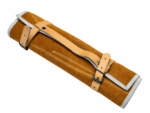
Brown Roll-Style Knife Organizer
A brown roll-style case or organizer is visible behind the knives.
It has a warm tan-brown appearance with prominent stitching and folded sections.
The organizer resembles a traditional roll-up knife carrier used for storing or transporting kitchen cutlery.
Its color complements the brown handle sections and the copper-colored decorative accents.
The stitching creates additional detail and helps define the organizer’s pocket-like construction.
Because the entire organizer is not clearly visible, its total number of compartments cannot be confirmed.
The material resembles leather or suede-like fabric, but genuine leather construction is not verified.
Customers should also confirm whether the organizer is included with the knife set.
If it is sold separately, the product listing should clearly distinguish the knives from the optional accessory.
For accurate e-commerce merchandising, package contents should always be based on the supplier’s confirmed packing list.
For Home Cooking and Culinary Collections
A visually distinctive kitchen knife set may appeal to home cooks, cooking enthusiasts, and buyers interested in decorative culinary accessories.
Different blade shapes can be useful when selecting tools for particular preparation tasks.
A chef-style knife may be considered for general slicing and preparation, while appropriately designed broad blades may serve more specialized roles.
However, customers should evaluate each knife individually.
The correct knife depends on the food being prepared, the cutting technique, and the tool’s verified construction.
The photographed set should not be marketed as professional-grade or suitable for commercial kitchen use without supporting specifications.
Similarly, food-contact suitability should be confirmed before the knives are used for meal preparation.
For collectors, the elaborate handle details and patterned blades provide an additional reason to consider the set.
The collection combines recognizable kitchen knife shapes with decorative materials-inspired styling.
A Distinctive Option for Knife Collectors
Knife collectors often appreciate variations in blade patterns, handle colors, profiles, and decorative fittings.
This collection provides several visible points of interest.
The broad blades showcase large Damascus-like patterns, while the pointed knife offers a different silhouette.
The repeating handle design gives the group a coordinated appearance.
The combination of woodgrain-style surfaces, marbled decorative sections, and metallic pins creates a distinctive visual character.
Collectors interested in pattern-welded steel, handmade construction, or particular manufacturing traditions should request documentation.
The photograph alone cannot establish authenticity, country of manufacture, production method, rarity, or collectible value.
Nevertheless, the visible design may be appealing to customers who enjoy unusual kitchen knives and decorative cutlery collections.
Product Features Visible in the Image
Product type: Coordinated assortment of fixed-blade kitchen knives.
Blade appearance: Silver-grey Damascus-style layered pattern.
Blade profiles: Broad cleaver-style and pointed chef-style shapes.
Handle appearance: Brown woodgrain, red and black marbling, and white stone-effect bands.
Handle accents: Copper-colored borders and gold-colored pins.
Carrying accessory: Brown stitched roll-style organizer shown in the background.
Kitchen Knife Care and Maintenance
Proper maintenance is important for preserving the condition and appearance of kitchen knives.
After food preparation, knives should be cleaned according to the manufacturer’s instructions.
Handwashing is generally a cautious approach when blade finishes and handle materials have not been verified.
Use a soft cloth or sponge and a suitable mild detergent.
Avoid leaving knives submerged in water.
After washing, carefully dry the blade and handle before storage.
Certain steels may require additional corrosion protection, depending on their composition.
If the blades are confirmed to contain carbon steel, the manufacturer may recommend suitable protective care.
The decorative handles should also be maintained according to their actual materials.
Wood, resin, composites, and stone-like materials can have different cleaning requirements.
Avoid harsh chemicals or abrasive cleaning pads that could damage the decorative sections.
For sharpening, use equipment and methods appropriate to the confirmed steel and edge geometry.
Always handle exposed cutting edges carefully.
Safe Storage and Transportation
Kitchen knives should be stored securely to protect both the blades and their users.
A suitable knife block, protective sheath, drawer organizer, or properly designed roll case can help prevent accidental contact with sharp edges.
The brown organizer pictured alongside the knives may provide a storage option if it is manufactured for the included pieces.
However, its compatibility and inclusion must be confirmed.
When transporting kitchen knives, each blade should be securely protected.
Do not place exposed knives loosely in bags or drawers.
Keep knives away from children and handle them carefully during cleaning.
Before use, inspect each knife for damage, loose handle components, or blade defects.
Any damaged knife should be removed from service until its condition has been assessed.
Important Details to Verify Before Ordering
Before purchasing this kitchen knife collection, customers should request the complete product specifications.
The first priority is confirming the number of knives included.
Each blade style should be identified with its dimensions and intended use.
Next, verify the steel composition and whether the Damascus-style patterns are produced through genuine pattern-welded construction.
The handle materials should also be confirmed, including the brown woodgrain-style portions, red-and-black sections, and white decorative bands.
Ask whether the knives are suitable for food preparation and what maintenance procedures the manufacturer recommends.
If the brown roll case is included, confirm its material, size, and compartment capacity.
For wholesale orders, additional details such as packaging, customization options, minimum order quantity, lead time, and shipping charges should be obtained directly from the supplier.
These specifications help customers evaluate the product accurately and prevent confusion about the contents of the set.
Explore a Distinctive Kitchen Knife Collection
The Damascus Pattern Kitchen Knife Set brings together bold patterned blades, decorative multicolor handles, and coordinated kitchen cutlery styling.
Its broad cleaver-style knives and pointed chef-style blade create visual variety, while the repeated handle details give the collection a consistent appearance.
The brown roll-style organizer completes the photographed arrangement and provides an additional detail for buyers to verify.
Explore this distinctive kitchen knife collection and confirm the included pieces, materials, and specifications to determine whether it suits your cooking needs or cutlery collection.





Reviews
There are no reviews yet.