

Antler-Look Damascus Pattern Hunting Knife – Traditional Outdoor Knife Design
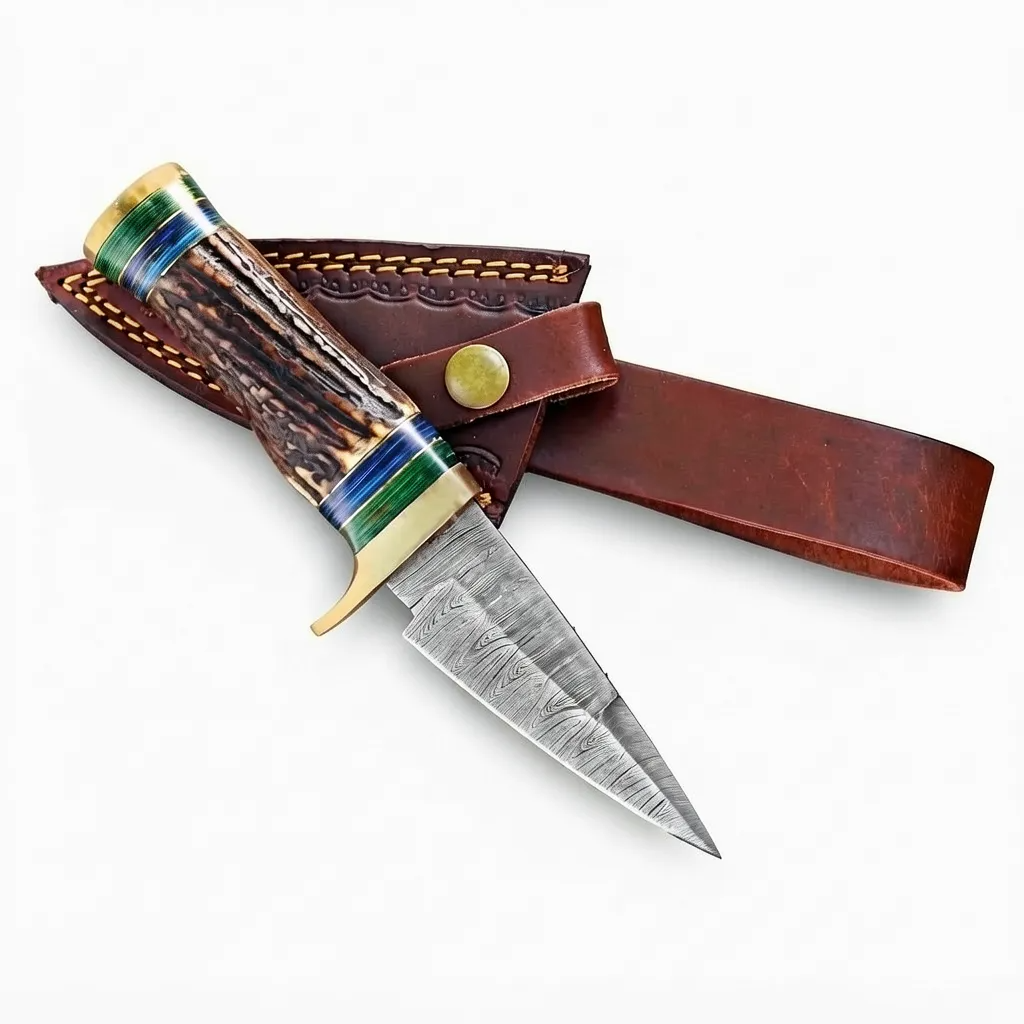
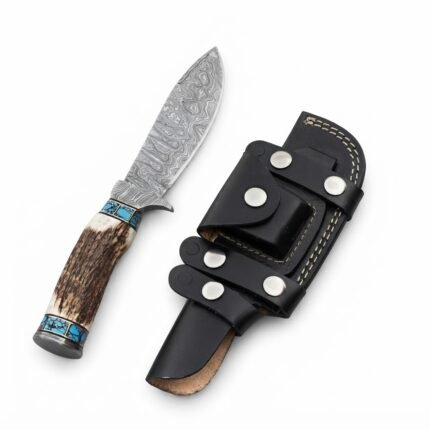
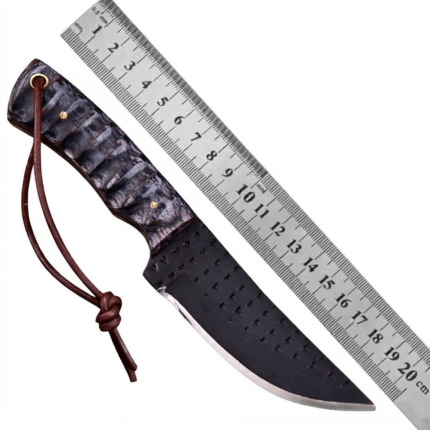
The Antler-Look Damascus Pattern Hunting Knife brings together a striking patterned blade, a richly textured brown handle, colorful decorative spacers, and brass-colored fittings. Its compact fixed-blade design draws inspiration from traditional outdoor cutlery, making it an appealing option for knife enthusiasts who appreciate distinctive materials, classic styling, and carefully considered visual details.
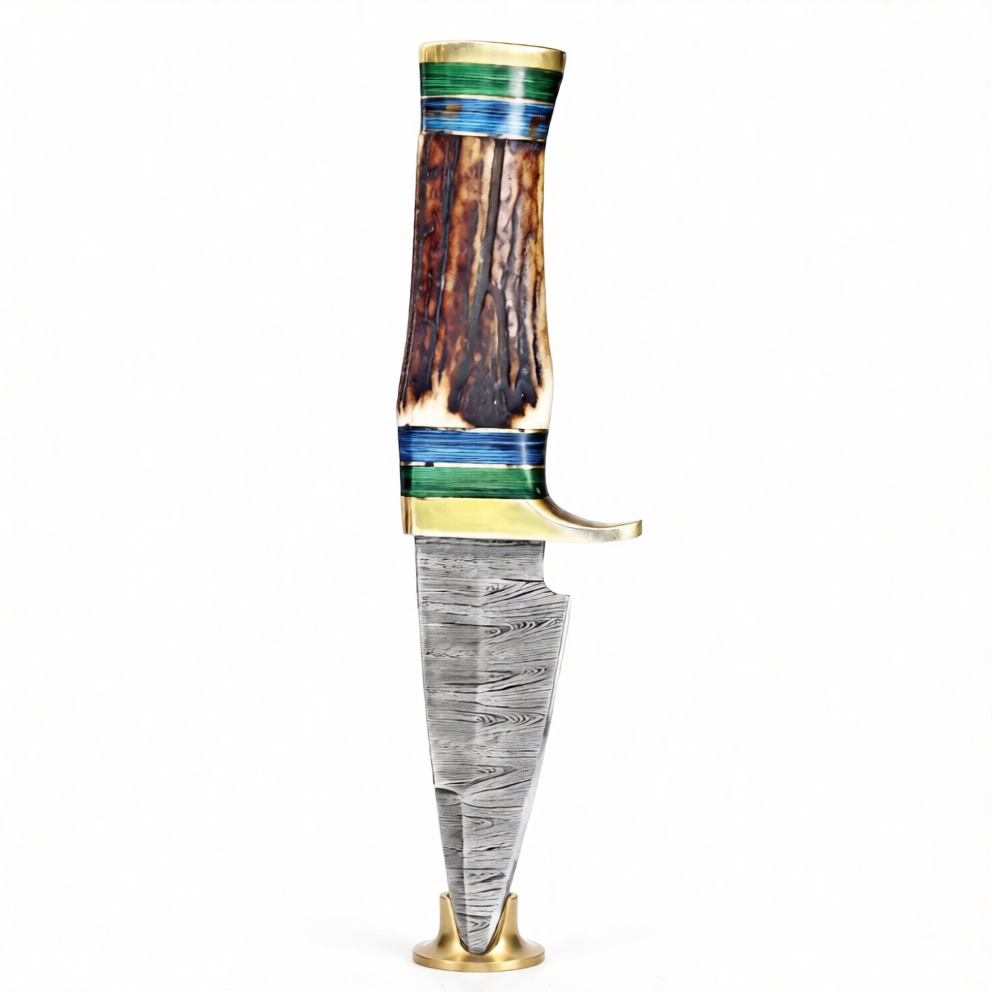
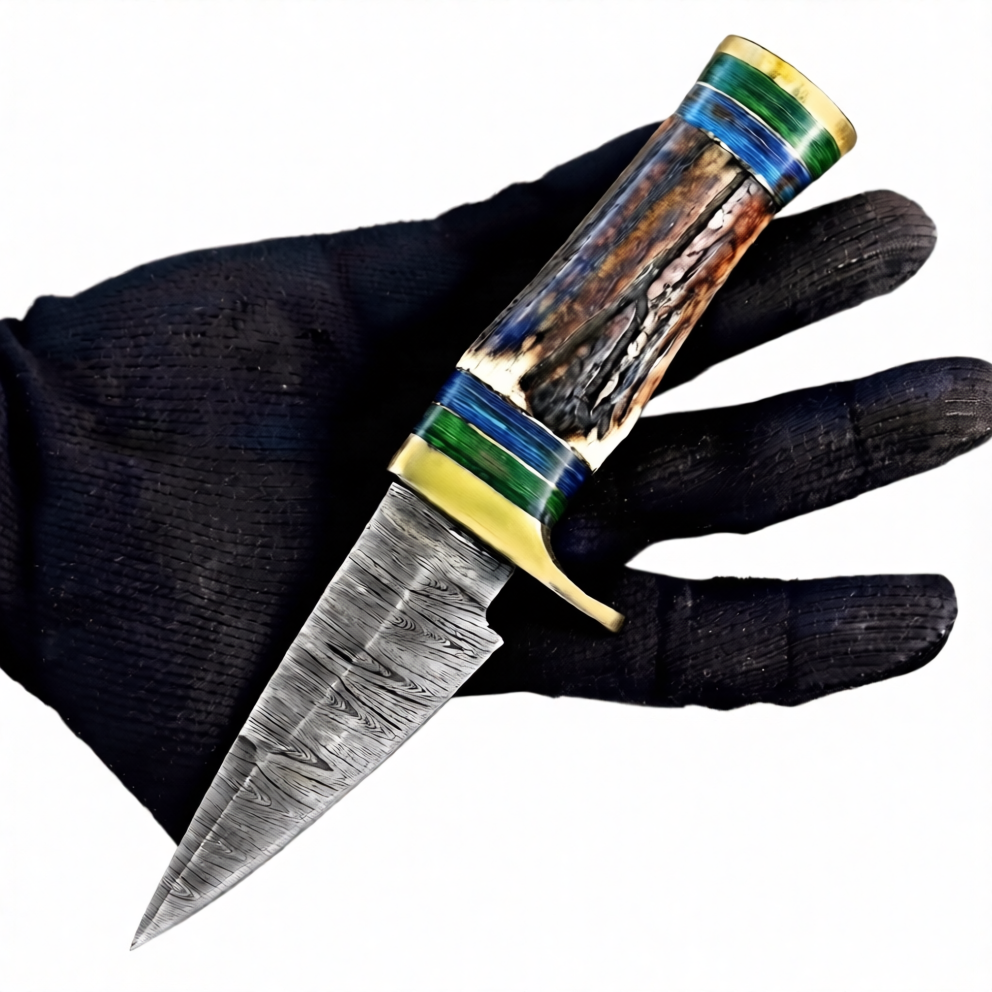
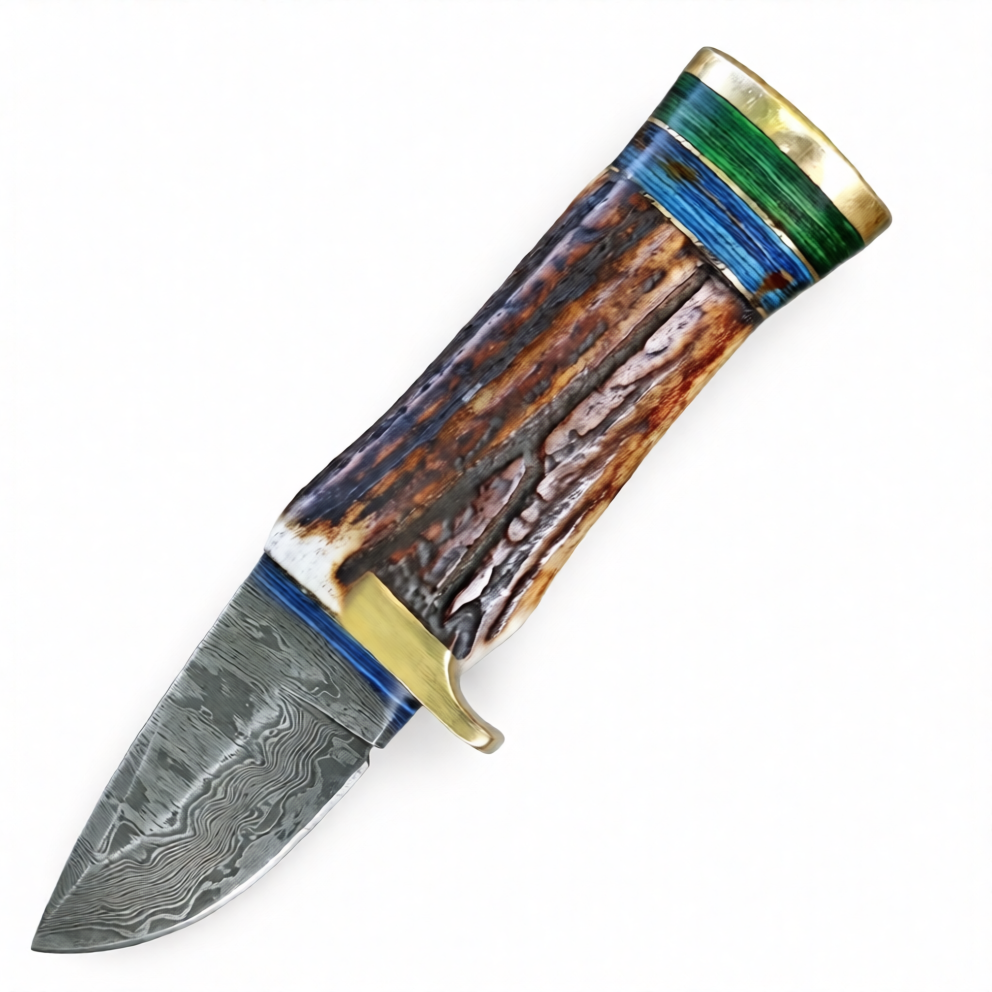
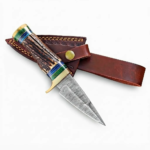
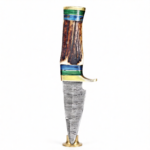
One of the most attractive characteristics of this knife is the contrast between its silver-gray blade and naturally inspired handle. The blade features flowing lines that resemble layered Damascus steel, while the handle displays dark brown and lighter cream-colored markings similar to the texture of stag antler. Bright blue and green spacer rings add another level of detail, separating the handle from the brass-colored guard and rear fitting.
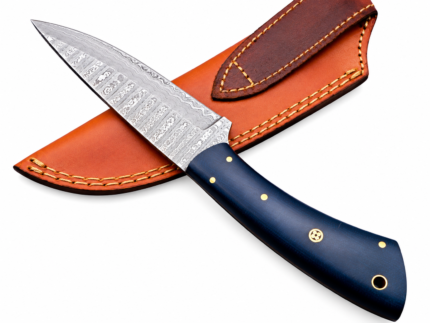
The image also shows a brown stitched sheath with an attached fastening strap. Together, the knife and sheath create a coordinated presentation suited to a traditional outdoor knife collection.
The exact steel grade, production process, handle material, and dimensions require supplier confirmation. Until those specifications are available, the appearance-based descriptions below provide a reliable introduction to the product.
Distinctive Damascus-Patterned Blade
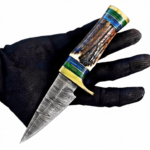
The Antler-Look Damascus Pattern Hunting Knife features a narrow metallic blade with a visibly layered pattern. Across the blade are curved silver-gray lines that resemble the flowing grain typically associated with Damascus-style cutlery.
The pattern becomes more noticeable where the blade broadens near the guard. From that point, the blade tapers toward a relatively fine, pointed tip, forming a familiar compact hunting-knife silhouette.
This combination of blade shape and surface detail gives the knife a distinctive appearance without requiring excessive decoration.
Traditional Damascus steel may be produced using pattern-welding methods, while other products use different steel constructions or decorative treatments to achieve similar visual effects.
A photograph alone cannot establish the manufacturing method. The blade should therefore be described as Damascus-patterned unless authentic pattern-welded construction is confirmed through supplier specifications.
Compact Fixed-Blade Profile
Unlike a folding pocket knife, this model has a visibly fixed blade and a separate handle. There is no folding pivot or opening mechanism shown in the photograph.
The narrow blade, tapered tip, and gently curved cutting edge follow a design commonly seen in small hunting and outdoor utility knives.
The shape makes this design relevant to buyers comparing fixed-blade knives for outdoor collections or general cutting applications.
Actual cutting performance, however, depends on steel composition, heat treatment, edge geometry, blade thickness, and overall construction.
Those properties are not established by the photograph and should not be assumed.
For customers considering practical outdoor use, the manufacturer should provide the blade length, overall length, weight, edge specifications, and recommended applications.
Antler-Look Textured Handle
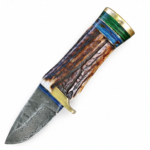
A notable feature of the Antler-Look Damascus Pattern Hunting Knife is its handle. The grip has an irregular, naturally inspired surface with contrasting brown, cream, and dark markings.
Its appearance resembles stag antler or another textured horn-like material. The surface pattern creates a rustic visual character that complements the patterned blade.
The handle has a gradually tapered form, appearing broader near its rear end and narrower toward the guard. Its shape creates a balanced visual relationship with the slim blade.
Although the handle resembles antler, the image does not prove that it is genuine stag antler, deer horn, bone, resin, or another specific material.
This distinction matters because buyers may have particular preferences regarding natural and synthetic handle materials.
The accurate description is an antler-look handle until its actual composition is verified.
Decorative Blue and Green Spacer Rings
The knife includes colorful rings positioned around the handle at its front and rear sections.
The visible colors include green, blue, and darker contrasting bands. These elements create a distinctive transition between the textured central grip and the brass-colored metal fittings.
This decorative arrangement gives the handle a more detailed appearance than a single-material grip.
The rings also provide visual continuity between the knife’s front and rear sections.
The image does not confirm whether these spacers are made from resin, fiber, metal, or another material.
Their dimensions and method of attachment also remain unverified.
For an accurate product specification, the supplier should identify the actual materials used for the spacers and handle fittings.
Brass-Colored Guard
A small metallic guard appears between the blade and handle.
Its warm gold-colored finish complements the rings and textured grip. The guard has a curved projection visible beneath the handle, adding a traditional fixed-blade knife detail.
The guard separates the handle visually from the blade and contributes to the knife’s recognizable profile.
Some knife guards are designed to help position the hand and create a physical boundary between the grip and blade.
However, the exact protective performance of this specific guard cannot be established from an image.
The guard should therefore be described according to its visible shape and appearance rather than with unverified safety claims.
It also should not be labeled solid brass until the manufacturer confirms the metal composition.
Decorative Rear Fitting
The rear of the handle features another brass-colored metal fitting.
A matching arrangement of green, blue, and dark spacer bands is visible immediately below this fitting.
Together with the guard, this rear detail creates a coordinated appearance across the knife.
These elements give the knife a traditional decorative character, particularly when viewed alongside the naturally inspired central grip.
The photograph does not reveal how the components are assembled internally.
Claims about hidden tang construction, a threaded pommel, adhesive systems, or other assembly techniques should be avoided unless supported by technical information.
Brown Stitched Sheath
The product photograph includes a brown sheath placed behind the knife.
The sheath has visible stitching around its edges and a fastening strap with a brass-colored snap-style fitting.
Its dark brown surface complements the handle and metallic accents.
The sheath follows the general appearance of a traditional knife cover and includes an extended section that may be intended for attachment or carrying.
The exact method of carrying and compatibility should be confirmed with the supplier.
Likewise, the image cannot establish whether the material is genuine leather or a synthetic leather-like alternative.
Before publishing, confirm whether the sheath is included with each knife and whether it is manufactured specifically for this model.
A properly fitted sheath can help keep the cutting edge covered during suitable storage, but its fit should always be checked.
Traditional Outdoor Styling
The Antler-Look Damascus Pattern Hunting Knife combines details associated with classic outdoor cutlery.
The patterned blade evokes traditional metalworking styles, while the antler-like grip draws inspiration from natural materials.
The gold-colored fittings add warmth to the design, and the bright decorative rings create a subtle contrast.
Its brown sheath contributes to the overall presentation.
The appearance makes the product relevant to adult enthusiasts interested in classic hunting-knife designs, outdoor equipment collections, and decorative fixed-blade cutlery.
Some customers may also appreciate the contrast between the narrow blade and the more substantial textured handle.
These are aesthetic characteristics, rather than claims about strength, durability, or professional performance.
Potential Applications
Fixed-blade knives are commonly used in outdoor settings for various general cutting tasks, depending on their verified specifications.
A compact knife of this shape may interest customers who prefer smaller outdoor cutlery rather than larger bowie-style knives.
The narrow blade profile and pointed tip are visible characteristics, but they do not establish suitability for specialized tasks.
Before recommending the knife for field processing, camping, hunting, or other demanding applications, the manufacturer should confirm its intended use, blade steel, hardness, and construction.
Buyers should avoid using any knife beyond the functions approved by its manufacturer.
The product is not presented as an emergency rescue tool, survival-rated knife, or heavy-duty chopping instrument.
Such descriptions require additional evidence that is not available from the image.
Collection and Display
The visual combination of the blade pattern, antler-like handle, and colored spacers gives this knife distinctive display appeal.
Customers interested in traditional fixed-blade knife designs may appreciate the way its individual elements work together.
Its silver-gray blade contrasts with the darker tones of the grip, while the brass-colored fittings provide bright finishing details.
The accompanying sheath also forms part of the overall product presentation.
For a collection, the knife can be displayed or stored using appropriate protective equipment in a secure location.
Careful storage is important to preserve the blade’s appearance and reduce the risk of accidental contact with its edge.
The product should always be kept out of children’s reach.
Blade Construction and Material Information
The blade has a clearly visible Damascus-style pattern, but the actual steel grade is unknown.
Possible steel properties cannot be established by appearance.
For example, the photograph does not confirm the presence of stainless steel, carbon steel, a particular alloy, or a specified number of forged layers.
The hardness, heat treatment, and corrosion resistance are also unknown.
These details are important to buyers who want to compare cutting performance and maintenance requirements.
The supplier should provide a confirmed steel specification and manufacturing description before such technical information is advertised.
If the blade is genuine pattern-welded steel, that detail may be included after verification.
If the pattern is decorative, the listing should accurately describe that finish instead.
Handle Material Verification
The central grip has a naturally textured appearance, but its composition must be confirmed separately.
Real antler, horn, bone, stabilized wood, and resin materials can display overlapping visual characteristics.
Different materials may also require different cleaning and care practices.
For that reason, describing the handle as antler-look is more accurate than making an unsupported material claim.
The manufacturer should identify the handle material and explain any recommended maintenance.
If natural animal-derived material is used, the supplier should also confirm that it was sourced and traded in compliance with applicable regulations.
This information helps customers evaluate the product based on their material preferences and local import requirements.
Cleaning Recommendations
Regular cleaning is important for maintaining knife appearance.
After appropriate use, carefully remove surface residue with a soft cloth and a suitable mild cleaning solution.
Avoid harsh abrasives that may scratch the blade or damage its patterned finish.
Dry the blade thoroughly after cleaning, particularly around the junction between the guard and handle.
Do not leave the knife submerged in water.
Because the handle material is unknown, prolonged soaking should be avoided.
Do not use aggressive chemicals or surface treatments unless the manufacturer confirms their compatibility.
The sheath should also be kept clean and dry.
Special care products should only be used once its material has been identified.
Storage and Handling
Store the knife securely when not in use.
A suitable sheath or protective storage system can reduce accidental contact with the cutting edge.
Always inspect the sheath before inserting the knife to ensure it fits correctly.
Do not force a blade into an incorrectly sized cover.
Avoid storing the knife in wet or humid conditions.
The blade and handle should be dry before long-term storage.
Keep the knife away from children and unauthorized users.
Follow all applicable laws governing knife possession, transportation, and use.
The knife should be handled only by responsible adults in appropriate settings.
Edge Maintenance
A knife’s cutting edge may require maintenance during its service life.
The appropriate sharpening method depends on blade material, heat treatment, and edge geometry.
Because these technical properties remain unverified, a specific sharpening angle should not be assigned.
Customers should follow the manufacturer’s recommended sharpening procedure.
Inappropriate sharpening equipment can affect the blade’s edge and finish.
The patterned surface should also be protected from unnecessary abrasion during maintenance.
Where professional sharpening is needed, choose a service familiar with the blade’s verified construction.
Important Specifications to Confirm
Before purchase, customers should be able to review the knife’s overall length, blade length, blade thickness, handle length, and weight.
The manufacturer should also confirm the steel grade, construction method, handle material, and guard composition.
Other useful details include blade hardness, sheath material, packaging contents, and any care recommendations.
These specifications allow buyers to make an informed comparison with other fixed-blade knife models.
Until they are confirmed, the visible design elements remain the most reliable basis for the listing.
An Appealing Traditional Knife Design
The Antler-Look Damascus Pattern Hunting Knife stands out through the combination of its flowing blade pattern, rustic grip appearance, colored spacer rings, and matching metallic fittings.
It presents a compact profile that reflects traditional outdoor knife styling.
The brown stitched sheath enhances its presentation and offers an additional visual element.
For enthusiasts seeking a visually distinctive fixed-blade knife, these characteristics provide a clear idea of what makes this model different.
Explore the Antler-Look Damascus Pattern Hunting Knife to appreciate its detailed handle design, patterned blade, and coordinated traditional appearance.




Reviews
There are no reviews yet.