




Honeycomb Handle Damascus Pattern Cleaver brings together a distinctive patterned blade, an olive-grey textured handle and a traditional dark brown sheath. Its broad cutting profile and unusual surface details give it an immediately recognizable appearance, making it an interesting choice for customers who appreciate decorative fixed-blade knives and cleaver-style designs.
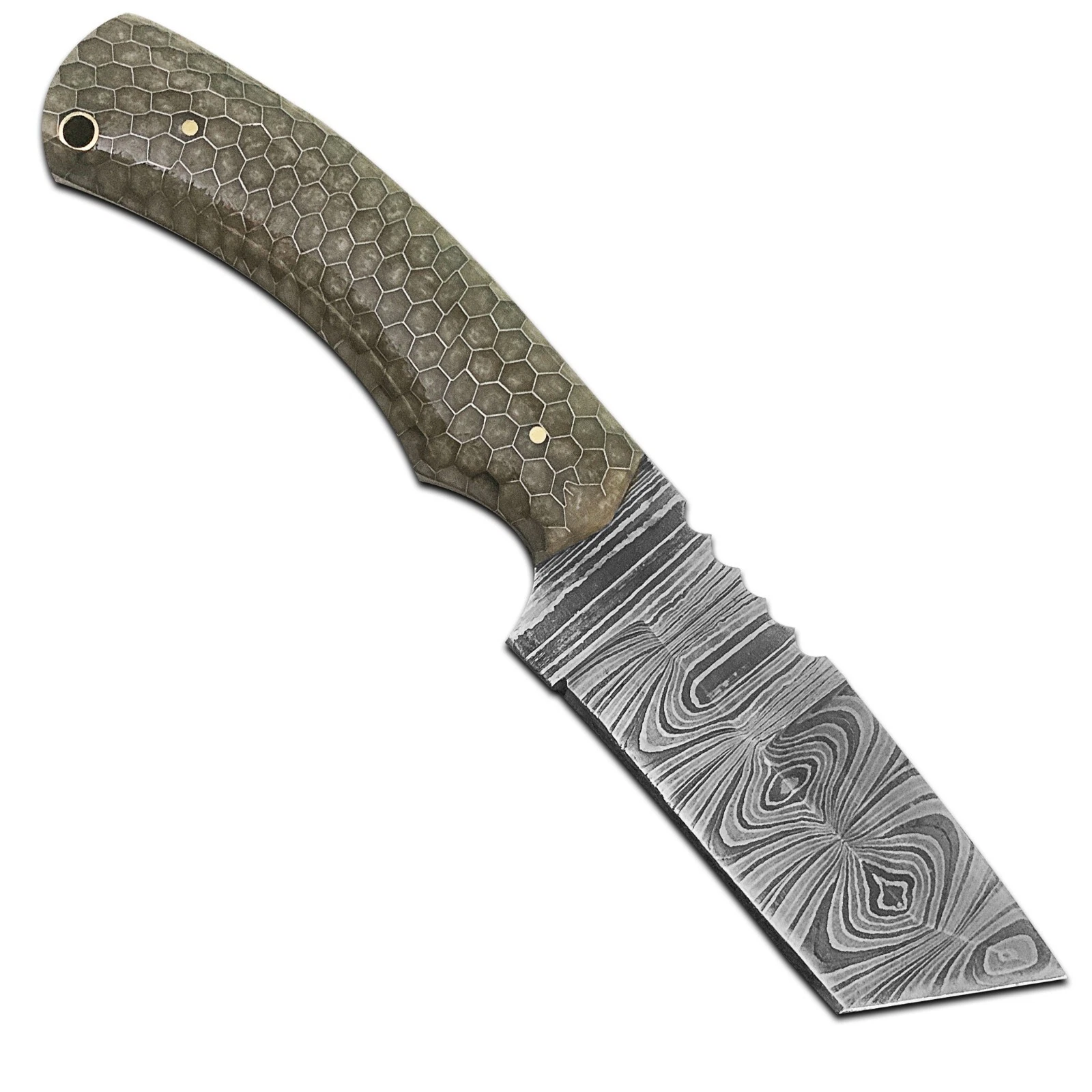
Damascus Pattern Cleaver Knife features a distinctive silver-grey patterned blade, a wide cleaver-style cutting profile, and an olive-grey honeycomb-textured handle. Its geometric handle design, visible metal pins, and dark brown stitched sheath give it an attractive appearance for fixed-blade knife enthusiasts and collectors.
The Damascus Pattern Cleaver Knife combines traditional knife styling with decorative details that distinguish it from ordinary cleavers. Its angular blade tip, patterned metal surface, and carefully coordinated colors make it an interesting addition to a knife collection.
The knife features flowing silver and charcoal-grey lines across the blade, a straight-looking lower cutting edge and a sharply angled tip. The handle has a honeycomb-inspired geometric texture, visible metal pins and a circular opening near the rear. A coordinating sheath completes the presentation.
With its contrasting finishes and practical-looking shape, this knife stands apart from ordinary plain-blade cleavers. It combines familiar design elements with a distinctive appearance that collectors and outdoor knife enthusiasts can appreciate.
Distinctive Honeycomb Handle Damascus Pattern Cleaver Design
Damascus Pattern Cleaver Knife – Design and Features
The most noticeable feature of this Honeycomb Handle Damascus Pattern Cleaver is the relationship between its blade pattern and textured handle.
The blade displays an intricate series of silver and grey lines. Some lines run almost parallel to the blade’s upper edge, while others form large curved and oval patterns near the tip.
These flowing shapes create a layered appearance that contrasts with the regular geometric texture of the handle.
The olive-grey handle features small polygonal cells that resemble a honeycomb or hexagonal surface. This texture extends over much of the visible handle section and gives the knife a recognizable identity.
Together, the blade and handle create a combination of organic-looking lines and organized geometric detailing.
The knife’s appearance is further complemented by its dark brown sheath, visible yellow stitching and metal snap closure.
The result is a traditional-looking fixed-blade cleaver with a distinctive decorative style.
Wide Damascus-Style Patterned Blade
The knife has a wide blade with a relatively straight cutting edge and an angular tip.
Its broad profile resembles the shape of a compact cleaver or general-purpose chopping knife. Unlike narrow hunting blades, this design has a noticeably wider cutting surface.
The steel-colored blade includes dark and light patterns that resemble the flowing layers commonly associated with Damascus-style steel.
These patterns provide visual character and make the blade particularly appealing to people who collect decorative knives.
Actual Damascus steel is manufactured using specific layered-metal processes. However, a visible pattern alone cannot establish the manufacturing method, steel composition or heat treatment.
For this reason, the blade is described as having a Damascus-style pattern until the supplier confirms the exact steel specifications.
The cutting performance of the knife depends on factors such as blade geometry, steel type, edge finish and construction quality.
Customers intending to use the knife for demanding outdoor or food preparation tasks should review the manufacturer’s technical information first.
Olive-Grey Honeycomb Textured Handle
One of the strongest design features of this knife is its unusual handle.
The visible handle surface has a muted olive-grey color with a pattern of small geometric cells. The shapes vary slightly in size and arrangement, giving the finish a natural-looking textured appearance.
This geometric detail is different from the plain wooden or smooth synthetic handles commonly found on cleaver knives.
The surface design may provide additional tactile contact when held, although actual grip performance cannot be established from an image.
The handle also has a gently curved lower contour with a recessed section near the blade.
This shape contributes to the knife’s distinctive profile and may accommodate different hand positions depending on the user’s grip.
The exact handle material is not confirmed. It could be a natural material, composite or manufactured scale with an applied texture.
Therefore, claims about wood species, resin, Micarta, G10 or other specific materials should only be added after supplier verification.
Visible Pins and Lanyard Opening
The handle includes several small metal-colored pins and a larger circular opening near the rear.
These details contribute to the overall appearance of the knife.
The circular rear opening resembles a lanyard hole, a feature commonly used on fixed-blade knives to accommodate a cord or hanging loop.
The image does not show a lanyard fitted to the knife.
Its brass-colored border contrasts with the darker handle finish, adding a small decorative highlight.
Visible pins are also distributed along the handle, creating a balanced appearance.
The photograph cannot establish the internal construction method, whether the knife has a full tang, or the strength of the handle attachment.
Buyers who require a knife for demanding tasks should obtain confirmation of these construction details before purchase.
Broad Cutting Profile and Angular Tip
The blade’s overall shape is different from a conventional pointed hunting knife.
It has a broad body, a relatively straight cutting edge and an angular tip that extends forward from the blade.
This silhouette gives the knife a compact cleaver-style appearance.
The blade also features small recesses along the upper spine near the handle.
These notches contribute to the design and may be intended as grip or decorative details, but their specific purpose has not been verified.
A wide blade is commonly associated with chopping and general-purpose cutting tools.
However, this knife’s suitability for chopping meat, cutting vegetables or heavier outdoor work depends on its actual dimensions, steel composition, edge geometry and manufacturer recommendations.
It should not be described as suitable for bone chopping or heavy-duty chopping without confirmed specifications.
For buyers comparing different knife styles, the blade profile is one of the key characteristics that distinguishes this product from ordinary narrow-blade utility knives.
Dark Brown Protective Sheath
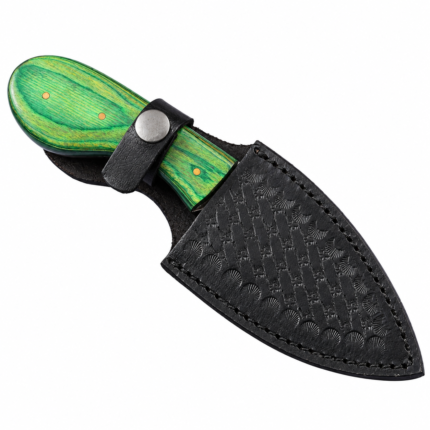
The product image shows a dark brown sheath positioned beneath the knife.
The sheath has a leather-like appearance, with visible yellow stitching running along its edges.
A retention strap with a circular metal snap fastener is attached near the upper section.
The sheath also features an extended carrying loop, which may be intended for belt attachment.
This design is consistent with traditional outdoor knife sheaths.
An appropriately fitted sheath helps cover the cutting edge when the knife is not in use, reducing accidental contact during storage and transportation.
The exact sheath material has not been independently verified. Although the image describes it as a premium leather cover, the leather grade and composition should be confirmed before making a definitive material claim.
The sheath adds practical value to the overall product presentation and gives the knife a coordinated appearance.
Before regular use, buyers should check that the knife fits securely and that the retention closure operates correctly.
A Distinctive Knife for Collectors
Knife collectors often appreciate unusual blade patterns, uncommon handle finishes and distinctive shapes.
This model brings all three elements together.
The flowing blade pattern provides visual depth, while the honeycomb-textured handle introduces a more modern decorative detail.
Its broad cleaver profile also differentiates it from standard hunting knives.
Collectors interested in patterned blades may find the combination particularly appealing.
The sheath creates a complete-looking set and adds to the product’s traditional appearance.
For display purposes, the knife can be appreciated for its blade design, contrasting colors and handle pattern.
Potential buyers should still request confirmation of the product’s materials and manufacturing method before making decisions based on steel type or craftsmanship claims.
Traditional Styling with Modern Visual Details
The Honeycomb Handle Damascus Pattern Cleaver combines traditional and contemporary design elements.
Its fixed-blade construction and protective sheath follow familiar knife-making styles.
At the same time, the handle’s geometric texture provides a more modern appearance.
This contrast makes the knife visually distinctive without requiring excessive decoration.
The subdued olive-grey handle works well with the dark and silver-colored blade, creating a coordinated color scheme.
The small brass-colored details add contrast without distracting from the main design.
The overall appearance may appeal to buyers who prefer darker, neutral-colored knives over brightly colored equipment.
The blade’s patterned finish remains the visual centerpiece, while the handle adds character.
Outdoor Knife and Utility Knife Appeal
A fixed-blade cleaver-style knife is a familiar design in outdoor and general-purpose knife collections.
The broad blade profile can appeal to customers looking for an alternative to narrower utility knives.
People who enjoy camping equipment, traditional fixed blades and outdoor knife designs may appreciate this model’s appearance.
However, the manufacturer must confirm its intended functions before it is advertised for specific tasks.
For example, food preparation suitability depends on the blade material, finish, cleanliness and whether the manufacturer recommends food contact.
Similarly, demanding outdoor applications require suitable edge durability, handle construction and blade thickness.
The image establishes the knife’s visible shape but does not verify these performance characteristics.
Customers should compare the confirmed product specifications with their intended use rather than choosing a knife solely by its visual design.
Understanding the Damascus-Style Blade Pattern
The blade pattern is one of the most important features to describe accurately.
Damascus-style blades are known for their flowing lines, layered-looking details and attractive contrasting finishes.
On this knife, the lines create large curved formations near the front of the blade and tighter, more closely spaced patterns toward the handle.
This variation gives the blade a visually interesting surface.
Some knives achieve such patterns through layered steel and controlled etching, while other products use different decorative finishing methods.
Without supplier documentation or physical inspection, the exact method used on this knife cannot be established.
A decorative pattern should not be treated as proof of exceptional sharpness, toughness or corrosion resistance.
These properties depend on the actual materials, heat treatment and finishing process.
For a product listing, describing the visible Damascus-style pattern is both accurate and useful to buyers.
Handle Shape and Grip Considerations
The handle appears slightly curved, with a wider rear section and a recessed lower profile.
Its shape is consistent with fixed-blade knives designed to be held in one hand.
The visible geometric texture may provide a different tactile feel from a completely smooth handle.
However, grip comfort varies according to hand size, surface material and the weight of the knife.
A photograph cannot verify whether the handle is slip-resistant or comfortable during extended work.
Customers planning regular use should review the knife’s dimensions and weight before purchasing.
They should also consider the handle’s texture, the shape near the blade and the presence of any hand-protection features.
Proper grip and handling technique remain important regardless of the knife’s design.
Attractive Gift for Knife Enthusiasts
The combination of a patterned blade, honeycomb-style handle and brown sheath makes this knife an interesting option for someone who collects fixed-blade knives.
Its unusual appearance provides a talking point for enthusiasts who appreciate distinctive knife designs.
It may suit collectors who already own traditional wooden-handle knives and want a different visual style.
The sheath also helps give the product a coordinated presentation.
Before choosing the knife as a gift, customers should confirm the exact package contents and whether any presentation box is included.
The photograph shows a knife and sheath, but additional accessories have not been verified.
Local regulations concerning knife ownership, transportation and age restrictions should also be considered before purchasing or gifting the product.
Knife Care and Maintenance
Proper care helps preserve the appearance of a patterned blade and handle.
After appropriate use, the blade should be cleaned according to the manufacturer’s instructions.
Remove moisture and residue promptly, especially when the steel’s corrosion resistance has not been confirmed.
A soft cloth is generally suitable for routine drying.
Avoid aggressive abrasives or cleaning chemicals that may damage the blade’s decorative surface.
The handle should also be kept clean and dry. Its maintenance requirements will depend on the material used.
If the handle is made from a natural material, its care requirements may differ from those of synthetic composites.
Store the knife securely when it is not being used.
The sheath should be checked for trapped moisture, worn stitching or damage to its closure.
Avoid prolonged storage of a damp blade inside the sheath.
If sharpening is required, follow the manufacturer’s recommendations or seek professional assistance to preserve the intended edge geometry.
Choosing the Right Cleaver-Style Knife
When comparing cleaver-style knives, buyers should consider more than appearance.
Blade dimensions, material composition, thickness, weight and edge geometry are important factors.
The handle should also be appropriate for the intended use.
Buyers interested in collecting may prioritize decorative finishes and distinctive construction details.
Those seeking a working knife should place greater emphasis on confirmed technical specifications.
For this model, the most important details to verify are its actual blade steel, handle material, dimensions, weight, construction method and recommended applications.
These specifications help buyers make informed comparisons with other products.
The included sheath should also be evaluated for fit, closure security and material quality.
A complete and accurate product specification is more valuable than unsupported claims about performance.
Why Consider This Honeycomb Handle Cleaver?
The visual identity of this knife is built around its unusual combination of features.
The blade displays flowing silver and grey patterns.
The wide cutting profile gives it a recognizable cleaver shape.
The olive-grey handle introduces a honeycomb-inspired texture, while the pins and lanyard opening provide finishing details.
A dark brown stitched sheath completes the presentation.
These visible characteristics make the knife easy to distinguish from ordinary fixed blades.
Collectors may appreciate its distinctive visual balance, while customers browsing outdoor knives may find its design interesting.
The product’s final suitability for particular cutting tasks should be determined from verified specifications.
Explore a Distinctive Fixed-Blade Cleaver
The Honeycomb Handle Damascus Pattern Cleaver combines a broad patterned blade, an olive-grey geometric handle and a coordinating dark brown sheath.
Its appearance brings together traditional fixed-blade construction and a distinctive decorative finish.
For collectors, knife enthusiasts and customers interested in unusual cleaver-style designs, it offers several features worth examining.
Explore this knife as part of your fixed-blade collection, and review the manufacturer’s confirmed material, dimension and performance specifications before placing an order.







Reviews
There are no reviews yet.