


Damascus Folding Pocket Knife – Amber-Brown Handle and Distinctive Patterned Blade
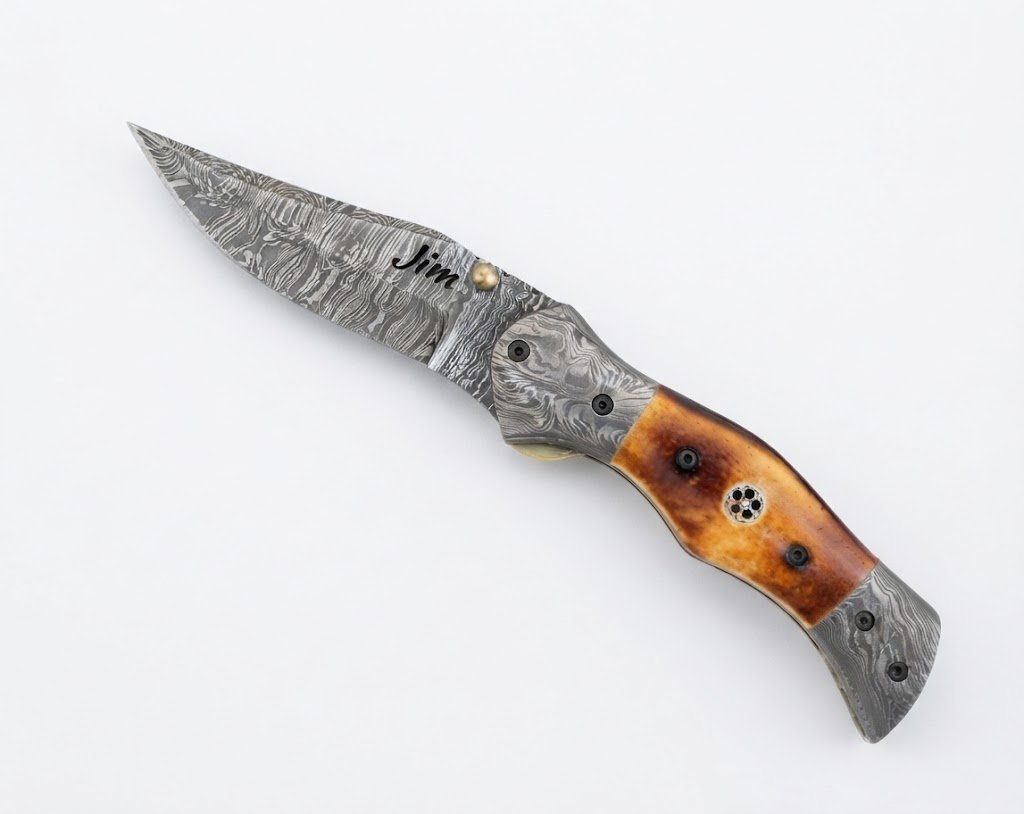
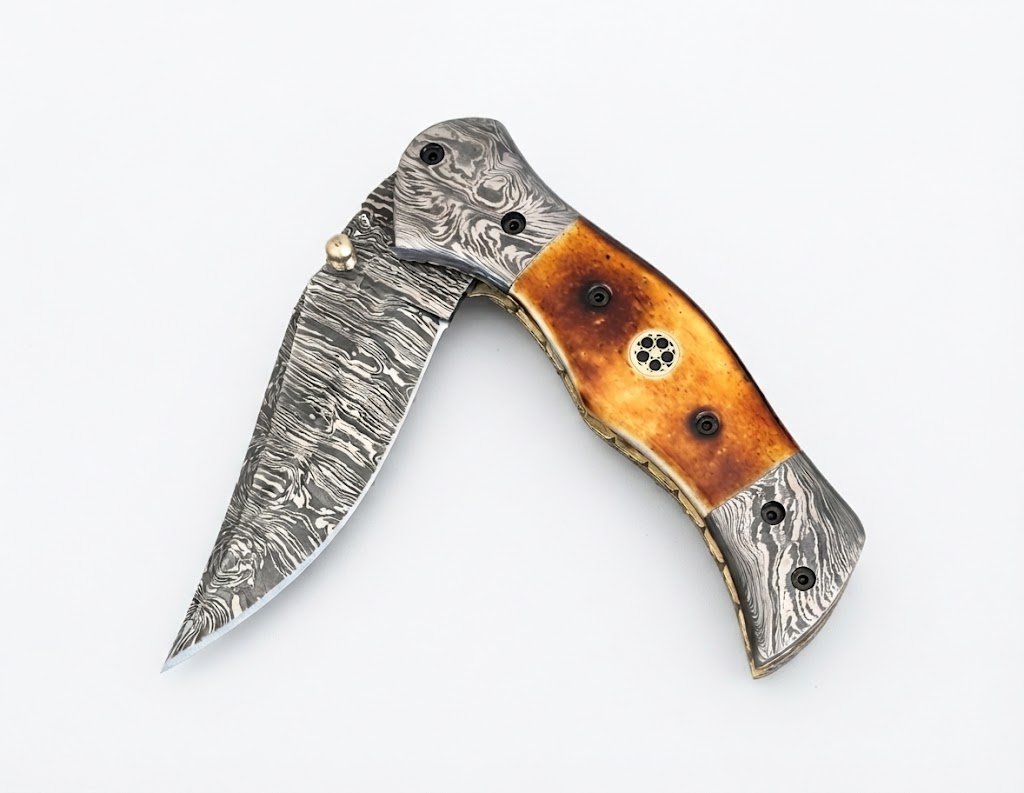
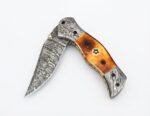
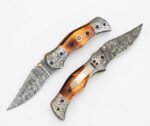
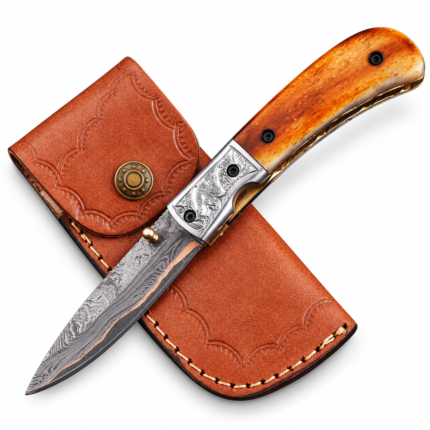
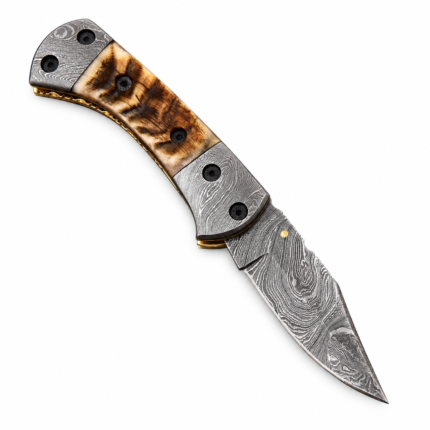
The Damascus Folding Pocket Knife features an attractive combination of traditional folding knife design, flowing blade patterns, amber-brown handle scales, and decorative silver-gray metalwork. Its distinctive appearance makes it an interesting choice for collectors, pocket knife enthusiasts, and customers who appreciate detailed craftsmanship and classic knife styling.
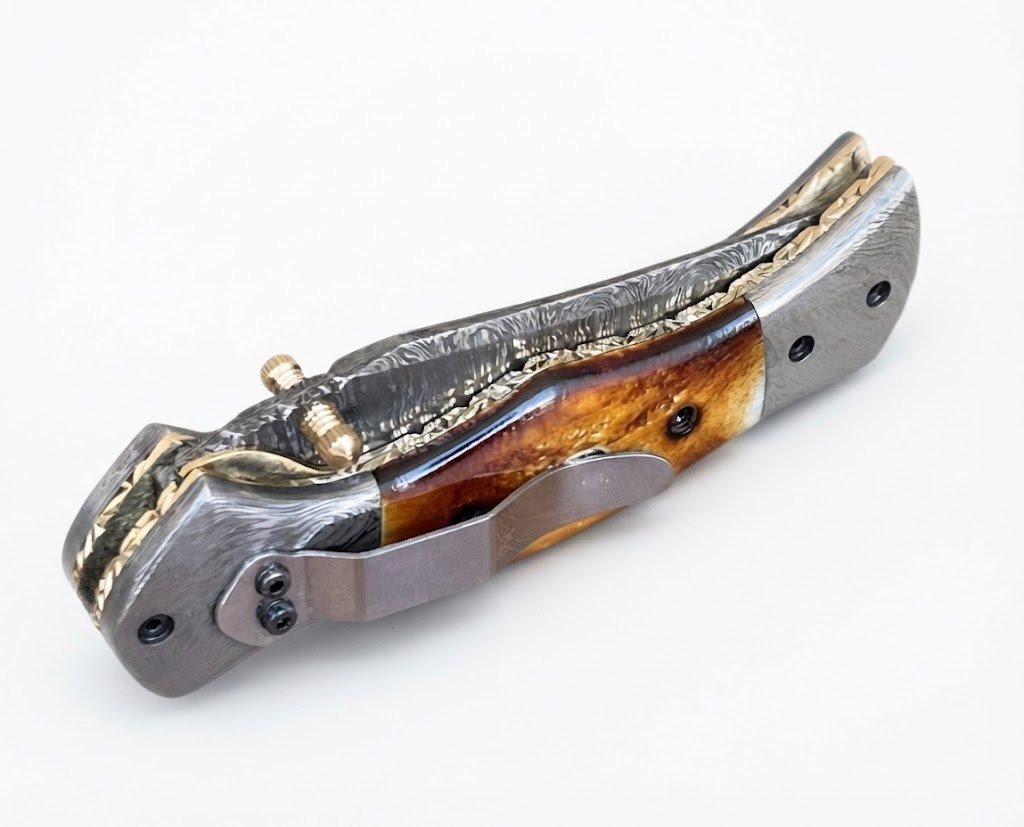
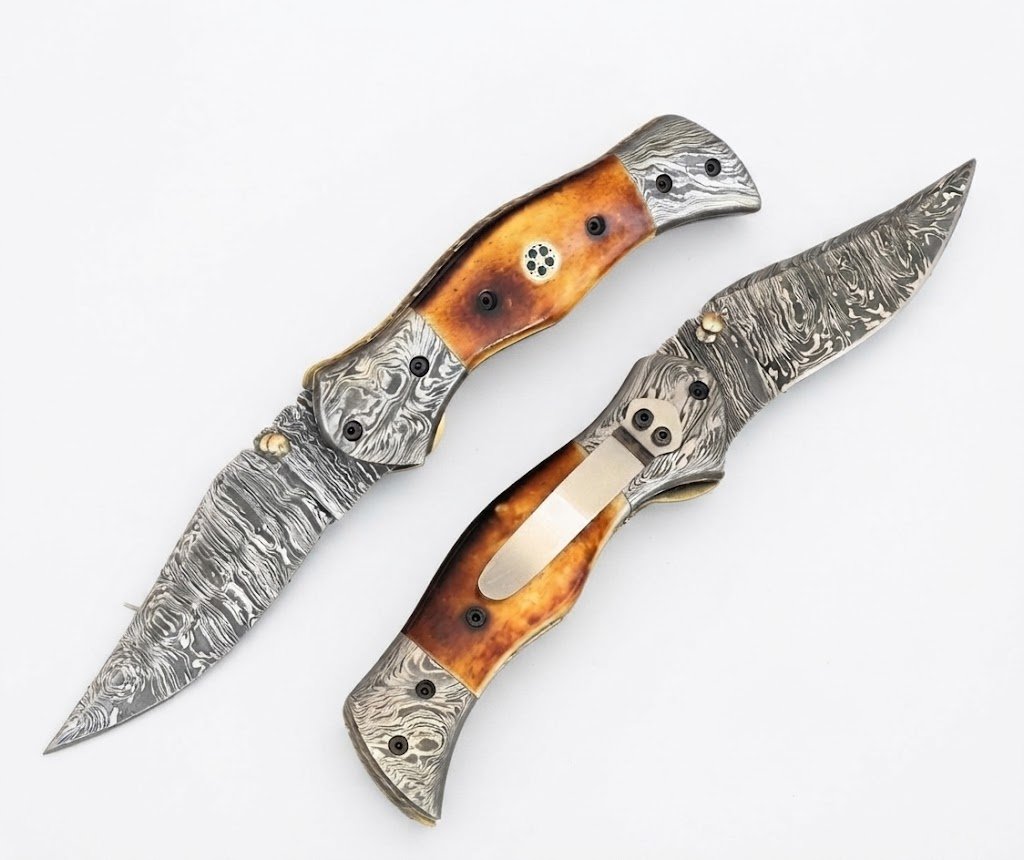
The blade displays a series of fine, layered-looking lines that create the recognizable appearance commonly associated with Damascus steel. These patterns extend across the blade surface, adding visual depth and character.
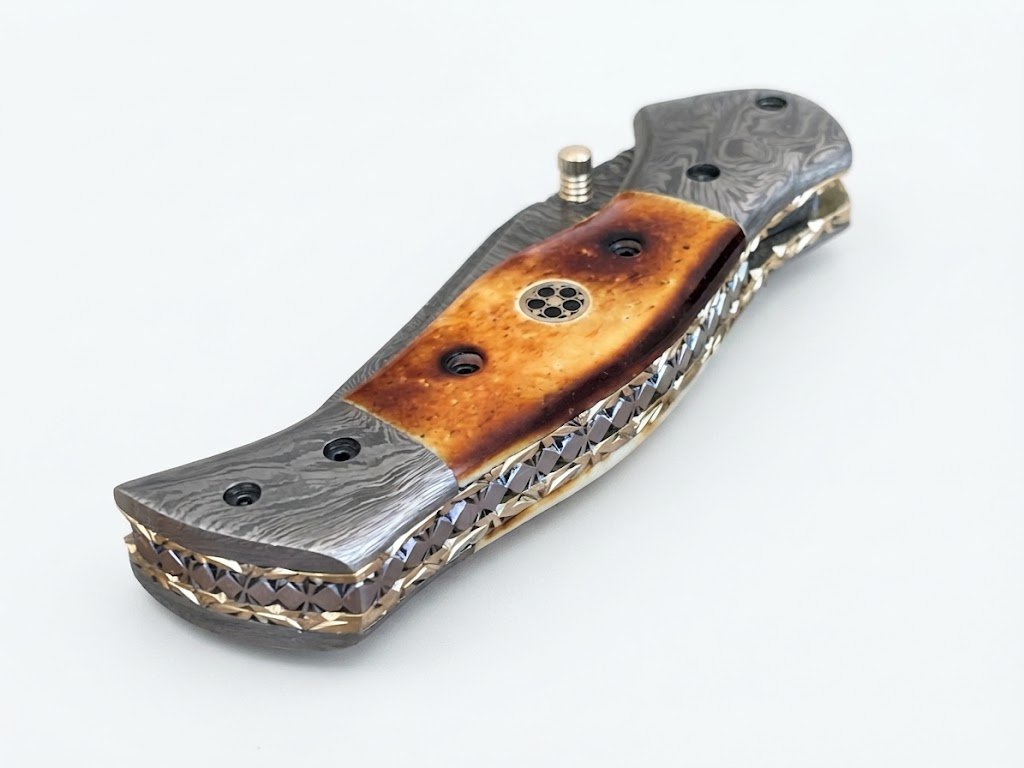
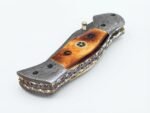
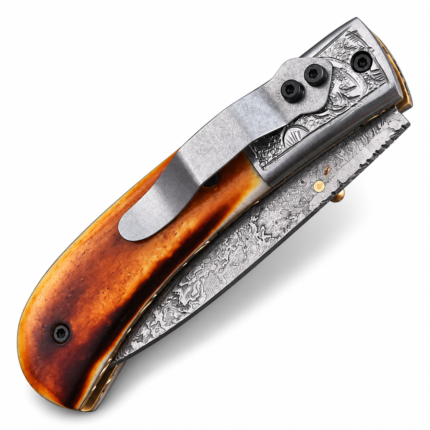
The handle combines warm golden-brown and darker brown tones, producing a natural-looking finish. Decorative metal bolster sections at the front and rear of the handle complement the blade’s patterned appearance.
A circular ornamental inlay positioned near the center of the handle provides an additional detail, while the gently curved handle design gives the knife a traditional folding pocket knife silhouette.
Unlike plain utility knives, this model emphasizes decorative appearance as well as its folding design.
Distinctive Damascus-Style Blade Pattern
The most noticeable feature of this knife is its silver-gray patterned blade.
Fine, flowing lines cover the blade surface, forming layered waves and irregular shapes. The patterns vary across the blade, creating a visually interesting contrast between lighter silver-colored areas and darker gray markings.
The blade has a pointed tip and a gently curved cutting edge. Its shape is consistent with a drop-point-inspired folding knife profile, although the precise blade classification should be confirmed against manufacturer specifications.
The patterned surface provides a decorative appearance that may be particularly appealing to collectors.
Damascus steel is widely recognized for its layered visual patterns. However, similar appearances can be produced using different manufacturing techniques.
A photograph alone cannot establish whether this blade is made from genuine pattern-welded steel or features an applied decorative pattern.
For customers who require genuine Damascus construction, the steel grades and manufacturing method should be confirmed with the supplier.
The image also does not establish hardness, edge retention, corrosion resistance, or heat-treatment quality.
Attractive Amber-Brown Handle Design
The knife features a curved amber-brown handle that provides a warm contrast to its silver-gray blade.
The visible surface has a combination of golden, tan, and darker brown areas, creating a natural-looking color variation.
The darker markings are concentrated around several parts of the handle, giving it a distinctive appearance.
Its curved shape follows the traditional design of folding pocket knives.
The handle broadens toward the rear and narrows slightly near the front bolster.
This design creates a visually balanced transition between the blade and handle.
A decorative circular inlay near the center adds another attractive detail.
The inlay has a metallic border and multiple small dark and light circular elements.
Several black fastening screws are visible around the handle.
Although the material resembles polished bone, horn, stabilized wood, or resin, its exact composition cannot be identified from the image.
The handle should therefore be described as amber-brown or natural-looking until the manufacturer confirms its material.
Decorative Front and Rear Metal Bolsters
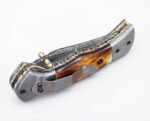
One of the distinctive design elements is the use of patterned metallic sections at both ends of the handle.
The front bolster surrounds the blade pivot area and displays flowing silver-gray markings.
The rear bolster features a similar patterned finish, giving the handle a coordinated appearance.
These metal sections contrast with the warmer color of the central handle panel.
The resulting design combines multiple surface textures without relying on oversized branding or colorful printed graphics.
The front bolster is positioned around the folding mechanism and includes visible fasteners.
The rear section forms the terminal part of the handle and has a slightly flared shape.
Both components contribute to the knife’s traditional styling.
The exact alloys and construction of the bolsters require supplier confirmation.
Traditional Folding Pocket Knife Construction
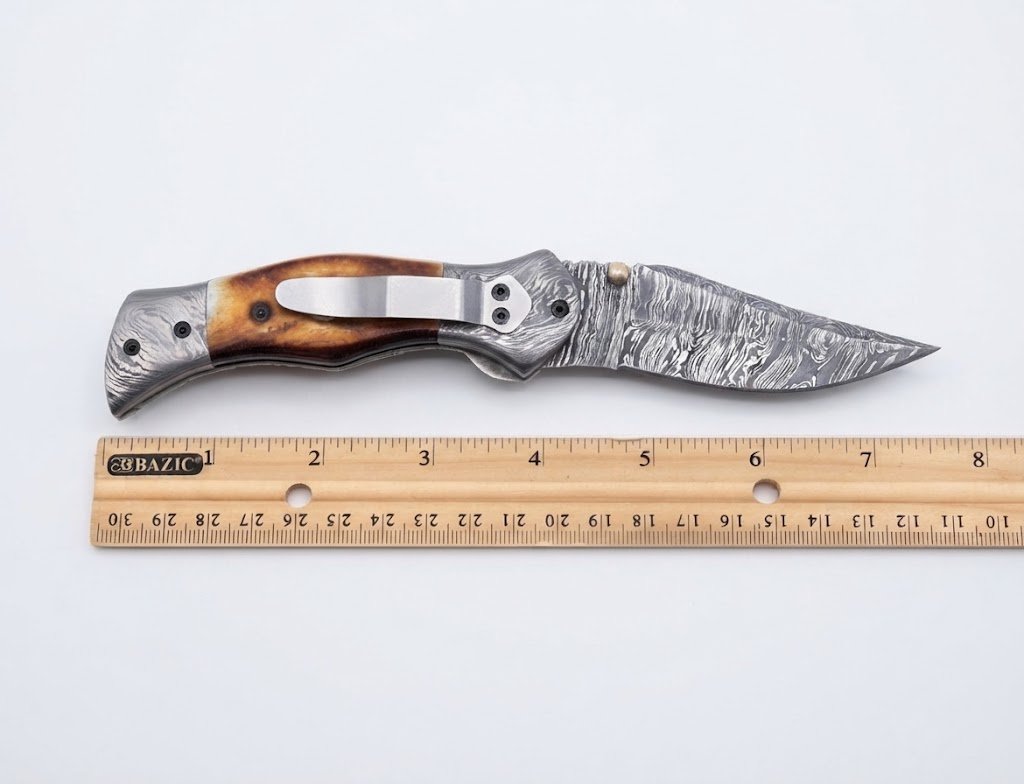
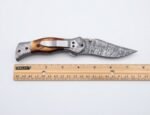
This knife is shown in its open position, revealing the full blade profile and handle arrangement.
Folding pocket knives use a pivot to allow the blade to move between an open position and a more compact storage position.
This general design makes them different from fixed-blade knives, which have blades permanently extended from the handle.
The visible brass-colored thumb stud near the blade pivot may be intended to assist opening.
However, the precise opening method and mechanical operation are not demonstrated in the photograph.
The image also does not establish whether the knife has a liner lock, frame lock, back lock, or another blade-retention system.
Before purchasing, customers should confirm the blade-locking mechanism, particularly when considering the knife for practical tasks.
The actual blade length, overall length, closed length, blade thickness, and weight should also be checked.
These measurements cannot be reliably determined from the image.
Detailed Blade and Handle Appearance
The design includes several visually distinctive components.
The patterned blade is predominantly silver-gray, with darker layered lines running across its surface.
The handle has a polished-looking finish with warm amber and dark brown colors.
The front and rear metal sections feature patterns that complement the blade.
Small dark screws provide visible fastening details.
A circular decorative inlay adds contrast near the center of the handle.
The small brass-colored thumb stud introduces another metallic accent.
Together, these components produce a decorative folding knife with a traditional appearance.
The overall aesthetic may appeal to customers who prefer knives with natural-looking handle finishes and intricate metalwork.
A Pocket Knife for Collectors
Knife collectors often look for models that offer interesting combinations of blade shape, surface pattern, handle material, and decorative details.
This folding knife brings several of those elements together.
Its patterned blade is the central visual feature, while the amber-brown handle gives it a recognizable color combination.
The matching patterned bolsters add another feature that distinguishes the design from simple folding knives.
The ornamental inlay provides an additional point of interest.
For customers building a collection of folding pocket knives, the knife offers a different appearance from plain black-handled or stainless-finish models.
Collectors interested in authenticity should request details about the steel composition, production method, and manufacturer.
The visible pattern should not be treated as proof of handmade construction or a particular steel grade.
General-Purpose Folding Knife Considerations
Folding pocket knives are commonly used for suitable everyday cutting tasks, including opening packaging and trimming appropriate materials.
Whether this particular model is suitable for a specific activity depends on its verified blade construction, sharpness, retention mechanism, dimensions, and structural condition.
These factors cannot be fully assessed from a photograph.
Customers considering regular practical use should confirm that the blade opens and closes correctly, the pivot operates smoothly, and the retaining mechanism functions as designed.
The handle should also be appropriate for the intended user’s hand size.
The product should not be advertised for heavy-duty cutting or demanding outdoor activities without reliable manufacturer information.
Its ornamental appearance does not automatically establish any particular level of cutting performance.
Why the Handle Design Matters
A pocket knife’s handle influences its appearance and how it is held.
This model features a curved profile with a gently shaped underside.
The shape creates a traditional silhouette that is visually different from straight rectangular handles.
Its warm amber-brown finish provides a strong contrast against the patterned metal.
The decorative inlay creates a focal point at the center of the handle.
The front and rear metallic sections frame the brown material and give the knife a coordinated finish.
Actual comfort, grip security, and durability depend on dimensions, material, and construction.
Those characteristics require physical examination or verified technical specifications.
A Decorative Addition to a Knife Collection
The knife may appeal to adults interested in traditional pocket knife designs and patterned metalwork.
The combination of amber-colored handle scales, decorative bolsters, and a flowing blade pattern creates a distinctive visual identity.
Its design can also be appreciated as part of a curated collection of folding knives.
For customers who value attractive finishes, the patterned blade and ornamented handle provide clear points of interest.
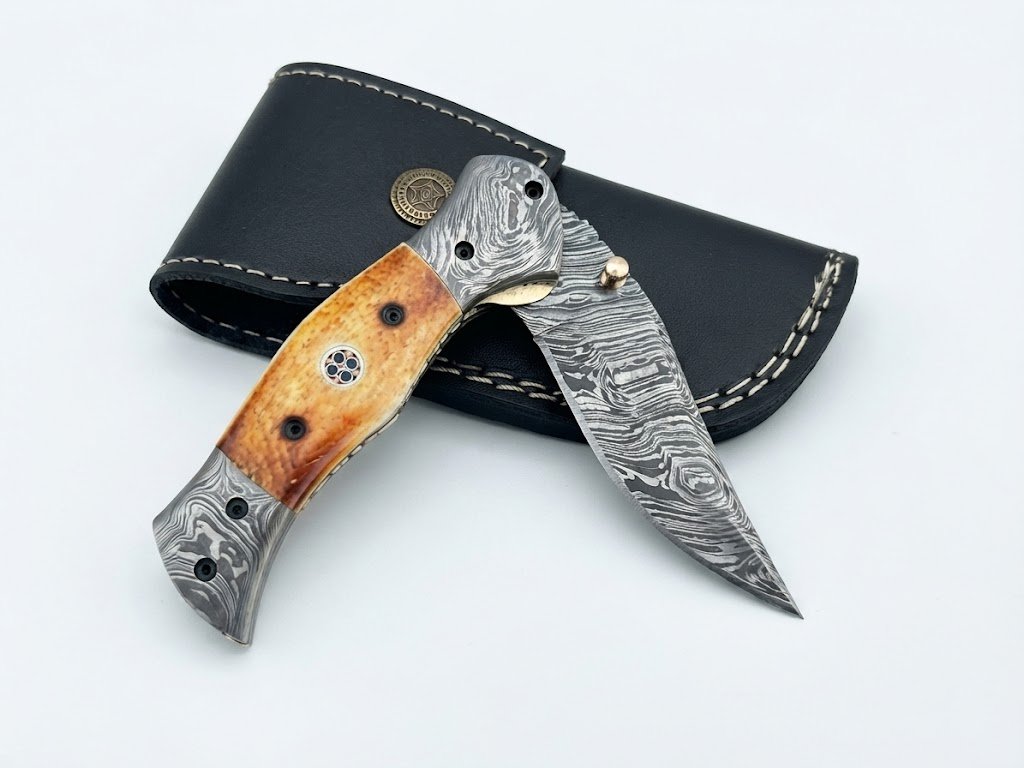
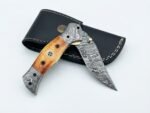
Whether the product is offered with gift packaging, a display box, or a carrying pouch should be confirmed separately.
No accessories are shown in the uploaded photograph.
Understanding Damascus-Style Steel
Damascus steel is a term commonly associated with blades featuring distinctive flowing patterns.
Traditional and modern methods of producing patterned steel can involve multiple metal layers, forging, and surface finishing.
However, some knives use decorative methods that imitate the appearance of pattern-welded steel.
The visible appearance of this particular blade cannot establish its exact manufacturing method.
Buyers should request information about the steel grades used and whether the construction is genuinely pattern-welded.
If steel hardness is important, the supplier should provide an actual hardness specification rather than an estimated figure.
Corrosion resistance also depends on the materials used and the care the blade receives.
A patterned finish should not be considered proof that a blade is stainless or corrosion-resistant.
Caring for the Patterned Blade
Proper maintenance is important for preserving the appearance of folding knives.
After suitable use, gently clean the blade and remove any residue.
Dry the blade thoroughly to reduce the risk of moisture-related damage.
Avoid leaving the knife in wet conditions for extended periods.
If the blade requires lubrication or protective oil, follow the manufacturer’s recommendations.
Keep the pivot area free from excessive dirt.
Avoid aggressive cleaning chemicals that could damage decorative surface finishes.
A soft cloth is generally preferable for routine surface cleaning.
The appropriate maintenance products may differ depending on the actual blade steel and finishing method.
Maintaining the Amber-Brown Handle
The handle has a smooth-looking amber-brown surface with decorative details.
To help preserve its appearance, gently remove dust using a soft, dry cloth.
Avoid unnecessary exposure to harsh cleaning agents.
Do not soak the handle in water.
If the handle is confirmed to be natural bone, horn, or wood, use care products suitable for that material.
If it is made from resin or another synthetic material, cleaning requirements may be different.
The manufacturer’s instructions should determine the appropriate care method.
The metal bolster sections can also be wiped clean with a soft cloth.
Pay attention to moisture around the pivot and fasteners.
Storage and Handling
The knife should be stored in a clean, dry location.
Before storage, ensure that the blade is clean and free from moisture.
When closing the knife, keep fingers clear of the blade’s path.
Do not assume that the blade locks in the open position until the mechanism has been verified.
A folding knife should only be used for activities appropriate to its actual construction.
It should not be used as a pry bar, screwdriver, or hammer.
If the pivot becomes loose or the blade-retention system is not functioning correctly, discontinue use until the issue is addressed.
Keep the knife out of reach of children.
Always follow applicable laws regarding knife ownership, carrying, transportation, and use.
Important Product Specifications
| Specification | Details |
|---|---|
| Product type | Folding pocket knife |
| Blade appearance | Damascus-style patterned finish |
| Blade color | Silver and dark gray |
| Blade profile | Pointed, gently curved edge |
| Handle color | Amber brown with darker markings |
| Handle material | Not verified |
| Bolsters | Patterned silver-gray metallic sections |
| Decorative features | Circular inlay and dark fasteners |
| Opening feature | Brass-colored thumb stud visible |
| Blade steel grade | Not verified |
| Locking system | Not verified |
| Overall dimensions | Not verified |
| Weight | Not verified |
| Accessories | None shown |
| Customization | Not verified |
What Makes This Knife Distinctive?
The Damascus Folding Pocket Knife stands out because of its combination of decorative elements.
The flowing blade pattern contrasts with the warm handle colors.
The patterned metal bolsters coordinate with the blade, creating visual continuity between the major components.
The circular handle inlay adds a traditional decorative touch.
The curved silhouette gives the model a classic pocket knife appearance.
Rather than relying on a single visual feature, the design combines patterned steel, contrasting colors, and multiple metallic details.
For customers looking for an attractive folding knife, these design elements may be the main reasons to consider this model.
Final Thoughts
The Damascus Folding Pocket Knife with Amber Handle & Patterned Metal Bolsters combines an intricate blade appearance with warm amber-brown styling and decorative metallic details.
Its traditional folding silhouette and distinctive handle design make it a visually interesting choice for collectors and pocket knife enthusiasts.
Explore this model for its classic styling, and review the verified steel, handle, and mechanism specifications before making a purchase.





Reviews
There are no reviews yet.