


Red Grain Handle Folding Knife with a Traditional Look
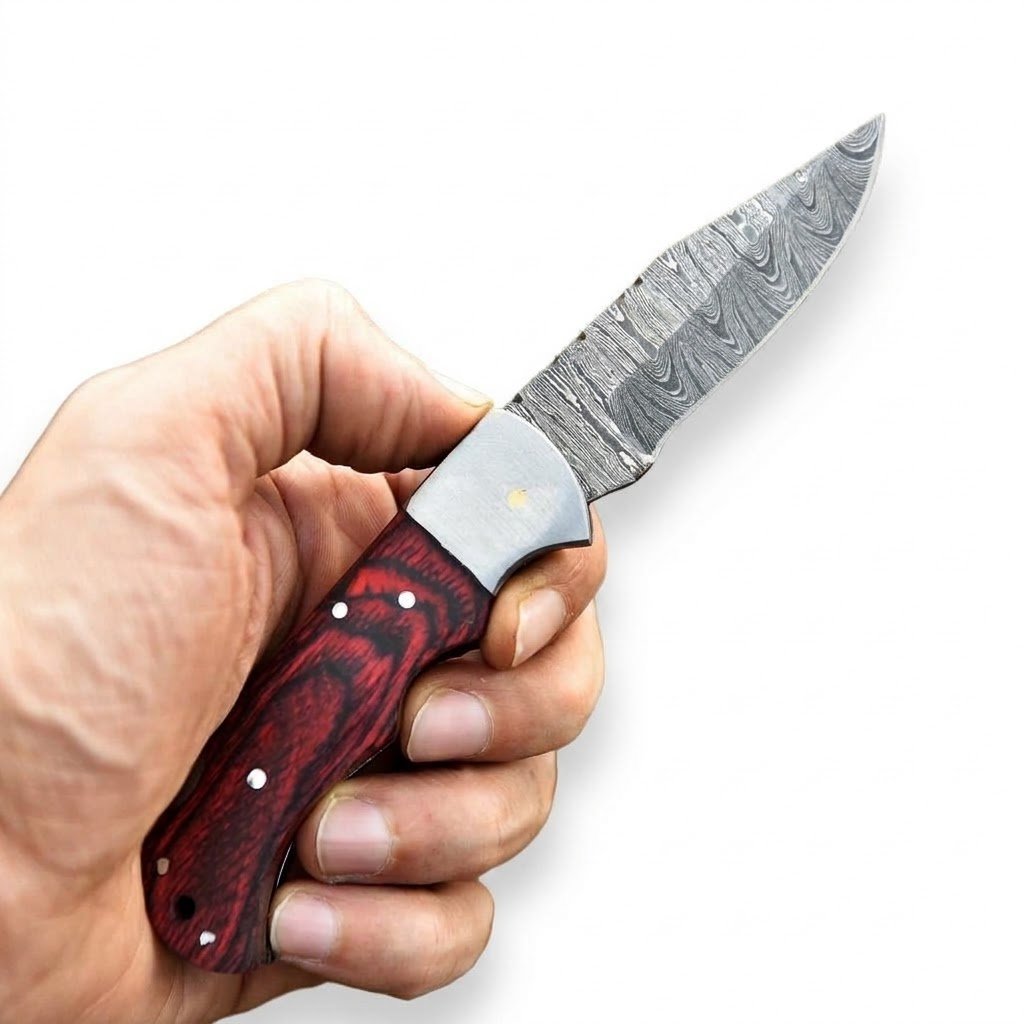
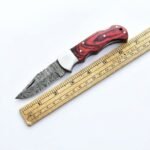
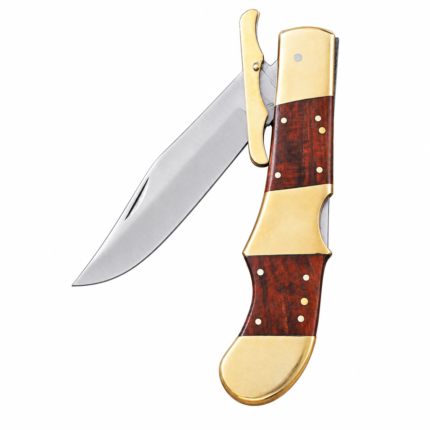
This red grain handle folding knife combines a gray patterned blade with a shaped red-and-black handle and a broad silver-tone bolster. Shown with its blade open, it has the familiar outline of a traditional pocket knife, brought to life by contrasting colors and detailed surface patterns. The blade’s fine flowing lines complement the larger grain-like markings across the handle.
The design offers several details to appreciate at close range. Small silver-tone pins punctuate the red handle, a circular opening sits near its rounded rear end, and the bright bolster creates a clear transition between handle and blade. Along the underside, shallow curves give the grip a more sculpted appearance than a straight-sided handle.
For buyers who enjoy the appearance of traditional folding knives, this combination provides a distinctive option to explore. Its visual character is clear from the photograph, while the steel specification, handle material, folding mechanism, and exact measurements still require confirmation.
A Gray Blade with Flowing Surface Patterns
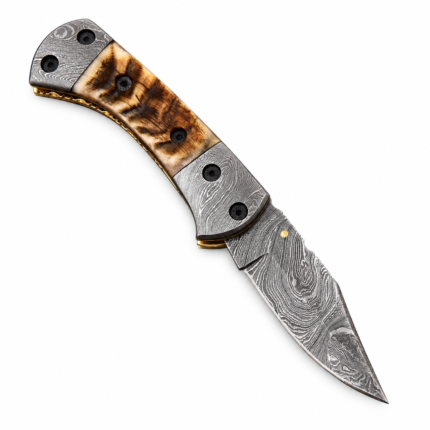
The blade carries closely spaced light and dark lines that form waves, loops, and irregular swirls. These markings extend across the visible blade face, creating detail from the area near the bolster toward the pointed tip. The pattern is especially noticeable against the plain white background.
Its appearance resembles the layered patterns commonly associated with Damascus-style blades. However, appearance alone does not establish genuine pattern-welded Damascus steel, a particular alloy combination, or a layer count. The accurate description for the pictured product is a gray patterned blade until its material and manufacturing method are documented.
That distinction allows the design to speak for itself. Customers can appreciate the flowing linework without relying on an unsupported claim about how it was produced. If material authenticity is important to your purchase, request a specific steel description for this exact knife.
A Pointed Profile with a Curved Cutting Edge
The blade narrows toward a pointed tip, while the lower cutting edge follows a gentle curve. Its outline creates a balanced visual transition from the wider base near the handle to the slimmer front section. No serrations are visible along the photographed cutting edge.
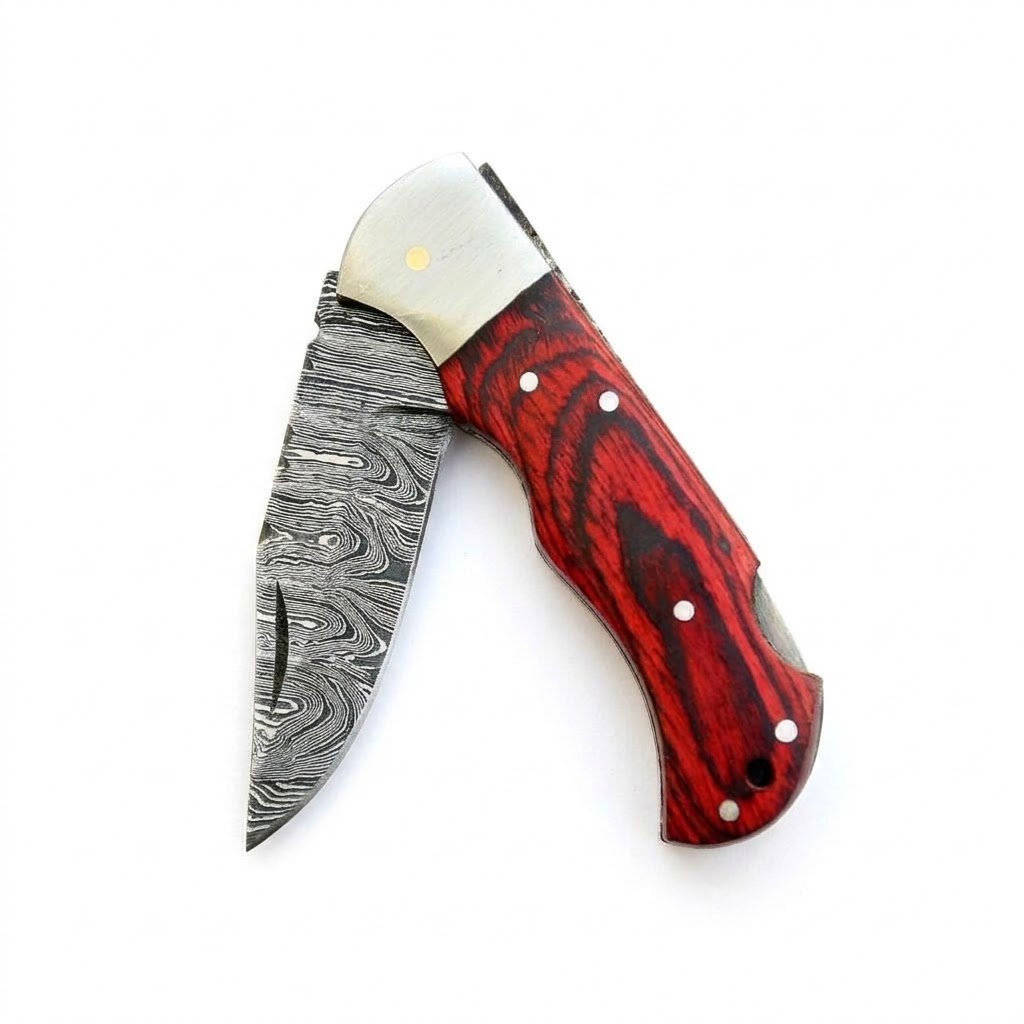
A long, narrow dark recess appears on the blade face near the upper edge. It resembles a traditional nail nick, a feature associated with manually opened folding knives. This visible detail reinforces the knife’s classic pocket-knife appearance without establishing the exact opening action.
The image does not demonstrate sharpness, cutting ability, or edge retention. Those qualities depend on more than the blade profile, including its steel, heat treatment, sharpening, and geometry. Buyers choosing a knife for a particular cutting task should confirm its intended applications alongside the visual details.
Red-and-Black Grain-Look Handle
The handle is the main source of color in this design. Rich red areas are crossed by dark, flowing bands that resemble wood grain. The markings change direction along the grip, forming larger curved shapes near the middle and narrower streaks toward the ends.
This combination gives the knife a warmer appearance than an all-metal or plain black design. The dark lines also connect visually with the blade’s darker pattern, while the silver-tone fittings provide lighter accents. Each part has its own finish, but the limited palette keeps the overall appearance coordinated.
Although the surface looks wood-like, the photograph does not identify the handle material. It could not reliably establish a wood species, laminated construction, resin content, or composite formulation. “Red-and-black grain-look handle” describes what is visible without turning an appearance into a material claim.
A Contoured Grip with a Rounded Rear
The handle follows a shaped outline rather than a straight rectangular form. Its underside includes shallow recesses and a broader curve toward the rear. The upper edge rises gently before rounding into the butt, giving the handle a flowing profile when viewed from the side.
These contours are useful details to compare when selecting a preferred handle shape. Some buyers favor a pronounced outline, while others prefer simpler, straighter grips. The photograph shows the side profile clearly enough to assess that visual preference.
Comfort and fit, however, depend on dimensions that are not confirmed here. Handle thickness, usable grip length, weight, and the size of the user’s hand all affect how a knife feels. The visible contours should therefore be understood as design features rather than proof of an ergonomic or non-slip grip.
Silver-Tone Bolster and Pin Details
A broad, bright bolster sits at the front of the handle. Its relatively plain surface separates the busy blade pattern from the red-and-black grain-like markings. This gives the eye a resting point between the knife’s two most detailed areas.
The bolster has a curved lower outline that follows the transition into the grip. Its light finish stands out against both the dark blade markings and the stronger red tones behind it. A small contrasting circular mark is also visible on its face, although its exact construction cannot be determined from the image.
Five small silver-tone pins can be seen across the photographed handle side. They add simple, evenly colored accents to the flowing pattern. The photograph does not identify the bolster or pin metals, so stainless steel, nickel silver, and other specific materials should not be assumed.
Rear Opening and Visible Handle Edges
Near the rounded rear of the handle is a dark circular opening. Its location is consistent with a lanyard hole, though the photograph does not show a cord fitted through it. The opening provides another clear detail for customers comparing the product’s appearance and possible accessory arrangements.
If you intend to attach a lanyard, confirm the opening diameter and its suitability for your chosen cord. No lanyard, clip, or other attachment is pictured as part of the product.
Thin dark and metallic-looking borders are also visible along portions of the handle’s underside. These show some of the layered appearance of the assembly, but they do not reveal enough to identify the complete internal construction. Additional photographs would be needed to examine the spine, opposite side, and blade seating.
Folding Format and Everyday Utility Considerations
The pictured knife appears to be a folding pocket-knife design, shown in its open position. Folding knives are commonly considered for portable utility use, but this single image does not show the closed configuration or demonstrate how the blade opens and closes.
For everyday tasks such as opening packaging or trimming cord, confirm that the seller recommends this particular model for that use. A suitable knife depends on its working specifications as well as its size and appearance. The photograph alone cannot verify cutting performance or mechanical reliability.
The lock type is also unconfirmed. It should not be described as a liner lock, back lock, slip joint, or assisted-opening knife without supporting information. Buyers should check the opening method, blade retention, and any locking mechanism before deciding whether the model meets their preferences.
Understanding the Ruler in the Photograph
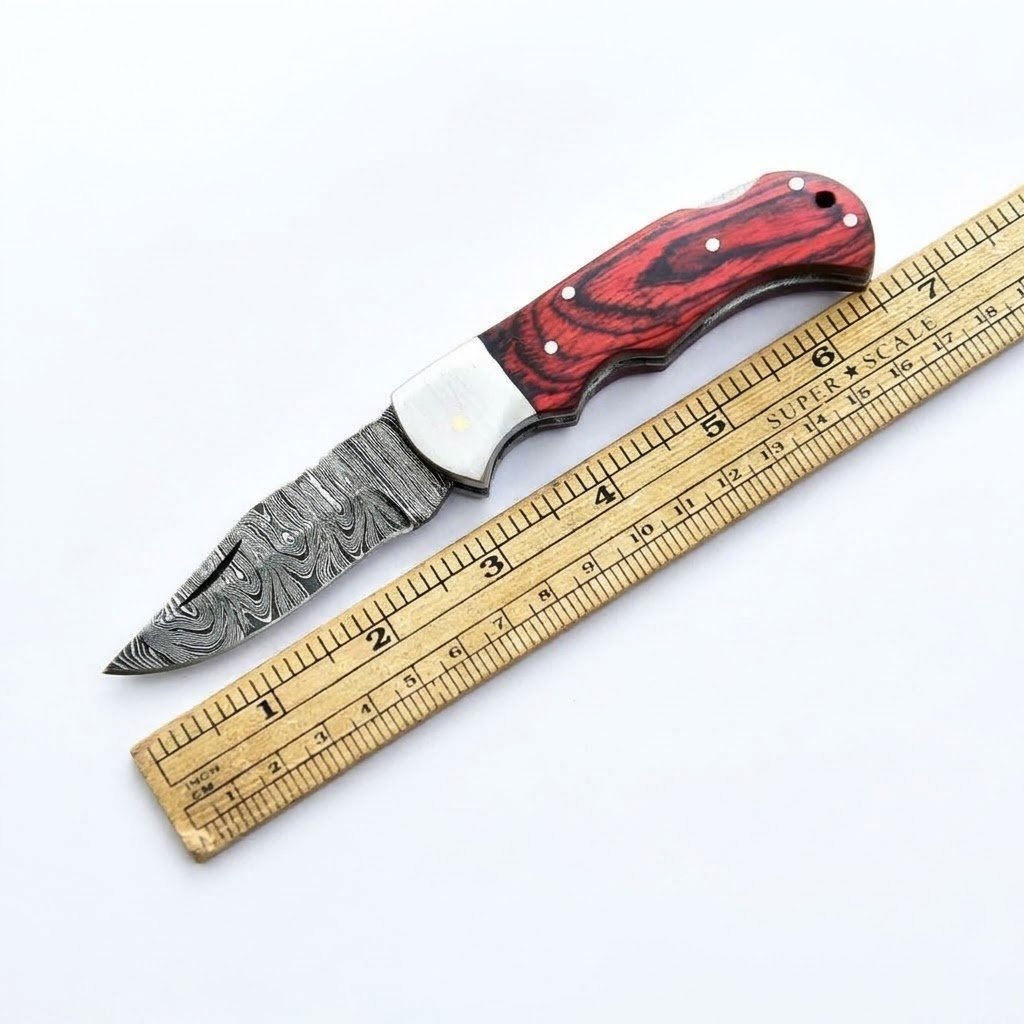
A ruler is positioned alongside the open knife, providing a useful general impression of scale. This is more informative than a product image with no size reference, especially when comparing the proportions of the blade and handle.
However, the knife and ruler are not aligned closely enough to support a precise advertised measurement. Their position and the camera angle introduce uncertainty about exactly where the tip and handle end fall against the scale. An exact overall length should not be taken from this photograph.
For a reliable size comparison, request the open length, closed length, blade length, and handle thickness. Weight is also useful when considering portability. These measurements can help you judge whether the knife suits your needs without relying on the apparent size of a close-up image.
A Design for Traditional Pocket-Knife Enthusiasts
This knife may appeal to customers who appreciate a traditional folding profile with a more colorful handle. The red-and-black pattern provides a clear focal point, while the silver-tone bolster preserves a familiar, understated element of classic pocket-knife styling.
For someone comparing collection pieces, the photograph offers several distinguishing details: the flowing blade pattern, curved handle underside, five visible pins, broad bolster, and rear opening. Together, these features make the design more specific than a general description such as “patterned folding knife.”
It may also be worth considering as a gift for a knife enthusiast who enjoys this style. Before choosing it for someone else, confirm their preferred size, mechanism, and material requirements. Appearance is an important part of the decision, but practical preferences are equally individual.
Specifications, Package Contents, and Available Options
The supplied image shows one open knife beside a ruler. No pouch, sheath, presentation box, spare parts, or maintenance accessories are shown. The ruler serves as a photographic size reference and should not be listed as an included item.
Only the pictured red-and-black handle variation is established. Other colors, engraving, custom packaging, and personalized options have not been verified for this product. Similar-looking knives from other suppliers may offer those choices, but their options should not automatically be applied to this listing.
Before ordering, confirm the blade material, handle composition, dimensions, weight, mechanism, and package contents. Product-specific documentation will also establish any warranty or after-sales support. These details make it easier to compare the knife fairly with alternatives and understand exactly what will arrive.
Care Guidance and Choosing Your Knife
Care instructions should be based on the confirmed blade and handle materials. The photograph does not establish whether the blade requires a particular protective treatment or whether the handle has a finish that needs special attention. Obtain the seller’s cleaning, storage, and sharpening guidance for the exact model.
The folding assembly also deserves product-specific instructions. Without knowing its mechanism, it would be premature to recommend a lubricant, adjustment method, or disassembly procedure. Keeping the supplied care information with the product gives you a more reliable reference than judging maintenance needs from its appearance.
The red grain handle folding knife brings together an expressive handle pattern, detailed gray blade, and bright bolster in a traditional-looking design. Review its confirmed specifications and take a closer look at the pictured details to decide whether it belongs in your collection.








Reviews
There are no reviews yet.