


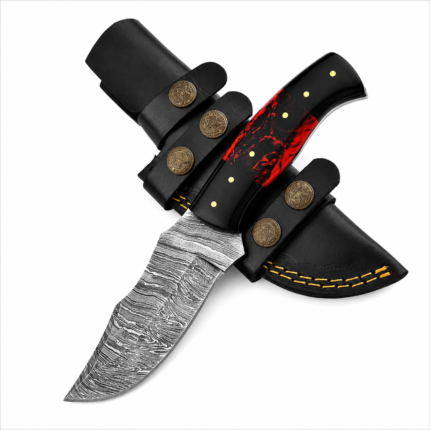
Timbercrest Rustic Fixed Blade Hunting Knife – Woodgrain Handle and Dark Textured Blade
Introduction to the Timbercrest Rustic Fixed Blade Hunting Knife
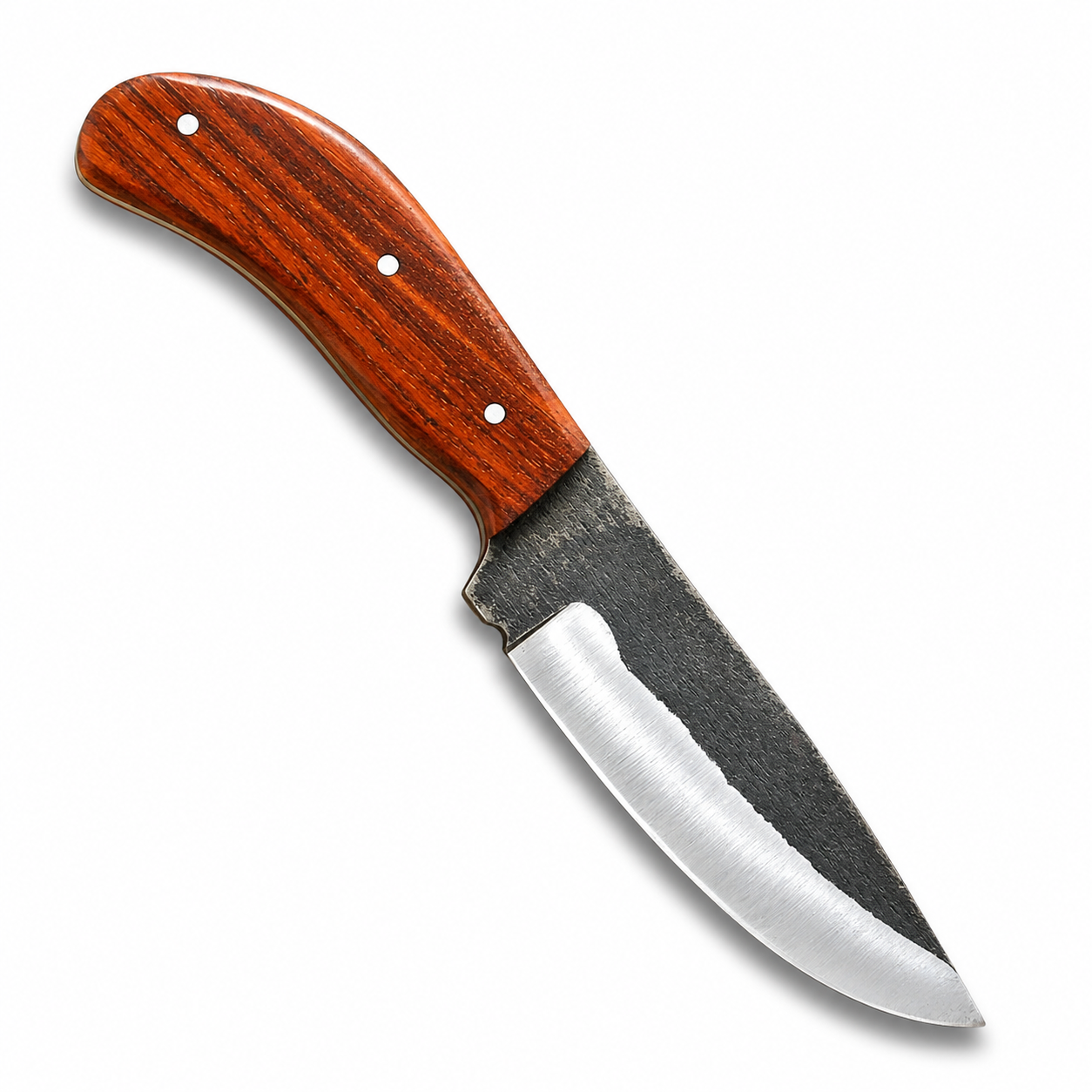
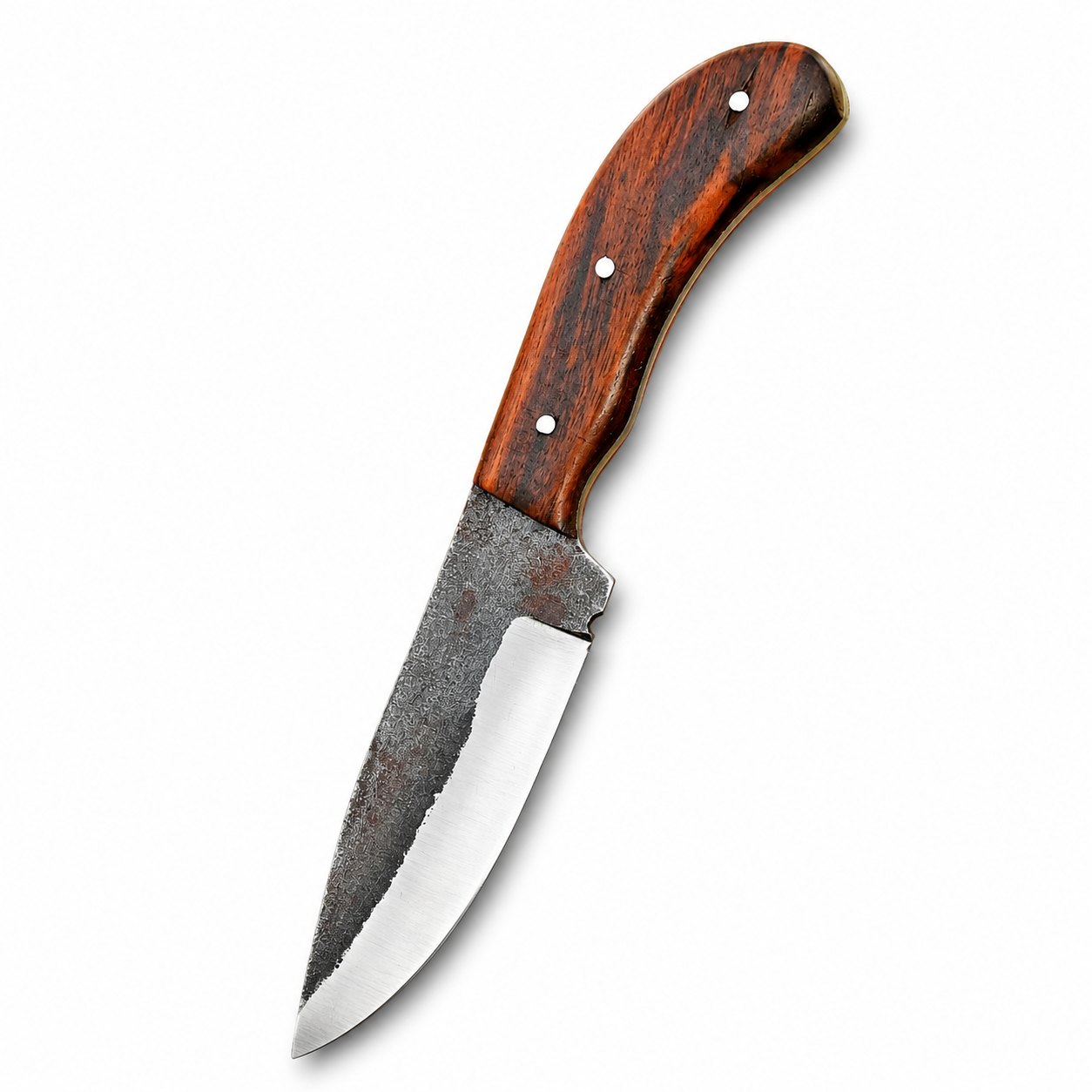
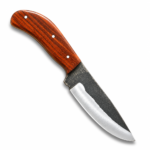
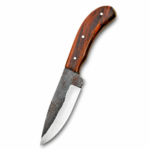
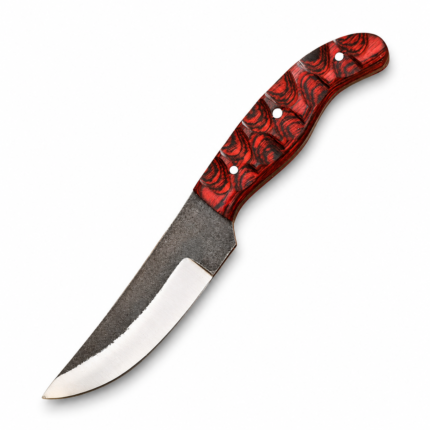
The Timbercrest Rustic Fixed Blade Hunting Knife combines a traditional outdoor knife silhouette with a distinctive reddish-brown woodgrain-style handle and a contrasting two-tone blade finish. Its curved cutting edge, dark textured blade surface, and polished silver bevel create a rustic appearance suited to hunting-inspired cutlery collections.
This fixed-blade knife features a gently curved, drop-point-style blade with a tapered tip and a contoured handle. Three visible silver-tone pins are positioned along the handle, complementing the bright metallic cutting bevel.
One of the product’s most recognizable characteristics is its contrast between warm handle colors and cool metallic blade finishes. The handle displays rich reddish-brown coloring with darker grain-like markings, while the blade features a charcoal-grey textured surface transitioning into a wide silver cutting area.
The combination produces a distinctive design that brings together traditional visual characteristics and contemporary finishing details.
For customers exploring fixed-blade hunting knives, rustic outdoor cutlery, or decorative knife collections, the Timbercrest design offers a recognizable profile with prominent surface detailing.
1. Traditional Fixed Blade Construction
The Timbercrest Rustic Fixed Blade Hunting Knife has a fixed, non-folding blade.
Unlike a folding pocket knife, the blade remains extended from the handle rather than moving into a closed position.
Fixed-blade designs have been associated with outdoor cutlery for generations. Their recognizable construction includes a clearly defined blade, a grip section, and a continuous overall silhouette.
This product follows that visual tradition.
Its blade is broad near the handle and gradually narrows toward the tip. The grip curves gently in the opposite direction, creating a flowing profile.
There is no visible folding mechanism, thumb stud, or locking assembly.
The exact internal tang construction is not visible in the photographs and should be confirmed through manufacturer specifications.
2. Distinctive Dark Textured Blade Finish
The blade features a dark charcoal-grey upper surface with a noticeably irregular texture.
This surface extends across the spine area and much of the central blade face.
Fine variations in the dark finish produce a rugged, forged-inspired appearance.
The surface is visually different from a uniformly polished blade because it contains small, uneven markings that catch light at different angles.
The contrasting finish gives the knife a distinctive identity.
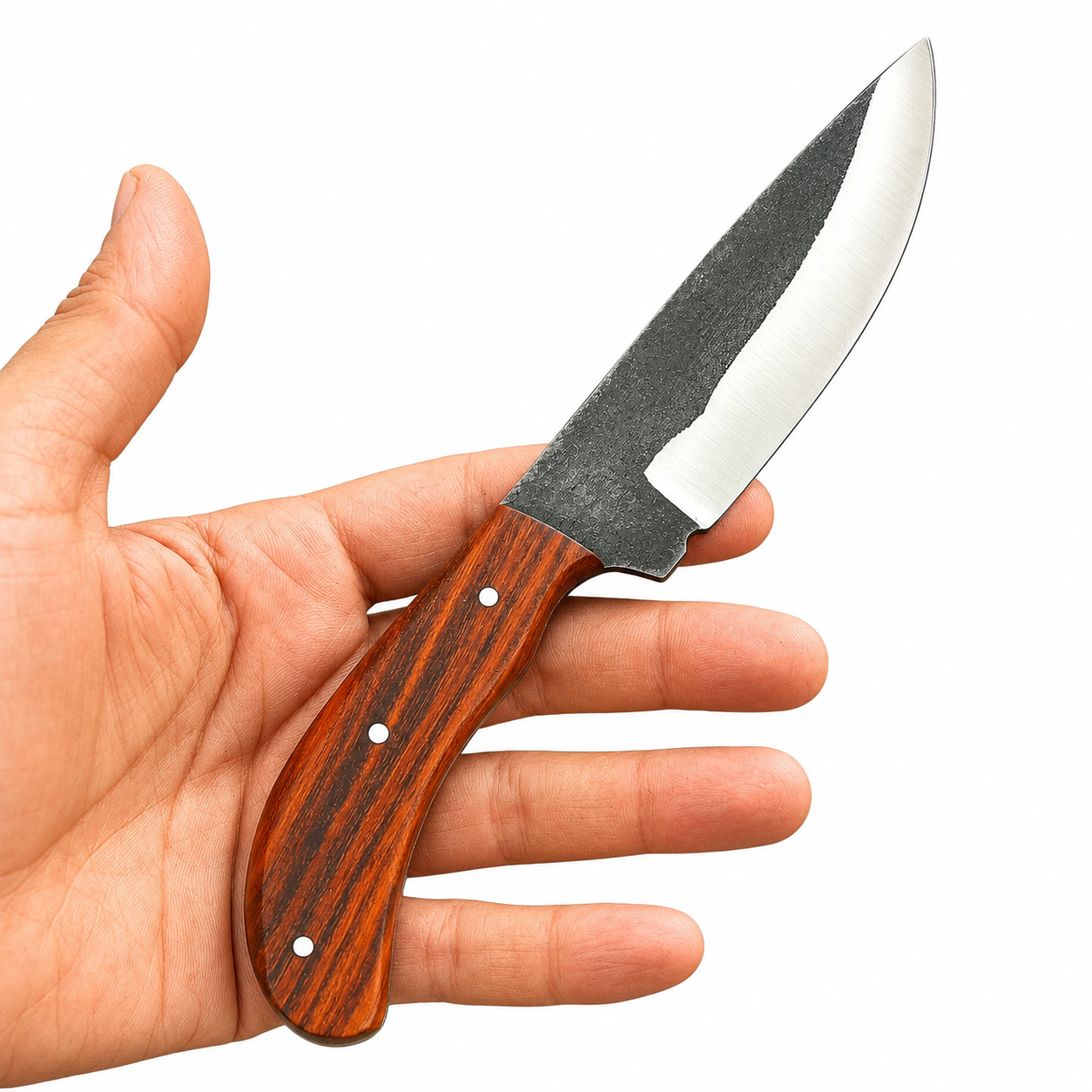
Its appearance is especially noticeable in the handheld product photograph, where the textured section is clearly visible alongside the brighter cutting bevel.
The exact finishing method, such as forging, surface treatment, or coating, must be verified with the manufacturer.
3. Polished Silver Cutting Bevel
One of the strongest design features of the Timbercrest Rustic Fixed Blade Hunting Knife is its polished silver cutting bevel.
The bevel runs along the curved cutting edge, producing a wide metallic highlight.
Its brighter finish contrasts with the dark textured upper blade surface.
The transition between these areas follows an irregular boundary rather than a perfectly straight line.
This contrast creates a visually layered blade appearance.
The polished bevel also emphasizes the cutting edge’s curvature as it extends toward the tip.
Fine finishing lines can be seen on the silver surface in some photographs.
Actual blade sharpness, hardness, bevel angle, and edge retention require physical testing or manufacturer data.
4. Curved Drop-Point-Style Blade Profile
The blade has a gently curved outline with a pointed front.
Its spine gradually slopes toward the tip, while the cutting edge forms a continuous arc.
This creates a drop-point-style silhouette commonly associated with hunting and outdoor knife designs.
The blade appears relatively broad near its base and narrower toward its point.
Its curved cutting profile is a defining element of the product’s appearance.
The silver bevel follows this curve, reinforcing the distinction between the cutting edge and the dark upper surface.
Photographs from different angles provide a clear view of this blade geometry.
The exact blade dimensions should be taken from a physical measurement rather than estimated from the photographs.
5. Reddish-Brown Woodgrain-Style Handle
The handle features a warm reddish-brown color with darker grain-like markings.
These markings run lengthwise across the surface and create a natural-looking woodgrain effect.
Some areas appear brighter, while others contain darker brown streaks.
The varying tones give the grip depth and visual character.
Its appearance complements the dark blade surface while contrasting with the polished silver cutting bevel.
The handle material cannot be established conclusively from photographs.
It should therefore be described as woodgrain-style until the manufacturer confirms whether it is natural wood, stabilized wood, laminate, resin, or another material.
6. Naturally Inspired Handle Appearance
The Timbercrest Rustic Fixed Blade Hunting Knife emphasizes traditional colors associated with natural materials.
The reddish-brown grip resembles the warm tones seen in various decorative hardwood finishes.
Darker streaks extend across the handle, creating an organic-looking pattern.
This appearance distinguishes the product from knives featuring solid-color synthetic handles.
The surface also displays subtle variations in tone, which become more apparent under bright studio lighting.
The combination of dark and warm colors contributes to the knife’s rustic identity.
For customers who appreciate traditional cutlery styling, the handle’s appearance is an important visual characteristic.
7. Curved and Contoured Grip
The handle follows a noticeable curve from its junction with the blade toward its rounded rear end.
Its shape is not completely straight.
The front section narrows slightly, while the middle and rear portions provide a broader grip profile.
A subtle inward curve is visible along the lower edge.
This contour contributes to the knife’s recognizable silhouette.
The handle’s rounded edges also create a smoother visual appearance than sharply squared designs.
Comfort, hand fit, and grip security depend on individual hand dimensions and the product’s actual size.
These characteristics should be evaluated through physical handling rather than assumed from images.
8. Three Silver-Tone Handle Pins
Three circular silver-tone pins are visible on the handle.
They are arranged lengthwise at different positions.
Their bright metallic appearance contrasts with the reddish-brown handle surface.
The pins provide small decorative accents that coordinate with the silver cutting bevel.
They also visually divide the handle into balanced sections without interrupting the woodgrain pattern.
The exact material, diameter, and fastening method are not established by the images.
However, the three-pin arrangement is clearly visible and can be included in the product’s descriptive specifications.
9. Rounded Handle End
The rear portion of the handle has a rounded shape with a slightly widened profile.
This creates a smooth visual finish.
The reddish-brown grain pattern continues toward the end of the grip.
A silver-tone pin is positioned near the rear section.
The rounded handle end complements the curved blade outline.
Together, these details create a traditional hunting-inspired profile.
Unlike aggressively angular handle shapes, this design has gradual transitions along its visible edges.
This makes the overall appearance understated despite the contrasting blade finish.
10. Blade-to-Handle Transition
The blade connects to the grip through a clearly defined transition.
A dark metallic section extends from the main blade toward the handle.
Near the lower edge, a small projecting section is visible.
This gives the blade and grip a distinct separation.
The handle begins directly behind the dark metal.
There is no large separate crossguard visible.
The transition contributes to the simple styling of the knife.
Its precise construction and internal attachment method must be confirmed with the supplier before making technical claims.
11. Rugged Two-Tone Blade Appearance
The combination of dark and silver finishes is central to this design.
The upper blade area appears rugged and textured.
The cutting bevel has a smoother, brighter appearance.
These contrasting surfaces create a strong visual distinction.
The dark portion emphasizes the blade’s body, while the silver finish follows the edge.
This two-tone presentation remains noticeable under different lighting conditions.
The contrast is particularly effective against the warm reddish-brown handle.
As a result, the knife has a coordinated appearance without relying on elaborate decorative engravings.
12. Hunting-Inspired Outdoor Styling
The Timbercrest Rustic Fixed Blade Hunting Knife draws visual inspiration from traditional hunting and outdoor cutlery.
Its curved blade, contoured grip, and fixed-blade configuration are recognizable characteristics of that category.
The warm woodgrain-style handle adds a classic design element.
The dark blade surface contributes a more rugged appearance.
These details make the product suitable for classification within hunting-style fixed-blade knife catalogs.
However, the images do not independently establish performance under demanding field conditions.
Claims about heavy-duty performance, edge retention, corrosion resistance, or suitability for particular cutting tasks should be supported by manufacturer specifications and testing.
13. Compact Visual Proportions
The photographs show a knife with relatively compact proportions.
The blade and handle occupy comparable portions of the overall silhouette.
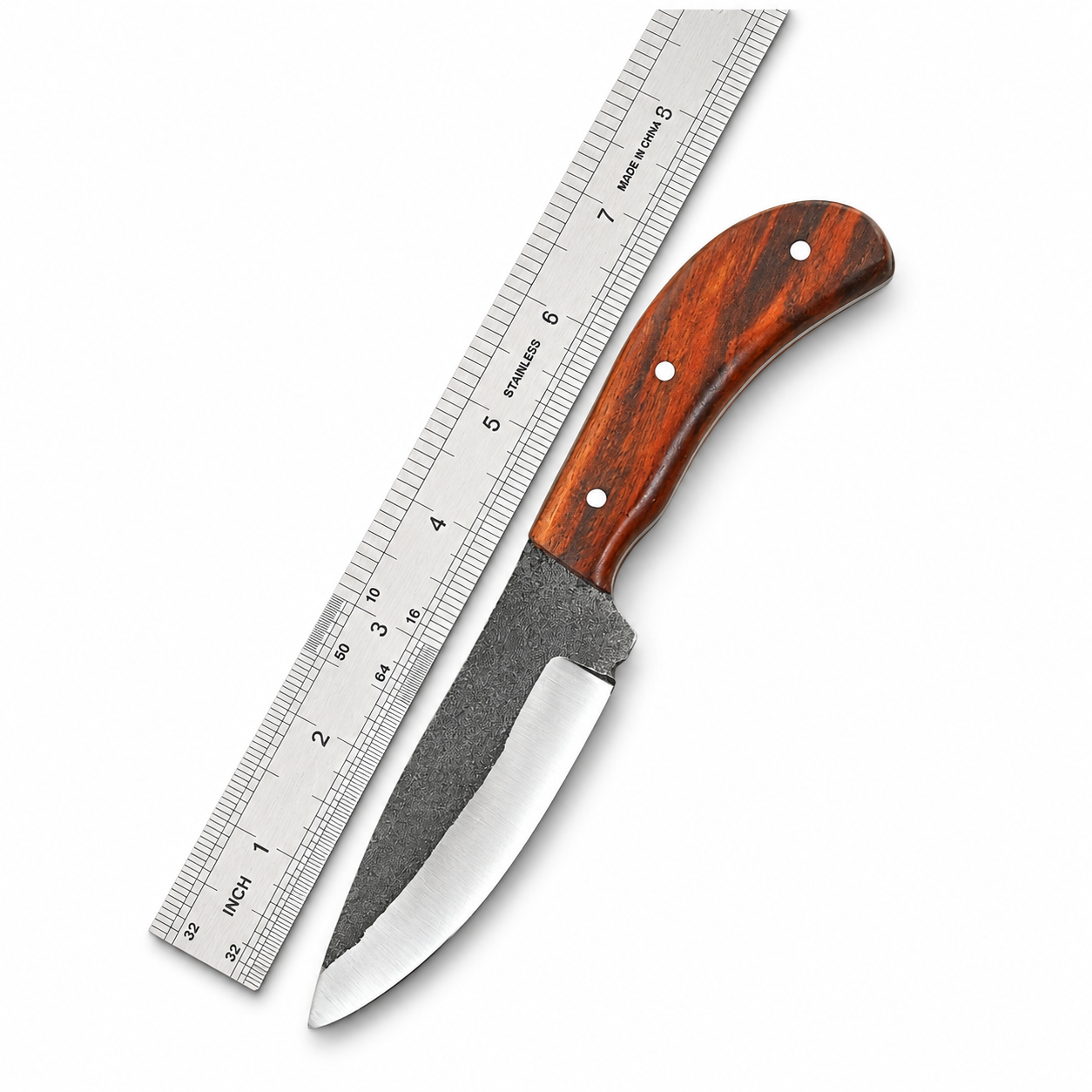
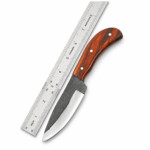
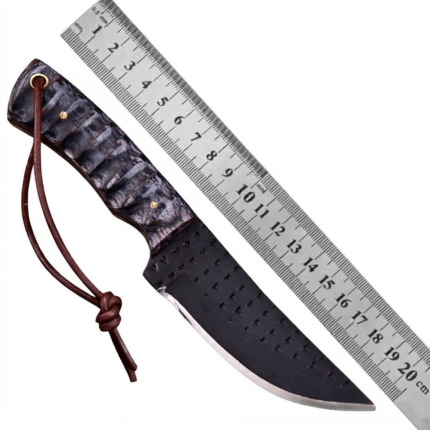
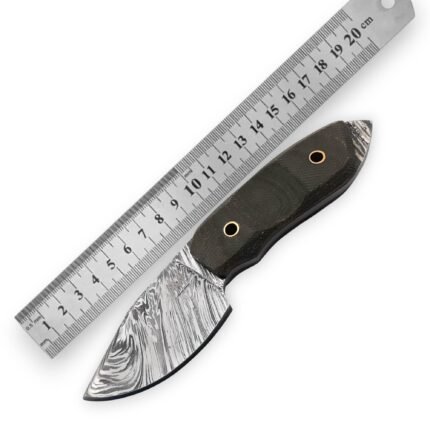
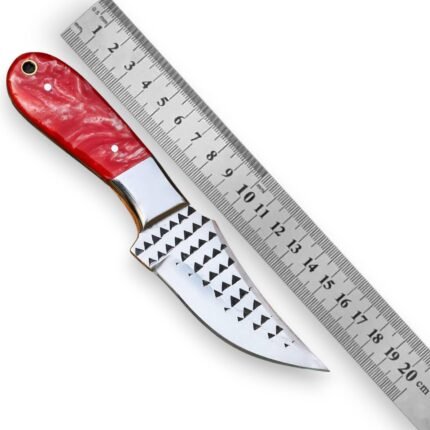
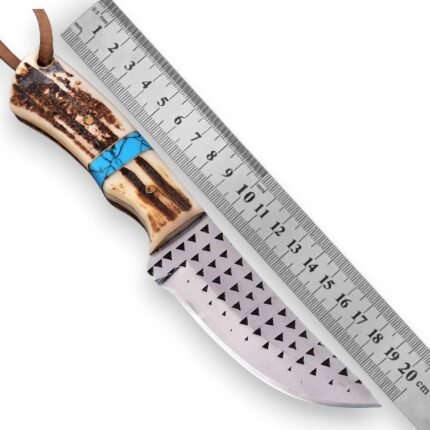
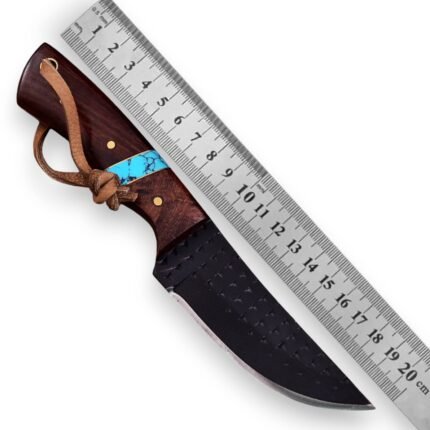
A stainless steel ruler appears beside the product in one image, providing a general scale reference.
Another photograph shows the knife resting in an open hand.
These perspectives help customers understand its approximate physical appearance.
Nevertheless, exact dimensions cannot be reliably established because of camera perspective and positioning.
Overall length, blade length, handle length, and thickness should be entered only after direct measurement.
Accurate specifications help customers compare products and make informed purchasing decisions.
14. Detailed Textured Surface
The darker portion of the blade has fine irregular markings distributed across its visible surface.
These markings create depth and give the blade a rustic appearance.
Compared with smooth metal, the texture reflects light in a less uniform manner.
This makes the surface appear darker and more varied.
The polished silver bevel provides a contrasting smooth section.
The irregular boundary between the finishes adds further visual character.
The texture should not automatically be described as hand-forged, hammer-finished, or oxide-treated without manufacturer confirmation.
Its appearance can accurately be described as dark and textured.
15. Smooth Curved Cutting Edge
The cutting edge follows a gentle curve from the blade heel toward the tip.
This creates a sweeping silver outline.
The curvature is visible in the full-length product images.
Its profile differs from completely straight-edged knives.
The transition toward the pointed front is gradual.
The blade’s visual geometry also coordinates with the curved handle.
While the shape is a visible feature, actual cutting characteristics depend on steel properties, edge geometry, heat treatment, and sharpening.
These technical properties require manufacturer verification.
16. Tapered Blade Tip
The front of the blade narrows to a pointed tip.
The upper spine slopes downward while the cutting edge curves upward toward the point.
This produces the characteristic drop-point-style outline.
The polished bevel remains visible near the front of the blade.
The dark upper surface becomes progressively narrower.
Together, these details form a tapered silhouette.
The tip shape is clearly shown in the handheld and angled product images.
It contributes significantly to the recognizable appearance of the knife.
17. Traditional Earth-Tone Color Palette
The handle’s reddish-brown finish introduces a warm, natural-looking color palette.
Dark brown markings provide additional contrast.
The blade combines charcoal grey and silver tones.
These colors create a cohesive appearance associated with rustic outdoor cutlery.
The warm handle complements the cooler metal surfaces.
The silver-tone pins provide small highlights.
Unlike brightly colored decorative handles, the Timbercrest design uses subdued, earthy shades.
This makes it visually appropriate for traditional knife collections and heritage-inspired product catalogs.
18. Attractive Woodgrain Detailing
The woodgrain-style pattern is visible across the handle surface.
Long dark streaks run through the reddish-brown finish.
Some markings are narrow and closely spaced.
Others are broader and more irregular.
These variations create a distinctive visual texture.
The pattern becomes more noticeable in close-up photographs.
It also contributes to the traditional character of the product.
Natural-looking surface patterns can vary between individual products, but any statement about actual variation should be confirmed by the supplier.
19. Decorative Appeal for Knife Collections
The Timbercrest Rustic Fixed Blade Hunting Knife has several design elements that may appeal to collectors.
The curved blade creates a recognizable outdoor silhouette.
The dark textured surface introduces visual character.
The silver bevel produces a clean metallic contrast.
The reddish-brown handle provides a classic appearance.
The three silver-tone pins add restrained decorative detail.
Together, these features make the knife visually distinctive.
For display purposes, the combination of contrasting finishes and natural-looking colors can be appreciated without relying on unverified technical performance claims.
20. Product Photography and Presentation
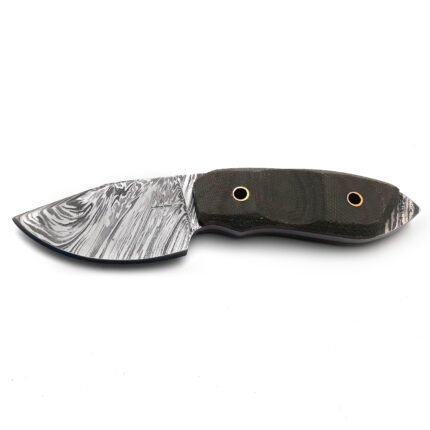
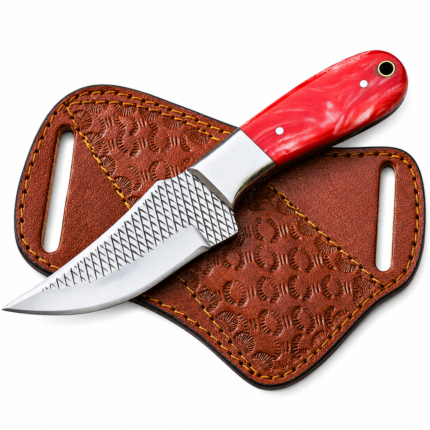
The uploaded photographs present the knife against clean white backgrounds.
The first image places it beside a ruler.
The second shows it resting across an open hand.
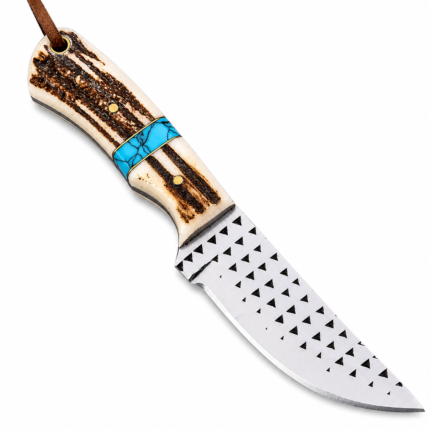
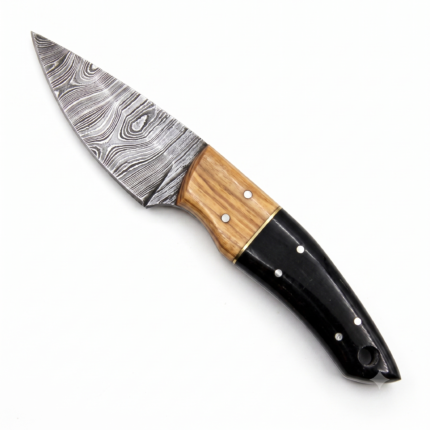
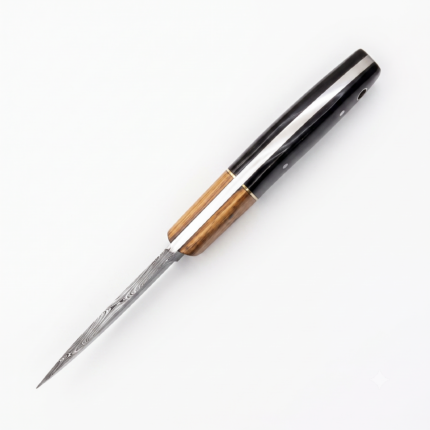
Additional images provide angled product views.
These photographs help demonstrate the knife’s visible shape, handle design, and blade finishes.
The white background also makes the reddish-brown handle colors stand out.
For e-commerce use, the full-length angled image is particularly useful as a featured product photograph.
The ruler and handheld views are valuable supplementary gallery images because they provide context about approximate scale.
21. Handheld Size Reference
The handheld photograph demonstrates how the knife appears in relation to a person’s hand.
The image shows the complete blade and most of the handle.
The curved grip and dark textured blade are clearly visible.
The silver bevel reflects light across its surface.
This image offers a helpful visual reference.
However, hand size varies among individuals, so the photograph cannot substitute for a specification chart.
Customers should receive verified length, width, thickness, and weight information when those measurements become available.
22. Ruler-Based Product Reference
The ruler photograph shows the knife positioned beside a stainless steel measuring ruler.
Visible markings provide approximate scale information.
The handle’s upper end appears near the higher-numbered ruler markings, while the blade extends toward the lower end.
Because the knife and ruler are not perfectly aligned on the same axis, precise measurements should not be inferred.
This photograph is best treated as a general size reference.
For product listings, measurements should be taken directly using appropriate measuring tools.
Including both a ruler photograph and confirmed dimensions can improve product clarity.
23. Visual Balance Between Blade and Handle
The Timbercrest design presents a relatively balanced visual relationship between its blade and grip.
The blade is broad near the handle and narrows toward the tip.
The handle is similarly substantial, with a curved central section and rounded rear.
The dark blade finish visually connects with the deeper brown tones in the grip.
The silver cutting bevel contrasts with the handle’s warm colors.
This combination creates a coordinated appearance.
Its overall proportions make the knife recognizable from both vertical and diagonal viewing angles.
24. Product Category and Classification
The main product category is Hunting Knives.
The most suitable subcategory is Fixed Blade Hunting Knives.
A secondary category may be Bushcraft & Outdoor Knives, depending on the website’s product taxonomy.
These categories reflect the visible design and general product type.
For WooCommerce, using a consistent hierarchy helps customers locate related products.
It also gives search engines contextual information about the product page.
The focus keyword should be incorporated naturally into the page title, description, and URL.
Avoid creating duplicate product pages with only minor changes to the name.
25. Blade Finish Maintenance
Blade maintenance depends on the steel grade and the exact surface treatment.
The knife should be cleaned carefully after handling.
A soft cloth can be used to remove light dust and surface residue.
The blade should be dried thoroughly before storage.
Aggressive cleaning compounds may alter the dark finish or polished bevel.
Any protective treatment should be compatible with the confirmed blade material.
The cutting edge must be handled with care.
Regular visual inspection is recommended.
Manufacturer guidance should take priority whenever specific maintenance requirements are supplied.
26. Handle Care and Preservation
The handle’s reddish-brown surface should be protected from unnecessary abrasion and impact.
Dust may be removed with a soft, dry cloth.
Strong cleaning agents should be avoided until the actual handle material is confirmed.
Excessive moisture and prolonged exposure to extreme temperatures may affect some handle materials.
However, the precise care requirements depend on whether the grip is natural wood, stabilized material, composite, or another substance.
The silver-tone pins should also be inspected periodically.
For long-term preservation, follow manufacturer-specific cleaning and storage recommendations.
27. Safe Storage Recommendations
A fixed-blade knife should be stored with its cutting edge properly protected.
A compatible sheath or blade guard can help prevent accidental contact.
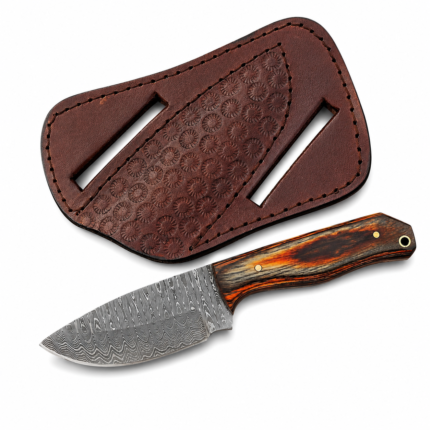
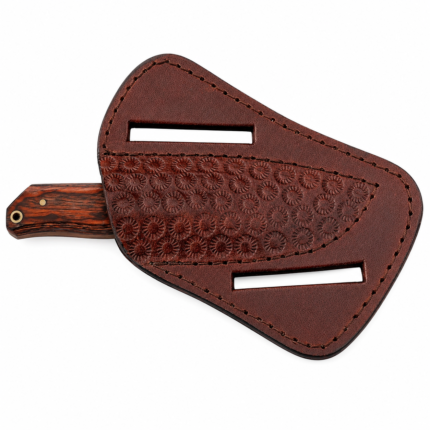
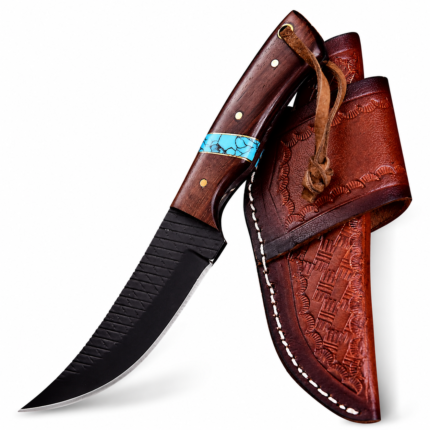
No sheath is shown in the uploaded photographs.
Therefore, a sheath should not be advertised as included without confirmation.
The blade should be clean and dry before storage.
Store the product securely and keep it away from children and unauthorized individuals.
Any transportation or possession must comply with applicable local laws and regulations.
The knife should be handled carefully regardless of its decorative appearance.
28. Product Specifications
| Specification | Description |
|---|---|
| Product Name | Timbercrest Rustic Fixed Blade Hunting Knife |
| Product Type | Fixed Blade Knife |
| Style | Hunting-Inspired Outdoor Knife |
| Blade Shape | Curved Drop-Point Style |
| Blade Surface | Dark Textured Finish |
| Cutting Bevel | Polished Silver Appearance |
| Handle Appearance | Reddish-Brown Woodgrain |
| Handle Shape | Curved and Contoured |
| Handle Pins | Three Silver-Tone Pins |
| Overall Length | Confirm with Manufacturer |
| Blade Length | Confirm with Manufacturer |
| Handle Length | Confirm with Manufacturer |
| Blade Thickness | Confirm with Manufacturer |
| Blade Material | Not Verified |
| Handle Material | Not Verified |
| Product Weight | Not Verified |
| Sheath | Not Shown |
29. Frequently Asked Questions
What is the Timbercrest Rustic Fixed Blade Hunting Knife?
It is a hunting-inspired fixed-blade knife featuring a dark textured blade, polished silver cutting bevel, and curved reddish-brown woodgrain-style handle.
Is this a folding knife?
No. The photographs show a non-folding fixed-blade design.
What type of blade does it have?
It features a curved, drop-point-style blade with a tapered tip.
What color is the handle?
The handle has a reddish-brown appearance with darker grain-like markings.
Is the handle made from real wood?
It has a woodgrain-style finish, but its exact material requires manufacturer confirmation.
What is the blade finish?
The blade combines a dark textured upper surface with a polished silver cutting bevel.
How many pins are visible on the handle?
Three silver-tone pins are visible.
Does the knife include a sheath?
A sheath is not shown. Package contents must be confirmed with the supplier.
What steel is used?
The exact steel grade has not been supplied and cannot be determined from photographs.
What are the knife’s dimensions?
A ruler provides a general visual reference, but precise dimensions should be obtained through direct measurement.
30. Key Product Highlights
- Fixed Blade Design: Traditional non-folding knife configuration.
- Curved Blade Profile: Distinctive drop-point-style silhouette.
- Dark Textured Finish: Rugged charcoal-grey blade appearance.
- Polished Silver Bevel: Contrasting metallic cutting-edge finish.
- Reddish-Brown Handle: Warm, woodgrain-inspired appearance.
- Contoured Grip: Gently curved handle profile.
- Three Silver-Tone Pins: Visible decorative metallic accents.
- Rustic Outdoor Styling: Traditional hunting-inspired design.
- Clean Blade-to-Handle Transition: Defined connection between metal and grip.
- Detailed Product Photography: Multiple angles highlighting visible features.
31. Why Choose the Timbercrest Rustic Fixed Blade Hunting Knife?
The Timbercrest Rustic Fixed Blade Hunting Knife stands out because of its traditional shape and distinctive material-inspired finishes.
Its curved blade creates a recognizable hunting-style silhouette.
The dark textured surface adds visual depth, while the silver cutting bevel offers a bright metallic contrast.
The reddish-brown handle introduces warmth and a natural-looking appearance.
Its three silver-tone pins complement the blade finish without overwhelming the woodgrain-style pattern.
The gently curved grip contributes to the knife’s traditional design.
These details make the Timbercrest model a distinctive option for customers interested in outdoor cutlery aesthetics, fixed-blade knife collections, and decorative knife displays.
Its visible features offer clear points of differentiation from conventional plain-finished designs.
Conclusion
The Timbercrest Rustic Fixed Blade Hunting Knife brings together a classic hunting-inspired silhouette, a dark textured blade, and a richly colored woodgrain-style handle.
Its polished silver cutting bevel contrasts with the darker blade surface, while the curved grip and three silver-tone pins add traditional decorative detail.
The product’s visual character comes from its combination of natural-looking tones, metallic finishes, and simple blade geometry.
It is well suited to hunting-style cutlery catalogs, fixed-blade product collections, and specialist knife displays.
Before final publication, verify the steel composition, handle material, actual dimensions, product weight, and included accessories with the manufacturer to ensure customers receive complete and accurate information.

Reviews
There are no reviews yet.