

Blue Inlay Damascus Hunting Knife with Wooden Handle and Leather Sheath
Introduction to the Blue Inlay Damascus Hunting Knife
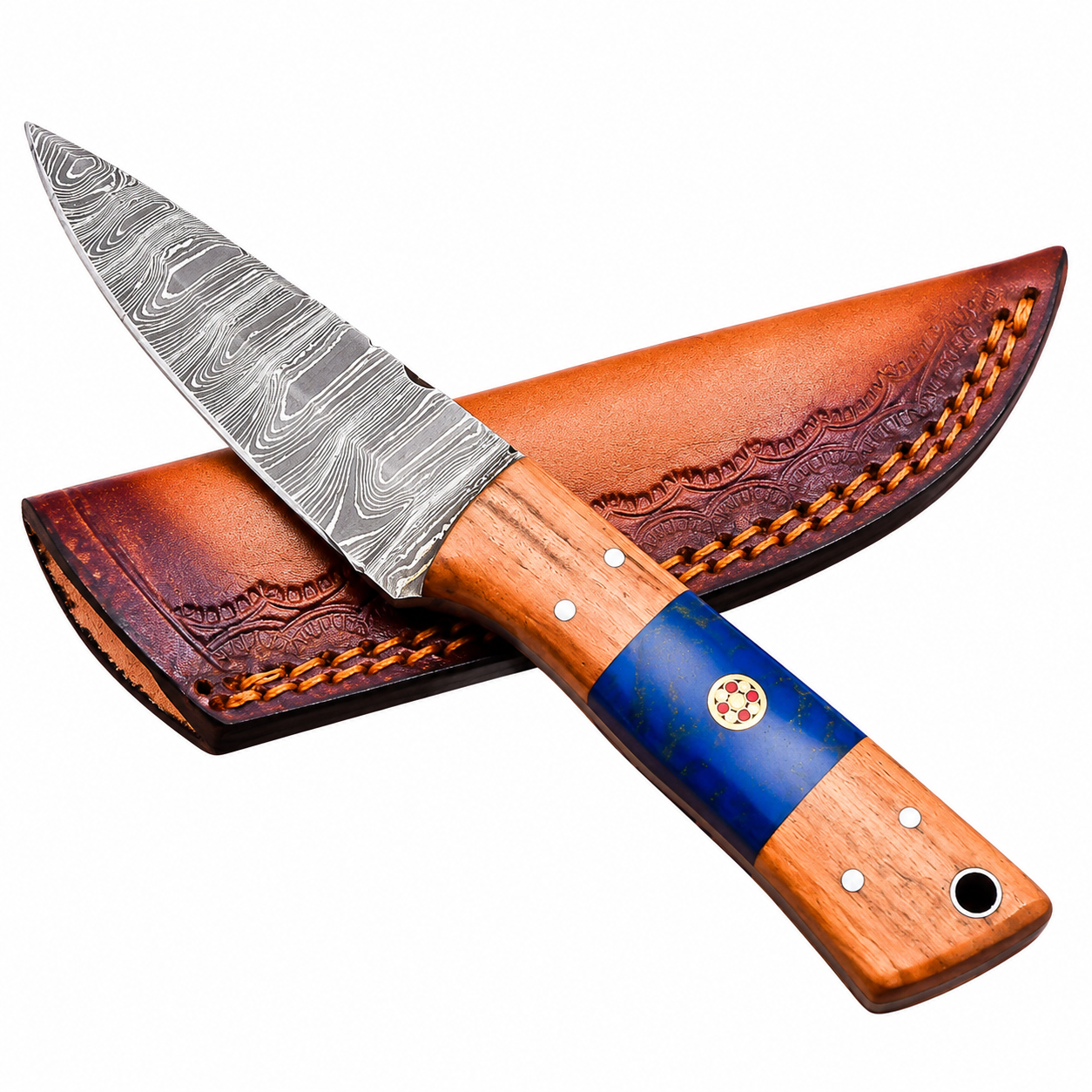
The Blue Inlay Damascus Hunting Knife combines traditional fixed blade styling with an attractive patterned steel blade, warm wood-grain handle sections, and a distinctive royal blue decorative inlay. Its coordinated appearance makes it an interesting addition to hunting-style knife collections, decorative outdoor accessories, and specialist cutting-tool assortments.
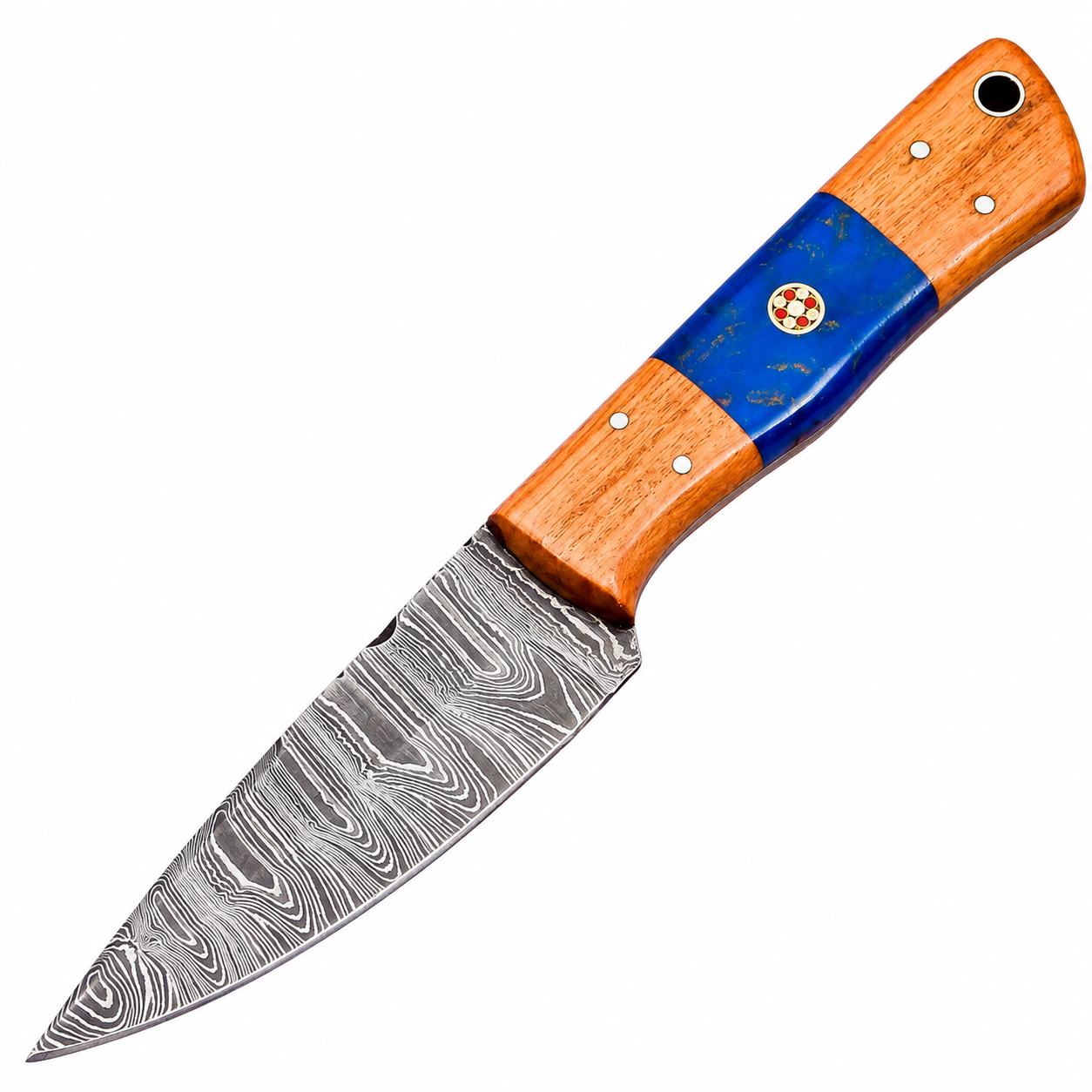
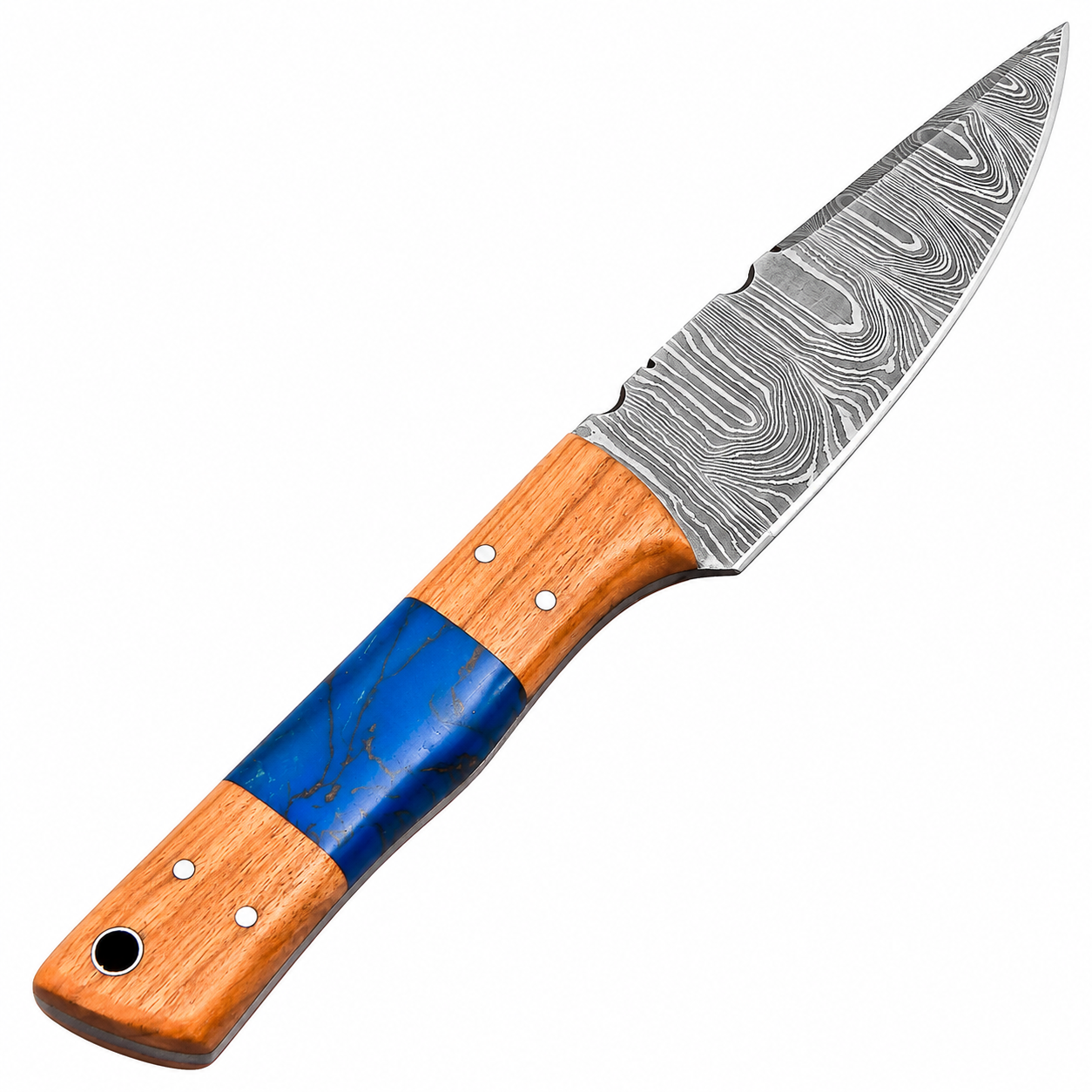
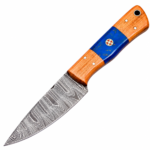
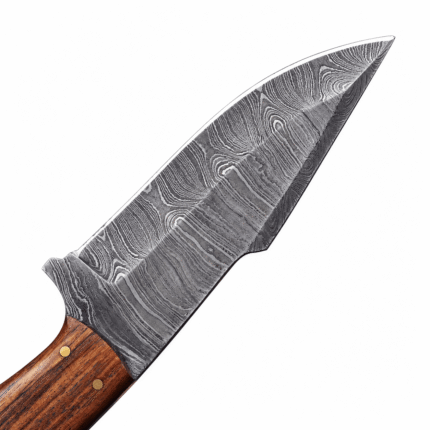
The knife features a silver and dark grey Damascus-style blade displaying intricate flowing lines and layered wave patterns. These markings extend across the visible steel surface, creating an appearance associated with traditional decorative metalworking.
The handle introduces a striking contrast between natural-looking brown wood-grain sections and a bold blue central panel. Small silver-colored rivets, a colorful mosaic-style pin, and a metal-lined lanyard opening provide additional detail.
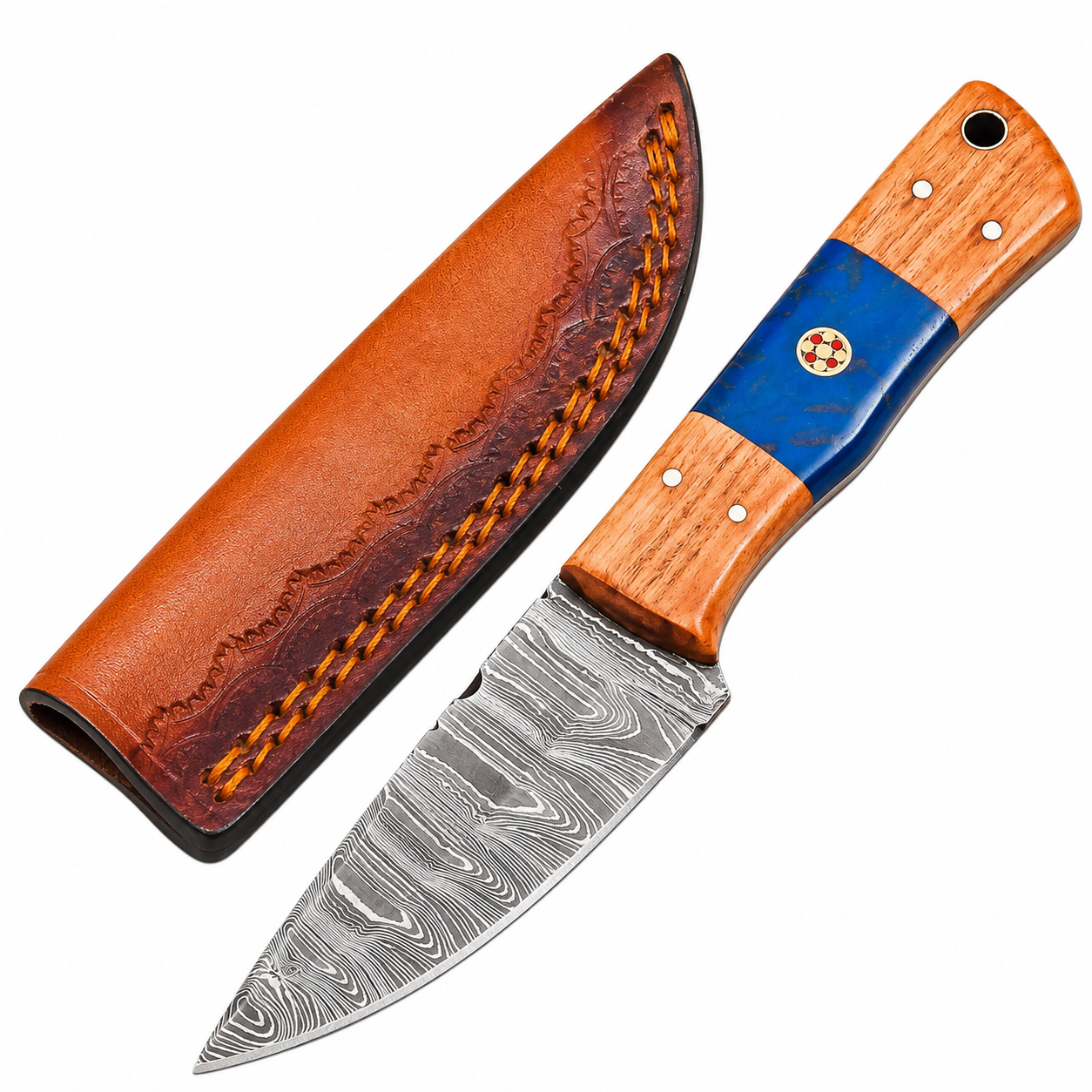
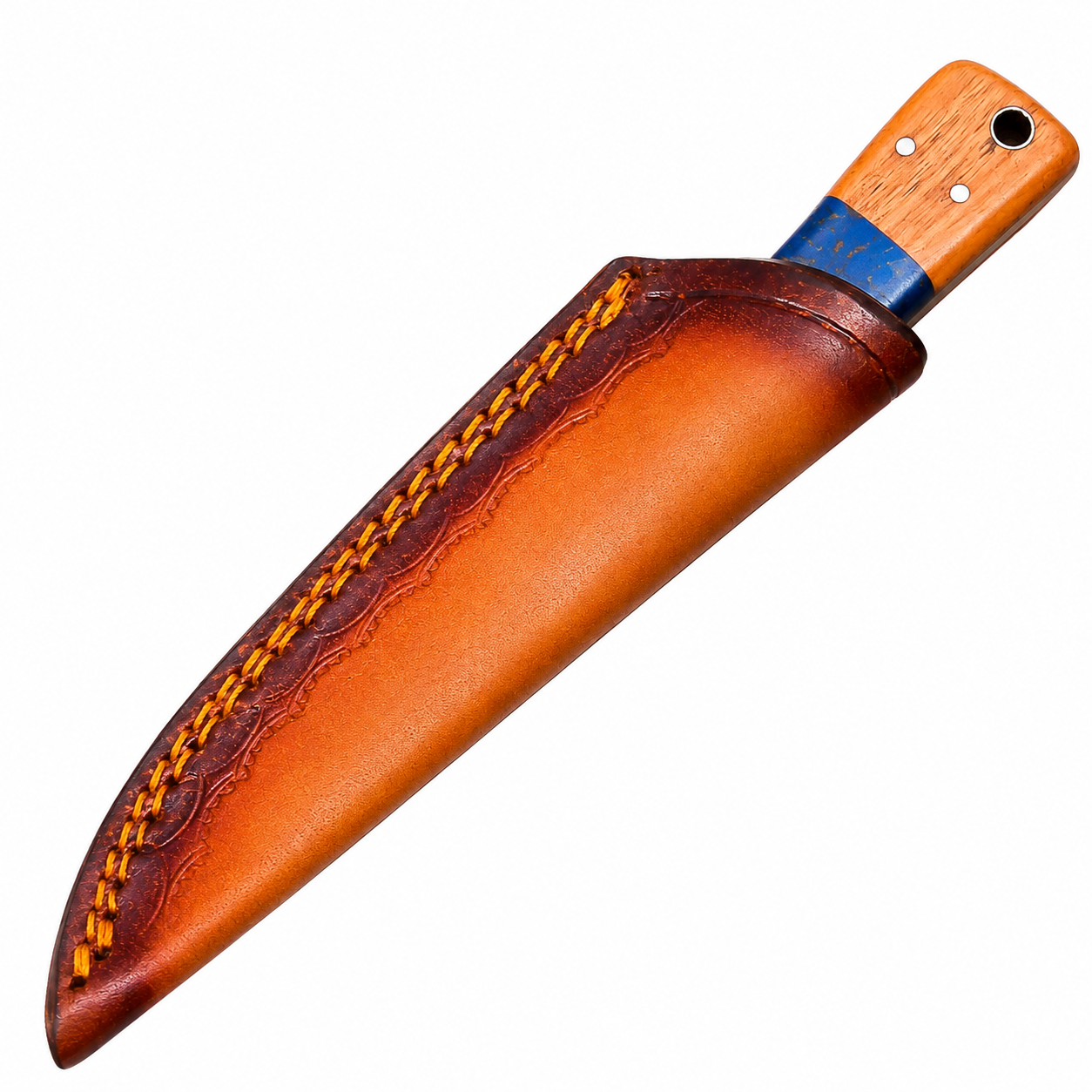
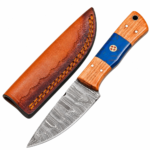
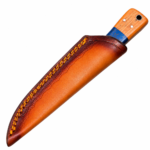
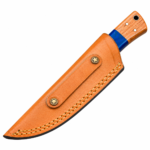
A tan-brown embossed protective sheath completes the presentation. Its decorative border, visible stitching, and traditional styling complement the handle’s warm brown tones.
Together, these features create an attractive combination of patterned steel, contrasting materials, and classic fixed blade design.
1. Distinctive Damascus-Patterned Steel Blade
The most noticeable feature of the Blue Inlay Damascus Hunting Knife is its beautifully patterned blade.
The steel surface displays multiple flowing lines, curved formations, and layered designs in contrasting silver and dark grey tones.
These patterns form an appearance commonly associated with Damascus-style steel.
Some sections feature closely spaced lines, while others display broader curves that follow the blade’s overall shape.
The resulting finish gives the knife considerable visual character.
Unlike blades featuring a completely uniform satin surface, this model emphasizes decorative steel patterns throughout the visible blade.
The contrast between lighter and darker lines makes the blade especially attractive in close-up product photography.
The actual manufacturing process, steel composition, and authenticity of pattern-welded construction should be confirmed through manufacturer documentation.
A visible Damascus-style pattern does not independently establish blade hardness, corrosion resistance, or edge retention.
However, its detailed appearance remains an important design feature for collectors and customers interested in decorative fixed blade knives.
2. Traditional Fixed Blade Construction
The knife has a fixed blade configuration, meaning that the blade remains permanently extended from the handle.
This provides a continuous external silhouette without a folding mechanism.
Fixed blade knives are commonly represented in traditional hunting-style collections and outdoor cutting-tool categories.
The visible design includes a substantial patterned blade connected to a curved decorative handle.
The blade and handle junction has a clean transition, with the wood-grain section positioned close to the steel.
A fixed blade appearance is an important consideration for customers comparing traditional knife designs.
However, structural strength depends on internal construction, tang configuration, steel grade, and handle attachment.
These details cannot be reliably determined from exterior photographs.
Customers considering the product for specific cutting activities should request verified technical information.
The visible fixed blade configuration nevertheless gives the knife a recognizable classic appearance.
3. Elegant Curved Blade Profile
The blade features a smooth cutting edge that curves gently toward a pointed tip.
Its profile resembles a traditional drop-point-style outdoor knife, although the exact technical classification should be verified.
The blade is broader near the handle and narrows gradually toward the front.
Its curved outline complements the shape of the handle.
A subtle transition between the patterned steel surface and cutting bevel is visible along the edge.
This geometry contributes to the knife’s balanced appearance.
The detailed Damascus-style pattern follows the curvature of the blade, emphasizing the smooth outline.
Blade shape is an important characteristic for collectors and outdoor cutting-tool enthusiasts.
Actual suitability for particular tasks depends on blade length, thickness, edge geometry, steel composition, and manufacturing quality.
These properties should be confirmed before making performance claims.
The curved blade profile remains one of the knife’s defining visible design characteristics.
4. Attractive Brown Wood-Grain Handle
The handle features warm brown sections with visible grain-like patterns.
These sections appear near the blade and at the rear of the handle.
Their orange-brown tones introduce a natural-looking contrast to the cool metallic blade.
The grain pattern contains subtle darker lines that create additional texture.
The surface appears smooth and polished in the supplied photographs.
Brown wood-grain styling is commonly associated with traditional hunting-style knife designs.
It provides a familiar appearance that balances the more colorful blue decorative center.
The actual wood species and whether the material is natural, laminated, stabilized, or manufactured should be confirmed with the supplier.
Different handle materials require different maintenance procedures.
The visible wood-grain design provides an attractive traditional element while retaining the product’s distinctive overall appearance.
5. Royal Blue Decorative Center Inlay
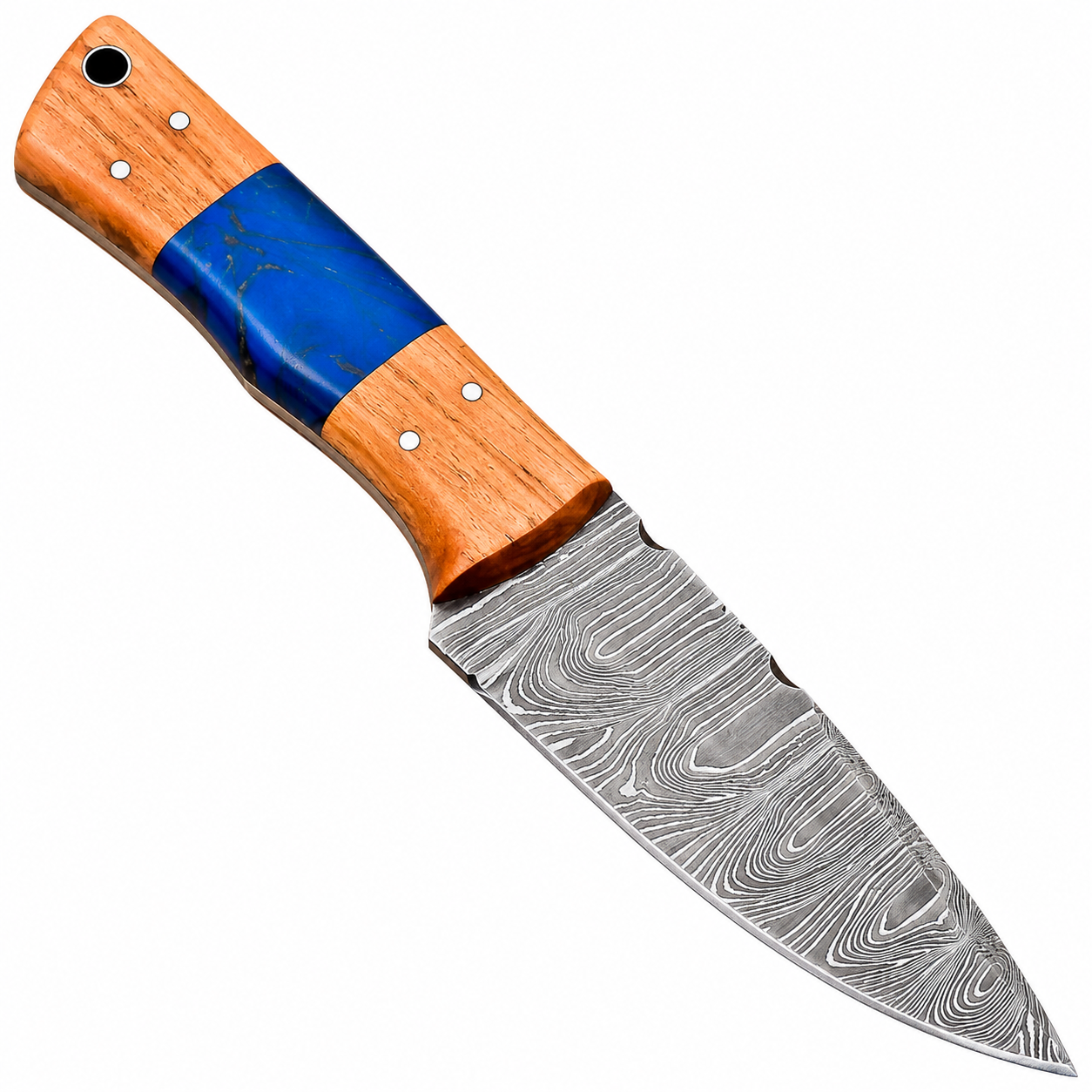
The central section of the handle features a deep royal blue finish.
This is one of the most recognizable characteristics of the Blue Inlay Damascus Hunting Knife.
The blue panel creates a strong contrast against the warm brown handle sections.
Subtle darker markings and irregular lines are visible within the blue surface.
These details give the center section a decorative stone-like or resin-like appearance.
The exact material has not been verified and should be described according to its visible finish.
Its rich blue color provides a contemporary accent within an otherwise traditional knife design.
The central placement makes the blue panel prominent from multiple viewing angles.
This provides an attractive focal point for product photographs.
The combination of blue, brown, silver, and grey creates a memorable visual presentation.
For collectors interested in unusual handle designs, the decorative center is an important distinguishing feature.
6. Multicolored Mosaic-Style Pin
A circular mosaic-style pin is positioned within the blue handle section.
The fitting features a gold-colored outer ring and several small colored shapes arranged in a decorative pattern.
Its red, cream, and metallic-looking details contrast against the blue background.
The mosaic fitting adds an ornamental element without overwhelming the overall design.
Small decorative pins are frequently incorporated into specialty knife handles for visual interest.
Their designs can vary considerably between models.
In this knife, the circular fitting coordinates with the warm wood-grain sections and silver-colored rivets.
The exact material and construction of the mosaic pin should be verified with the manufacturer.
The pin’s distinctive appearance makes it suitable for close-up product photography.
It also helps buyers identify this model among other fixed blade knife designs.
7. Silver-Colored Handle Rivets
Several small circular silver-colored rivets are visible along the wooden portions of the handle.
Their metallic appearance contrasts with the warm brown surface.
The rivets are arranged along the grip, providing simple and consistent detailing.
Similar fittings are commonly found on traditional knife handles.
Depending on the product’s construction, they may serve decorative or structural purposes.
The exact composition and function of these particular fittings require manufacturer confirmation.
Their relatively understated appearance allows the blue center panel and patterned blade to remain the main visual features.
The contrast between silver rivets, brown handle sections, and the colorful mosaic pin creates a coordinated design.
These details are especially noticeable in photographs taken against a white background.
8. Metal-Lined Lanyard Opening
A circular lanyard-style opening is visible near the rear of the handle.
The opening has a metallic border that coordinates with the silver-colored rivets.
Its location near the handle end makes it an identifiable traditional knife feature.
Lanyard holes are commonly incorporated into outdoor knife designs.
Their dimensions and compatibility with particular cords depend on the actual product specifications.
Customers should follow the manufacturer’s recommendations when selecting attachments.
Any attached cord should not interfere with safe handling.
The visible opening adds another recognizable element to the handle.
It also creates a contrast against the surrounding brown wood-grain finish.
The metal-lined opening contributes to the overall traditional styling of the knife.
9. Comfortable-Looking Contoured Handle
The handle features a gently shaped profile with smooth curves along its upper and lower edges.
Its rear section is slightly broader than the area closer to the blade.
This gives the knife a recognizable fixed blade grip shape.
The transition between the brown sections and blue inlay appears smooth.
The handle does not feature aggressive external ridges or prominent protrusions.
Its appearance suggests a carefully contoured gripping surface.
However, actual ergonomic comfort depends on handle dimensions, material texture, hand size, and intended use.
These factors cannot be confirmed through photographs alone.
Customers should review verified measurements when evaluating the knife for practical activities.
The curved handle contributes significantly to the product’s balanced appearance.
10. Decorative Tan-Brown Protective Sheath
The Blue Inlay Damascus Hunting Knife includes a tan-brown protective sheath with a traditional leather-like appearance.
The sheath follows the general outline of the blade.
Its exterior features warm brown tones, decorative stamped patterns, and visible stitching.
The darker edge provides an attractive contrast against the lighter main surface.
The sheath’s curved profile complements the knife’s blade shape.
When the knife is inserted, the decorative handle remains visible above the opening.
This creates an attractive product presentation, particularly because the blue center section remains exposed.
A correctly fitted sheath can help cover the cutting edge during suitable storage and transportation.
The actual sheath material, attachment arrangement, and retention characteristics require supplier confirmation.
11. Decorative Sheath Embossing
The sheath features decorative markings arranged near its outer edge.
These impressions create a traditional ornamental appearance.
The repeated pattern follows the sheath’s curve and adds visual texture to the brown surface.
The darker decorative border also creates a contrast with the lighter central area.
Embossed sheath detailing is often appreciated by collectors who prefer traditional-looking accessories.
It allows the sheath to contribute to the overall aesthetic instead of functioning as a plain cover.
The exact manufacturing method cannot be established from photographs.
Therefore, claims about hand-tooling or individually handcrafted production should only be used when verified.
The visible decorative finish nevertheless makes the sheath a distinctive accessory.
12. Contrasting Stitching and Sheath Details
A line of warm-colored stitching follows the sheath’s outer edge.
The thread provides a noticeable contrast against the darker brown border.
This detail highlights the sheath’s shape and complements the handle’s warm tones.
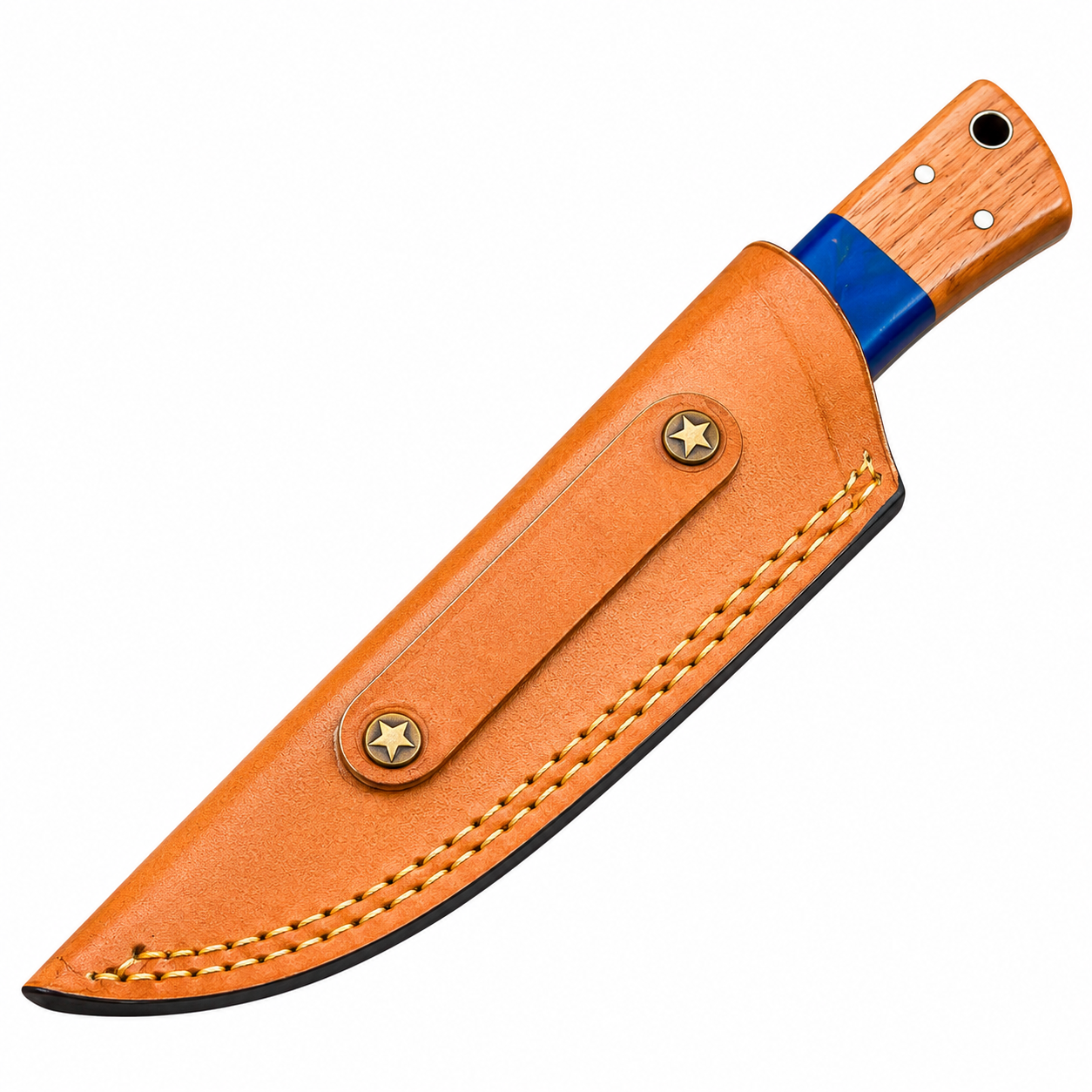
The photographs also show a separate strap-style fitting on the sheath.
Its exact attachment arrangement and retention function should be confirmed with the supplier.
The visible stitching adds a traditional finishing detail.
Customers should inspect the sheath periodically for loose threads, damaged sections, or separation.
A worn or damaged sheath should not be relied upon for secure blade protection.
For online product presentation, photographs showing both sides of the sheath can help customers understand its design.
13. Seven Stunning Product Design Features
The Blue Inlay Damascus Hunting Knife combines seven notable visible features.
1. Damascus-Patterned Blade: Flowing silver and dark grey lines create an elaborate metallic appearance.
2. Traditional Curved Profile: A pointed blade with a gently curved cutting edge provides a familiar hunting-style silhouette.
3. Brown Wood-Grain Handle: Warm natural-looking sections contrast with the patterned steel.
4. Royal Blue Center Inlay: A bright decorative section makes the handle instantly recognizable.
5. Mosaic-Style Pin: A multicolored circular fitting introduces an attractive ornamental accent.
6. Silver Rivets and Lanyard Opening: Metallic details complement the handle’s traditional design.
7. Tan-Brown Decorative Sheath: Embossed markings, contrasting stitching, and a shaped protective cover complete the set.
Together, these features distinguish the knife from simpler fixed blade models.
14. Traditional Styling with Contemporary Color
This knife combines familiar traditional elements with a more colorful decorative presentation.
The curved fixed blade creates a classic outdoor silhouette.
The brown wood-grain handle sections introduce natural-looking warmth.
The Damascus-style pattern provides traditional decorative steel character.
The royal blue center section adds a contemporary visual element.
The mosaic pin and silver-colored rivets complete the combination.
This contrast makes the product visually distinctive.
For collectors who enjoy variation in knife handle designs, the blue inlay offers an attractive alternative to conventional single-material grips.
The coordinated sheath reinforces the traditional appearance.
The result is a knife set that combines classic styling with individual decorative character.
15. An Attractive Addition to Knife Collections
Collectors often appreciate differences in blade profiles, steel patterns, handle materials, and accessories.
The Blue Inlay Damascus Hunting Knife includes several recognizable features.
Its detailed blade pattern provides an attractive focal point.
The brown wood-grain sections introduce traditional styling.
The blue center panel and colorful mosaic fitting create distinctive decorative details.
The separate sheath completes the overall presentation.
These characteristics make the knife suitable for consideration within a traditional fixed blade collection.
Collectors should verify the actual steel composition, handle material, manufacturing method, and dimensions when evaluating authenticity or technical quality.
The visible design can be appreciated independently of unverified performance claims.
For display purposes, the knife should be positioned securely with appropriate protection for the cutting edge.
16. Hunting-Style Knife Category
The knife fits naturally within the hunting-style fixed blade category.
It can also be listed among decorative Damascus-patterned knives and traditional outdoor cutting tools.
The category describes its visible shape and external construction.
Its actual suitability for specific applications depends on verified materials, dimensions, edge characteristics, and manufacturer guidance.
A properly specified knife may be appropriate for ordinary cutting tasks consistent with its intended purpose.
However, the photographs alone do not establish performance in demanding outdoor conditions.
Customers should avoid assuming that decorative steel patterns or handle finishes guarantee particular mechanical properties.
For an accurate product listing, the visible design should be presented alongside verified technical information.
This helps buyers compare products and understand the intended applications.
17. Product Photography and E-Commerce Presentation
The supplied images show the knife from several different angles.
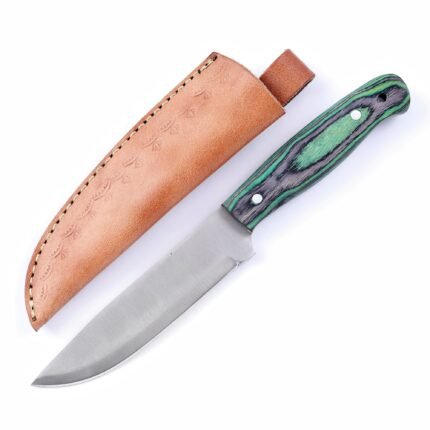
The first photograph presents the complete knife against a white background, emphasizing the blade pattern and decorative handle.
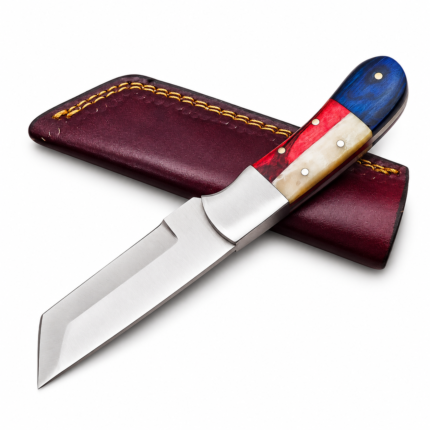
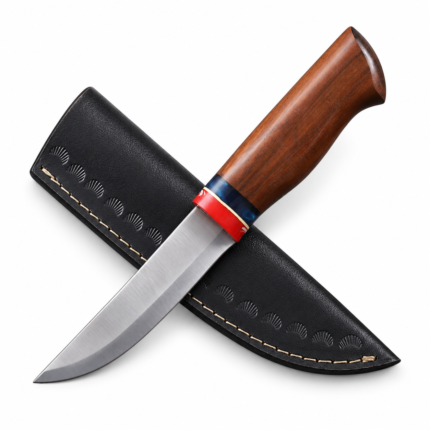
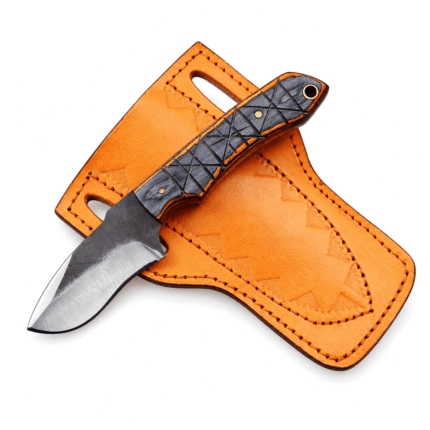
Another image displays the knife diagonally across its tan-brown sheath.
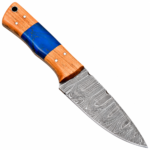
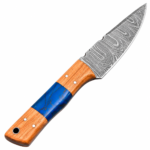
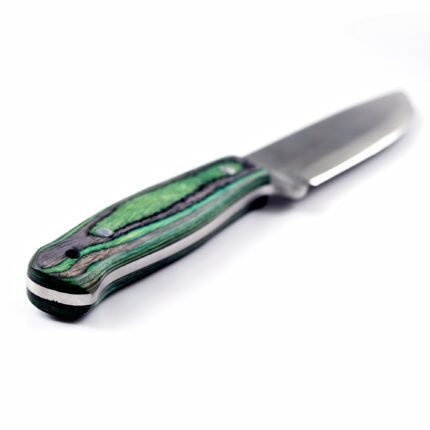
Additional views show the blade from different sides and highlight the blue center section.
The final photographs present the knife inserted into the sheath and show its strap-style details.
Together, these views provide a useful overview of the product’s external appearance.
For WooCommerce, a clear photograph showing the entire knife can be selected as the featured image.
The remaining photographs should be added to the product gallery.
Descriptive filenames and relevant alt text can improve accessibility and help organize product images.
Each alt description should reflect the actual contents of the photograph.
18. Caring for the Damascus-Patterned Blade
Proper maintenance helps preserve the appearance of a patterned steel blade.
After appropriate use, the blade should be cleaned carefully according to manufacturer instructions.
Moisture, dirt, and residue should be removed before storage.
The steel should then be dried completely.
Certain steel compositions may be susceptible to corrosion during prolonged moisture exposure.
A compatible protective oil may be recommended depending on the verified steel grade.
Abrasive cleaning products should be avoided unless approved for the actual finish.
Aggressive cleaning can alter decorative surface patterns.
The cutting edge should be inspected regularly for damage.
Sharpening methods should be selected according to the blade’s verified composition and geometry.
Appropriate care helps preserve the distinctive patterned appearance.
19. Maintaining the Wooden-Style Handle
The handle should be maintained according to its confirmed materials.
Ordinary dust can generally be removed using a soft cloth.
The brown sections have a wood-grain appearance, while the blue center has a different decorative finish.
These materials may require different cleaning methods.
Until their composition is confirmed, strong solvents and abrasive cleaners should be avoided.
Natural wood, stabilized wood, and resin-based materials can respond differently to moisture and conditioning products.
The silver-colored rivets and mosaic fitting should be inspected occasionally.
Any cracks, separation, or loose fittings should be assessed before use.
Keeping the handle clean and protected from excessive heat or moisture can help maintain its visual appearance.
20. Maintaining the Brown Protective Sheath
The sheath should be inspected regularly for damaged stitching, wear, or material separation.
Loose surface dust can generally be removed with a soft, dry cloth.
If the material is confirmed to be genuine leather, a compatible leather conditioner may be appropriate.
Synthetic leather-style materials can require different care.
The decorative stamped surface should not be scrubbed aggressively.
The knife should be cleaned and dried before placement inside the sheath.
For extended storage, follow manufacturer recommendations regarding contact between steel and sheath materials.
Certain conditions may allow moisture to accumulate.
A sheath with damaged seams or unreliable retention should not be relied upon for safe storage.
21. Buyer Considerations and Verified Specifications
The photographs establish the knife’s visible features, including its fixed blade configuration, Damascus-style pattern, brown wood-grain handle, blue inlay, mosaic pin, and decorative sheath.
However, important technical specifications remain unconfirmed.
Customers should obtain the overall length, blade length, blade width, thickness, handle length, total weight, steel grade, and hardness from the manufacturer.
The exact tang construction should also be verified.
Handle material, inlay composition, and sheath material require accurate identification.
These specifications help customers compare models and select products according to their needs.
Wholesale buyers may also require information about packaging, inspection procedures, and shipping requirements.
Providing reliable specifications supports accurate product representation and reduces misunderstandings.
22. Responsible Handling and Secure Storage
Any fixed blade knife should be handled carefully.
Users should keep their hands away from the cutting edge and maintain control during appropriate use.
The knife should only be used for tasks consistent with its verified construction and intended purpose.
Before use, inspect the blade, handle, and relevant fittings for damage.
When the knife is not required, the blade should be protected by a suitable sheath.
The sheath must fit properly and remain in good condition.
The knife should be stored securely away from children and unauthorized individuals.
Owners should follow all applicable laws concerning knife possession, transportation, storage, and use.
Decorative appearance does not reduce the importance of responsible handling.
Frequently Asked Questions
What is a Blue Inlay Damascus Hunting Knife?
It is a hunting-style fixed blade knife featuring a Damascus-patterned steel blade, wooden-style handle sections, blue decorative center inlay, and matching protective sheath.
Does the blade feature genuine Damascus steel?
The blade has a visible Damascus-style pattern. Its exact steel composition and pattern-welded manufacturing method require manufacturer verification.
What color is the handle?
The handle combines warm brown wood-grain sections with a royal blue decorative center.
Does the knife include a mosaic pin?
Yes. A multicolored circular mosaic-style fitting is visible within the blue handle section.
Does the product include a sheath?
Yes. The photographs show a tan-brown embossed leather-style sheath with decorative stitching.
Is the handle made from natural wood?
The brown handle sections have a wood-grain appearance. Their precise composition and wood species should be confirmed with the supplier.
Is this a folding knife?
No. It has a permanently extended fixed blade.
Does it have a lanyard hole?
Yes. A metal-lined circular opening is visible near the rear of the handle.
Is the sheath made from genuine leather?
The sheath has a leather-like appearance. Its actual material requires supplier confirmation.
How should the knife be maintained?
Clean and dry the blade after appropriate use, follow material-specific maintenance instructions, inspect the fittings, and store the knife securely.
What dimensions are available?
Exact measurements have not been supplied. Buyers should request verified dimensions from the manufacturer.
Final Product Overview
The Blue Inlay Damascus Hunting Knife offers an attractive combination of traditional fixed blade styling, intricate Damascus-patterned steel, and a distinctive multicolored handle.
Its curved blade profile creates a classic hunting-style appearance, while the brown wood-grain handle sections introduce natural-looking warmth.
The royal blue center inlay, decorative mosaic pin, silver-colored rivets, and metal-lined lanyard opening provide recognizable finishing details.
A matching tan-brown embossed sheath completes the presentation.
For collectors, specialist retailers, and customers interested in decorative outdoor knife designs, this product presents a distinctive combination of traditional blade styling and contemporary handle accents.
With appropriate maintenance, responsible handling, and secure storage, it can remain an appealing addition to a specialty fixed blade knife collection.






Reviews
There are no reviews yet.