






Damascus Utility Knife with Patterned Blade and Wooden Handle
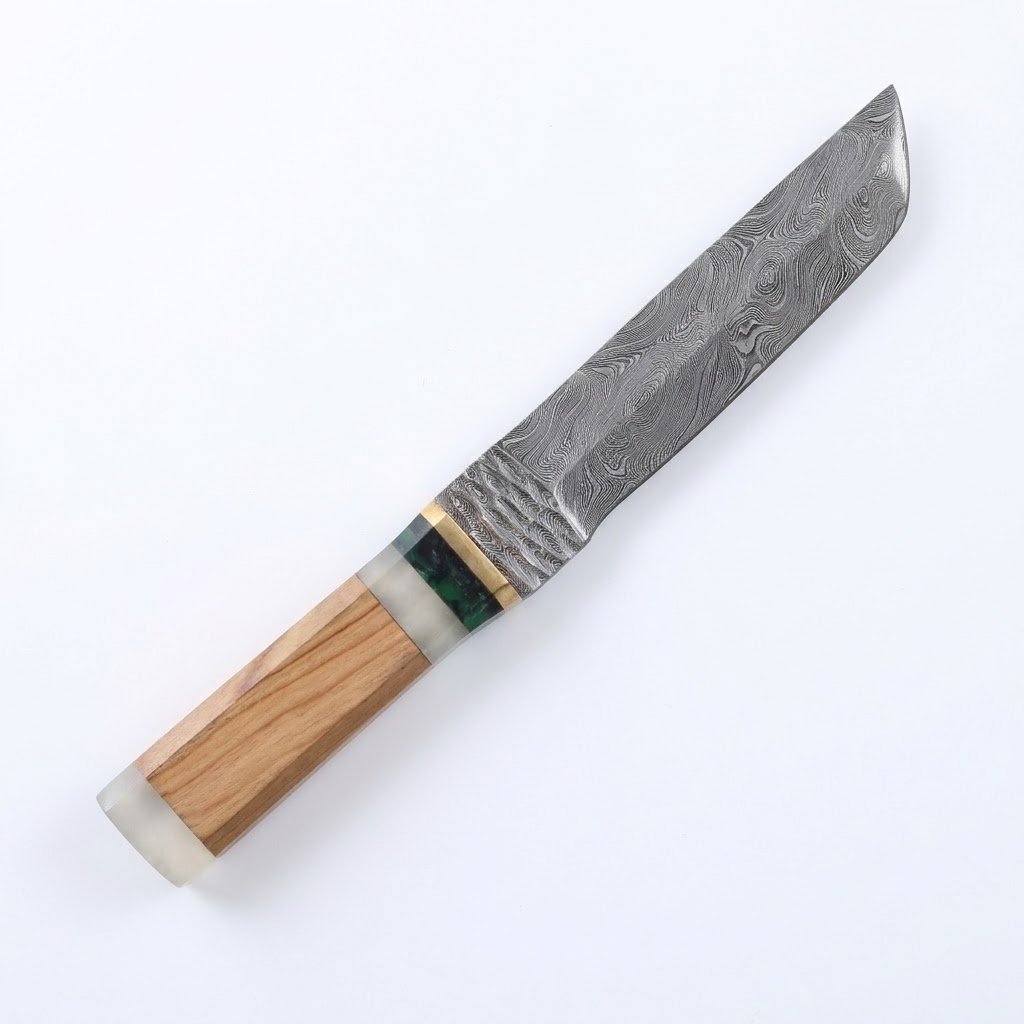
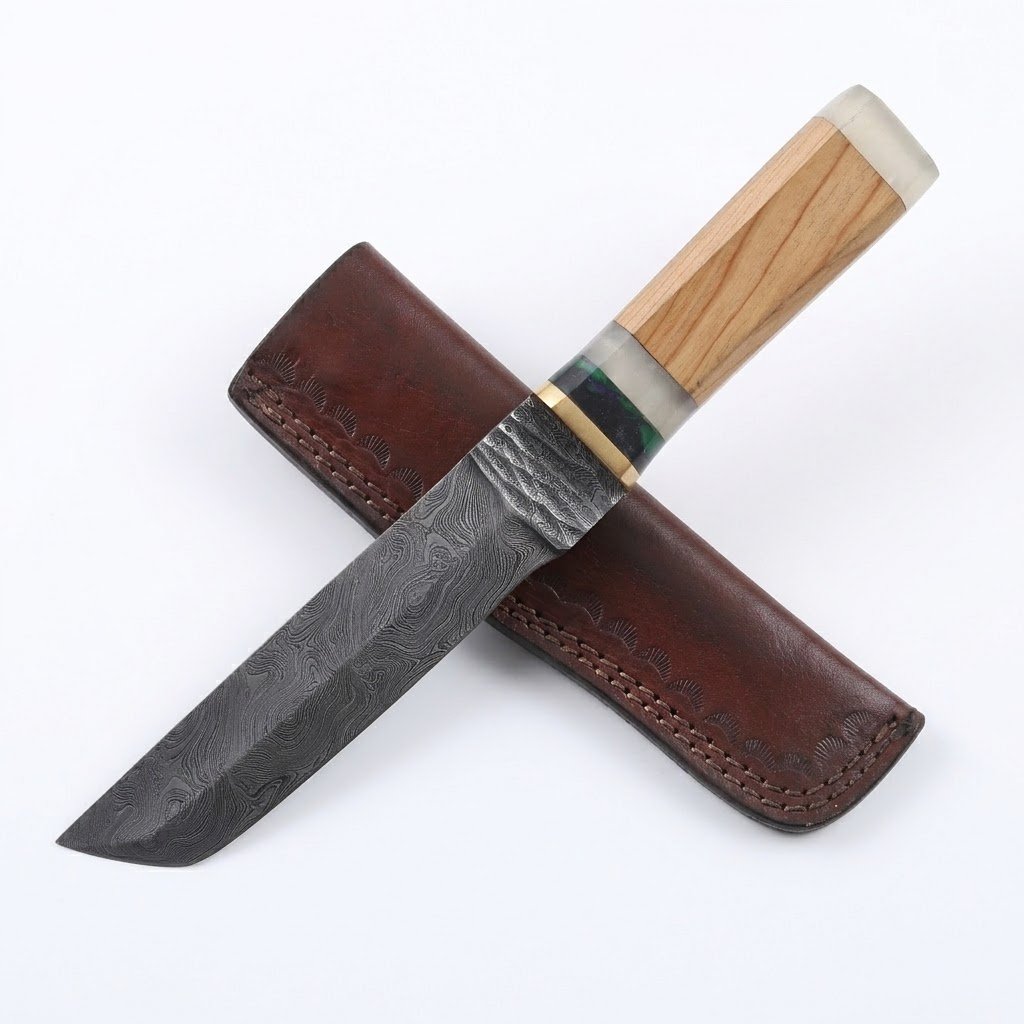
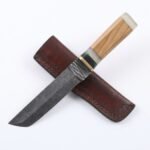
Add a distinctive touch to your kitchen collection with this Damascus Utility Knife, featuring an elegant patterned blade and a light-brown wooden-look handle. The silver-gray blade displays flowing Damascus-style patterns, while decorative green, cream, and gold-tone accents create an attractive transition between the blade and handle.
Its slim cutting profile and upswept pointed tip give it a distinctive appearance compared with traditional broad kitchen knives. Designed with visual appeal in mind, this knife is an interesting choice for kitchen cutlery enthusiasts, collectors, and customers who appreciate unique blade designs.
Distinctive Damascus-Style Blade Pattern
One of the defining characteristics of this kitchen knife is its detailed blade surface.
The silver-gray blade displays numerous flowing lines, circular formations, and layered patterns. These markings create a textured visual effect associated with Damascus-style cutlery.
Rather than having a plain, polished appearance, the blade presents a series of organic designs that run from the area near the handle toward the pointed tip.
The pattern is especially noticeable across the wider upper section of the blade, where closely spaced lines form circular and wave-like shapes.
Near the handle, the blade features additional closely grouped markings that visually separate the patterned cutting section from the handle assembly.
This detailed appearance makes the knife interesting for customers who appreciate decorative metalwork, distinctive kitchen tools, and unusual cutlery designs.
Material clarification: The photograph shows a Damascus-style pattern, but it does not establish whether the blade is forged from layered Damascus steel, pattern-welded steel, etched steel, or another patterned material. The exact steel composition and manufacturing process should be confirmed before publishing technical claims.
Slim Blade Profile with an Upswept Tip
The blade features a slim, elongated cutting profile that differs from the wide triangular shape of a conventional Western chef knife.
Its cutting edge curves gently upward as it approaches the tip. The upper portion narrows toward a pointed end, creating a streamlined appearance.
This design may appeal to customers who prefer narrower blades for certain kitchen preparation tasks.
Compared with a broad chopping knife, a slim blade can be easier to position when working around smaller ingredients or making controlled cuts. Actual cutting performance, however, depends on the blade’s dimensions, edge geometry, sharpness, and construction.
For everyday kitchen use, knives of this general style may be considered for tasks such as:
- Preparing vegetables for meals
- Cutting smaller fruits into serving portions
- Trimming suitable boneless ingredients
- Making controlled cuts during food preparation
- Slicing soft ingredients on an appropriate cutting board
- Handling light kitchen preparation work
The exact suitability of this particular knife should be confirmed by the manufacturer, especially for food-contact use.
It is not intended to be described as a cleaver, heavy-duty chopping knife, or bone-cutting tool based on the available image.
Natural-Looking Wooden Handle
The handle creates a warm contrast with the cool metallic appearance of the blade.
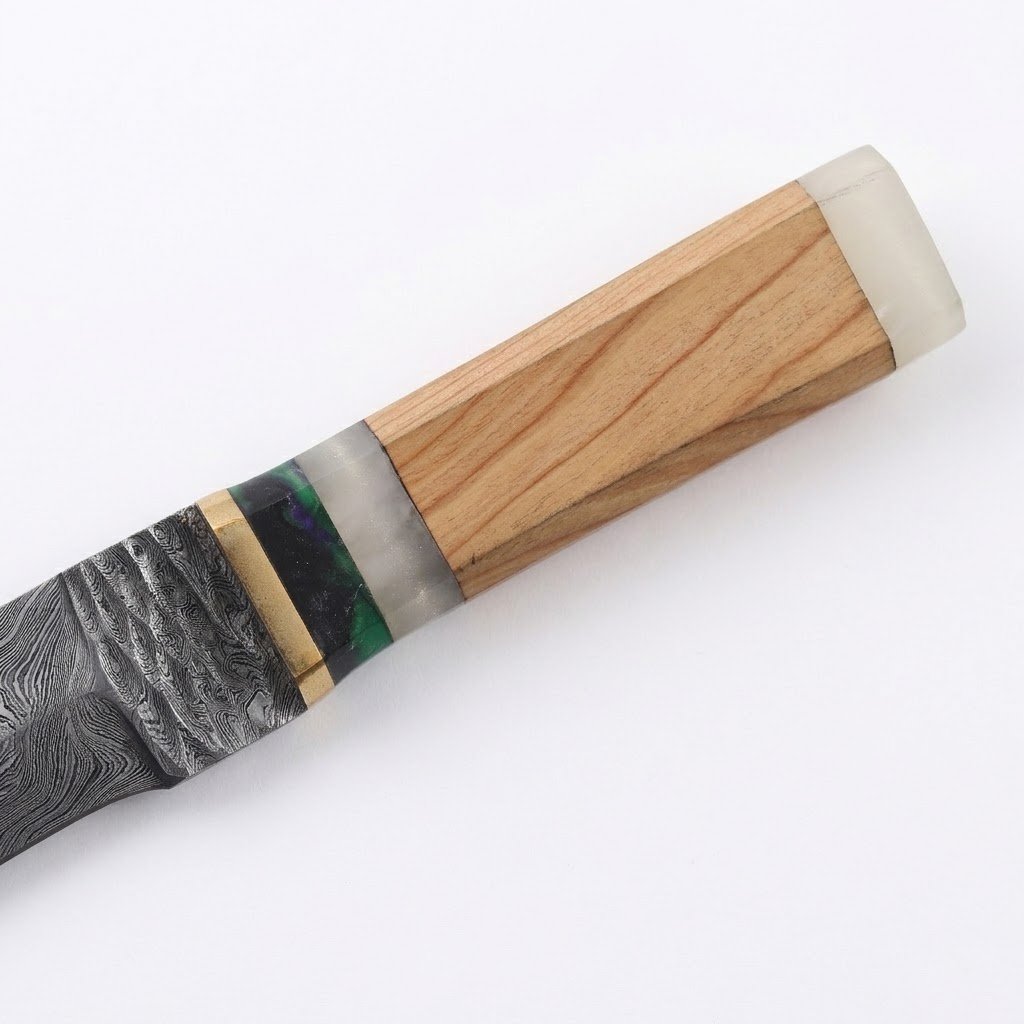
It features a light-brown finish with visible wood-like grain running along its length. The grain includes subtle darker lines that provide an organic appearance.
Unlike handles with pronounced finger grooves or complex contours, this design uses a relatively straight profile with flat-looking surfaces and gently defined edges.
Its simple form contributes to the knife’s clean appearance and allows the decorative details near the blade to stand out.
The handle also features a pale cream-colored end cap that contrasts with the natural-looking brown section.
The visible wood-like finish adds a traditional touch to an otherwise contemporary-looking knife.
Because natural wood, stabilized wood, and wood-effect composites can appear similar in photographs, the precise handle material should be verified with the supplier.
Decorative Green and Cream Handle Accents
A particularly attractive feature of this knife is the decorative section positioned between the blade and the main handle.
This area includes several contrasting bands that create a layered appearance.
A dark green section with subtle variations in color sits between lighter and darker accents. Cream-colored portions surround the green detailing, while narrow gold-tone bands add visual definition.
Together, these colors create an elegant transition between the metallic blade and the light-brown handle.
The result is a balanced design that combines natural-looking materials with decorative elements.
These accents may appeal to customers who want a kitchen knife that feels different from standard black-handled stainless steel cutlery.
The image does not establish whether the colored components are resin, stone, horn, synthetic composite, or another material. For that reason, this listing describes their visible appearance rather than assigning an unverified material.
A Blend of Traditional and Contemporary Styling
Kitchen knives are often selected for their practical purpose, but their appearance can also influence a buying decision.
This knife combines several design elements commonly associated with traditional and contemporary cutlery.
The Damascus-style pattern gives the blade a handcrafted aesthetic, while the streamlined profile creates a more modern silhouette.
Meanwhile, the wooden-look handle contributes warmth and simplicity.
The decorative green and cream-colored bands add a distinctive finishing touch without overpowering the blade design.
Together, these details make the knife suitable for customers who prefer kitchen accessories with an individual character.
Its understated color palette also allows it to complement different kitchen interiors, including kitchens featuring wooden counters, neutral finishes, stainless steel appliances, or natural materials.
Designed for Customers Who Appreciate Distinctive Cutlery
This Damascus pattern kitchen utility knife may appeal to several types of customers.
Home Cooking Enthusiasts
Home cooks who enjoy collecting different styles of kitchen knives may appreciate the narrow blade profile and decorative finish.
Its appearance makes it an interesting alternative to standard household cutlery.
Kitchen Knife Collectors
Collectors who enjoy examining blade designs, handle materials, and decorative combinations may find the layered pattern and multicolored handle details especially appealing.
The design offers several visible features that distinguish it from plain kitchen knives.
Culinary Gift Shoppers
For customers considering a kitchen-themed gift, the combination of the decorative blade and wooden-look handle provides an attractive presentation.
Gift suitability will depend on the final product quality, packaging, and any included accessories.
Cutlery Retailers
Retailers looking for visually distinctive kitchen knife products may find this style suitable for a specialty cutlery collection.
The patterned blade can provide a useful point of differentiation in product photography and online catalogs.
Visible Product Features
This kitchen knife has several notable design characteristics.
Damascus-style surface pattern: The blade features flowing layered lines with distinctive circular and wave-like formations.
Silver-gray metallic finish: The blade’s neutral metallic appearance contrasts with the warmer handle colors.
Narrow cutting profile: The elongated blade has a relatively slim shape with a gently rising cutting edge.
Upswept pointed tip: The blade ends in an upward-sweeping point, giving it a distinctive outline.
Wooden-look handle: A light-brown handle section displays visible longitudinal grain.
Green decorative detail: A dark green accent adds color near the blade and handle connection.
Cream-colored accents: Pale sections near the front and rear of the handle create a layered look.
Gold-tone separators: Thin contrasting bands add definition to the handle decoration.
These characteristics are based on the visible product photograph and should not be confused with independently tested performance specifications.
Everyday Kitchen Preparation
A well-chosen kitchen knife can make food preparation more organized and convenient.
Different cutting tasks often benefit from different blade shapes, and a slim utility-style knife can complement a larger chef knife in a kitchen collection.
For example, users may prefer a smaller or narrower knife when preparing modest quantities of ingredients or working with items that do not require a broad chopping blade.
The visible curved edge may also influence how the knife contacts the cutting board during a slicing motion.
However, the image does not show the exact dimensions, balance, weight, or sharpened edge geometry.
Customers should therefore review confirmed specifications before selecting this knife for a particular cutting technique.
The product should be used only for tasks appropriate to its verified blade construction and manufacturer instructions.
An Attractive Addition to a Kitchen Collection
The appeal of this knife comes from the combination of its different design elements.
The blade pattern creates visual depth, while the wooden-look handle provides a softer, more natural appearance.
The green and cream details act as a transition between the two sections, bringing the design together.
This combination makes the knife suitable for display in a safely stored cutlery collection as well as for kitchen use once its food-contact suitability has been confirmed.
Customers who already own traditional chef knives may appreciate adding a differently styled blade to their collection.
For retailers, clear photographs showing the entire knife, blade pattern, handle detailing, and profile will help shoppers understand its appearance before purchasing.
Knife Care and Maintenance
Proper care is important for preserving the condition and appearance of any kitchen knife.
The following general recommendations are useful for a patterned metal blade and wooden-look handle, subject to the manufacturer’s specific instructions.
Clean Carefully After Use
If the manufacturer confirms that the knife is food-safe, clean it after preparing ingredients.
Use a soft sponge or cloth with mild dish soap and lukewarm water.
Avoid leaving food residue on the blade or handle for extended periods.
Dry After Washing
Use a clean, soft cloth to dry the blade and handle thoroughly.
Pay particular attention to the area where the handle meets the blade, as moisture may collect around decorative fittings.
Avoid Extended Water Exposure
Do not leave the knife soaking in a sink.
Prolonged exposure to water may affect certain metal finishes, adhesives, and natural handle materials.
Hand Washing Is Preferable
Unless the manufacturer specifically states otherwise, hand washing is the safer approach for maintaining a decorative kitchen knife.
Dishwasher heat, detergents, and repeated water exposure can damage some handle materials and finishes.
Store the Blade Safely
Keep the knife in an appropriate knife block, protective sleeve, blade guard, or other suitable storage system.
Avoid storing an exposed edge loosely among other metal utensils.
Maintain the Cutting Edge
If the knife is supplied with a sharpened edge, follow the manufacturer’s recommendations for edge maintenance.
The appropriate sharpening method and angle depend on the actual blade material and edge geometry.
Avoid aggressive sharpening methods until those specifications are known.
Important Product Information
This description is based on the product’s visible design.
The following technical details have not been established from the image:
- Exact blade steel grade or alloy
- Number of steel layers
- Blade length and overall length
- Blade thickness and weight
- Hardness rating
- Handle material composition
- Full-tang or hidden-tang construction
- Country of manufacture
- Sharpening angle
- Food-contact certification
- Included sheath, box, or accessories
Why Consider This Damascus Pattern Kitchen Knife?
For customers looking beyond basic kitchen knife designs, this product offers a distinctive visual combination.
Its intricate blade markings immediately catch the eye, while the light-brown handle helps create a warm, traditional appearance.
The green, cream, and gold-tone detailing adds another level of character.
The narrow profile and pointed tip also distinguish it from wider knives commonly found in everyday kitchen sets.
Together, these elements make it an appealing option for shoppers who appreciate attractive cutlery and want to explore a different knife style.
The final purchasing decision should consider confirmed blade specifications, intended use, product quality, and compatibility with the customer’s cooking needs.
Explore a Distinctive Kitchen Knife Design
The Damascus Pattern Kitchen Utility Knife with Wooden Handle brings together a decorative metal appearance, natural-looking handle grain, and carefully contrasted accent colors.
Its flowing blade pattern and slim silhouette create a memorable design for a kitchen cutlery collection.
Explore this patterned kitchen knife if you’re looking for an appealing alternative to conventional cutlery, and review the confirmed product specifications before purchasing.






Reviews
There are no reviews yet.