







Patterned Fixed Blade Hunting Knife with Brown Handle
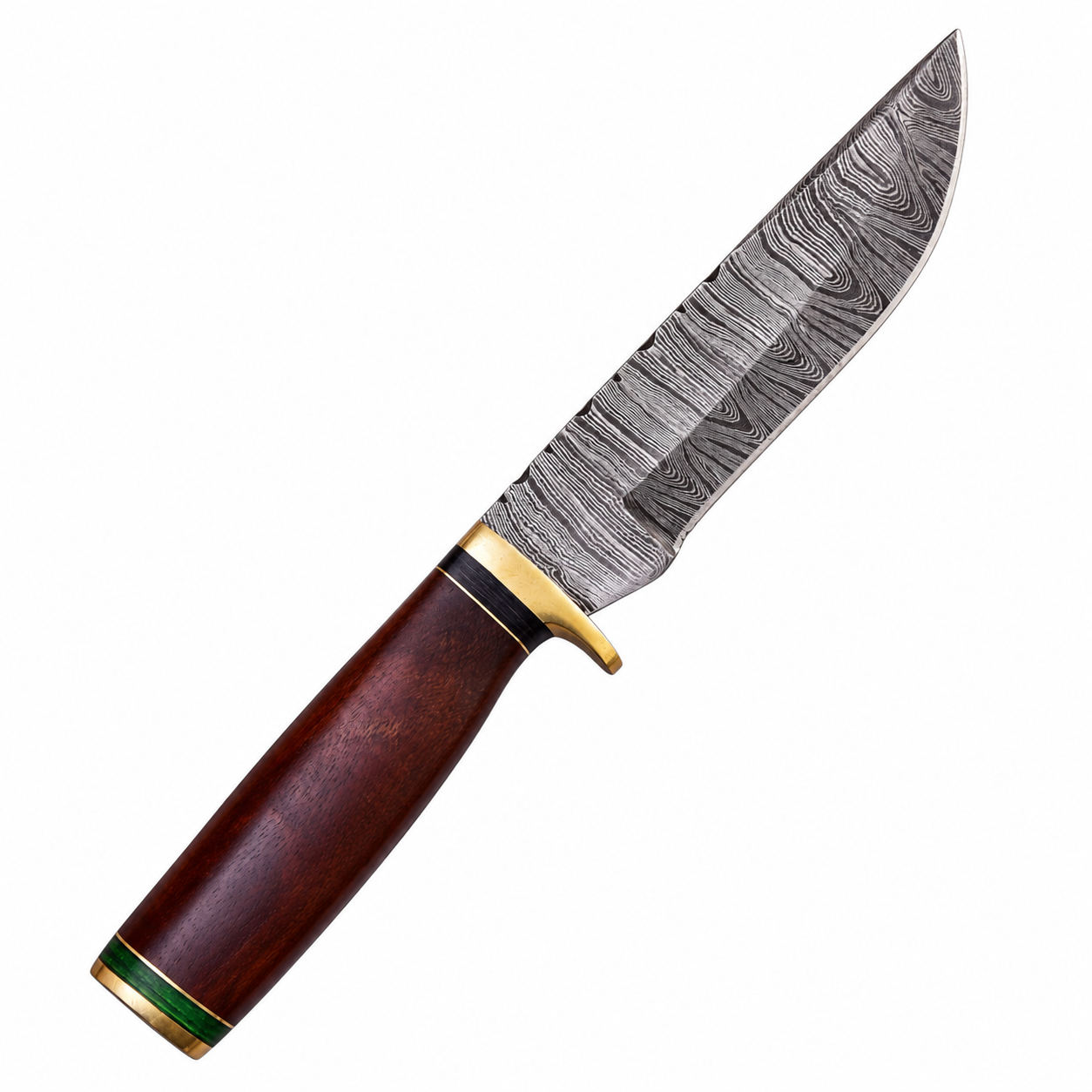
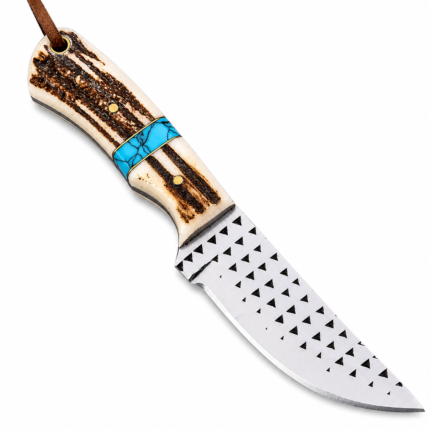
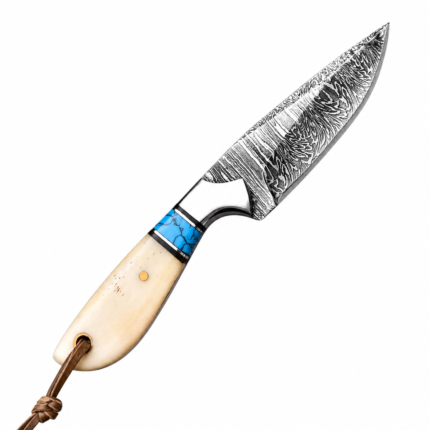
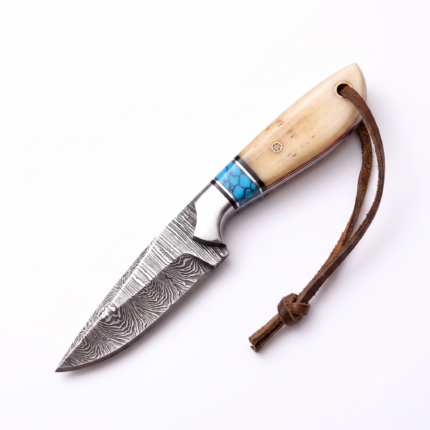
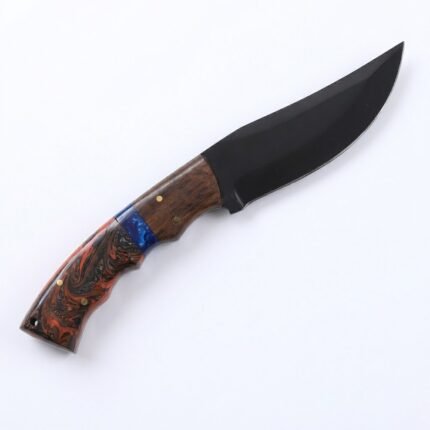
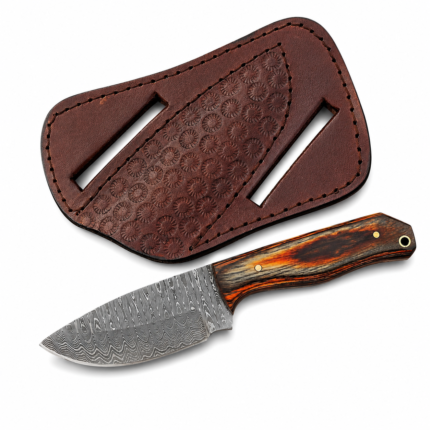
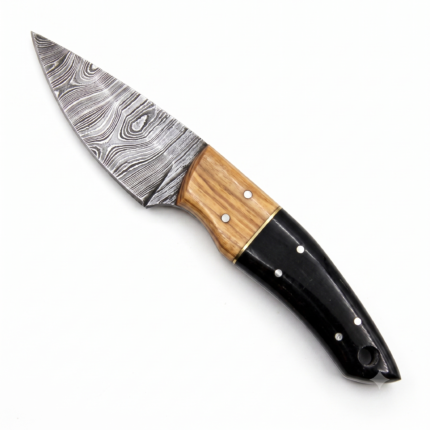
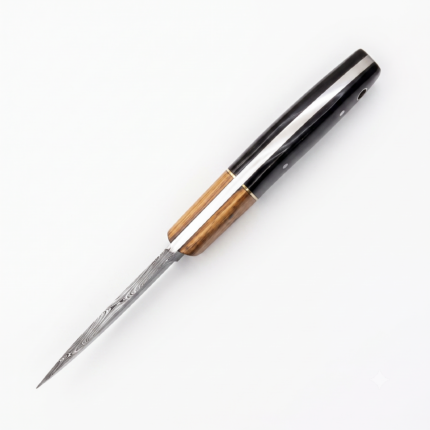
The Patterned Fixed Blade Hunting Knife combines a distinctive blade design with a traditional brown handle and contrasting metallic details. Designed in a classic outdoor knife style, it features a long, pointed blade, a gently curved cutting edge, and a gold-tone guard separating the handle from the blade.
Its most recognizable characteristic is the flowing pattern covering the blade surface. The silver and dark gray lines create a layered appearance commonly associated with Damascus-style knife designs. These patterns complement the deep brown handle, giving the knife an attractive balance of traditional and decorative elements.
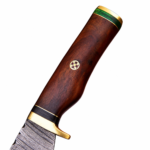
The handle has a smooth wood-grain appearance with darker natural-looking streaks. A narrow black section and gold-colored spacer sit near the front, while a green accent and gold-tone end cap add contrast at the opposite end.
For knife collectors, outdoor equipment enthusiasts, and buyers interested in traditional fixed-blade designs, this knife offers a visually distinctive addition to a collection.
Distinctive Patterned Blade Design
The blade is the centerpiece of this hunting-style knife. It features a flowing series of dark and light lines that extend across most of the visible surface.
The pattern creates a visual effect resembling multiple layers of metal, with curved lines following the general shape of the blade. These details give the knife a different appearance from plain polished or black-coated blades.
The cutting edge appears lighter and more reflective than the main blade surface. Its smoothly curved profile transitions toward a pointed tip, creating a traditional hunting knife silhouette.
The blade also has a small series of visible scalloped or notched details along the upper edge near the handle.
These design elements provide additional character without overwhelming the overall shape.
The photograph cannot establish whether the pattern results from forge-welded steel, surface etching, or another manufacturing process. It should therefore be described as a layered-pattern or Damascus-style appearance until its construction has been confirmed.
For customers who appreciate decorative metalwork, the blade design is a central reason to consider this knife.
Traditional Fixed Blade Construction
Unlike folding knives, fixed-blade knives have a blade that remains extended during use. They do not require an opening or closing mechanism.
This general design is common among hunting, camping, and outdoor utility knives.
The product pictured has the appearance of a fixed blade, with a distinct guard and a full-sized handle.
A fixed-blade format is often preferred by customers who want a straightforward design without a folding mechanism.
However, the internal tang construction is not visible. Whether this particular knife has a full tang, hidden tang, or another construction type must be confirmed with its manufacturer.
Likewise, the precise attachment method between the blade and handle is not established by the photograph.
The knife’s visible construction gives it a traditional appearance suitable for both outdoor knife collections and display purposes.
Brown Wood-Grain-Style Handle
The handle features a deep reddish-brown surface with visible darker grain patterns. Its slightly tapered shape creates a smooth transition between the blade guard and the end of the handle.
The rich brown coloration contributes to the knife’s classic appearance.
Wood-grain-style handles are particularly popular among buyers who appreciate natural-looking outdoor equipment and traditional cutlery designs.
The elongated handle provides space for a conventional hand grip, although actual comfort depends on the knife’s dimensions, balance, surface finish, and the user’s hand size.
No visible finger grooves interrupt the main brown section. Instead, the handle has a relatively smooth profile.
This understated design allows the blade pattern and decorative metal fittings to remain the dominant visual features.
The exact handle composition cannot be confirmed from the image. For accuracy, it is described as a brown wood-look handle rather than a specific timber species.
Gold-Tone Guard and Decorative Accents
At the front of the handle, a gold-colored guard forms a visible separation between the blade and gripping area.
The guard has a curved projection beneath the handle, contributing to the traditional hunting knife silhouette.
Its polished appearance contrasts with both the dark blade patterns and brown handle.
A black accent band sits directly behind the guard, bordered by narrow metallic-looking details.
At the rear of the handle, the design includes a green decorative band, a narrow gold-tone spacer, and a matching end cap.
These accents add visual interest without making the design overly complicated.
The gold-tone components should not be described as solid brass unless the actual material has been verified.
The visible finish may result from brass, another metal, plating, or a decorative coating.
Together, the fittings give the knife a coordinated design that will appeal to collectors who value detailed finishing.
Curved Blade Profile
The knife features an elongated blade with a sweeping cutting edge and a pointed tip.
The curved blade shape is associated with traditional outdoor knives intended for controlled cutting tasks.
Its profile also makes it visually different from straight-edged utility blades, cleavers, and compact pocket knives.
A curved edge can be useful for certain outdoor cutting activities, depending on blade geometry and sharpness.
The pointed tip is a defining feature of the knife’s traditional appearance.
However, the blade length, thickness, grind, and edge angle cannot be established precisely from this image.
These measurements are important when evaluating practical suitability and should be confirmed before advertising the knife for a specific demanding application.
For this listing, the blade shape is accurately described without making unsupported performance claims.
A Traditional Outdoor Knife Aesthetic
The combination of a patterned blade, brown handle, and gold-colored fittings creates a style associated with classic hunting and outdoor knives.
This appearance may particularly appeal to customers who enjoy traditional cutlery, outdoor gear, and decorative metalwork.
Unlike modern designs dominated by synthetic black handles or angular blade profiles, this knife has a more traditional silhouette.
Its materials and colors work together to create a warm visual contrast.
The dark blade pattern gives the product detail, while the brown handle introduces a more natural-looking finish.
The gold-tone guard provides a contrasting focal point between the two main sections.
Whether displayed in a collection or included among approved outdoor equipment, this style offers a different character from conventional tactical-looking knives.
Suitable for Knife Collectors
Collectors often choose knives for reasons beyond their immediate utility.
Blade shape, surface patterns, handle design, decorative fittings, and overall proportions can all contribute to a knife’s appeal.
This Patterned Fixed Blade Hunting Knife brings several of those characteristics together in one design.
The flowing blade lines are highly visible, making the surface pattern an important decorative feature.
The brown handle and metallic fittings introduce contrasting textures and colors that complement the blade.
Collectors who enjoy Damascus-inspired appearances may appreciate its visual design, while those interested in traditional fixed-blade knife shapes may be drawn to its silhouette.
Actual collector value depends on authenticity, craftsmanship, condition, material composition, and provenance.
These details cannot be confirmed from the photograph alone.
For that reason, the knife should not be promoted as a rare, limited-edition, historically authentic, or investment-grade item without additional documentation.
Outdoor Equipment Considerations
Fixed-blade knives are commonly associated with camping, hunting, and other outdoor activities where cutting tools may be needed.
The style of this product makes it relevant to customers browsing outdoor knife collections.
Depending on confirmed blade materials and manufacturer recommendations, similar knives may be suitable for ordinary cutting tasks associated with outdoor utility equipment.
Examples include cutting cord, opening packaging, and preparing suitable materials during authorized outdoor activities.
However, the image alone does not establish this particular knife’s load capacity, edge retention, corrosion resistance, or suitability for heavy-duty use.
It should not be promoted for chopping hard materials, prying, splitting wood, or other demanding applications without verified manufacturer specifications.
The best approach is to present the knife’s visible design accurately while providing confirmed technical details separately.
Customers should always select cutting tools appropriate to the intended activity and follow applicable local regulations.
Why Blade Materials Matter
When buying a hunting-style knife, blade composition is an important consideration.
Different steel grades have different properties related to hardness, corrosion resistance, sharpening characteristics, and wear.
Some patterned knives are produced using forge-welded layers of steel, while others use surface treatments that create a similar appearance.
These construction methods are not interchangeable.
The visible layered pattern is an attractive design feature, but it is not sufficient evidence of the knife’s internal steel structure.
A reliable product specification should identify the manufacturer’s declared steel composition, hardness range, construction method, and maintenance recommendations.
Until those details are available, claims such as high-carbon Damascus steel, 1095/15N20 construction, exceptional edge retention, or corrosion-proof performance should be avoided.
This approach gives buyers clear information and prevents decorative features from being confused with verified technical properties.
Handle Construction and Comfort
A knife’s handle affects how it feels during ordinary handling.
The pictured knife has a smooth, elongated handle with a relatively uncomplicated shape.
Its brown surface shows a grain-like texture, while the guard and rear fittings create clearly defined ends.
A comfortable handle should fit the user’s hand without creating unnecessary pressure points.
However, grip comfort varies between individuals and cannot be determined from product photography.
The handle’s actual material, finish, weight, and attachment method would need to be confirmed to provide a complete technical assessment.
Customers should also consider whether the surface remains comfortable and controllable during the intended use.
The visible handle design can be described accurately without promising nonslip performance or a particular ergonomic rating.
An Appealing Display Piece
This knife has a strong visual identity that may make it attractive for display in a suitable collection.
Its blade pattern is detailed enough to remain noticeable even without decorative engraving or added logos.
The combination of dark and bright metallic finishes makes the blade stand out against the brown handle.
The green accent near the end provides a small additional color detail.
Collectors may appreciate these features when arranging a display of traditional knife styles.
For display purposes, the knife should be stored securely in a suitable holder or protective enclosure that prevents accidental contact with its edge.
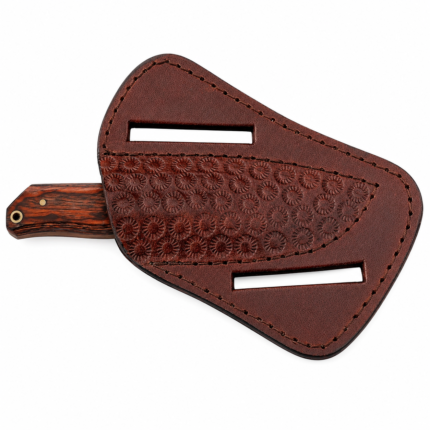
No display stand, storage case, or sheath is visible in the uploaded image.
Such accessories should only be included in the product description if they are actually supplied with the item.
General Knife Care and Maintenance
Appropriate care helps preserve a knife’s appearance and condition.
The manufacturer’s instructions should always take priority, especially for patterned blades or decorative handle finishes.
Until specific care guidance is available, gentle manual cleaning is a reasonable precaution.
Use a soft cloth with mild cleaning products suitable for the verified blade material. Avoid prolonged exposure to water and unnecessary contact with harsh chemicals.
After cleaning, dry the blade and metal fittings carefully.
Pay attention to the junction between the blade and handle, where moisture may accumulate.
Avoid abrasive scrubbing that could damage or alter the patterned finish.
The handle should also be protected from excessive heat, prolonged soaking, and unsuitable cleaning agents.
Because the exact handle material is not confirmed, specific recommendations for wood oil, wax, or other treatments should be obtained from the supplier.
Store the knife in a clean, dry location with its edge properly protected.
If the knife includes a manufacturer-approved sheath, follow the supplier’s storage guidance.
Safe Handling and Storage
Every exposed-blade knife requires responsible handling.
When examining or cleaning the knife, keep fingers away from the cutting edge and pointed tip.
Use a stable surface and avoid unnecessary contact with the blade.
Never use the knife as a screwdriver, pry bar, hammer, or substitute for another type of tool.
Keep it securely stored when not in use.
An appropriate protective cover or dedicated storage compartment can help reduce accidental contact with the edge.
The knife should also be kept away from children and unauthorized users.
Local laws regarding knife ownership, carrying, transportation, and outdoor use vary between regions.
Buyers should confirm the requirements in their location before purchasing or transporting the product.
What to Confirm Before Ordering
When evaluating this knife, customers should review the supplier’s technical information rather than relying on appearance alone.
Important details include the exact overall length, blade length, blade thickness, steel grade, tang construction, handle material, and weight.
It is also useful to confirm whether a sheath is included, how the knife is packaged, and which care instructions apply.
The manufacturer’s stated intended use should be considered before selecting the knife for regular outdoor tasks.
For buyers ordering multiple pieces, packaging requirements, quality inspection arrangements, and product consistency are also important.
If customization is offered, the available options and additional charges should be confirmed directly with the supplier.
No customization options are verified from the uploaded image.
A Distinctive Choice for Traditional Knife Enthusiasts
A good product listing should explain both what makes an item appealing and which details still require confirmation.
This knife’s most recognizable features are its sweeping patterned blade, classic fixed-blade shape, brown wood-grain-style handle, gold-tone guard, and contrasting green end accent.
These details create an attractive design suitable for customers exploring hunting-style cutlery and decorative fixed-blade knives.
Its appearance is easy to appreciate, while technical performance should be evaluated using verified specifications.
For collectors and outdoor knife enthusiasts who prefer a traditional silhouette and Damascus-inspired blade styling, the Patterned Fixed Blade Hunting Knife is a distinctive option worth exploring.


Reviews
There are no reviews yet.