

Runic Damascus Pattern Viking Axe with Engraved Wooden Handle
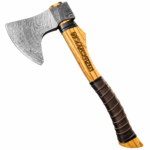
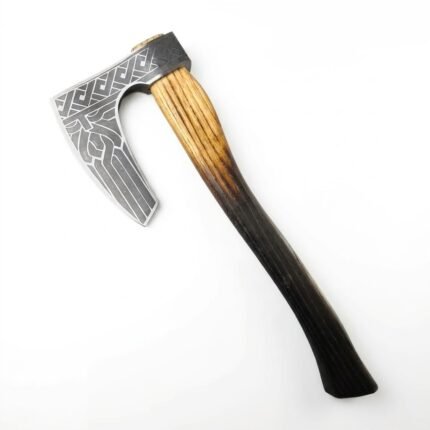
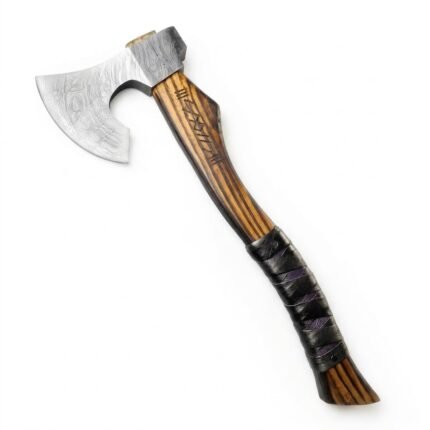
The Runic Damascus Pattern Viking Axe brings together a broad, traditionally inspired axe head, intricate layered metal patterns, and a golden-brown wooden-look handle decorated with bold rune-like symbols. Its distinctive appearance combines historical axe styling with contrasting materials, creating an eye-catching design for collectors, traditional tool enthusiasts, and customers interested in Nordic-inspired craftsmanship.
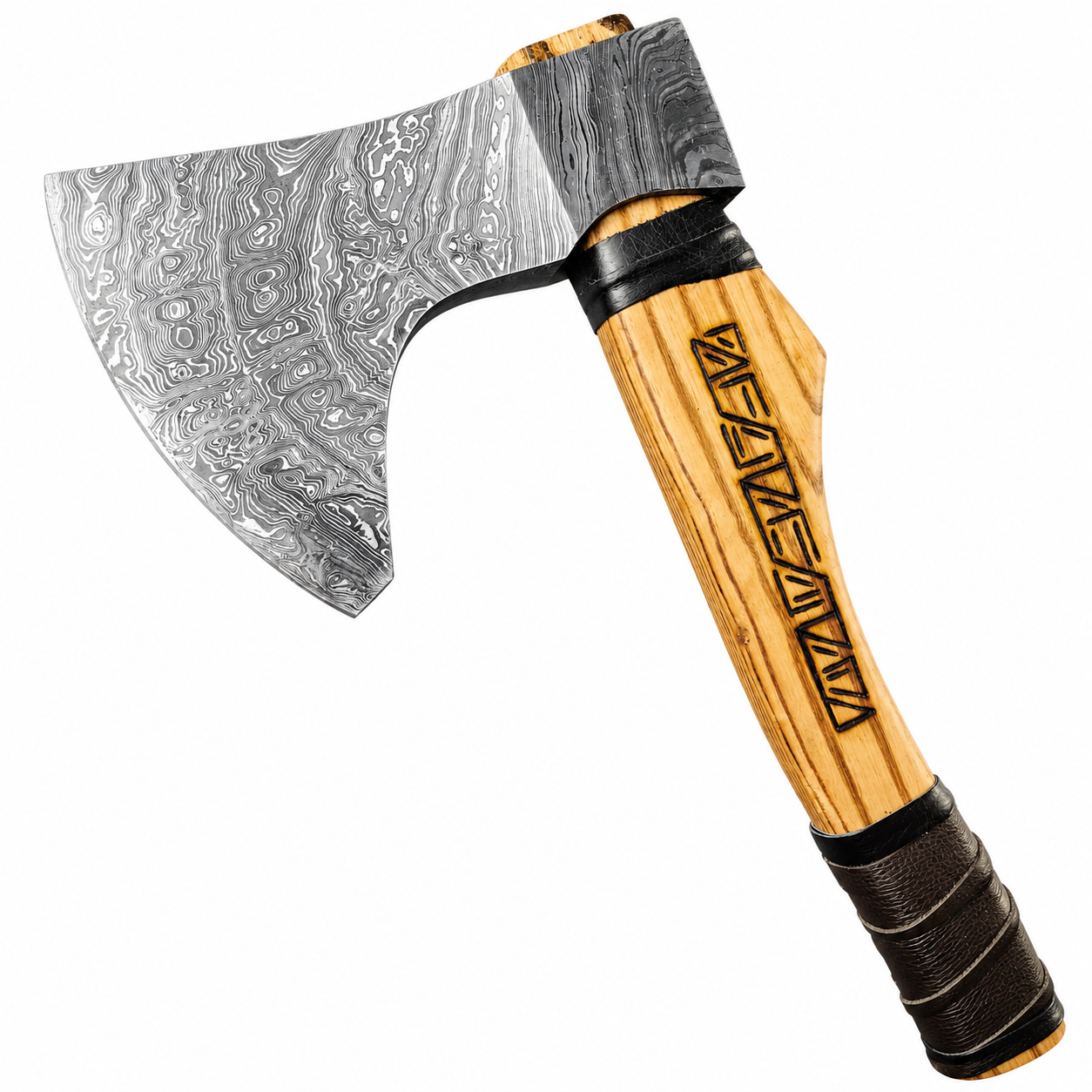
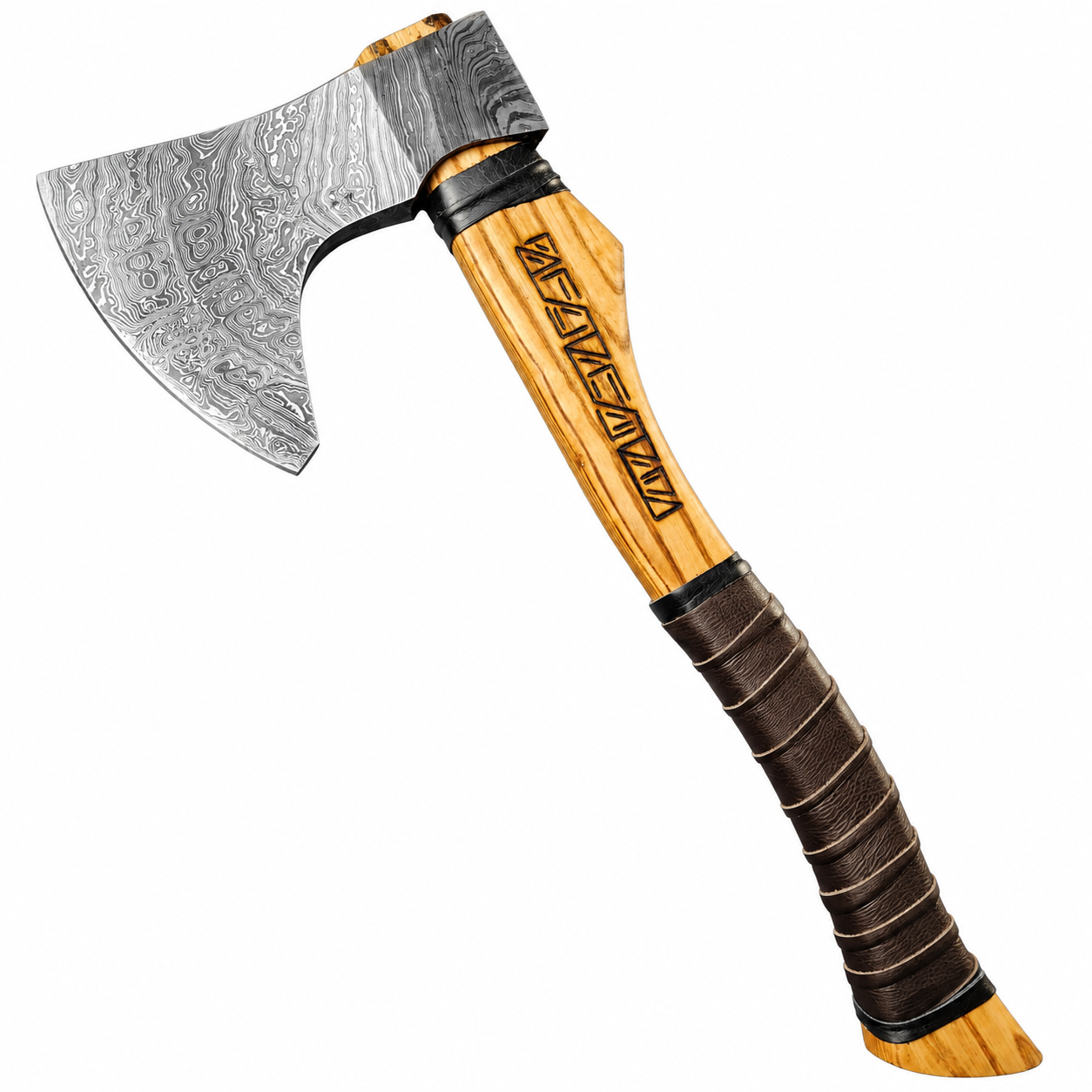
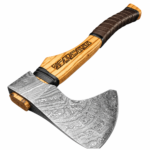
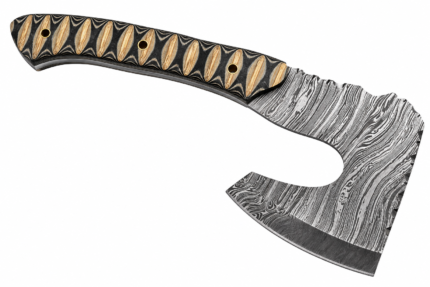
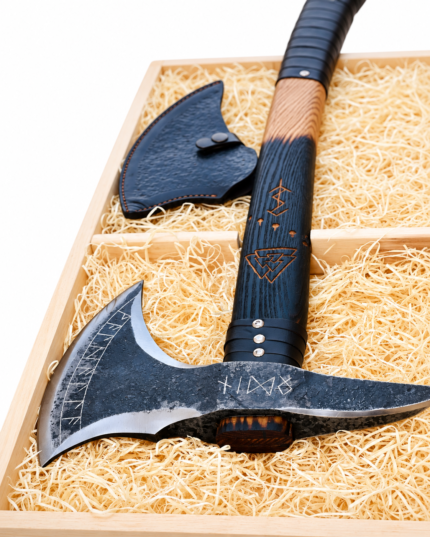
The axe features a wide silver-grey head with flowing Damascus-style patterns extending across its visible surface. A curved lower blade section gives the head a recognizable bearded shape, while the straight upper edge and angular rear portion create a strong traditional silhouette.
The handle displays warm golden-brown coloring with dark lengthwise grain patterns. A series of geometric symbols runs down the exposed front, adding a decorative touch that reinforces the axe’s Viking-inspired appearance.
Black wrapping appears in two separate areas: a short section directly beneath the axe head and a longer section around the lower grip.
Together, these features create a product with a distinctive combination of decorative metalwork, rustic handle detailing, and traditional axe design.
Distinctive Damascus-Style Patterned Axe Head
The most prominent feature of this axe is its richly patterned metal head.
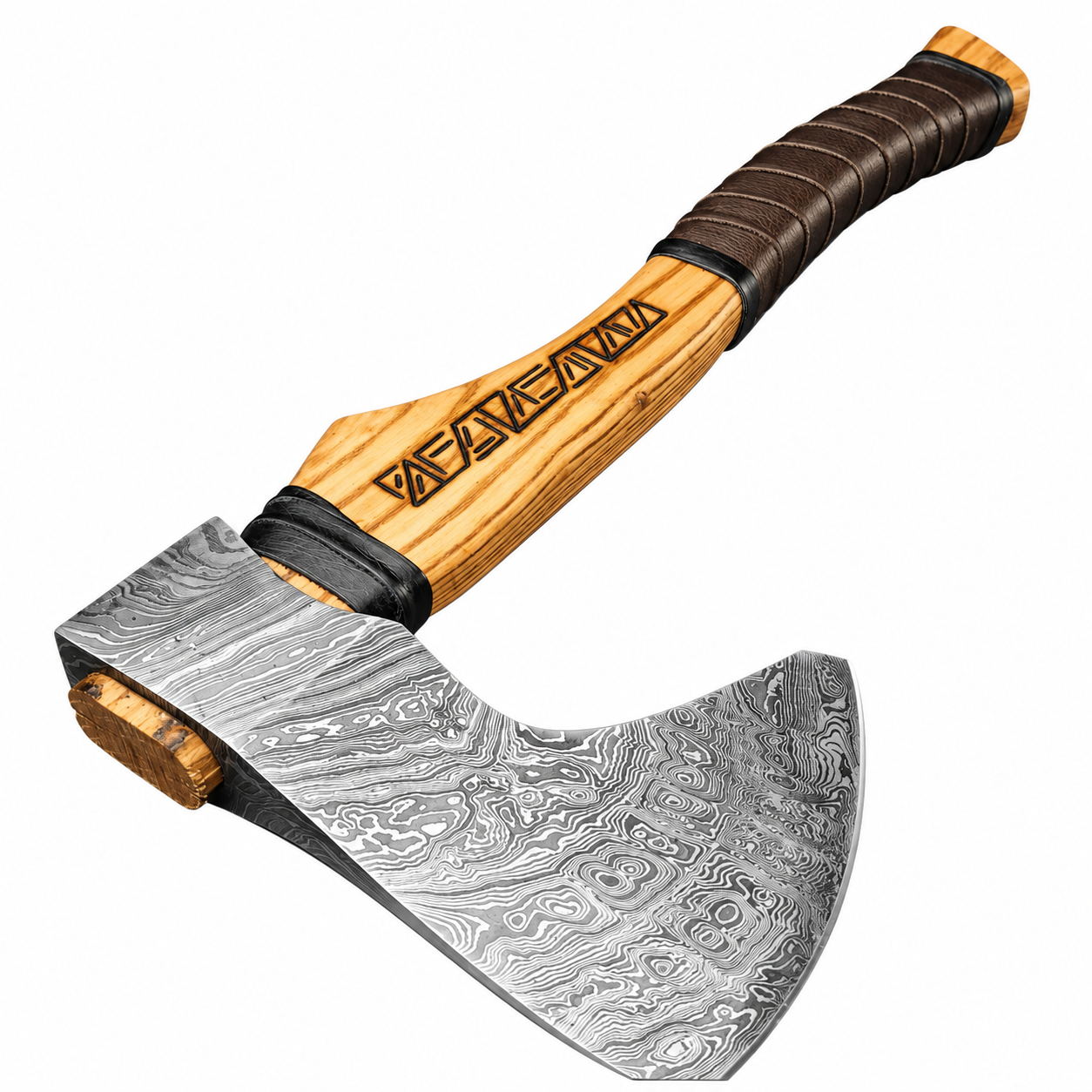
Its silver-grey surface displays intricate flowing lines, irregular wave formations, and rounded layered patterns. The markings extend across the broad cutting section and continue toward the darker rear portion of the head.
This decorative appearance resembles patterns commonly associated with Damascus steel.
The surface includes a combination of lighter silver tones and darker grey details, creating an attractive visual contrast.
Toward the rear of the head, the pattern becomes darker and more closely spaced.
This variation gives the entire head a coordinated appearance without making every section look identical.
Damascus-style axes are particularly recognizable because of their distinctive surface patterns. Unlike plain metal finishes, the layered-looking markings introduce additional texture and visual detail.
On this product, those flowing patterns are a central part of the design.
However, the photographed pattern does not independently establish the steel composition or manufacturing method.
The manufacturer should confirm whether the head is produced using genuine pattern-welded steel, an etched finish, or another technique before any specific material claim is published.
Traditional Bearded Axe Blade Profile
The Runic Damascus Pattern Viking Axe features a broad cutting head with a pronounced curved lower section.
This shape is commonly described as a bearded axe profile.
The cutting section extends downward, forming a visible curve that returns toward the handle connection.
The result is a distinctive silhouette that differs from the more symmetrical outline of many modern hatchets.
The upper edge of the head appears relatively straight, while the cutting edge curves downward toward its lower point.
This combination produces the traditional bearded appearance.
The blade occupies a substantial portion of the product’s overall width, making it visually prominent.
Bearded axe designs have historical associations with various traditional European axes, including Viking-age examples.
Their recognizable forms continue to influence modern decorative axes, collectible pieces, and traditional tool designs.
This particular product uses a historical-inspired shape, although the photograph does not establish that it is a historically accurate reproduction.
Its decorative patterning and engraved-looking handle give it a contemporary interpretation of traditional Nordic styling.
Golden-Brown Wood-Look Handle
The handle creates a strong contrast against the silver-grey metal head.
It has a warm golden-brown appearance, with darker stripes running lengthwise along the exposed surface.
The visible grain-like pattern gives the handle a natural, rustic character.
The handle extends downward at a slight angle from the axe head, creating a traditional curved overall profile.
The middle section is left uncovered, allowing the wooden appearance and decorative markings to remain visible.
The surface looks smoothly shaped, with a slightly changing width along its length.
Toward the lower portion, the handle continues beneath the black wrapping and ends with a small exposed wooden section.
This arrangement gives the axe a balanced appearance, with visible wood separating the two dark wrapped areas.
The exact wood species cannot be determined from the image.
For a technical product listing, the supplier should confirm the material, surface treatment, and attachment method.
Until these details are available, describing the handle as wood-look or wooden-style is more accurate than identifying a particular timber species.
Engraved Runic-Style Handle Details
One of the most distinctive elements of the axe is the dark series of angular symbols running down the handle.
These markings resemble traditional runic-inspired decorative characters.
They are arranged vertically along the exposed central section, forming a bold visual feature against the golden-brown background.
The symbols have dark outlines and sharp geometric shapes.
Their contrast makes them clearly visible even from a distance.
This decorative treatment reinforces the product’s historical-inspired appearance and helps distinguish it from axes with plain wooden handles.
The markings appear engraved or burned into the surface, although the exact process cannot be verified from the photograph.
They should therefore be described as runic-style markings rather than confirmed hand-carved engravings.
Their precise meaning or translation also cannot be established from the image alone.
For customers interested in historical or symbolic accuracy, the manufacturer should provide an explanation of the markings.
Black Wrapped Grip Sections
Black wrapping contributes another important visual element.
A relatively short wrapped section sits directly beneath the metal head.
This area separates the upper wood-look handle from the head and introduces a dark accent around the connection.
The wrapping appears to overlap in bands, producing a textured surface.
A second, longer wrapped section covers the lower gripping area.
This lower section has visible horizontal lines and a darker brown-black finish.
The wrapping produces a rustic look that complements the traditional shape of the axe.
It also contrasts with the exposed golden-brown section carrying the decorative symbols.
The two-section arrangement makes the handle visually distinctive without covering its decorative center.
The wrapping looks leather-like, but its actual composition has not been verified.
Whether it improves grip performance, absorbs moisture, or provides additional cushioning requires manufacturer confirmation.
Those practical characteristics should not be claimed solely from its appearance.
Viking-Inspired Traditional Styling
The combination of a bearded axe head and rune-like handle decoration creates a recognizable Nordic-inspired appearance.
Bearded axes are frequently associated with traditional European axe designs, including historical Nordic examples.
Their curved lower cutting sections have become a familiar feature of Viking-inspired decorative equipment.
This axe takes that recognizable outline and combines it with contrasting decorative materials.
The silver-grey patterned head gives the product a detailed metallic appearance.
The exposed golden-brown handle provides a warmer natural-looking element.
Dark markings and black grip wrapping complete the design.
These details may appeal to customers interested in historical-inspired objects, traditional craftsmanship, and Nordic-themed collections.
The product should be described as Viking-inspired rather than an authenticated historical replica.
Its exact design origin, cultural reference, and manufacturing period have not been established.
An Attractive Combination of Metal and Wood
One of the strongest features of the product is the contrast between its materials and colors.
The axe head uses predominantly silver and grey tones.
Its layered-looking metal pattern gives the broad blade an intricate finish.
The handle introduces golden-brown coloring that stands out against the metal.
The dark symbols add further visual contrast.
Finally, the black wrapping creates two darker sections that frame the exposed handle.
This arrangement gives the product a coordinated appearance.
The overall effect is rustic without being visually plain.
The broad axe head provides a substantial focal point, while the decorative handle adds detail to the remaining length.
For collectors comparing multiple axes, these features make this design easy to distinguish from models with unpatterned heads and simple handles.
Single-Bit Axe Head Configuration
The photographed product has one primary cutting edge.
This makes it a single-bit axe rather than a double-headed axe.
The head includes a broad cutting section on one side and an angular rear portion surrounding the handle connection.
The upper portion appears relatively straight, while the lower section forms the characteristic bearded curve.
The handle extends beneath this connection and remains visible through the center of the product.
This arrangement is commonly found in traditional axe designs.
The photographed example appears compact enough to be presented as a hand axe or hatchet-style product, although its exact size cannot be established without measurements.
A scale reference is not included in the image.
Customers should therefore consult the manufacturer for accurate overall length, head width, cutting-edge length, and total weight.
Decorative Appeal for Axe Collectors
The Runic Damascus Pattern Viking Axe may interest collectors who enjoy traditional axe designs.
Its prominent bearded blade shape is recognizable and visually different from ordinary splitting axes.
The patterned metal surface adds decorative interest.
The runic-style markings introduce another distinctive element, while the black wrapping creates a traditional tool-inspired finish.
These features make the axe suitable for consideration as a collectible design.
Buyers interested in display pieces may appreciate the decorative detailing and contrasting colors.
Collectors who own several axes may also find the patterned head and marked handle appealing additions to a varied collection.
However, the exact intended use should be confirmed with the manufacturer.
The product should not be represented as a professional chopping tool or historical replica without appropriate supporting evidence.
Understanding Its Potential Applications
Axes with similar silhouettes are commonly offered in categories such as camping equipment, traditional axes, outdoor tools, and decorative collectibles.
However, products within these categories can differ considerably in material quality, edge geometry, handle attachment, and intended workload.
This particular axe has not been accompanied by verified technical specifications.
Therefore, its suitability for cutting timber, splitting wood, bushcraft, or other demanding outdoor activities cannot be confirmed from the photograph.
Before purchasing for practical use, customers should request details about the steel grade, heat treatment, head attachment, and handle construction.
These characteristics are essential for assessing the suitability of an axe for particular tasks.
The visible design establishes its style, but not its tested performance.
What Makes This Axe Distinctive?
Several visual features distinguish this product from conventional axe models.
The first is the broad silver-grey bearded head.
Its curved lower cutting section creates a traditional silhouette.
The second is the detailed Damascus-style pattern covering the metal.
The third is the warm wood-look handle with visible lengthwise grain.
The fourth is the series of black geometric symbols running down the central section.
The fifth is the combination of short upper wrapping and longer lower grip wrapping.
These details work together to create a recognizable appearance.
The product combines rustic styling, historical-inspired shapes, and decorative metal finishes without relying on excessive additional ornaments.
Visible Product Features
The uploaded photograph supports the following visual description:
- Product type: Single-bit, bearded-style axe.
- Head appearance: Silver-grey metal with a layered Damascus-style pattern.
- Blade shape: Broad, curved cutting section with a pronounced lower extension.
- Handle appearance: Golden-brown wood-look finish with darker grain markings.
- Handle decoration: Dark angular rune-like symbols arranged vertically.
- Grip details: Black wrapping below the head and around the lower handle.
- Color combination: Silver-grey, charcoal, golden brown, and black.
- Design influence: Traditional Viking-inspired axe styling.
- Photographed accessories: No separate sheath, cover, or presentation box is shown.
The actual steel composition, handle material, dimensions, weight, and performance characteristics remain unverified.
General Care and Maintenance
Appropriate care helps preserve the appearance of traditional metal tools.
After handling the axe, wipe the head with a clean, dry cloth.
Avoid allowing water or moisture to remain on the metal surface.
Different steels require different maintenance procedures, so the manufacturer should confirm whether a protective oil is recommended.
Do not assume the patterned metal is stainless or corrosion-resistant.
The wooden-look handle should be cleaned using methods suitable for its confirmed material.
Avoid prolonged exposure to water and excessive humidity.
The black wrapped sections should also be kept clean and dry unless the manufacturer supplies different care instructions.
Store the product in a secure location where the cutting edge cannot be contacted accidentally.
A correctly fitted blade cover may provide additional protection, but no cover is visible in the photograph.
Before any functional use, inspect the head attachment, handle, and blade condition.
Do not use an axe with loose or damaged components.
Keep the product away from children and follow applicable local safety requirements.
Important Specifications to Confirm
Customers who require detailed technical information should request it directly from the supplier.
Axe head: Steel grade, pattern-forming method, hardness, heat treatment, head weight, blade width, and cutting-edge length.
Handle: Actual material, wood species where applicable, finish, overall length, and method of securing the head.
Grip wrapping: Material composition, installation method, and care requirements.
Complete product: Overall length, total weight, intended applications, included accessories, and warranty terms.
Available variations: Handle colors, engraving options, packaging arrangements, and other customization services, where offered.
These details should be confirmed before publishing precise specifications or offering custom orders.
A Distinctive Traditional Axe Design
The Runic Damascus Pattern Viking Axe stands out through its broad patterned head, curved bearded cutting profile, golden-brown wood-look handle, and striking black geometric markings.
The two black grip-wrap sections complement the natural-looking handle and create a coordinated rustic appearance.
Its design may appeal to collectors, historical-style enthusiasts, and customers interested in traditional Nordic-inspired equipment.
Explore this axe for its distinctive decorative details, flowing metal pattern, and recognizable bearded silhouette.








Reviews
There are no reviews yet.