


Blackened Full Tang Bowie Knife Blank – Unfinished Knife Component
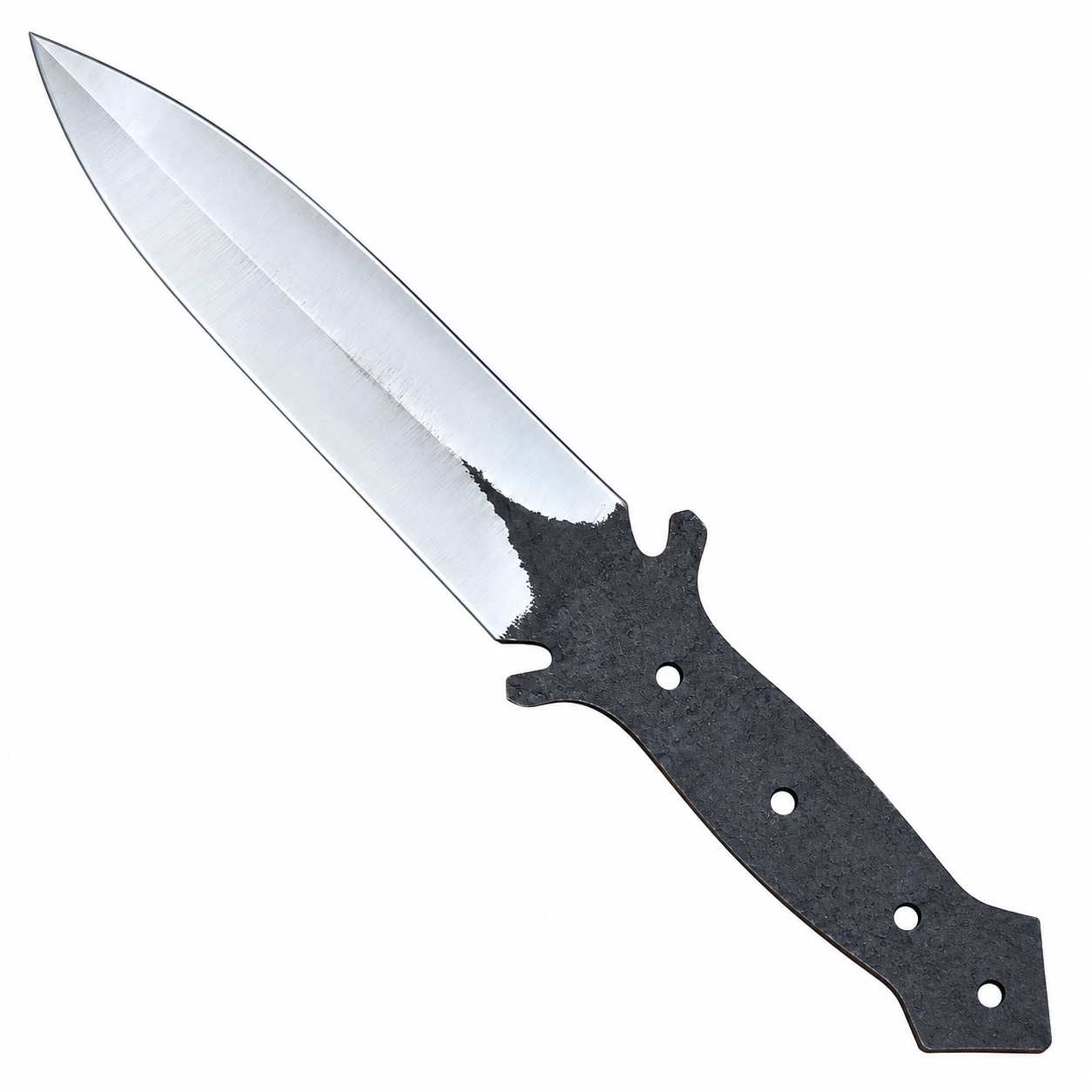
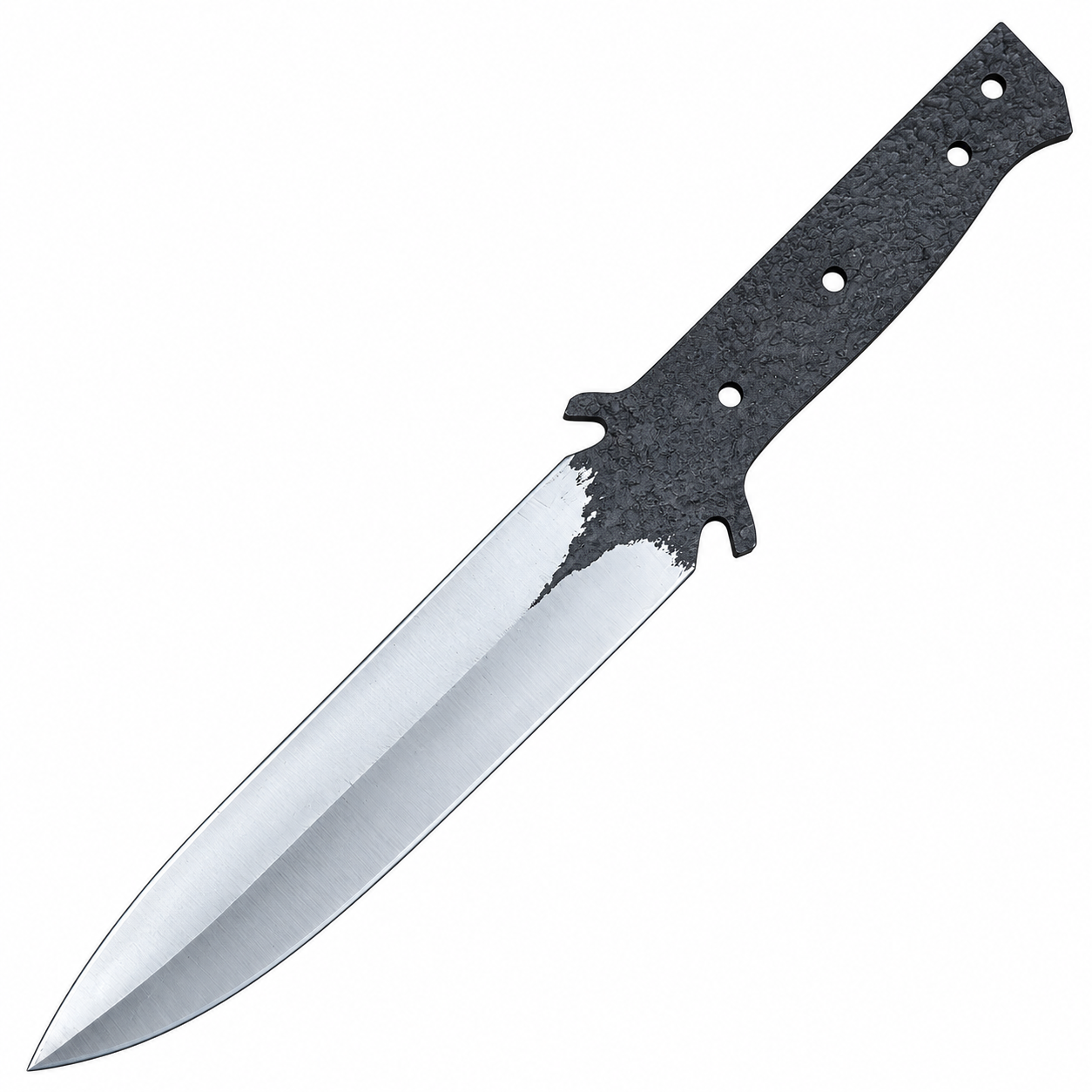
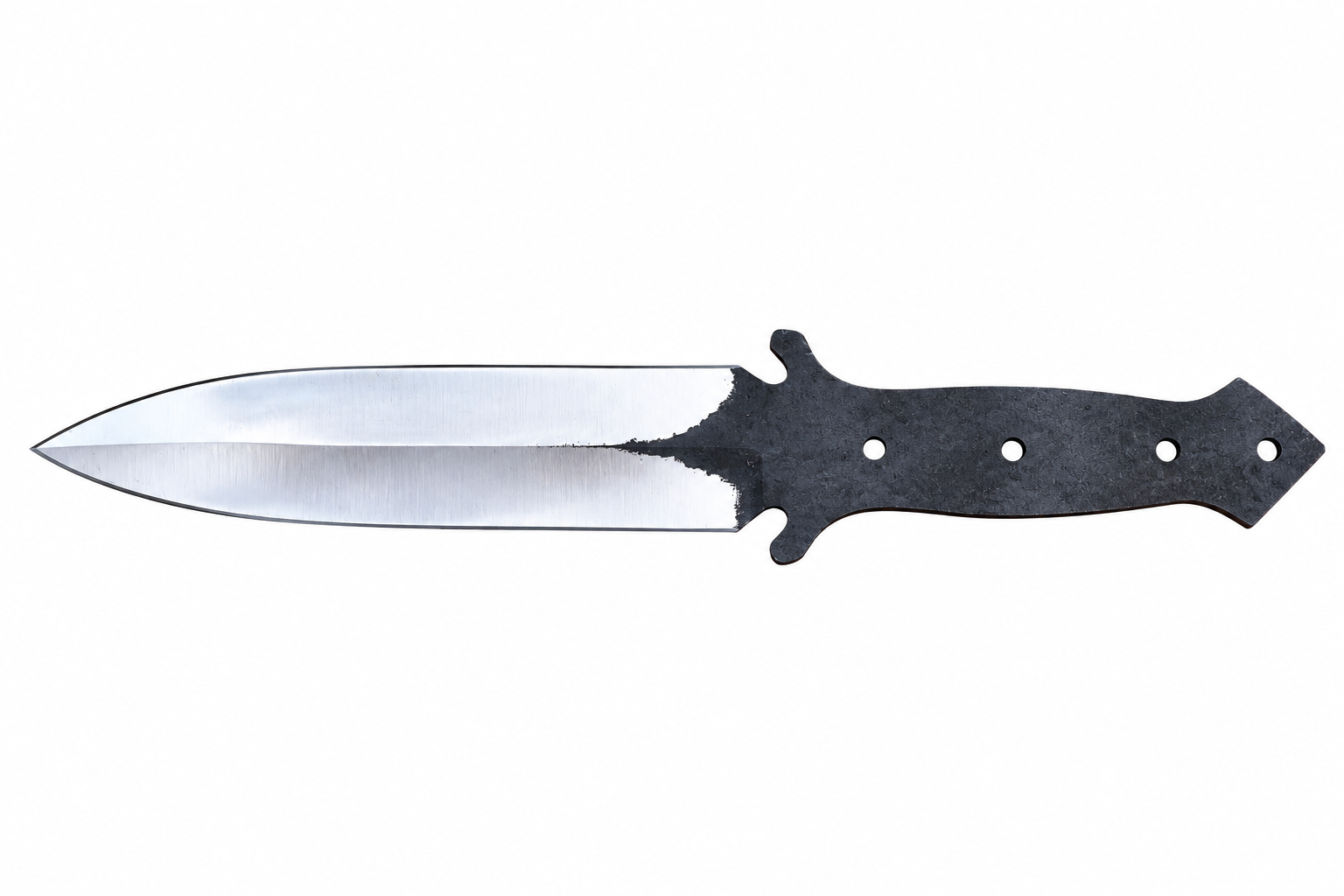
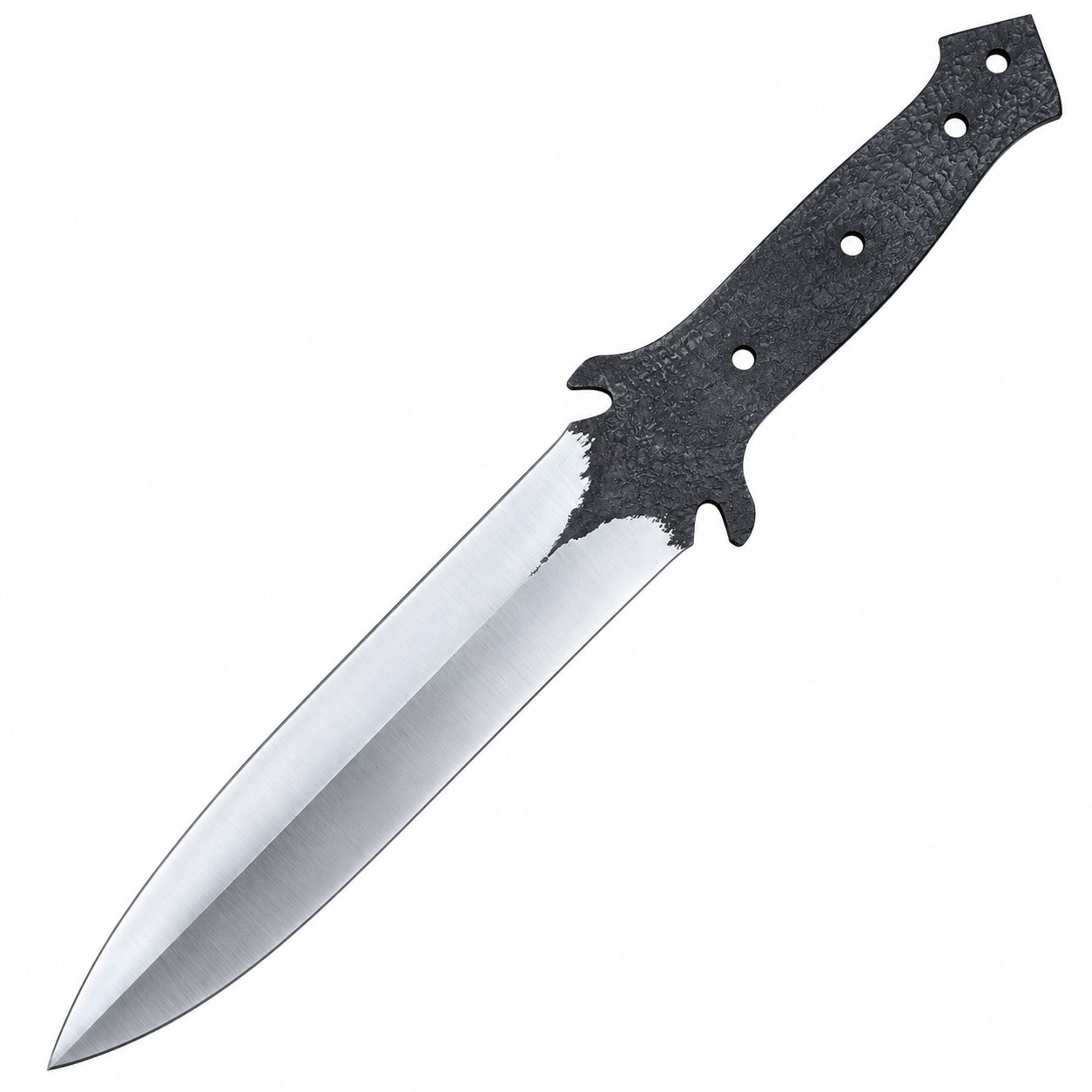
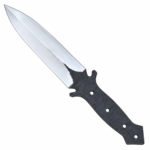
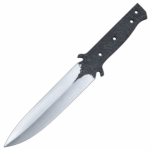
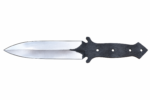
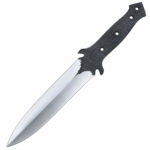
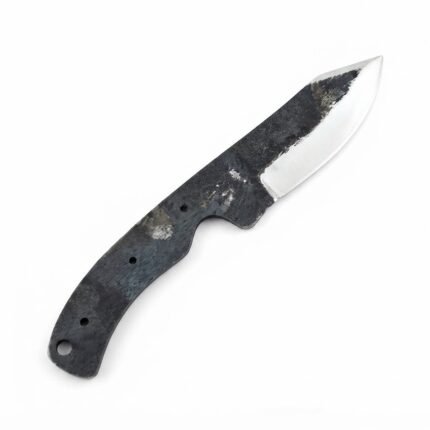
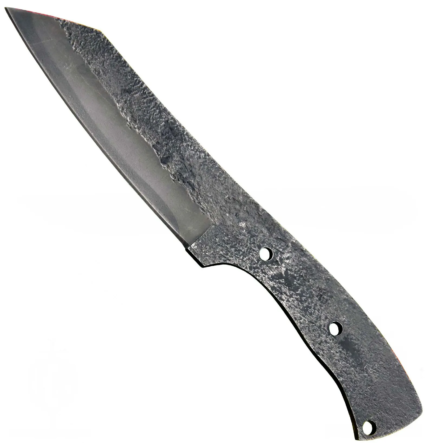
The Blackened Full Tang Bowie Knife Blank is an unfinished metal knife component featuring a broad silver-toned blade, a dark textured body, and an extended tang with multiple pre-drilled holes. It is designed in the recognizable style of a fixed-blade Bowie knife, with a long cutting profile, pointed tip, and a prominent transition between the blade and handle area.
Unlike a finished knife, this product is shown without attached handle scales, a grip covering, or a protective sheath. The exposed tang provides a clear view of the metal profile and the mounting holes. This makes it visually relevant to knife-making supplies, unfinished knife components, and custom handle projects.
One of its most noticeable characteristics is the contrast between the polished blade section and the dark, irregularly textured metal surface. The silver cutting area follows a broad, slightly curved outline that narrows toward a pointed tip. The darker surface continues from the upper blade into the handle tang, giving the component a consistent appearance.
The blade also incorporates small integral protrusions close to the transition between the handle and cutting section. These provide a distinctive profile commonly associated with guarded fixed-blade designs.
For buyers comparing unfinished knife blanks, visible shape, handle space, mounting-hole placement, and surface finish are important considerations. This product offers a distinctive combination of these elements.
Broad Bowie-Inspired Blade Profile
The blade has a substantial profile with a broad cutting section and a pointed tip.
Its silhouette resembles that of traditional Bowie-style fixed blades, although the exact classification depends on the manufacturer’s design specifications.
The cutting edge follows a gently curved line toward the tip. The opposite side forms a comparatively long, straighter upper blade profile.
The metal surface transitions from a dark upper section to a silver-toned lower section, creating a clear visual division.
A broad polished bevel is visible along the cutting portion. The reflective surface has fine linear marks resembling a satin-ground finish.
The blade’s pointed shape is a prominent visual characteristic.
This style distinguishes the product from smaller utility blade blanks, narrow fillet knife blanks, and rectangular cleaver blanks.
Exact blade length, cutting-edge geometry, bevel angle, and thickness cannot be established from the photograph, so these specifications should be confirmed before publishing.
Exposed Full Tang Design
The handle portion is not covered by wood, resin, rubber, or other grip materials.
Instead, the metal extends continuously from the blade into the handle area.
This visible arrangement is characteristic of a full-tang knife blank.
The exposed section provides the basic outline for fitting handle scales or other suitable grip components.
Its shape is slightly curved, with a widened rear section and narrower regions closer to the blade.
The upper and lower edges are clearly defined.
The tang also features a dark surface finish that matches the unpolished portion of the blade.
This creates a coordinated appearance across the entire component.
Although the photograph supports describing the design as full tang, the exact thickness and internal material composition are not confirmed.
Multiple Pre-Drilled Handle Holes
Several circular holes are visible along the handle tang.
These openings differ in size and are distributed from the blade-side region toward the rear of the handle.
The larger and smaller openings are clearly visible against the white background.
Pre-drilled holes are common features of unfinished knife blanks intended for later handle fitting.
Their presence is useful when evaluating the appearance of an unfinished tang and its compatibility with a proposed handle design.
However, the precise hole diameters, spacing, and compatibility with specific fasteners are not established by the image.
Buyers should obtain a dimensional drawing or manufacturer measurements before selecting matching handle hardware.
It is important not to assume that standard pin sizes will fit every opening.
Dark Textured Metal Appearance
The exposed upper blade and tang have a blackened or charcoal-gray surface.
The finish has a visibly uneven, textured appearance.
Small irregular marks and changes in tone create a rougher visual character than the polished cutting section.
This appearance may resemble a forged or forge-scale finish, but the photograph alone does not prove that the knife was hand-forged or produced using a particular forging method.
The dark finish is visually prominent across the handle portion.
It continues near the upper area of the blade before transitioning into the polished bevel.
This contrast gives the blank a distinctive appearance.
The exact treatment used to create the dark surface, whether forging scale, oxidation, coating, or another finishing method, should be confirmed with the supplier.
Polished Silver-Toned Cutting Section
The blade’s lower section has a bright metallic finish.
It appears smoother and more reflective than the darkened upper blade.
Fine grinding lines are visible across the polished area.
The polished portion extends along much of the blade and reaches the pointed tip.
Its clean metallic appearance contrasts with the dark upper surface.
This design gives the component an unfinished but clearly defined blade profile.
The image does not confirm the edge’s actual sharpness.
A visible polished bevel is not necessarily evidence that the blade has received final sharpening.
Manufacturers may supply similar blanks at different stages of finishing.
Therefore, the product’s sharpening status should be confirmed separately.
Integral Guard-Style Projections
Near the transition between the blade and tang, two small metal projections are visible.
These form part of the continuous metal outline.
They are positioned on opposite sides of the transition area and contribute to the knife’s traditional fixed-blade silhouette.
Unlike a separate crossguard, these projections appear integrated into the knife blank.
This distinction is important when describing the product accurately.
The design may appeal to buyers interested in knife blanks with a defined guard-like shape rather than completely straight handle-to-blade transitions.
Their exact dimensions and intended structural role are not confirmed.
Unfinished Handle Area
The handle portion remains exposed, with no attached scales or grip covering.
This is a defining characteristic of the product.
The tang has a long, slightly curved shape.
Its rear end is wider than the middle section, creating a recognizable handle outline.
Multiple holes are present along the tang.
The surface has a textured charcoal finish.
Because the handle has not been completed, the photographed item should not be advertised as a ready-to-use finished knife.
Any description of final grip comfort, handle material, or assembled balance would require information about the completed product.
For product listings, clearly stating that the item is a knife blank helps distinguish it from complete Bowie knives.
Knife-Making Supply Classification
This product belongs naturally within a knife-making supply category.
It can be described as an unfinished fixed-blade component with a prepared blade outline and exposed tang.
The visual features align with products commonly categorized as knife blanks.
For commercial organization, appropriate classifications include fixed-blade knife blanks, Bowie-style knife blanks, and unfinished knife components.
These categories help customers distinguish between finished cutting tools and unfinished metal parts.
The exact manufacturing stage should be established by the supplier.
Some unfinished blanks may require final grinding, sharpening, finishing, or other professional work.
The photograph cannot confirm which processes have already been completed.
Surface Finish and Visual Contrast
The contrast between the dark tang and bright blade is one of the most distinctive characteristics of this product.
The dark surface has an uneven, textured appearance.
The polished cutting section displays a smooth silver finish.
Together, these create a two-tone metal design.
The transition between the finishes is irregular rather than perfectly straight.
This contributes to the product’s rugged visual character.
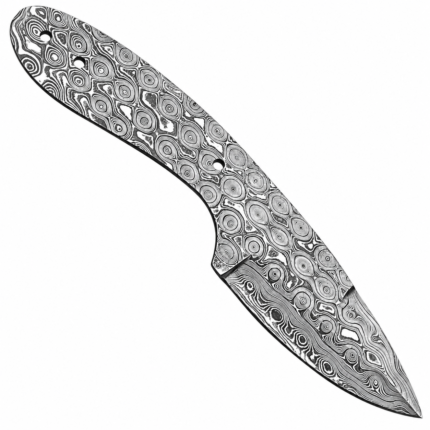
The overall appearance differs from uniformly polished knife blanks and decorative Damascus-patterned products.
The blade does not show the repeating layered pattern commonly associated with Damascus steel.
Therefore, it should not be advertised as Damascus steel without independent material verification.
Product Design and Proportions
The component has a long overall profile.
The handle tang occupies a substantial portion of the total length.
The blade extends forward into a broad section that tapers toward the tip.
A gradual curve is visible along the cutting edge.
The rear tang includes a rounded or angled termination.
The finger-area contour is visible near the base of the blade.
These shape details give the blank a recognizable fixed-blade outline.
The photograph is useful for understanding the general geometry, but it does not provide a reliable measurement scale.
Overall length, blade length, tang length, width, and thickness must be measured separately.
Appropriate Buyers
The product is relevant to customers researching unfinished knife components and traditional Bowie-style blade profiles.
Potential buyer groups include specialist knife-component retailers, experienced knife makers, and businesses sourcing unfinished metal blanks.
Its exposed tang and visible holes distinguish it from completed knife products.
The dark-and-silver appearance may also interest collectors of unfinished blade components.
Buyers should evaluate the product using verified technical data, especially if the intended purchase requires a specific steel composition or heat-treatment condition.
The visual design alone cannot establish performance or suitability for a particular application.
Material and Heat-Treatment Information
The photograph shows a metallic knife blank but does not identify the steel grade.
Possible steel grades should not be inferred from the color, texture, or blade shape.
Similarly, a dark textured finish is not reliable evidence of high-carbon steel.
The product’s hardness cannot be determined visually.
Heat-treatment status also remains unconfirmed.
For an accurate commercial listing, the supplier should provide the steel specification, hardness range, heat-treatment condition, and any relevant finish information.
These details are particularly important because unfinished knife blanks can be supplied at different stages of manufacture.
The product description should remain material-neutral until supporting documentation is available.
Dimensions and Technical Specifications
Customers purchasing unfinished metal components often require precise measurements.
The visible image does not establish those dimensions.
A reliable specification sheet should include overall length, blade length, blade thickness, tang length, handle width, and mounting-hole measurements.
The product’s net weight should also be confirmed.
If the manufacturer offers multiple sizes, each variation should be documented separately.
This helps buyers distinguish between visually similar products and select a suitable component.
In the absence of verified measurements, it is more accurate to leave these fields unspecified than to estimate them from the image.
General Storage and Handling
Unfinished knife components should be handled carefully because exposed edges and pointed sections may present a cutting hazard.
The blade should be stored in a protective covering appropriate for the product’s dimensions.
Keep the metal clean and dry.
Avoid prolonged moisture exposure.
The appropriate corrosion-prevention method depends on the actual steel composition and surface treatment.
Do not assume the component is stainless steel.
Inspect the condition of the blade and finish periodically.
Keep the component secured and inaccessible to children.
Follow all applicable local rules relating to possession, storage, transportation, and professional use.
Product Specifications
| Attribute | Description |
|---|---|
| Product Type | Unfinished Knife Blank |
| Style | Bowie-Inspired Fixed Blade |
| Tang Design | Visible Full Tang |
| Blade Color | Silver and Dark Gray |
| Tang Finish | Blackened Textured Appearance |
| Blade Finish | Polished Bevel |
| Handle Scales | Not installed |
| Tang Holes | Multiple pre-drilled holes |
| Integral Guard | Small guard-style projections |
| Blade Steel | Not verified |
| Hardness | Not verified |
| Heat Treatment | Not verified |
| Dimensions | Not verified |
| Sheath | Not shown |
| Manufacturing Method | Not verified |
| Country of Origin | Not verified |
Product Summary
The Blackened Full Tang Bowie Knife Blank features a broad polished blade, contrasting dark textured metal, exposed full-tang construction, and multiple circular handle openings.
Its distinctive fixed-blade outline makes it visually recognizable within the unfinished knife component category.
Unlike a finished knife, it is supplied in the pictured configuration without attached handle scales or a sheath.
Explore this Bowie-inspired knife blank as a traditional-style metal component, and confirm the relevant specifications before purchase.









Reviews
There are no reviews yet.