


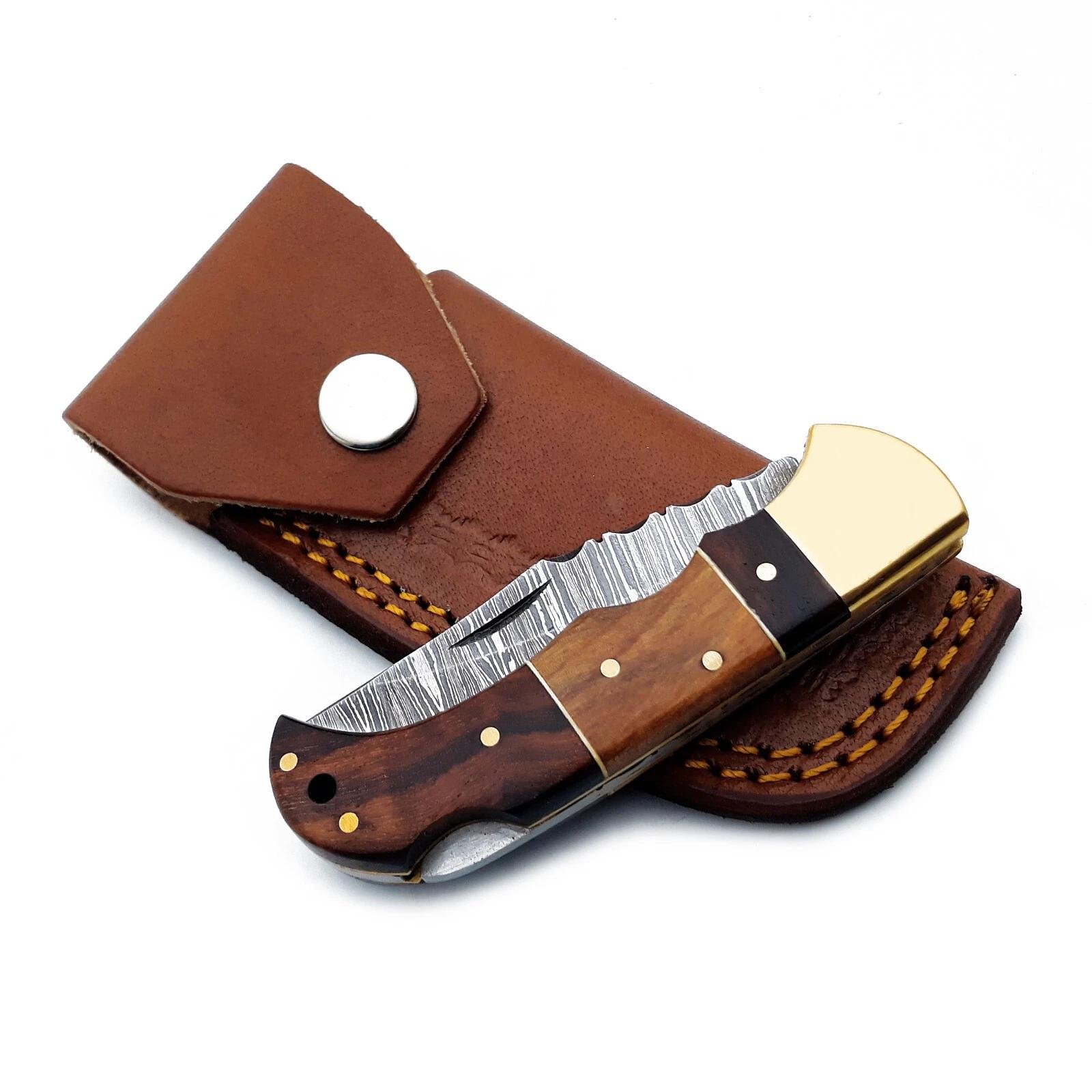

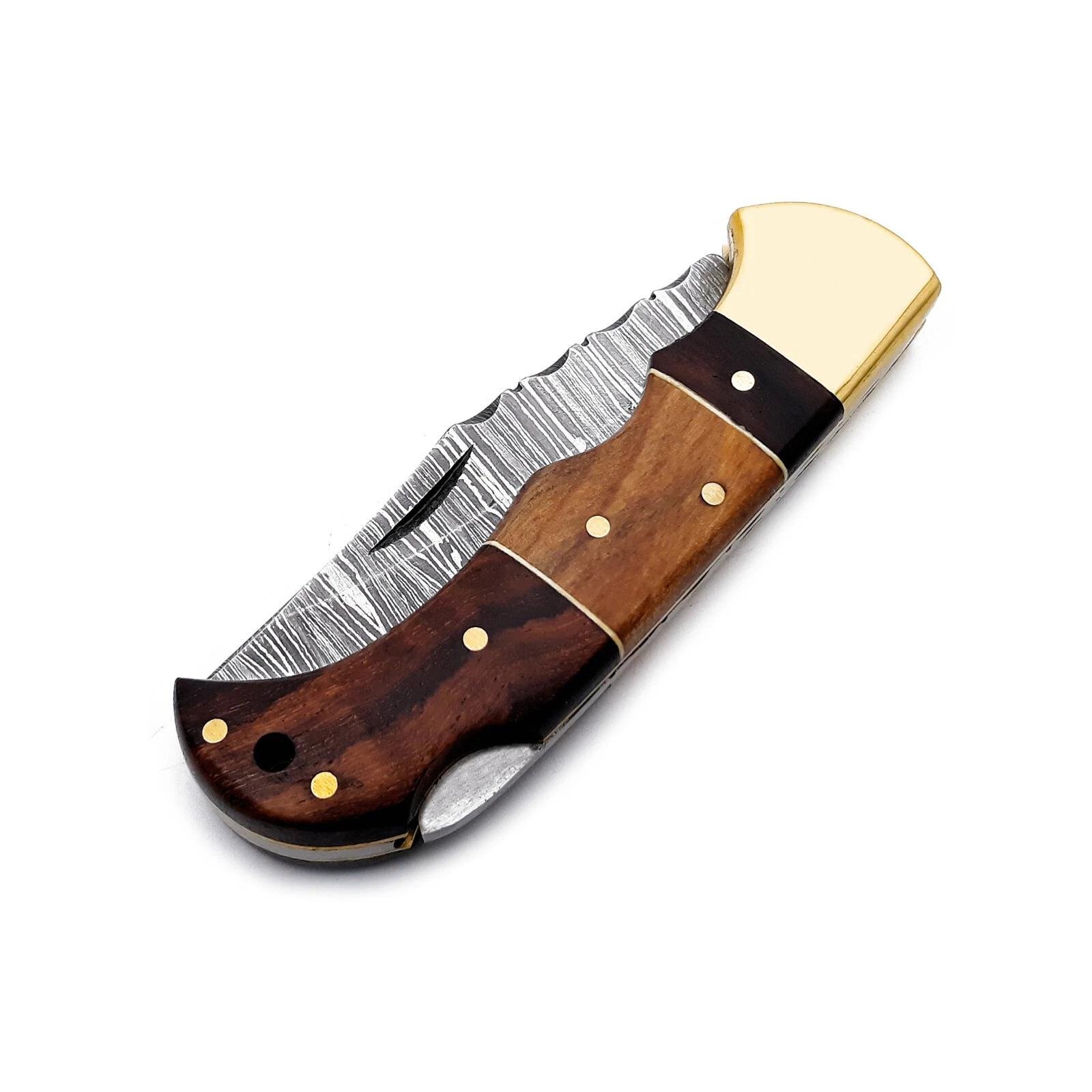
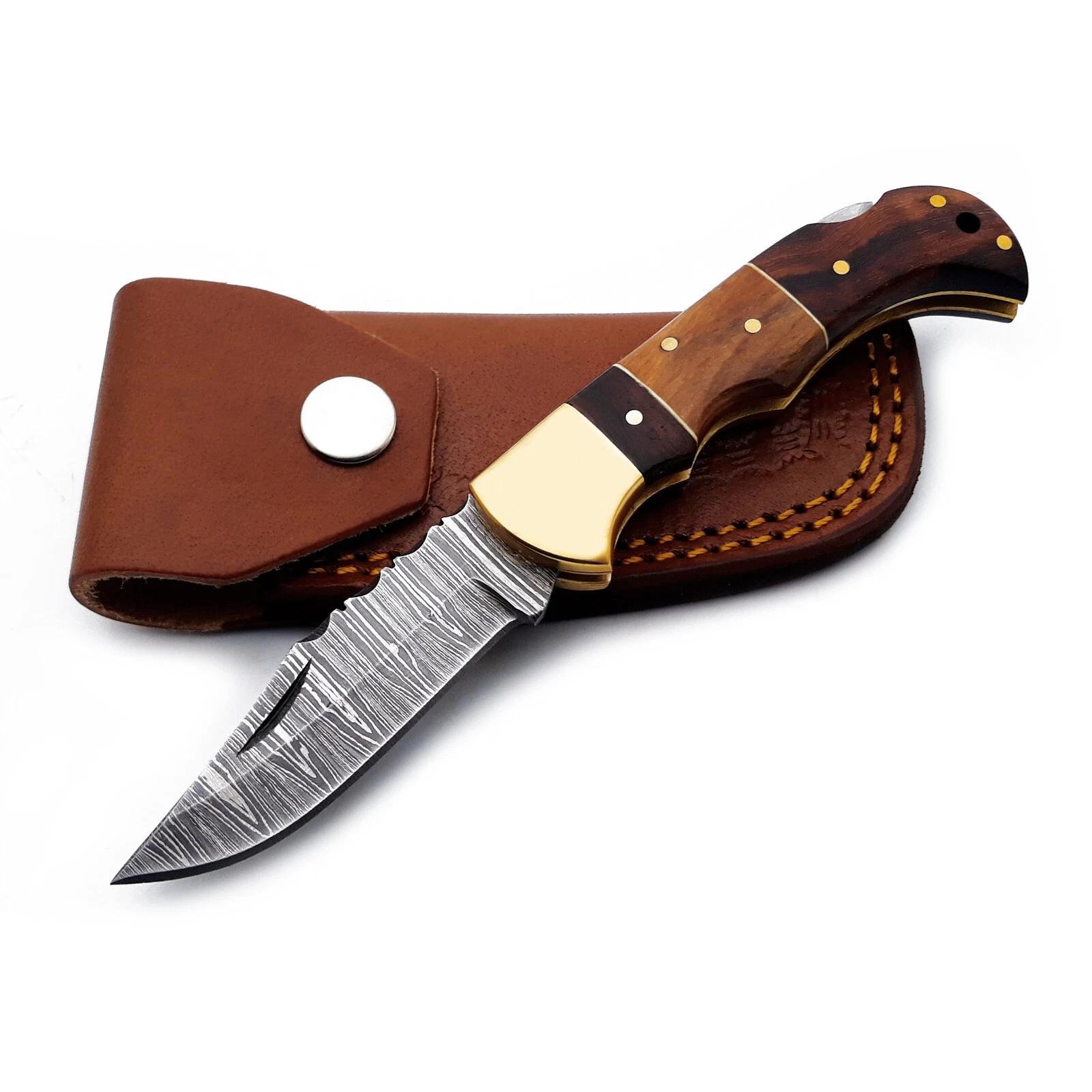
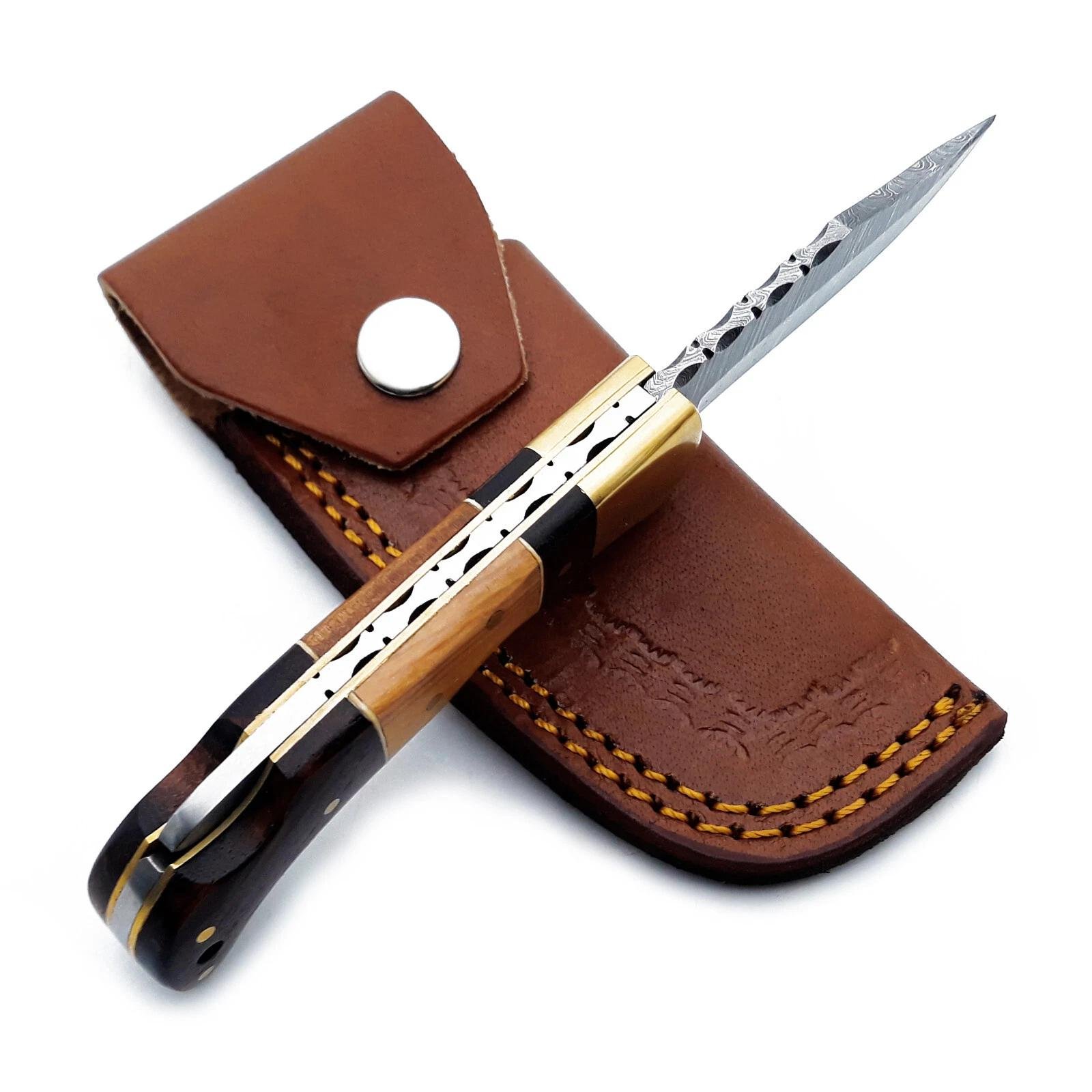






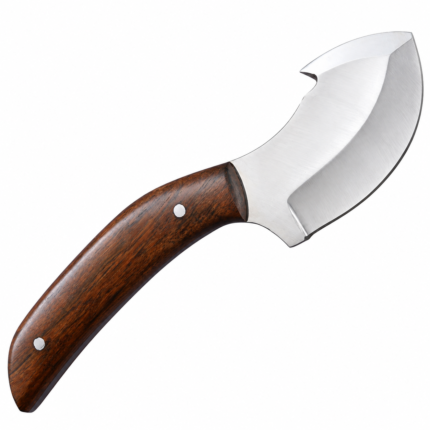
Brown Wood Handle Damascus Pattern Hunting Knife
Introduction to the Brown Wood Handle Damascus Pattern Hunting Knife
The Brown Wood Handle Damascus Pattern Hunting Knife brings together a distinctive patterned blade, a beautifully contrasting multitone handle, and traditional hunting-inspired styling. Designed with a fixed-blade profile, this knife has a recognizable appearance that combines the visual character of classic outdoor cutlery with decorative metallic details.
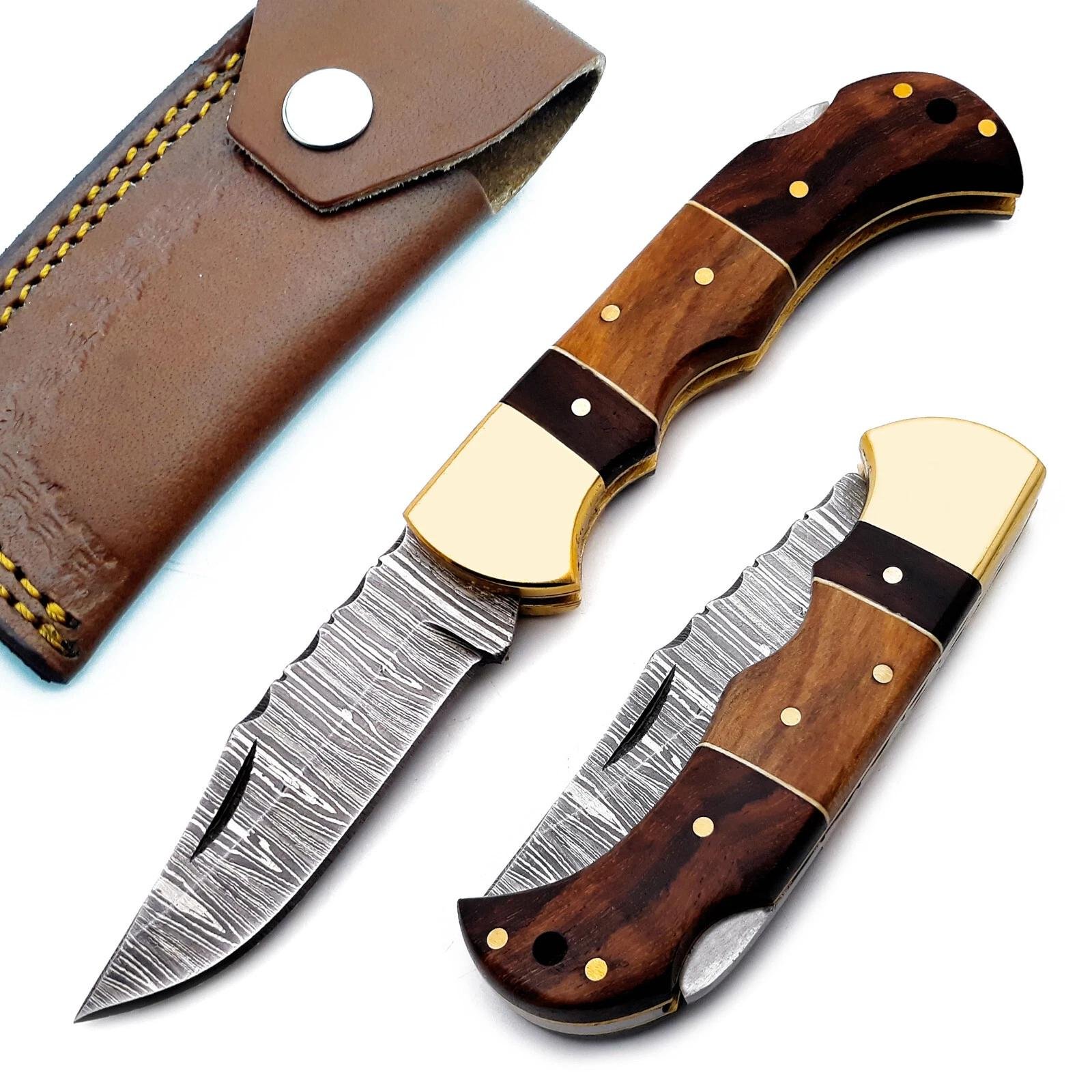
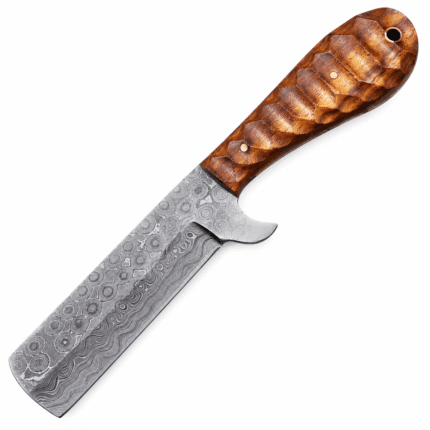
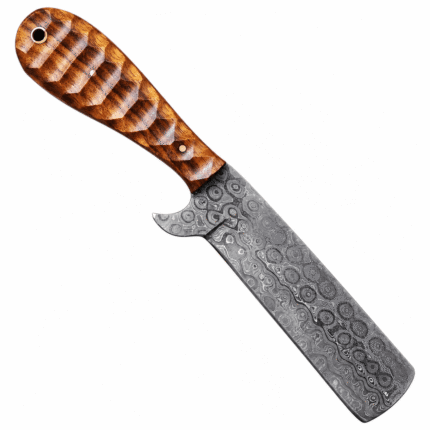
One of its most noticeable features is the silver-and-gray blade pattern. Fine, flowing lines extend across the visible blade surface, creating a layered appearance commonly associated with Damascus-style knives. The pattern complements the dark and medium-brown sections of the handle, giving the entire piece an attractive, coordinated finish.
The handle includes a broad gold-tone bolster where the blade meets the grip. This bright metallic section provides a strong contrast against the brown handle and silver blade. Small circular pins, narrow dividers, and a curved handle profile complete the overall design.
For collectors and enthusiasts who appreciate unusual blade finishes and traditional fixed-blade designs, this knife offers a visually distinctive addition to an adult cutlery collection.
Its exact technical specifications, construction materials, and intended performance should be confirmed with the manufacturer before purchase.
Distinctive Damascus-Style Blade Pattern
The patterned surface is one of the main reasons this knife stands out.
Unlike a blade with a completely plain metallic finish, the Brown Wood Handle Damascus Pattern Hunting Knife displays fine, irregular lines across much of its visible surface.
These patterns follow the blade’s length and change direction in several areas. The result is a natural-looking arrangement of silver and darker gray markings.
The contrast gives the blade an ornamental appearance without requiring large decorative engravings.
The appearance resembles the layered patterns commonly associated with Damascus steel. However, several manufacturing and surface-finishing methods can produce similar designs.
For that reason, the blade should be described as having a Damascus-style or Damascus-pattern finish until the supplier confirms its actual composition.
Customers interested in genuine pattern-welded steel should ask for the steel grades, construction method, and relevant manufacturing specifications.
The visible pattern is an attractive design feature, but appearance alone does not establish hardness, strength, edge retention, or corrosion resistance.
Traditional Fixed Blade Construction
The knife has a fixed-blade configuration.
Its blade extends directly from the handle without a visible folding joint or pivot mechanism.
This construction style is commonly associated with hunting knives, outdoor knives, and traditional utility cutlery.
The Brown Wood Handle Damascus Pattern Hunting Knife has a blade profile that narrows from a wider base toward a defined point.
The cutting edge follows a gentle curve, while the upper blade edge has a more gradual, slightly angled outline.
This gives the knife an elegant and recognizable silhouette.
The blade appears to have a short decorative groove near its lower section and several small scalloped details along the spine near the handle.
These features contribute to the knife’s distinctive appearance.
Although the blade is visibly fixed, the photograph does not establish its internal tang construction.
The exact assembly method and structural characteristics should be confirmed by the supplier.
Elegant Brown Wood-Grain-Look Handle
The handle is designed with several contrasting brown sections.
Its front section has a dark brown finish, while the central section has a warmer, medium-brown wood-grain appearance.
The rear section returns to a deeper brown shade, creating a coordinated three-part visual design.
The Brown Wood Handle Damascus Pattern Hunting Knife combines these tones with narrow metallic dividers that separate the different handle sections.
The visual arrangement gives the handle greater depth than a uniform single-color grip.
Small gold-colored circular pins are distributed across the visible surface.
A dark opening near the rear serves as a lanyard-hole feature.
The handle material appears wood-like, but its precise composition cannot be confirmed from the photograph.
Natural wood, laminated wood, stabilized wood, and wood-look composite materials can share similar visual characteristics.
For an accurate product listing, the manufacturer should identify the actual handle material.
Gold-Tone Bolster and Decorative Accents
A prominent gold-colored bolster connects the handle visually to the blade.
Its smooth, polished-looking surface contrasts with the patterned gray blade and the darker handle sections.
The bolster has a broad, rounded shape that follows the handle’s contour.
This detail is particularly noticeable because it introduces a bright metallic finish near the center of the knife.
The Brown Wood Handle Damascus Pattern Hunting Knife also features narrow metallic separators between the handle sections.
These dividers create a neat visual transition from one brown tone to another.
The visible pins introduce additional metallic highlights.
Together, these details give the knife a traditional decorative character.
The exact fitting materials are not confirmed.
Although the gold-colored components resemble brass, they should not be described as solid brass without supplier documentation.
Curved Handle with Finger Contours
The handle has a gently curved overall shape.
Its lower edge includes several recessed areas that resemble finger-placement contours.
The back of the handle widens and curves outward, creating a distinctive rounded end.
The Brown Wood Handle Damascus Pattern Hunting Knife therefore has a more sculpted-looking handle than knives with simple straight grips.
The upper surface also follows a curved profile, complementing the handle’s overall shape.
These design details may appeal to buyers who prefer traditional hunting-style cutlery.
However, comfort and grip security cannot be established from an image alone.
Actual handling characteristics depend on the dimensions, weight, texture, handle material, and individual user.
Claims about exceptional ergonomics or slip-resistant performance would require independent confirmation.
Curved Pointed Blade Profile
The blade has a slightly sweeping cutting-edge profile and a pointed tip.
Its lower edge curves gradually from the base toward the forward section.
The upper outline narrows toward the point, creating a shape associated with many hunting-inspired knife designs.
The Brown Wood Handle Damascus Pattern Hunting Knife uses this blade shape as one of its defining visual characteristics.
The shape differs from a rectangular cleaver or a broad chopping tool.
It also differs from a narrow straight-edged utility blade.
Near the handle, small scalloped spine details introduce additional texture.
A darker, elongated decorative groove is visible on one face of the blade.
These details contribute to its appearance but do not, by themselves, establish any particular mechanical or cutting advantage.
A Balanced Combination of Colors
The product’s visual character comes from the combination of gray, brown, and gold tones.
The blade has a predominantly silver surface with darker layered-looking markings.
The handle combines dark brown and warm brown sections.
A gold-colored bolster provides a bright transition between blade and handle.
The Brown Wood Handle Damascus Pattern Hunting Knife brings these elements together in a coordinated design.
The result is less colorful than knives with bright resin handles but more decorative than a conventional plain-metal knife.
Its natural-looking brown tones give it a traditional appearance.
The silver blade pattern adds visual complexity.
The gold-tone fittings provide small points of contrast without dominating the design.
This combination makes the knife recognizable in product photography.
Why Blade Patterns Attract Collectors
Patterned blades have long attracted attention from knife collectors because they create visual variation.
Some designs resemble flowing water, while others feature straight lines, waves, or irregular layered formations.
The Brown Wood Handle Damascus Pattern Hunting Knife displays a predominantly linear pattern with variations along the surface.
For an adult collector, this type of appearance may be an important part of the buying decision.
The blade can be appreciated for its design even when the exact steel composition is not yet documented.
However, a decorative pattern should not be confused with proven metallurgical performance.
The supplier must establish whether the blade is genuinely pattern-welded, etched, or finished through another process.
Accurate terminology helps customers make informed comparisons.
Hunting-Inspired Design and Intended Use
The knife has several features commonly found in hunting-style cutlery.
These include a fixed blade, pointed tip, curved edge, and contoured handle.
The Brown Wood Handle Damascus Pattern Hunting Knife therefore fits naturally within an online category dedicated to hunting-style fixed-blade knives.
Its visual design may interest collectors of outdoor equipment and traditional cutlery.
However, the photograph does not confirm the knife’s suitability for specific field activities.
A manufacturer’s specification is needed before advertising it for skinning, field dressing, camping, bushcraft, or demanding outdoor work.
Customers comparing products for functional purposes should consider the verified blade material, dimensions, weight, construction, and recommended applications.
This information is more useful than unverified performance claims.
Handle Fittings and Visible Details
Several small components distinguish this knife from a basic fixed-blade design.
The handle contains multiple circular metallic pins.
The rear section includes a dark, round opening that resembles a lanyard hole.
Narrow metallic lines separate the individual handle sections.
The Brown Wood Handle Damascus Pattern Hunting Knife uses these details to create a traditional, decorative appearance.
The circular pins appear in different positions along the handle.
The gold-colored bolster is substantially larger than the other visible metallic elements.
Together, these features form a recognizable visual arrangement.
However, a photograph cannot establish the precise role or material of every fitting.
The manufacturer should confirm whether the pins are structural, decorative, or both.
A Product for Adult Knife Enthusiasts
Knife enthusiasts often consider several different factors when evaluating a product.
Some prioritize blade geometry and material specifications.
Others appreciate the appearance of traditional handles, decorative fittings, and unusual surface patterns.
The Brown Wood Handle Damascus Pattern Hunting Knife may interest adults who appreciate the second group of characteristics.
Its multitone handle and patterned blade create an ornamental appearance.
The fixed-blade design maintains a familiar silhouette.
The curved handle and gold-tone bolster add further distinction.
For collectors comparing several similar knives, the combination of these visible details provides a useful way to identify this specific model.
The listing should nevertheless provide verified technical information before making claims about functional performance or collectible value.
Understanding the Importance of Material Specifications
The exact blade steel has not been confirmed.
This matters because different steels have different properties.
Hardness, corrosion behavior, edge retention, and maintenance requirements depend on the specific material and manufacturing process.
The Brown Wood Handle Damascus Pattern Hunting Knife should therefore be described accurately without assigning an unsupported steel grade.
The blade’s patterned appearance should not be used as evidence of a particular alloy.
Similarly, the handle should not automatically be described as rosewood, walnut, or another hardwood.
The wood-grain appearance is visible, but the precise material remains unknown.
A responsible listing distinguishes visual appearance from verified technical specifications.
Customers benefit from clear information, especially when comparing knives at different prices.
Dimensions and Weight
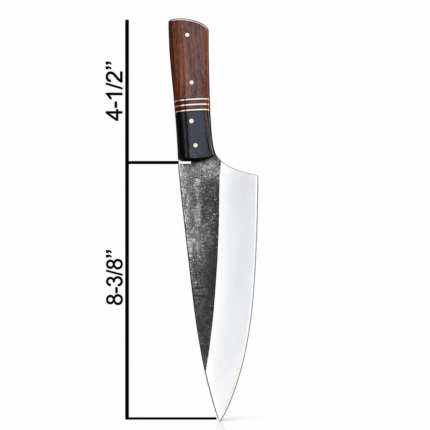
The uploaded image contains no reliable measurement reference.
As a result, the overall length and blade length cannot be determined accurately.
The Brown Wood Handle Damascus Pattern Hunting Knife may appear compact or moderately sized in the photograph, but such impressions are not reliable measurements.
The manufacturer should supply the actual dimensions.
Useful details include overall length, blade length, blade thickness, handle length, and weight.
These specifications help customers compare the knife with similar fixed-blade products.
They also provide useful information for storage and accessory compatibility.
Until confirmed, avoid publishing exact measurements or describing the knife as lightweight, heavy-duty, or oversized.
Caring for the Blade Finish
Proper maintenance depends on the actual steel and surface treatment.
After manufacturer-approved use, remove dirt or residue with suitable cleaning materials.
Dry the blade thoroughly before storage.
Do not assume that the patterned finish is resistant to moisture or corrosion.
The Brown Wood Handle Damascus Pattern Hunting Knife has visible surface markings that should be preserved during cleaning.
Harsh abrasives may alter decorative finishes.
Avoid using aggressive chemicals unless the manufacturer specifically recommends them.
If a protective oil is required, choose one appropriate for the verified blade material and intended application.
Store the knife in a dry environment and inspect the blade periodically.
Follow the supplier’s care instructions whenever available.
Maintaining the Handle
The handle has dark and medium-brown sections with a smooth-looking finish.
Different handle materials require different care.
Natural wood may have maintenance needs that differ from stabilized wood or manufactured composites.
The Brown Wood Handle Damascus Pattern Hunting Knife should be cleaned according to its confirmed handle material.
Avoid prolonged exposure to water and excessive heat.
Use a soft cloth to remove ordinary surface dust.
Do not apply strong solvents to the handle without verifying their compatibility.
Inspect the visible fittings occasionally.
If a handle component becomes loose or damaged, discontinue use until the product has been properly assessed.
Following material-specific care instructions can help preserve the knife’s appearance.
Storage and Responsible Ownership
Any knife with an exposed cutting edge requires careful handling and secure storage.
Keep the blade protected when the knife is not in use.
The Brown Wood Handle Damascus Pattern Hunting Knife should be stored away from children and unauthorized users.
A compatible protective sheath or secure storage solution may be appropriate.
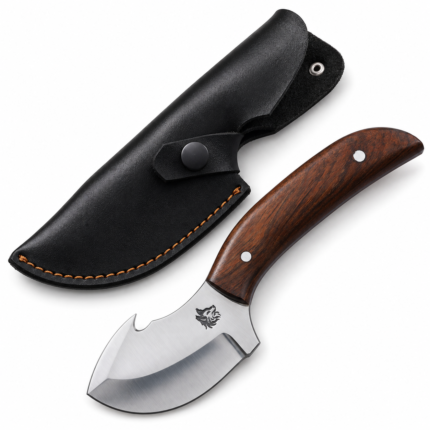
However, no sheath is shown in the photograph.
Customers should confirm whether a sheath is included before ordering.
Do not assume that additional accessories are supplied unless the product package is documented.
Follow applicable laws and regulations concerning knife ownership, transport, and storage.
Use the product only for applications approved by the manufacturer.
Comparing This Knife with Other Fixed-Blade Designs
There are many fixed-blade knives available, and their designs can vary significantly.
Some have plain metal finishes and single-color handles.
Others feature decorative patterns or multiple handle materials.
The Brown Wood Handle Damascus Pattern Hunting Knife is distinguished by its layered-looking blade pattern and three-tone handle design.
Its gold-colored bolster introduces a particularly noticeable visual detail.
The curved cutting edge and pointed blade shape establish its hunting-inspired silhouette.
Customers comparing similar products should look beyond appearance.
Confirmed blade steel, handle material, weight, construction, and intended use are all important.
These details allow buyers to understand how one product differs from another.
The most accurate comparison combines visible design characteristics with reliable manufacturer specifications.
What to Confirm Before Ordering
Before purchasing, customers should verify the exact steel composition and blade manufacturing method.
The handle material should also be identified.
The Brown Wood Handle Damascus Pattern Hunting Knife has visible metallic fittings, but their material composition remains unknown.
Customers should ask whether a protective sheath is included.
Overall length, blade length, thickness, and weight should be confirmed.
The supplier should also explain any available color variations or customization options.
Bulk buyers may wish to request a sample before placing a larger order.
These steps help avoid misunderstandings about the product.
They are particularly important when ordering visually similar knives from different manufacturers.
Final Thoughts
The Brown Wood Handle Damascus Pattern Hunting Knife combines a flowing Damascus-style blade pattern, a curved pointed profile, and a distinctive multitone brown handle.
Its gold-tone bolster, metallic spacers, circular pins, and contoured grip give the product a traditional decorative character.
For adult collectors and enthusiasts who appreciate fixed-blade cutlery, these visible design elements make it a noteworthy option.
Explore this patterned hunting-style knife and request the manufacturer’s confirmed dimensions, materials, and intended-use specifications before making your purchasing decision.



Reviews
There are no reviews yet.