









Damascus Fillet Knife – Patterned Fish Preparation Knife with Blue Handle
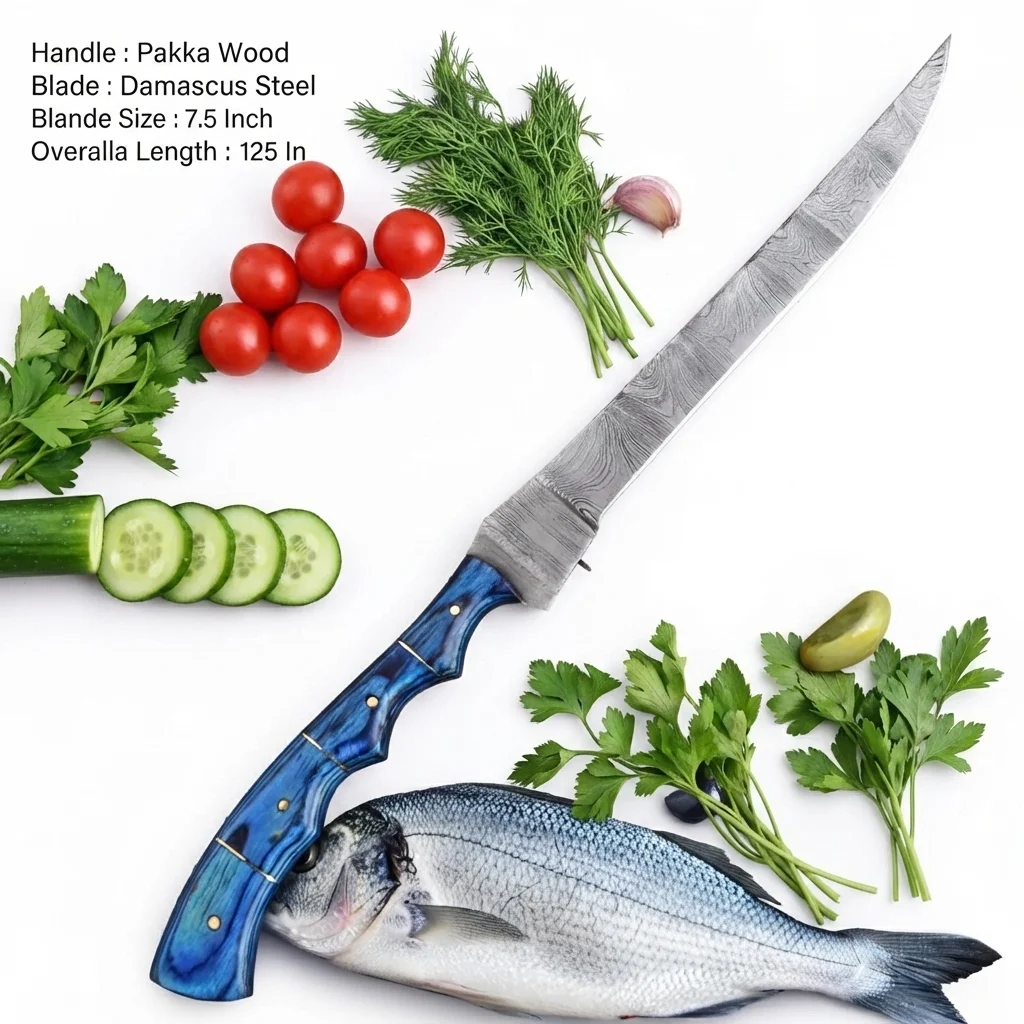
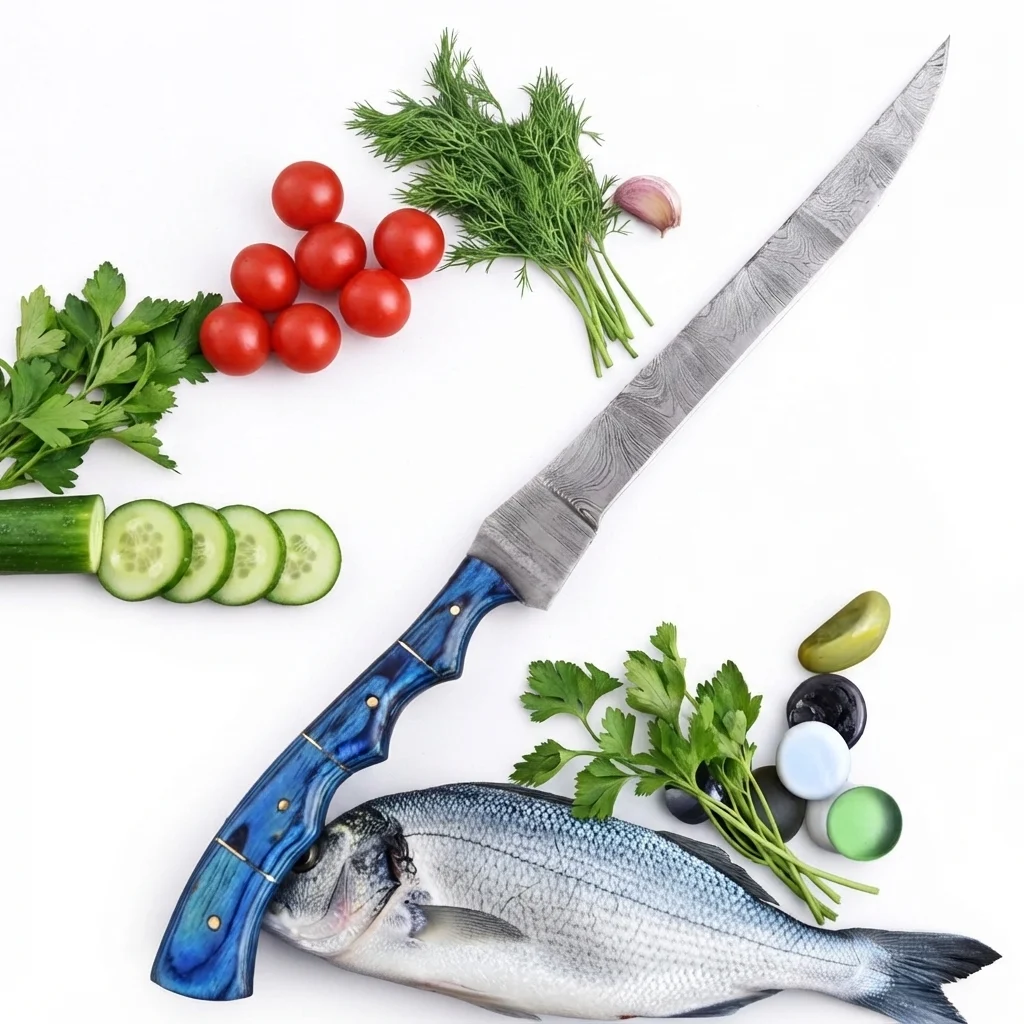
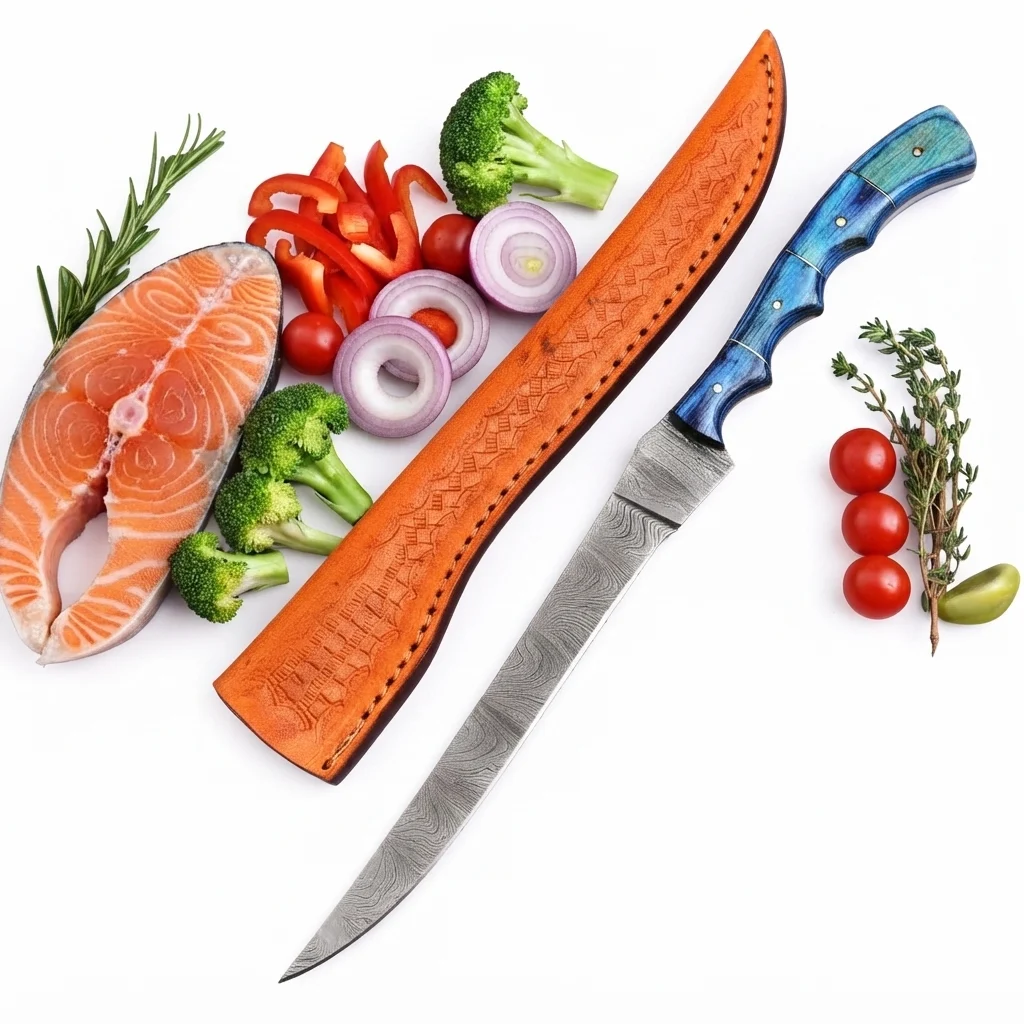
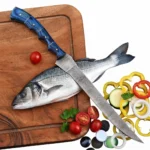
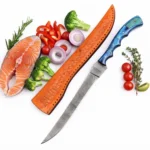
The Damascus Fillet Knife combines a long, narrow blade profile with intricate Damascus-style patterns, a distinctive blue wood-grain handle and a coordinated orange leather-style sheath. Featuring an elongated pointed blade and contoured grip, this knife presents a recognizable fish fillet knife design suitable for culinary equipment collections and seafood preparation assortments.
The blade displays flowing layered-looking patterns that create a decorative metallic appearance. Its narrow profile gradually tapers toward a pointed tip, reflecting the visual characteristics commonly associated with fillet knives.
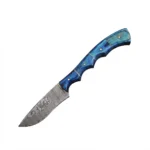
The handle features rich blue tones, dark flowing markings and natural-looking grain patterns. Its gently curved design complements the slim blade and provides a distinctive visual contrast.
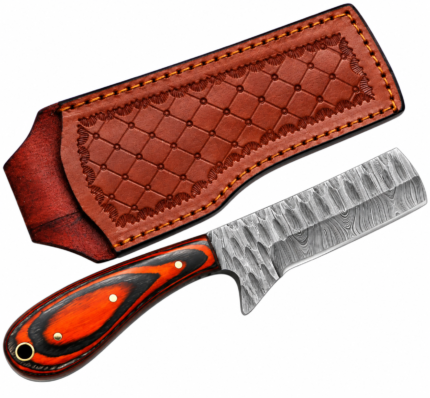
An orange sheath with decorative embossing and visible stitching accompanies the knife, creating a coordinated presentation.
Together, these features make the Damascus Fillet Knife an attractive option for customers interested in patterned kitchen knives, fish preparation equipment and distinctive culinary cutlery.
Distinctive Damascus-Style Blade Pattern
One of the most recognizable features of the Damascus Fillet Knife is its decorative patterned blade.
The surface displays flowing lines, layered-looking formations and subtle wave-like markings that resemble the appearance associated with Damascus steel.
These patterns extend along the length of the narrow blade, highlighting its elongated shape.
The contrast between lighter and darker metallic tones adds visual depth to the cutting section.
Visible Blade Features:
- Intricate Damascus-style blade pattern.
- Long narrow cutting profile.
- Gradually tapered pointed tip.
- Smooth curved cutting edge.
- Silver-gray metallic finish.
- Fixed-blade configuration.
These details give the knife a distinctive appearance compared with conventional plain-finish fillet knives.
The exact steel composition and manufacturing technique should be verified with the supplier before describing the blade as genuine pattern-welded Damascus steel.
Long Narrow Fillet Blade Design
The Damascus Fillet Knife features an elongated blade with a relatively narrow profile.
Its cutting edge follows a gentle curve toward the pointed front section.
The slim blade silhouette is commonly associated with fish fillet and seafood preparation knife designs.
The blade gradually narrows toward the tip, creating a recognizable culinary cutting profile.
Its patterned surface provides decorative detail without changing the overall slender appearance.
Actual blade flexibility, sharpness and suitability for filleting depend on the steel properties, blade thickness, heat treatment and manufacturing specifications.
Decorative Silver-Gray Blade Finish
The Damascus Fillet Knife features a silver-gray blade surface with intricate layered-looking details.
The metallic appearance provides a neutral contrast against the colorful handle.
The decorative patterns vary along the blade, creating a distinctive visual texture.
Unlike completely polished kitchen knives, the patterned surface adds traditional decorative character.
The smooth blade outline complements the flowing metallic markings.
The exact finishing process and corrosion resistance should be confirmed with the manufacturer.
Blue Wood-Grain Handle Design
The handle is one of the most distinctive features of the Damascus Fillet Knife.
Its surface displays rich blue tones mixed with darker flowing patterns and subtle natural-looking accents.
The design resembles decorative wood grain, creating an eye-catching contrast with the silver-gray blade.
The handle follows a gently curved profile with several subtle contours along its underside.
Visible Handle Features
- Blue wood-grain-style appearance.
- Dark flowing decorative markings.
- Curved grip profile.
- Contrasting end sections.
- Visible metallic fastening pins.
- Decorative circular fittings.
- Coordinated color design.
The actual handle material should be confirmed before describing it as stabilized wood, natural wood, resin or another specific material.
Contoured Curved Grip Profile
The Damascus Fillet Knife features a handle with a gently curved shape.
Its underside includes subtle finger contours that contribute to the recognizable grip profile.
The rear section widens slightly, creating a rounded handle end.
The blue decorative finish follows the curves of the grip, maintaining a consistent appearance.
The handle’s shape complements the long narrow blade and contributes to the knife’s overall design.
Actual grip comfort and security depend on the confirmed handle material, dimensions and surface finish.
Decorative Metallic Handle Pins
Several small metallic-colored pins are visible along the handle.
These details provide contrast against the blue surface.
The handle also includes decorative separators between its different sections.
Their metallic appearance complements the silver-gray blade.
The exact fastening construction and materials should be verified with the manufacturer.
Together, these details contribute to a coordinated and carefully styled appearance.
Orange Leather-Style Sheath
An attractive feature of the Damascus Fillet Knife is the accompanying orange sheath.
The sheath features a long, narrow shape that follows the general outline of the blade.
Its warm orange-brown exterior contrasts with the blue handle and silver-gray blade.
Decorative embossed patterns extend across the sheath surface, while visible stitching follows the outer edge.
Visible Sheath Features:
- Orange-brown leather-style appearance.
- Long narrow blade-covering profile.
- Decorative embossed surface.
- Contrasting edge stitching.
- Curved pointed front section.
- Coordinated knife storage design.
The actual sheath material, internal protection and attachment features should be verified with the supplier.
Distinctive Blue and Orange Color Combination
The Damascus Fillet Knife features a visually striking combination of blue, silver-gray and orange tones.
The patterned metallic blade provides a neutral foundation.
The blue handle introduces a vibrant decorative element, while the orange sheath creates a warm contrast.
These colors work together to create a recognizable presentation.
The combination distinguishes the knife from conventional kitchen cutlery featuring plain black or brown handles.
This makes the product visually appealing for culinary knife catalogs and decorative kitchen equipment displays.
Traditional Fillet Knife Styling
The Damascus Fillet Knife features a slim blade design commonly associated with fish preparation knives.
Its long cutting profile and tapered tip create a recognizable culinary silhouette.
The decorative blade pattern adds traditional styling, while the blue handle provides a contemporary visual element.
The orange sheath complements the overall appearance.
This combination creates an attractive knife design for customers interested in distinctive food preparation equipment.
Suitable for Fish Preparation Collections
The Damascus Fillet Knife may appeal to customers interested in seafood preparation equipment and decorative kitchen cutlery.
Its narrow blade profile resembles common fish fillet knife designs.
Potential Applications Include:
- Fish preparation equipment collections.
- Seafood cutting knife assortments.
- Culinary knife displays.
- Kitchen cutlery collections.
- Fishing accessory assortments.
- Decorative cooking equipment.
- Fillet knife product catalogs.
Actual suitability for specific food preparation tasks depends on verified blade flexibility, material composition, edge geometry and manufacturer recommendations.
Attractive Culinary Knife Presentation
The Damascus Fillet Knife combines decorative blade patterns with a distinctive handle and matching sheath.
The silver-gray blade displays detailed flowing markings, while the blue grip introduces a colorful accent.
The orange sheath adds another decorative component through its embossed patterns and stitching.
Together, these features create a coordinated appearance suitable for product photography, kitchen equipment catalogs and culinary gift assortments.
Any claims about gift packaging or included accessories should be confirmed before publication.
Knife Care and Maintenance
Proper maintenance helps preserve the appearance and condition of the Damascus Fillet Knife.
After handling or use, the blade should be cleaned carefully and dried thoroughly.
Avoid prolonged moisture exposure, particularly when the exact steel composition and corrosion resistance are unknown.
The patterned blade surface should be maintained using cleaning methods appropriate for its confirmed finish.
The blue handle should be cleaned according to its actual material composition.
Avoid harsh chemicals that may damage the decorative grip or metallic fittings.
Hand washing is generally a cautious option when dishwasher compatibility has not been verified.
The accompanying sheath should be kept clean and dry according to its material requirements.
Store the knife securely in an appropriate protective covering or storage case.
Keep sharp knives away from children and unauthorized users.
Why Choose the Damascus Fillet Knife?
The Damascus Fillet Knife offers a distinctive combination of an elongated patterned blade, curved blue wood-grain handle and decorative orange sheath.
Its narrow blade profile creates a recognizable fish fillet knife appearance, while the flowing Damascus-style markings provide decorative appeal.
The blue handle introduces a contemporary color element, and metallic fittings add subtle finishing details.
The orange sheath completes the coordinated presentation with embossed patterns and visible stitching.
For customers interested in decorative fish preparation knives and distinctive kitchen cutlery collections, this product provides an attractive combination of traditional styling and modern visual details.
Whether selected for a personal culinary collection or featured in a kitchen equipment catalog, the Damascus Fillet Knife stands out through its patterned blade, colorful handle and coordinated sheath.







Reviews
There are no reviews yet.