


Damascus Pattern Antler Handle Hunting Knife with Brown Sheath
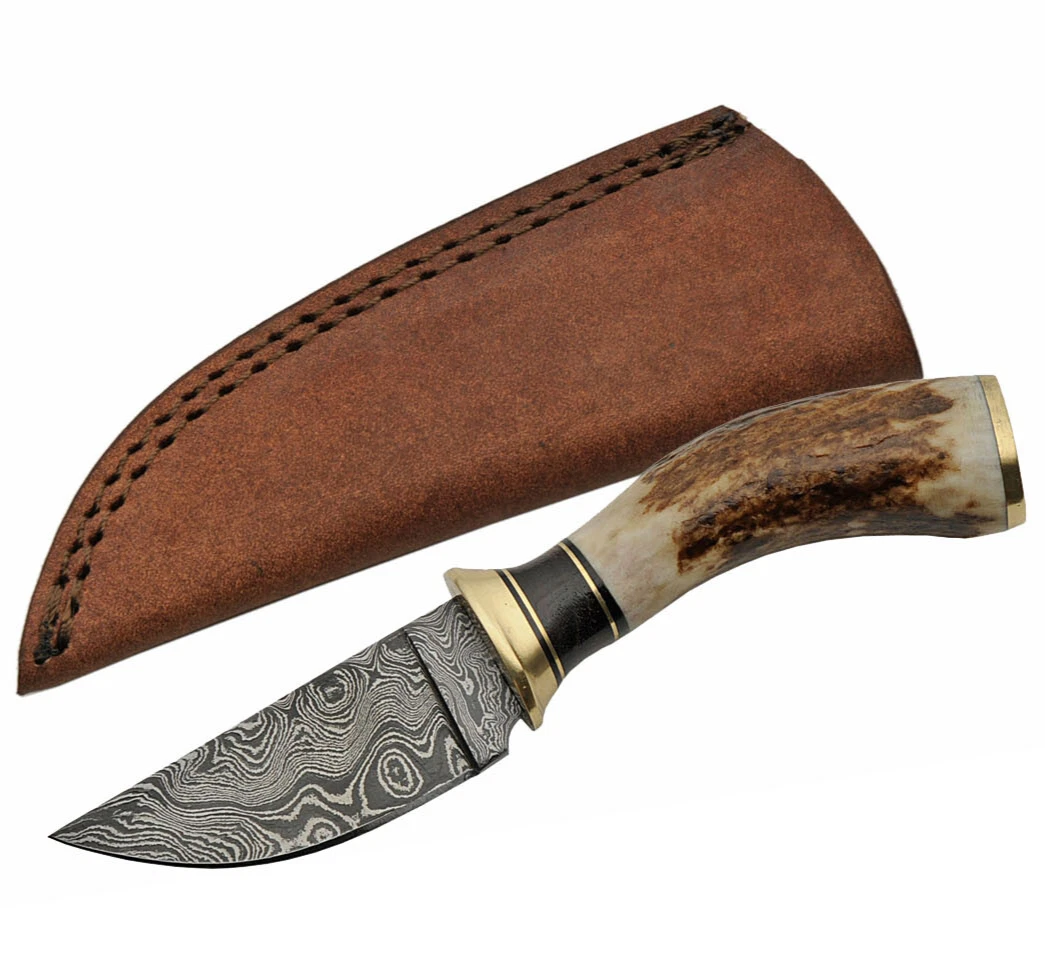
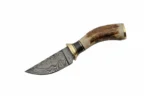
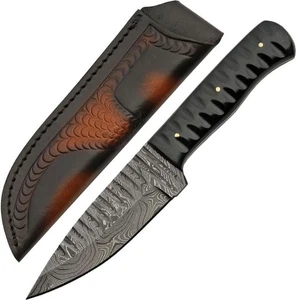
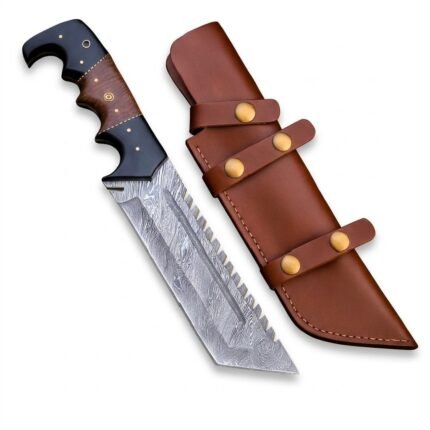
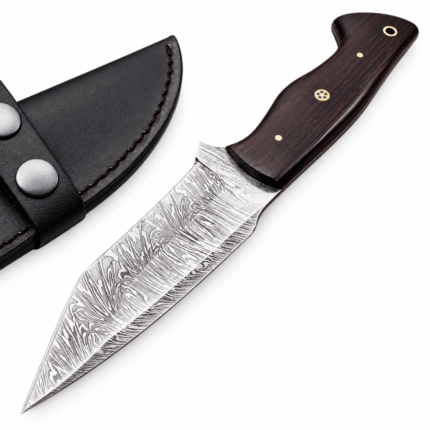
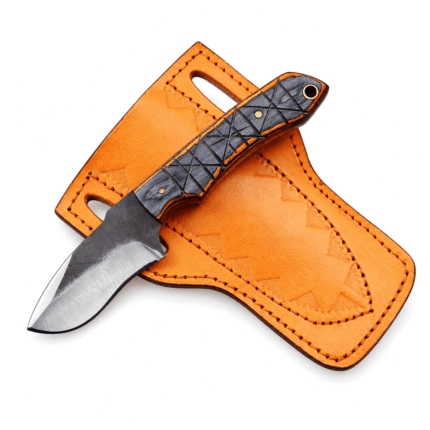
The Damascus Pattern Antler Handle Hunting Knife combines a traditional outdoor blade design with distinctive decorative detailing. Featuring an intricately patterned blade, a naturally inspired cream-and-brown handle, gold-colored fittings, and a matching brown sheath, this knife has a classic appearance that appeals to adult hunting enthusiasts, outdoor equipment collectors, and customers who appreciate traditional knife designs.
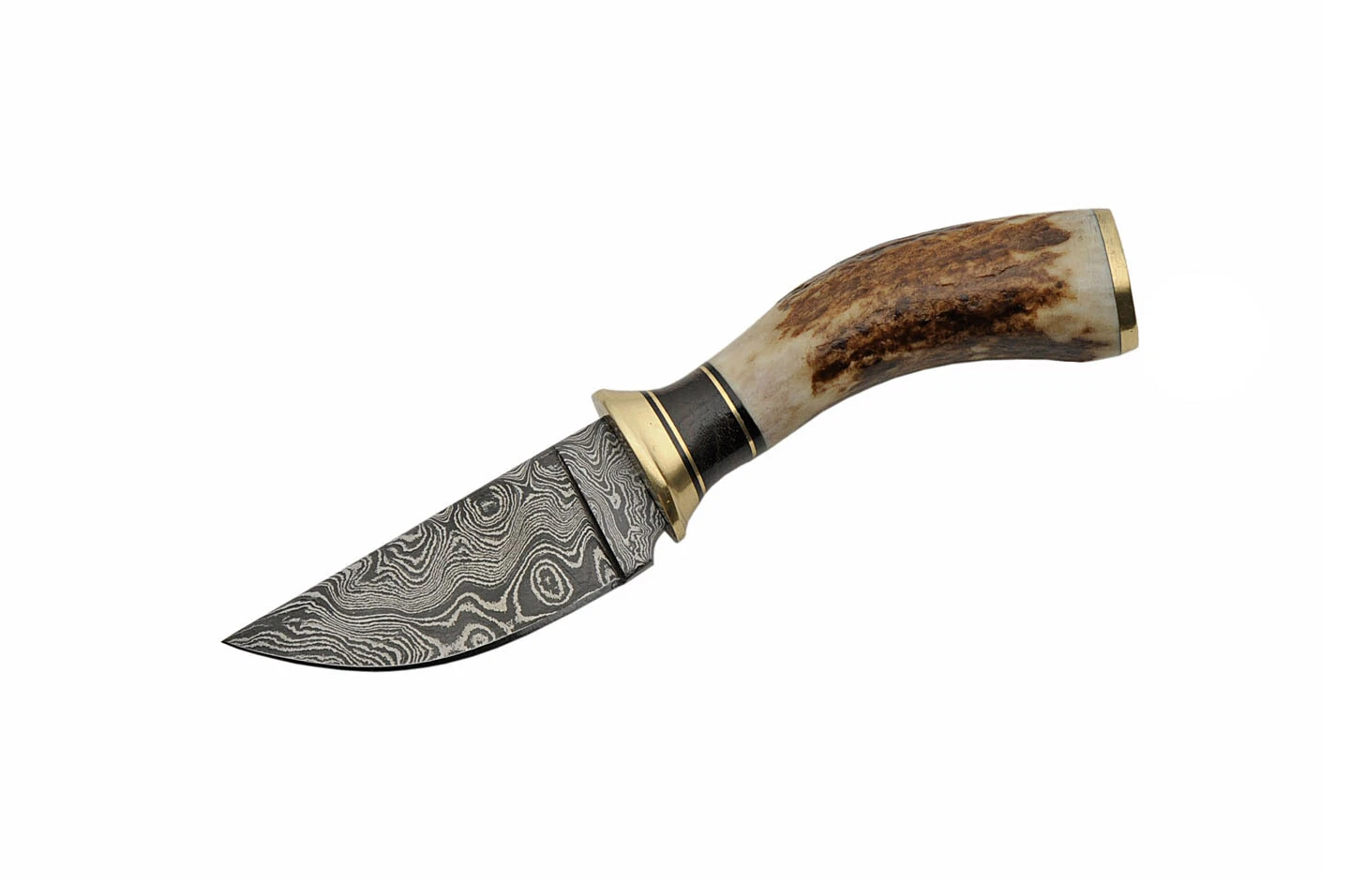
The blade features a broad curved cutting edge and a pointed tip, giving it a recognizable hunting and skinning knife profile. Across the metallic surface, flowing Damascus-style patterns create an attractive combination of light and dark grey lines.
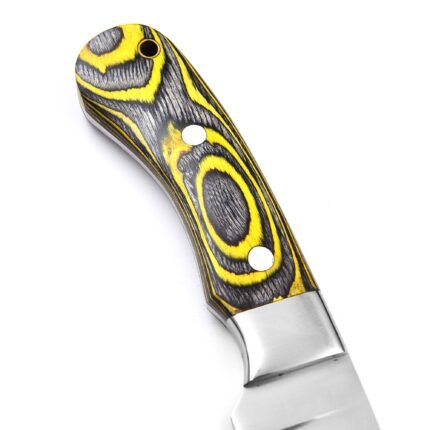
The handle adds another distinctive element. Its curved shape and irregular brown-and-cream coloring resemble natural stag antler, while the smooth dark spacer and gold-colored accents provide a contrasting finish.
A brown stitched sheath accompanies the knife in the photograph, completing its traditional outdoor presentation.
This model is particularly attractive to customers who prefer compact fixed-blade hunting knives with decorative features rather than plain utility designs.
Damascus-Pattern Hunting Knife with a Distinctive Blade
One of the most recognizable features of this hunting knife is its intricate Damascus-style blade pattern.
The visible metallic surface displays flowing lines, circular formations, and irregular layered shapes. These patterns follow the general contours of the blade, creating an appearance commonly associated with traditional Damascus knife-making.
Damascus-style blade patterns are popular among knife collectors because they add character and visual variation to a metallic surface.
The photographed pattern includes both tightly grouped lines and larger circular details. Several oval-shaped formations are visible across the blade, surrounded by continuous wave-like markings.
This combination creates a layered appearance that makes the knife visually different from ordinary polished or coated blades.
The pattern is especially noticeable across the broad cutting section, where the contrast between darker and lighter tones creates depth.
Although the blade resembles pattern-welded Damascus steel, its exact material composition and manufacturing process have not been independently confirmed.
True pattern-welded Damascus steel is commonly manufactured using multiple steel layers, but visually similar patterns may also be created through alternative processes.
Therefore, this knife is accurately described as having a Damascus-pattern blade until the supplier verifies its construction.
For customers interested in the appearance of traditional patterned knives, the blade is one of this product’s main attractions.
Traditional Fixed-Blade Knife Construction
The knife features a fixed-blade configuration rather than a folding design.
Fixed-blade knives are familiar tools in hunting and outdoor equipment collections. Their blades remain extended, eliminating the opening and locking mechanisms associated with folding pocket knives.
The design provides a straightforward knife profile, with the blade extending from a handle that remains in a fixed position during normal use.
This configuration is commonly associated with hunting, field dressing, camping, and appropriate outdoor cutting applications.
The pictured knife has a pronounced transition between its blade and handle, with a gold-colored bolster positioned near the front of the grip.
Its construction style emphasizes the traditional relationship between a patterned metallic blade and a contoured handle.
Although fixed-blade construction can be relevant to outdoor utility, the actual strength of a knife depends on additional factors.
These include blade thickness, steel type, tang construction, heat treatment, and overall manufacturing quality.
Such specifications cannot be verified through the uploaded photograph.
Customers who plan to use the knife for demanding activities should request confirmed technical information from the manufacturer.
Curved Skinning-Style Blade Profile
The blade has a broad cutting belly and a gently curved edge that extends toward a pointed tip.
This profile is commonly associated with hunting and skinning knives.
A curved cutting edge can be useful for controlled slicing movements when the knife is properly manufactured, sharpened, and used for an appropriate task.
The broad section provides an extended curved cutting profile, while the narrower front creates a familiar hunting-knife silhouette.
Unlike a straight-edged utility blade, this design emphasizes a rounded cutting belly.
The blade also differs from a gut-hook hunting knife because no integrated gut hook is visible.
Its appearance is closer to a conventional hunting or skinning knife intended for general cutting applications.
The pointed tip is relatively narrow compared with the broad central blade section.
This combination gives the knife a balanced visual appearance, with a noticeable transition from the wider blade to its curved tip.
Actual sharpness, edge retention, and cutting performance cannot be determined from the image alone.
However, its profile is consistent with the style of fixed-blade knives commonly marketed for hunting-related cutting and game-processing applications.
Intricate Layered Metallic Blade Appearance
The blade’s surface is a defining part of its overall design.
Instead of a uniform silver finish, it features multiple shades of grey arranged in flowing patterns.
The lines appear to run across the blade in irregular formations, creating a decorative surface reminiscent of layered metal.
Some areas feature tightly arranged curves, while others display wider oval patterns.
This variation contributes to the knife’s traditional decorative character.
The metallic surface also contrasts with the softer cream-and-brown tones of the handle.
For collectors, this combination of patterned steel appearance and natural-looking handle material may be particularly appealing.
The pattern gives the knife a distinctive identity without requiring an unusually large or exaggerated blade shape.
Its general outline remains consistent with conventional compact hunting knives.
The surface finish should be maintained according to the actual blade material.
The photograph does not confirm whether the steel is stainless, high-carbon, pattern-welded, or manufactured using another method.
Accordingly, claims about corrosion resistance, hardness, edge retention, or layer count should be supported by supplier specifications.
Antler-Style Handle with Natural-Looking Texture
The handle is another striking feature of this hunting knife.
Its cream-and-brown coloring closely resembles the appearance of natural stag antler.
The visible surface includes irregular brown markings, lighter cream-colored areas, and subtle texture variations.
These details give the handle a traditional outdoor character that complements the patterned blade.
Antler-inspired handle designs are often associated with classic hunting knives because of their natural appearance.
The handle’s gently curved profile adds to this traditional styling.
From the front bolster, the handle extends into a slightly arched shape before widening toward the rear end.
This creates a distinctive silhouette rather than the completely straight profile found on some modern utility knives.
The image suggests an antler-like material, but the exact composition remains unverified.
Natural antler, bone, resin, and other synthetic materials can sometimes appear similar in photographs.
For this reason, the product is described as having an antler-style handle rather than being advertised as genuine stag antler.
Customers requiring natural antler should confirm the material with the supplier before purchasing.
Cream and Brown Handle Color Combination
The handle features warm natural-looking colors.
Cream tones cover much of the visible surface, while darker brown markings create irregular contrast along the upper section.
These variations give the handle a rustic appearance.
The color combination is particularly suitable for customers who prefer traditional outdoor knife designs over brightly colored synthetic grips.
Unlike plain black handles, the cream-and-brown pattern creates visual interest without introducing a modern tactical appearance.
It also complements the grey blade pattern and the brown sheath.
The handle’s coloring makes the knife recognizable when displayed alongside other hunting knives.
For collectors, the combination of natural-looking textures and metallic detailing may be one of the product’s strongest visual characteristics.
Because the handle material is not confirmed, individual color variations and material characteristics should not be promised without manufacturer information.
Contoured Handle Design
The handle has a gently curved shape that follows the traditional appearance of certain hunting knives.
Its upper surface arches slightly, while the lower edge follows a complementary contour.
This creates an organic profile that matches the antler-inspired finish.
The rear section appears somewhat wider than the narrow portion near the front bolster.
Such shaping is commonly found on knives intended to be held during controlled cutting tasks.
However, the actual grip comfort, balance, and handling characteristics cannot be assessed from a photograph.
The handle’s performance depends on its dimensions, material, surface condition, and the user’s hand size.
The appearance alone does not establish that the grip is slip-resistant or ergonomically tested.
For customers interested in frequent outdoor use, verified handle measurements are important.
The handle’s visual design makes it an attractive choice for traditional-style knife collections.
Gold-Colored Bolster and Handle Fittings
A noticeable gold-colored bolster is positioned between the blade and the handle.
This fitting creates a clear transition between the Damascus-pattern blade and the antler-style grip.
Its warm metallic color provides contrast with the grey blade surface.
Near the front of the handle, a dark spacer with thin gold-colored lines adds another decorative detail.
The combination of these elements gives the knife a refined traditional appearance.
The black spacer visually separates the cream-colored handle from the metallic bolster.
A matching gold-colored fitting is also visible at the rear end of the handle.
These details create a coordinated design in which the front and rear fittings complement one another.
Although the fittings resemble brass, their exact material cannot be confirmed from the photograph.
They should therefore be described as gold-colored metallic components until supplier documentation establishes their composition.
Black Decorative Spacer
The smooth dark section near the front of the handle creates a visual separation between the bolster and the antler-style grip.
This section appears black or very dark brown.
Thin gold-colored accent lines border the spacer, giving it a layered appearance.
The combination of black and gold-colored detailing adds contrast to the warm handle tones.
It also draws attention to the transition between blade and grip.
This type of decorative styling is often associated with traditional fixed-blade knives and collector-oriented outdoor designs.
The exact material of the spacer cannot be established from the image.
It should not be described as ebony, buffalo horn, or another specific material without supplier verification.
Its visible appearance can accurately be described as a dark decorative spacer with gold-colored trim.
A Traditional Hunting Knife Aesthetic
The knife combines several familiar elements of traditional hunting equipment.
These include a broad curved blade, antler-inspired handle, metallic bolster, and brown protective sheath.
Each component contributes to its classic appearance.
The blade’s flowing pattern introduces decorative detail, while the handle’s natural-looking colors provide a rustic contrast.
The gold-colored fittings create a more refined presentation.
The sheath adds an additional traditional feature through its simple shape and dark stitching.
Together, these elements create a cohesive outdoor knife design.
Customers who prefer traditional hunting equipment may find the knife’s appearance more appealing than modern knives with highly angular blade profiles and synthetic black handles.
This model emphasizes classic styling while retaining the recognizable structure of a fixed-blade hunting knife.
Brown Stitched Protective Sheath
The uploaded photograph shows a brown sheath positioned behind the knife.
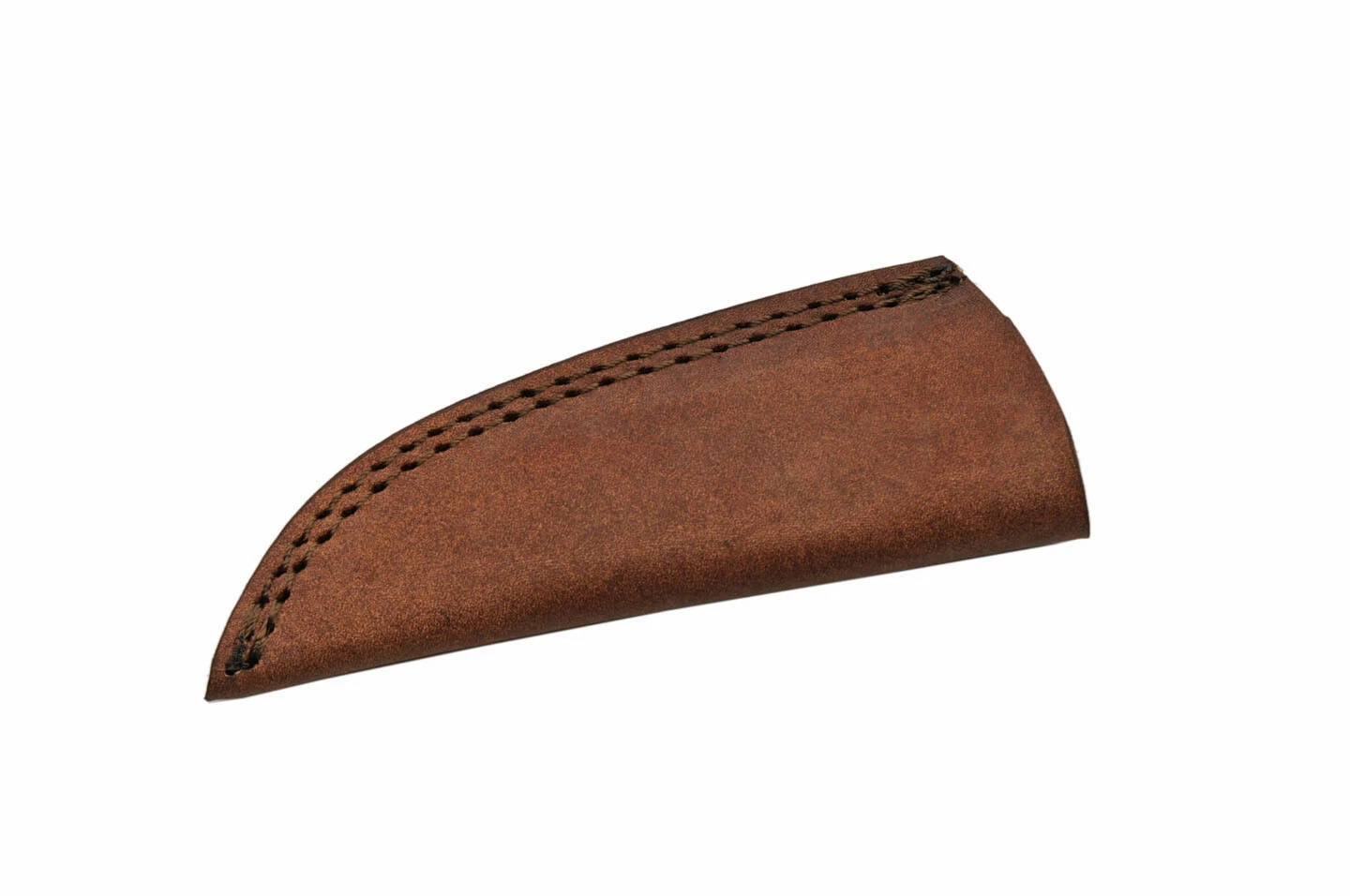
The sheath has a tapered profile with a curved lower section and a wider opening near the top.
Its surface has a matte, suede-like appearance.
A line of dark stitching follows the outer edge, creating a simple decorative border.
The warm brown color complements the cream-and-brown handle.
The sheath resembles a traditional leather knife sheath, but its exact material cannot be confirmed from the image.
Genuine leather, suede, and certain synthetic materials may look similar in product photographs.
Therefore, the sheath should be described as a brown leather-style sheath unless its composition is verified.
The pictured design provides a coordinated storage accessory for the knife.
A protective sheath can help keep a compatible blade covered when properly fitted and used.
Before advertising the sheath as included with every order, the seller should confirm the final package contents.
Simple Stitched Sheath Design
Unlike heavily decorated sheaths with large embossed panels or multiple straps, the pictured sheath has a relatively simple appearance.
Its main surface is plain brown, with dark stitching following the perimeter.
This restrained design complements the detailed blade pattern.
The contrast between the simple sheath and the more decorative knife creates a balanced presentation.
The sheath’s lower section follows the general shape of a curved knife blade.
Its upper opening is wider, providing a recognizable traditional sheath profile.
No belt loop or fastening strap is clearly visible in the photograph.
For that reason, those features should not be advertised as confirmed.
The sheath’s fit, retention method, internal lining, and attachment options should be checked with the manufacturer.
Suitable for Hunting Equipment Collections
The knife’s curved blade profile and fixed construction are consistent with traditional hunting and skinning knife designs.
Hunting knives are commonly used for suitable outdoor cutting tasks and game-processing activities.
The curved cutting belly may be relevant to customers who prefer this blade shape for controlled slicing.
Its pointed tip also contributes to the familiar profile of a compact hunting knife.
However, the actual suitability of the product for particular activities depends on verified steel properties, dimensions, sharpness, and construction.
These factors cannot be determined reliably from the photograph.
Customers should consider their intended application before selecting a knife.
For specialized work, confirmed specifications and appropriate handling techniques are essential.
The product should not be described as suitable for heavy chopping, prying, or impact tasks without manufacturer evidence.
Outdoor and Camping Knife Collections
Fixed-blade knives are common additions to outdoor equipment collections.
This model may appeal to customers who appreciate classic hunting-knife styling and decorative metallic patterns.
Its compact-looking design, natural-inspired handle, and coordinated sheath create a traditional outdoor appearance.
For camping enthusiasts, the knife may be of interest as part of an equipment collection.
Actual suitability for camp-related cutting tasks depends on the knife’s verified specifications.
Customers should confirm its overall length, blade length, thickness, weight, and material before relying on it for a specific activity.
The traditional sheath provides a matching accessory for appropriate storage.
As with all fixed-blade knives, proper blade protection and secure storage are important.
An Attractive Knife for Collectors
Knife collectors often appreciate distinctive blade patterns, traditional handle materials, and coordinated decorative fittings.
This model combines all three visual elements.
The Damascus-style blade provides intricate flowing patterns.
The antler-style handle introduces natural-looking texture and warm colors.
Gold-colored metallic fittings contribute a traditional decorative finish.
The brown sheath completes the presentation.
These details may make the knife an appealing addition to a collection of hunting knives, decorative blades, or traditional outdoor equipment.
The model also differs visually from knives with plain stainless-look blades, black coatings, or colorful synthetic handles.
For adult collectors who prefer rustic and classic knife designs, its combination of materials and colors is particularly distinctive.
Claims of collectible rarity, handmade production, historical origin, or investment value would require additional evidence.
A Traditional Gift Option for Adult Collectors
A decorative hunting-style knife can be a considered gift for an adult who appreciates outdoor equipment or knife collecting.
The combination of patterned blade, natural-looking handle, and matching sheath gives this model a distinctive presentation.
Its gold-colored fittings add visual detail, while the curved blade profile maintains a traditional hunting-knife appearance.
For customers selecting a gift, the actual product specifications and package contents should be confirmed beforehand.
If the intended recipient specifically prefers genuine antler handles or pattern-welded Damascus steel, supplier verification is especially important.
Buyers should also check applicable age restrictions, shipping requirements, and local regulations.
The knife should be handled and stored responsibly.
Blade Care and Maintenance
Proper maintenance is important for preserving the appearance and condition of any fixed-blade knife.
After appropriate use, carefully remove visible debris from the blade.
Clean the surface using methods suitable for the confirmed steel type and finish.
Dry the blade thoroughly before storage.
Pay particular attention to the transition between the blade and handle, where moisture or residue may collect.
The Damascus-style pattern may require careful treatment to preserve its appearance.
Avoid aggressive abrasive cleaning unless specifically recommended by the manufacturer.
Certain steel compositions may benefit from a suitable protective oil.
However, maintenance products should be selected according to the actual material.
If the knife is used for food-related processing, only appropriate cleaning and maintenance products should be used.
Inspect the blade periodically for signs of corrosion, damage, or edge deterioration.
Sharpening should follow methods suitable for the blade’s verified geometry and steel composition.
Caring for the Antler-Style Handle
The handle should be cleaned gently to maintain its decorative appearance.
Because its material is not confirmed, prolonged soaking should be avoided unless approved by the manufacturer.
A soft cloth may be suitable for removing ordinary surface dust.
Harsh solvents and aggressive cleaning products may damage certain natural materials, resins, adhesives, or surface finishes.
For genuine antler, bone, or wood, specific care instructions may apply.
These should not be assumed until the handle composition has been verified.
The handle should be dried after cleaning and inspected for signs of damage or looseness.
The decorative dark spacer and metallic fittings should also be kept clean.
Avoid exposing the knife to unnecessary moisture and extreme storage conditions.
Sheath Care and Proper Storage
The brown sheath should be kept clean and dry.
Its stitched edges should be inspected periodically for visible wear.
If the sheath is confirmed as genuine leather or suede, suitable material-specific care products may help preserve its condition.
If synthetic, different cleaning methods may be required.
Do not apply leather conditioners until the material is verified.
Avoid inserting a wet or dirty blade into the sheath.
For extended storage, a clean, dry blade should be kept in conditions appropriate to its material.
The sheath should fit securely and protect the cutting edge during intended storage or transport.
Because the photograph does not reveal its internal construction or retention features, these details should be confirmed before making performance claims.
Responsible Knife Handling
This hunting-style knife has a pointed tip and a visible cutting edge.
It should be treated as a sharp tool.
Keep fingers away from the edge during use, cleaning, and maintenance.
Use the knife only for tasks suitable for its verified construction.
Avoid using it as a pry bar, screwdriver, or impact tool unless the manufacturer specifically approves those applications.
Store the knife securely when not in use.
Keep it away from children and unauthorized users.
Check applicable laws before purchasing, carrying, shipping, or transporting the knife.
Before placing the knife in its sheath, ensure the blade is clean and that the sheath is appropriate for the model.
Key Visible Product Features
- Product type: Fixed-blade hunting and skinning-style knife
- Blade appearance: Damascus-style layered metallic pattern
- Blade profile: Broad curved cutting belly with pointed tip
- Handle appearance: Cream-and-brown antler-style surface
- Handle shape: Gently curved, contoured profile
- Front fitting: Gold-colored metallic bolster
- Decorative detail: Black spacer with narrow gold-colored trim
- Rear fitting: Gold-colored end cap
- Sheath appearance: Brown leather-style protective sheath
- Sheath detailing: Dark stitching along the perimeter
- Design character: Traditional hunting and outdoor styling
- Potential customers: Adult hunting enthusiasts and knife collectors
The actual blade steel, handle material, sheath composition, dimensions, hardness, weight, and manufacturing method require verification.
Why Choose This Damascus Pattern Antler Handle Hunting Knife?
This knife combines a recognizable hunting-knife profile with distinctive decorative styling.
Its curved blade displays detailed Damascus-inspired patterns that create visual interest across the metallic surface.
The antler-style handle adds a rustic appearance, while the black spacer and gold-colored fittings provide contrast.
The brown stitched sheath complements the knife’s traditional presentation.
For customers comparing decorative fixed-blade hunting knives, this model offers an attractive combination of patterned metal, natural-looking handle colors, and coordinated accessories.
Its appearance may particularly appeal to adult collectors who prefer traditional designs over modern tactical styling.
Practical performance should be evaluated according to confirmed manufacturer specifications.
Explore a Classic Damascus-Style Hunting Knife
The Damascus Pattern Antler Handle Hunting Knife with Brown Sheath brings together a patterned curved blade, a distinctive cream-and-brown handle, and traditional metallic detailing.
Its recognizable outdoor styling makes it an interesting choice for adult hunting enthusiasts and knife collectors.
Explore this fixed-blade hunting knife if you appreciate traditional design, Damascus-inspired blade patterns, and natural-looking handle finishes.





Reviews
There are no reviews yet.