





Damascus-Style Knife Blade Blanks with Narrow Metal Tangs
Product Overview
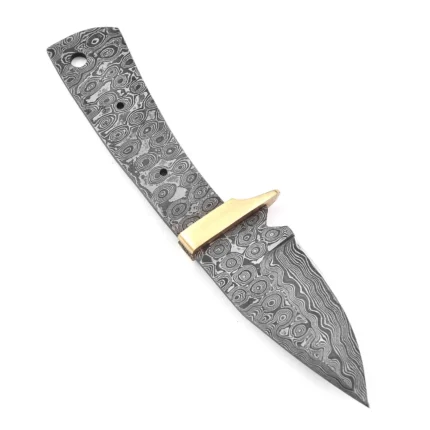
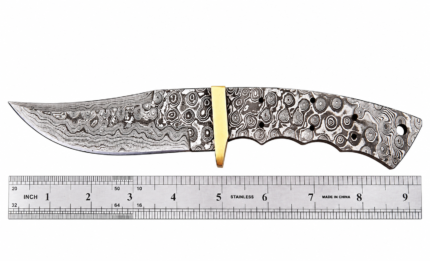
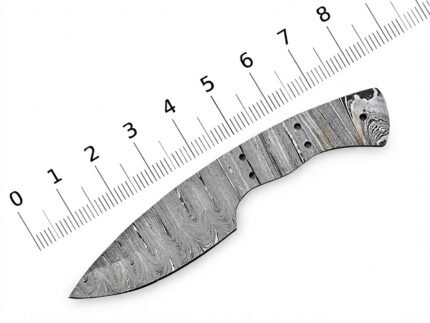
The Damascus-Style Knife Blade Blanks feature an intricate silver-gray patterned finish, elongated blade profiles, and narrow exposed metal tangs. Their distinctive appearance comes from flowing lines, contrasting metallic tones, and layered-looking surface details.
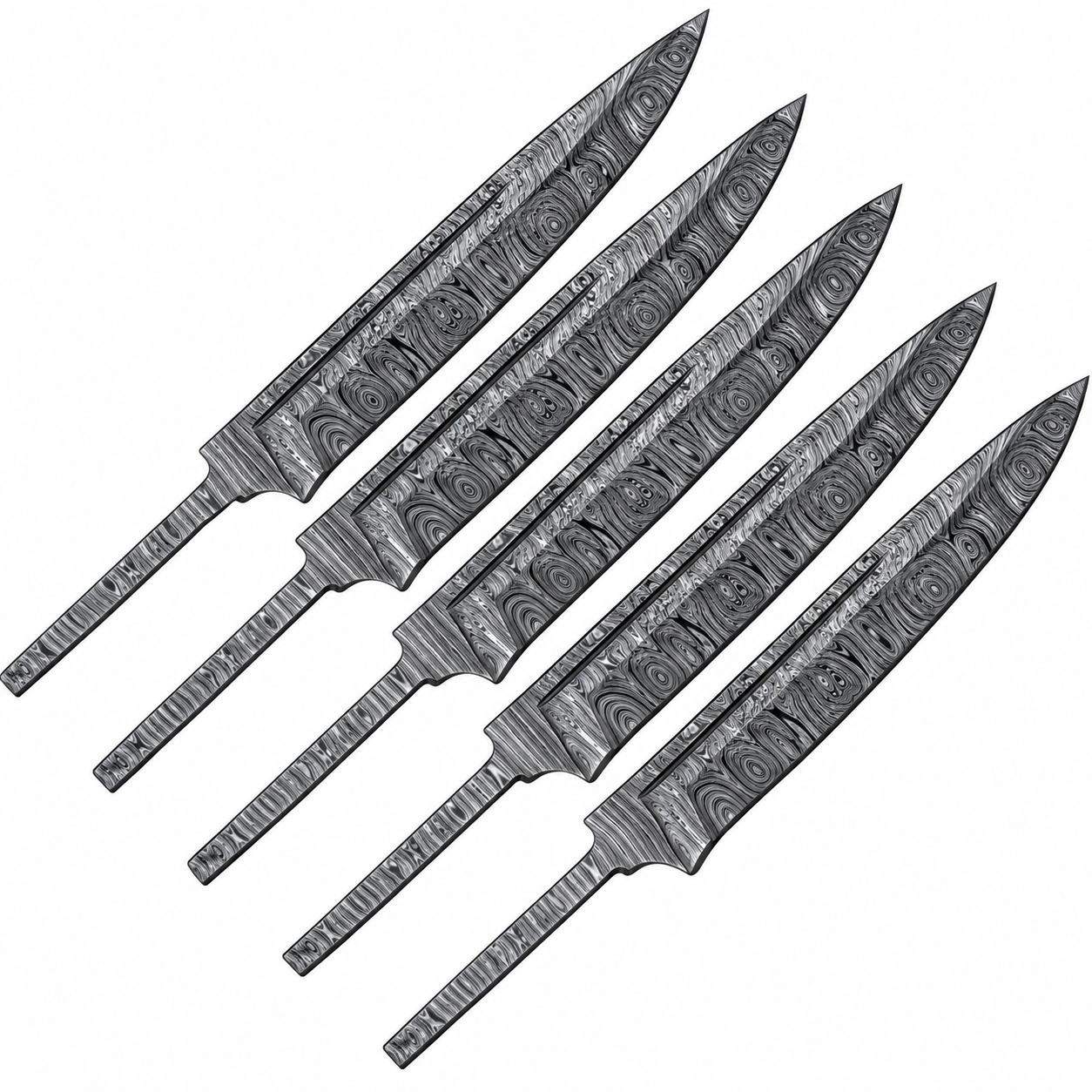
The supplied product image displays five similar blade blanks arranged diagonally against a clean white background. Each piece has a pointed blade section, a gently tapered outline, and an extended narrow tang without an attached handle.
The visible patterns resemble decorative Damascus-style metalwork. However, the photograph does not establish whether the pieces are made from genuine pattern-welded Damascus steel or another patterned metal.
These knife blade blanks are shown as unfinished components rather than completed knives.
Their exact dimensions, steel grades, manufacturing methods, and technical specifications remain unverified.
Distinctive Damascus-Style Surface Pattern
One of the most recognizable features of the Damascus-Style Knife Blade Blanks is their detailed metallic pattern.
The visible surfaces display closely spaced lines, irregular curves, and contrasting light and dark markings.
Many of these markings run along the length of the blades, creating a flowing appearance.
Other areas contain smaller irregular shapes and changes in pattern direction.
The combination produces a distinctive silver-gray decorative finish.
The pattern extends across the broader blade sections and continues onto the narrower tang extensions.
This creates a visually consistent appearance across each metal component.
Although the surface resembles traditional Damascus-style steel, the pattern alone cannot confirm the exact metal composition or manufacturing method.
Elongated Blade Profiles
The blade blanks have relatively long, narrow profiles.
Each blade gradually tapers toward a pointed end.
The visible outlines are similar across the five pieces, suggesting a coordinated design.
The blade sections are broader near their bases and narrower toward their tips.
This gradual change in width creates a recognizable knife-blade silhouette.
Each blank also has a small transition area where the broader blade section meets the exposed tang.
The image clearly shows these outlines, but their exact measurements cannot be calculated reliably.
Without a measurement scale, blade length, width, and thickness must remain unspecified.
Narrow Exposed Metal Tangs
Each of the Damascus-Style Knife Blade Blanks features a narrow metal extension at the opposite end from the pointed blade.
This section is commonly called a tang.
The tangs are noticeably narrower than the blade sections.
They have relatively straight sides and small, flat-looking ends.
The visible metal pattern continues across much of these extensions.
No separate handle material is attached in the image.
The absence of handles is an important distinction between these unfinished components and complete knives.
The exact tang dimensions, thickness, and internal construction cannot be confirmed from the photograph.
Silver-Gray Metallic Appearance
The blades display a combination of silver, charcoal gray, and darker metallic markings.
Lighter sections create contrast against the deeper gray patterns.
Some areas appear more reflective, while others have a darker, textured-looking appearance.
The contrast is especially noticeable around the upper portions of the blades.
The metallic tones remain consistent across the five visible pieces.
No bright colors, attached decorative handles, or brand markings are visible.
The overall appearance is defined by the natural-looking movement of the metallic patterns rather than colored accessories.
Pattern Variations Across the Blades
Although the five blanks have very similar outlines, the visible surface markings contain subtle variations.
Some regions show tightly grouped lines.
Other areas contain broader, irregular patterns.
These differences create a complex decorative appearance.
The patterned finish extends toward the pointed ends and around the broader sections near the tangs.
Fine markings also remain visible on the exposed metal extensions.
The photograph does not establish whether these differences result from individual manufacturing variations, surface finishing, or lighting.
The five pieces should therefore be described as visually similar rather than guaranteed identical.
Longitudinal Surface Detail
A darker, narrow line-like feature is visible along part of several blade surfaces.
This detail follows the general length of the blade.
It creates an additional visual division within the patterned metal.
Because the photograph provides only one viewing angle, the depth and exact construction of this feature cannot be established.
It may represent a recessed feature, a decorative marking, or a variation in the surface finish.
The listing should not identify it as a specific engineered groove without manufacturer confirmation.
Describing the visible line-like detail is more accurate than assigning an unverified technical purpose.
Blade and Tang Transition
Each blank has a defined shoulder area where the broader blade meets the narrow tang.
The outline changes at this point, creating a visible distinction between the two sections.
The transition includes slight curves and angled contours.
These shapes are consistent with the overall appearance of unfinished knife-blade components.
The decorative metallic pattern continues through much of this region.
No additional fittings, guards, bolsters, or handle panels are shown.
The photograph establishes the visible exterior shape but not the internal structure or production process.
Five Similar Pieces in the Photograph
The uploaded image displays five individual blade blanks.
They are arranged in parallel diagonal positions with their pointed ends directed toward the upper-left portion of the image.
Their exposed tangs extend toward the lower-right.
The pieces appear similar in shape, proportion, and surface finish.
However, the image alone cannot confirm whether the commercial product is sold as one piece, a set of five, or another quantity.
This distinction matters when preparing accurate product information.
The final package quantity should be confirmed independently rather than inferred from the product photograph.
Unfinished Component Appearance
The Damascus-Style Knife Blade Blanks are shown without attached handles.
No decorative grip panels or separate handle fittings are visible.
The narrow tangs remain exposed.
This gives the pieces a distinctly unfinished appearance.
The photograph also does not show protective covers, packaging, or accompanying accessories.
The product should therefore not be described as a complete handled knife.
Likewise, no assumptions should be made about the inclusion of additional components.
Accurate catalog identification should reflect the condition and components actually visible.
Decorative Metalwork Characteristics
The surface pattern is an important part of the product’s identity.
Closely spaced metallic lines create a layered-looking appearance across each blade.
The patterns are not limited to one small area.
Instead, they cover much of the visible metal.
The flowing markings contrast with the relatively simple, tapered outlines of the blades.
This relationship between detailed surface patterns and restrained overall shapes gives the pieces their distinctive appearance.
However, no claim of handmade production, historical authenticity, or specialized steel construction can be established from the photograph.
Material Identification and Verification
The patterned surfaces visually resemble Damascus-style steel.
Genuine pattern-welded Damascus steel is associated with particular manufacturing processes, but similar-looking decorative patterns may also be produced through other finishing methods.
A photograph cannot reliably distinguish between all possible manufacturing techniques.
The steel composition, hardness, surface treatment, and production process remain unknown.
For this reason, the term Damascus-style is appropriate as an appearance-based description.
It communicates the recognizable surface pattern without implying that the material’s composition has been independently authenticated.
Missing Dimensions and Technical Information
The image does not include a ruler, specification chart, or measurement scale.
As a result, the exact blade length, overall length, tang length, width, and thickness cannot be established.
The weight of each piece is also unavailable.
The photograph provides useful information about relative proportions but cannot establish numerical specifications.
The same limitation applies to steel grade, hardness, and surface treatment.
These details should remain unspecified until verified documentation becomes available.
Presenting unknown measurements as confirmed specifications could misrepresent the product.
Image Composition and Product Presentation
The five blades are photographed against a plain white background.
This background provides strong contrast with the darker metallic patterns.
Each blade is positioned diagonally and separated from the neighboring pieces.
The arrangement makes their long, tapered outlines easy to distinguish.
The pointed ends form a staggered row across the upper portion of the image.
The narrow tang extensions follow a similar diagonal arrangement.
The white background also makes the transition between blade sections and exposed tangs clearly visible.
Only one side of the pieces is shown, so reverse-side details cannot be independently confirmed.
Visible Product Characteristics
The following characteristics can be identified from the supplied photograph:
- Five similar knife blade blanks are pictured.
- The blades have elongated, tapered profiles.
- Each has a pointed end.
- The visible surfaces display silver-gray Damascus-style patterns.
- The blades have narrow exposed tang extensions.
- No handles are attached.
- Similar longitudinal line-like markings appear on the blade surfaces.
- The pieces are arranged diagonally on a white background.
- No manufacturer logo or identifying label is visible.
These observations provide a factual basis for documenting the product.
Accurate Product Classification
The pieces are most accurately described as patterned knife blade blanks.
They are not shown as finished folding knives.
They also should not be categorized as complete handled knives.
Their identifying features are the exposed narrow tangs, tapered blade sections, and Damascus-style surface markings.
The most useful catalog distinction is between a finished knife and an unfinished blade component.
This distinction helps keep product information accurate.
The photograph supports the description of the five visible pieces but does not establish package contents or manufacturing specifications.
Final Product Overview
The Damascus-Style Knife Blade Blanks are characterized by their flowing silver-gray metallic patterns, narrow exposed tangs, and elongated pointed profiles.
The five pieces shown share a similar overall design and decorative appearance.
Their surfaces contain intricate contrasting markings that resemble traditional Damascus-style metalwork.
No handles are attached, and the exact materials, dimensions, manufacturing methods, and commercial package quantity remain unverified.
These visible characteristics provide a clear and factual basis for documenting the product without introducing unsupported technical details.








Reviews
There are no reviews yet.