

Rustic Patterned Blade Chef Knife with Antler-Style Handle
A Distinctive Kitchen Knife with a Rustic Character
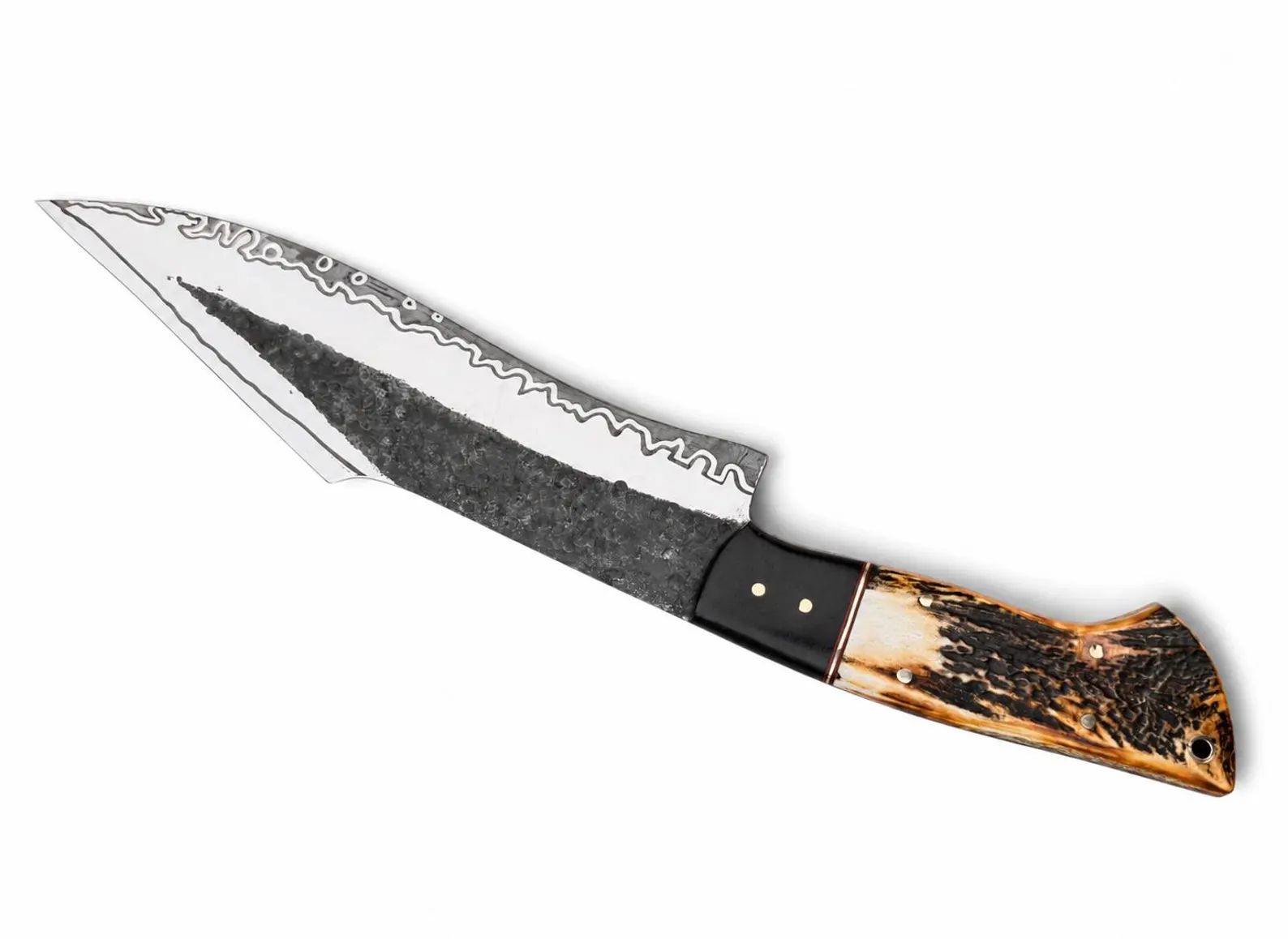
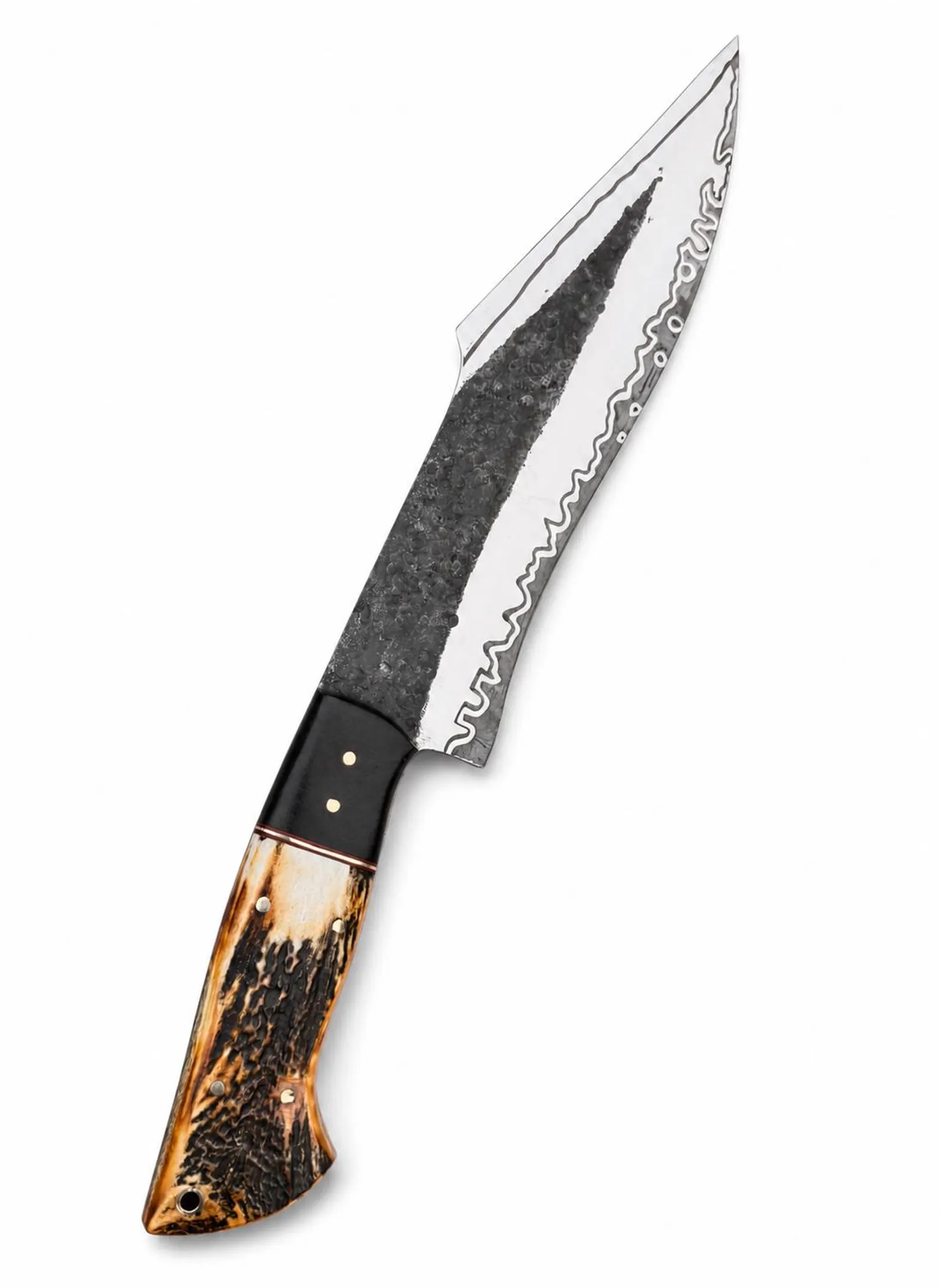
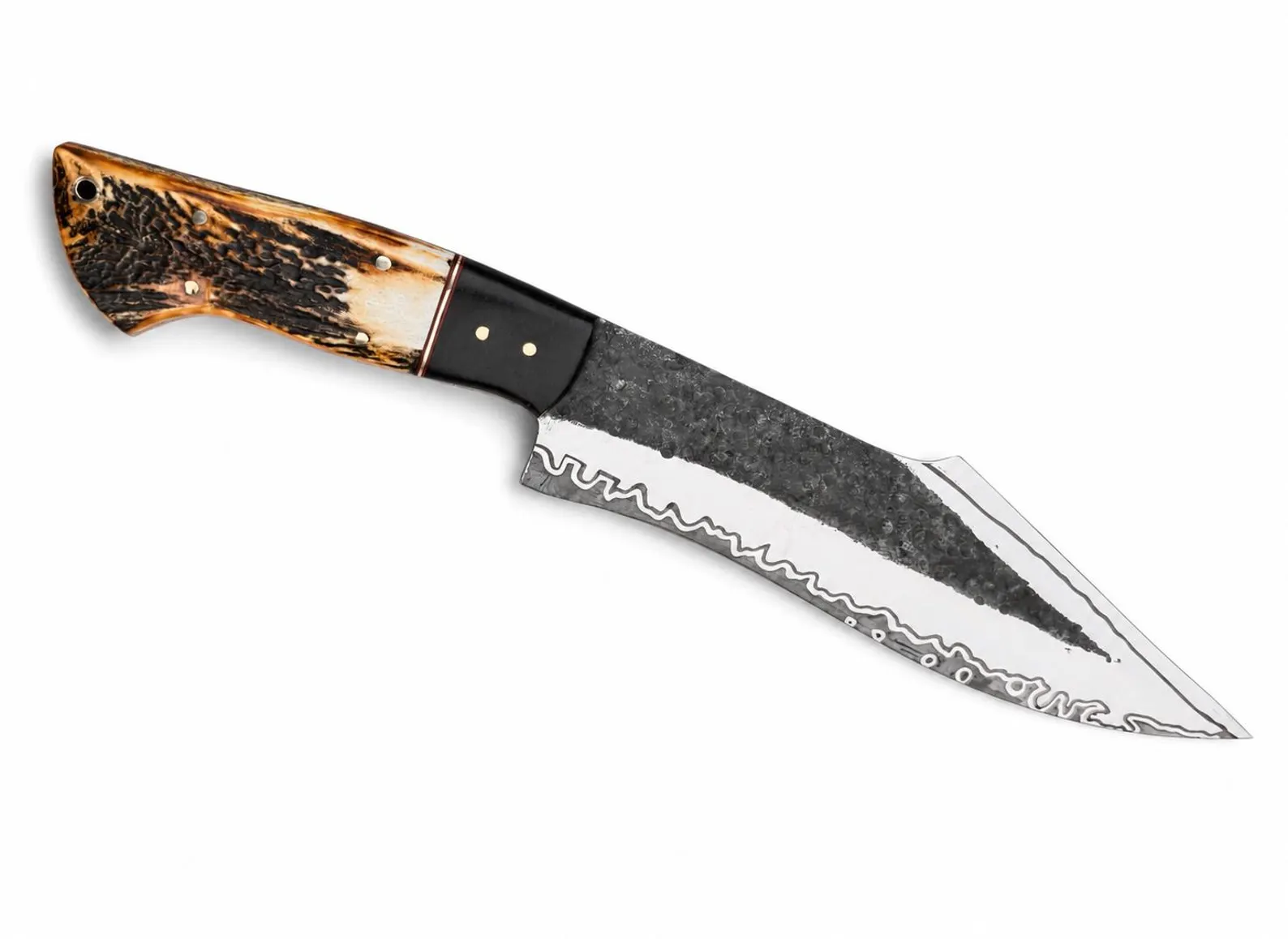
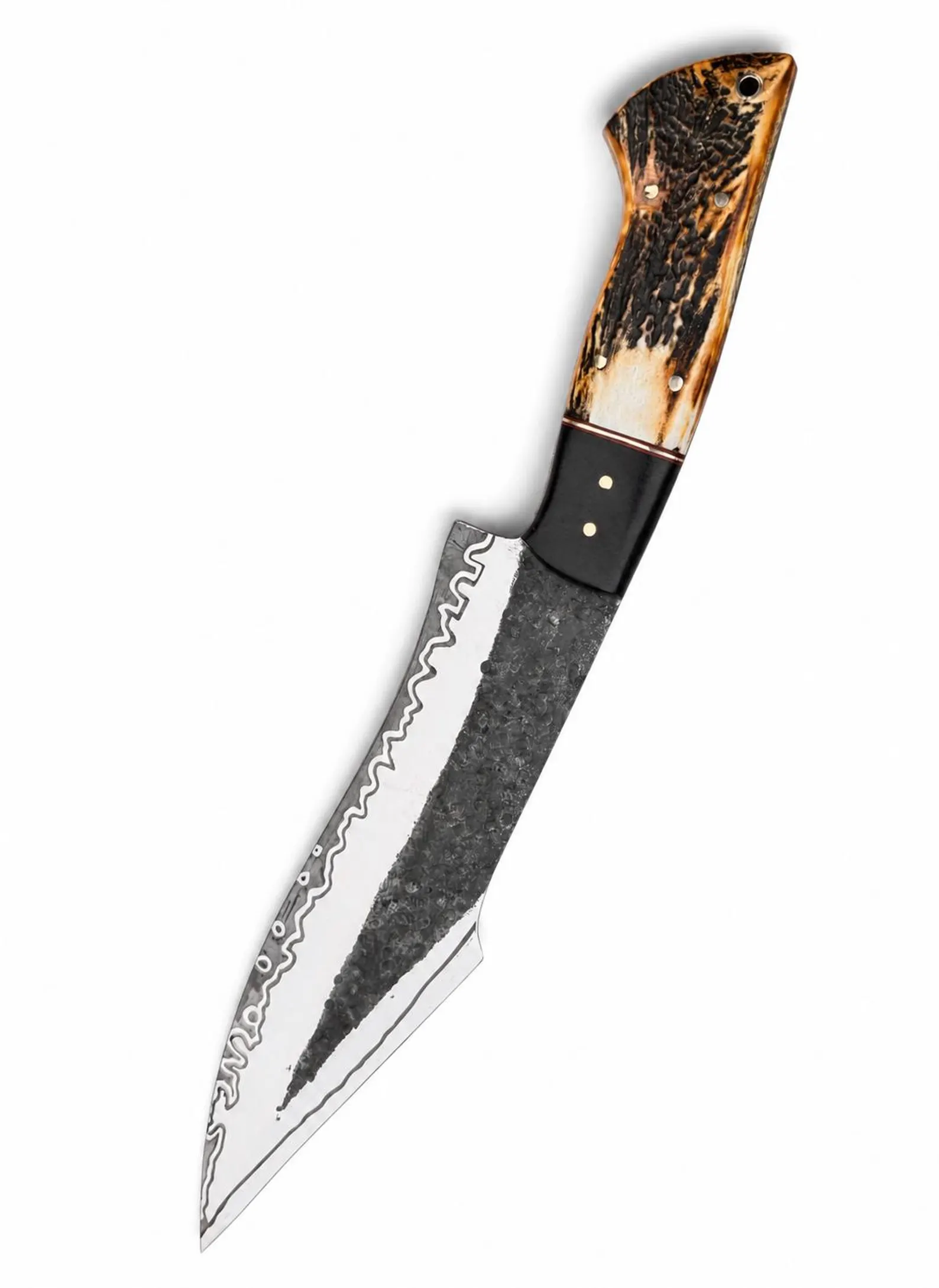
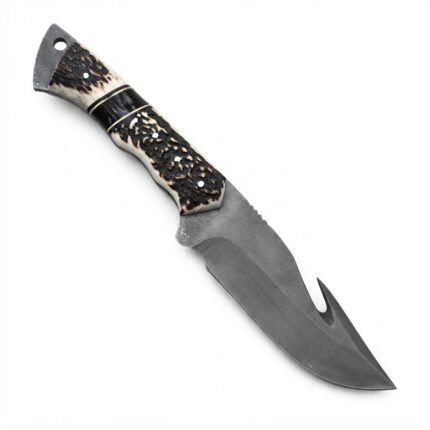
Bring a distinctive look to your kitchen knife collection with the Rustic Patterned Blade Chef Knife with Antler-Style Handle. Designed with a striking combination of a dark textured blade, bright cutting edge, and decorative handle, this knife offers an alternative to the clean, minimal appearance of conventional kitchen cutlery.
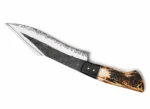
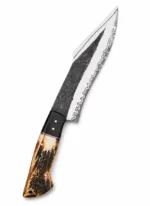
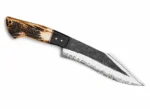
Its elongated blade features an angular profile that gradually narrows toward a pointed tip. A contrasting pattern follows part of the blade, creating a decorative transition between the dark surface and the brighter polished areas. These visual details give the knife a bold appearance that stands out in a collection of traditional or contemporary kitchen tools.
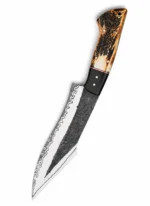
The handle combines warm brown, amber, cream, and black tones, with a textured upper section that resembles natural antler. A smooth black section connects the handle to the blade, while visible metal pins add further detail to its construction.
This specialty knife is an appealing choice for people who appreciate unusual blade profiles, rustic styling, and distinctive kitchen accessories.
An Angular Blade with an Eye-Catching Finish
One of the most noticeable features of this knife is its unusually shaped blade. Unlike a standard chef knife with a continuously curved cutting edge, this design has a pronounced angular profile and a long, sloping cutting area.
The blade features a combination of dark and silver-toned surfaces. Its darker central area has an irregular, hammered-looking texture, while the brighter sections create contrast along the blade.
A decorative wavy line runs along one side of the brighter portion, giving the knife a Damascus-inspired appearance. The pattern is particularly noticeable against the polished surface and makes the blade visually different from ordinary kitchen knives.
The pointed blade end adds another distinctive element to the design. Together, these details create a knife that looks equally at home among rustic kitchen equipment and specialty cutlery collections.
The photograph does not establish the actual blade alloy, number of steel layers, hardness, or forging process. These technical details should be confirmed before the knife is marketed as genuine Damascus steel or hand-forged cutlery.
Designed for General Kitchen Food Preparation
The Rustic Patterned Blade Chef Knife is presented as a specialty kitchen cutting tool suitable for consideration in everyday food preparation.
Its extended cutting edge and tapered blade profile make it relevant to common kitchen tasks such as preparing vegetables, cutting ingredients into manageable portions, and working with boneless meat.
Depending on the final blade dimensions, edge geometry, and steel specifications, this style of knife may be useful for preparing ingredients for home-cooked meals, barbecue dishes, and other food preparation activities.
For vegetable preparation, a knife with a properly sharpened cutting edge can be used to slice ingredients such as onions, peppers, mushrooms, and other produce.
For meat preparation, the angular blade shape may appeal to cooks who prefer specialty butcher-style cutlery for trimming and portioning suitable boneless cuts.
However, the actual cutting performance depends on the blade material, thickness, sharpening quality, and construction. These characteristics cannot be confirmed through appearance alone.
The knife should not be described as a bone cleaver or used for chopping hard bones unless the manufacturer specifically confirms that application.
Textured Blade Surface with Decorative Patterning
The combination of contrasting finishes is central to this knife’s appearance.
The dark blade surface displays an uneven, textured finish that resembles the appearance of traditional forged metalwork. The brighter cutting area provides a strong visual contrast, while the irregular decorative lines introduce additional detail.
These features create a rugged style that may appeal to buyers who prefer cutlery with a traditional or handcrafted aesthetic.
Unlike plain stainless-look kitchen knives, this model emphasizes visible texture and patterning. Its appearance makes it an interesting option for people building a themed kitchen collection or looking for a knife with an unconventional design.
Because the blade has a patterned appearance, it may be described as Damascus-style. Genuine pattern-welded Damascus construction, however, would need to be verified through reliable manufacturer information.
The blade finish should also be confirmed before making claims about corrosion resistance, edge retention, or protective coatings.
Decorative Antler-Style Handle
The handle is another defining feature of this knife.
Its curved profile combines an upper section with a textured, antler-like appearance and a smooth black lower section positioned closer to the blade.
The upper portion displays dark, irregular markings over brown, amber, and cream-colored areas. These markings create a natural-looking pattern that gives the handle a traditional outdoor-inspired character.
The black section near the blade features small, round, light-colored pins. Additional visible pins are positioned along the textured upper section.
A circular opening is also visible at the end of the handle. This feature resembles a lanyard hole and may allow the use of a suitable hanging cord or attachment, depending on the manufacturer’s intended design.
The handle’s shape adds to the knife’s overall appearance, giving it a recognizable silhouette.
Although the surface resembles antler, the photograph does not confirm whether it is genuine antler, bone, resin, composite, or another decorative material.
The exact handle construction, tang design, and grip performance should be verified with the manufacturer.
A Balanced Combination of Rustic and Modern Styling
This knife brings together several design influences in one product.
The dark textured blade suggests traditional forged cutlery, while the bright cutting edge gives the knife a cleaner, more contemporary appearance.
The contrasting handle materials further emphasize this combination.
Its decorative upper handle has an organic appearance, while the smooth black section introduces a simple and understated detail.
The result is a knife with a bold visual identity that appeals to buyers who prefer equipment with personality rather than completely uniform finishes.
The patterned blade also contributes to the knife’s collectible appeal. Each visible section adds detail without relying on printed logos or elaborate decorations.
For customers who value the appearance of their kitchen tools, this design offers something noticeably different from conventional chef knives.
Suitable for Home Kitchens and Specialty Cutlery Collections
The Rustic Patterned Blade Chef Knife may be relevant to several types of buyers.
Home cooking enthusiasts: People who enjoy preparing meals and experimenting with different styles of kitchen cutlery may appreciate this knife’s unusual shape and appearance.
Barbecue and outdoor cooking enthusiasts: Its rugged visual style may appeal to customers who prefer rustic cooking accessories. Outdoor suitability should be confirmed by the manufacturer, particularly if a protective sheath or storage solution is required.
Specialty knife collectors: Collectors interested in decorative blade patterns, angular profiles, and contrasting handle finishes may find this model a visually interesting addition.
Gift buyers: Its distinctive design makes it a potential gift choice for adult cooking enthusiasts or cutlery collectors who appreciate unusual kitchen accessories.
Kitchenware retailers: The knife’s recognizable appearance may help it stand out in a specialty kitchen knife collection or a product range focused on rustic kitchen designs.
Regardless of the intended customer, the blade and handle specifications should be reviewed to ensure that the knife is suitable for the buyer’s preferred application.
Understanding the Blade Profile
The blade has a relatively broad upper area near the handle and an extended profile that narrows toward its end.
Its distinctive geometry differs from the rounded belly commonly associated with Western chef knives.
This gives it a striking silhouette and may influence the way it contacts a cutting board during food preparation.
Some cooks prefer flatter cutting sections for particular slicing or push-cutting movements, while others prefer the rounded edges found on traditional chef knives for rocking cuts.
The most suitable cutting technique depends on the actual edge profile and the user’s experience.
Because the knife’s exact dimensions and bevel geometry are not known, its suitability for a particular technique should be assessed after reviewing the finished product.
For safe cutting, always use a stable chopping board and keep the blade away from fingers and other parts of the body.
A Distinctive Addition to a Knife Collection
Kitchen knives are often selected for practical reasons, but design and presentation also matter to many buyers.
A knife with an unusual blade profile can add visual variety to an existing collection of chef knives, utility knives, and specialty cutting tools.
This model’s angular silhouette, patterned blade, and contrasting handle make it recognizable even when displayed alongside other cutlery.
Its appearance may suit a rustic kitchen setting, a collection of traditional-inspired knives, or a carefully selected range of gift items.
Buyers interested in decorative kitchen tools may especially appreciate the relationship between the dark blade surface and the lighter handle tones.
The visible finish gives the product a character that cannot be conveyed by a simple, polished blade alone.
Although the design has a traditional appearance, its actual manufacturing process and country of origin should be confirmed independently.
Kitchen Knife Care and Maintenance
Proper care helps maintain the appearance and condition of kitchen cutlery.
For this style of knife, hand washing is a sensible precaution unless the manufacturer provides different cleaning instructions.
After use, gently clean the blade with mild dish soap, warm water, and a non-abrasive sponge. Avoid harsh cleaning products that may damage decorative finishes or handle surfaces.
Dry the blade and handle thoroughly with a soft cloth before placing the knife in storage.
Avoid leaving the knife submerged in water or exposed to moisture for extended periods, especially when the blade alloy and handle material have not been confirmed.
Store the knife separately from loose kitchen utensils to reduce accidental contact with the cutting edge.
A properly fitted knife guard, sheath, or dedicated knife storage solution may help protect both the blade and the user.
For sharpening, choose a method appropriate to the manufacturer’s recommended blade material and edge angle. Incorrect sharpening techniques can alter the cutting profile or damage the edge.
Do not place the knife in a dishwasher unless the manufacturer explicitly states that dishwasher cleaning is suitable.
Choosing the Right Kitchen Knife
Before purchasing any specialty kitchen knife, it is useful to review more than its appearance.
Blade length, overall length, blade thickness, handle construction, and steel composition can all influence suitability for different cutting tasks.
The intended use should also be considered.
A knife selected for slicing vegetables may not have the same design requirements as a knife intended for trimming meat or performing demanding chopping tasks.
Customers should confirm whether the blade is manufactured from carbon steel, stainless steel, pattern-welded Damascus steel, or another material.
This information is particularly important when choosing appropriate cleaning, sharpening, and storage methods.
Handle material is another consideration. Natural and synthetic handle materials can have different maintenance requirements, particularly with repeated exposure to water.
For this knife, the visible characteristics are clear, but specific technical measurements and material details remain subject to supplier confirmation.
An Interesting Choice for Specialty Kitchenware
The Rustic Patterned Blade Chef Knife with Antler-Style Handle combines several attractive design features in one distinctive product.
Its angular blade, dark textured surface, decorative wavy pattern, and contrasting handle create an appearance that sets it apart from standard kitchen knives.
The curved handle and visible metal fittings add further detail, while the bright cutting edge complements the darker blade finish.
For customers who appreciate characterful kitchen equipment, this knife offers a visually distinctive alternative to more conventional cutlery.
It may appeal to home cooks, kitchenware enthusiasts, adult gift buyers, and specialty knife collectors looking for a model with an unusual design.
Explore this patterned blade chef knife as a distinctive addition to your kitchen tools or specialty cutlery collection.







Reviews
There are no reviews yet.