

Gut Hook Hunting Knife – Distinctive Outdoor Knife with Antler-Style Handle
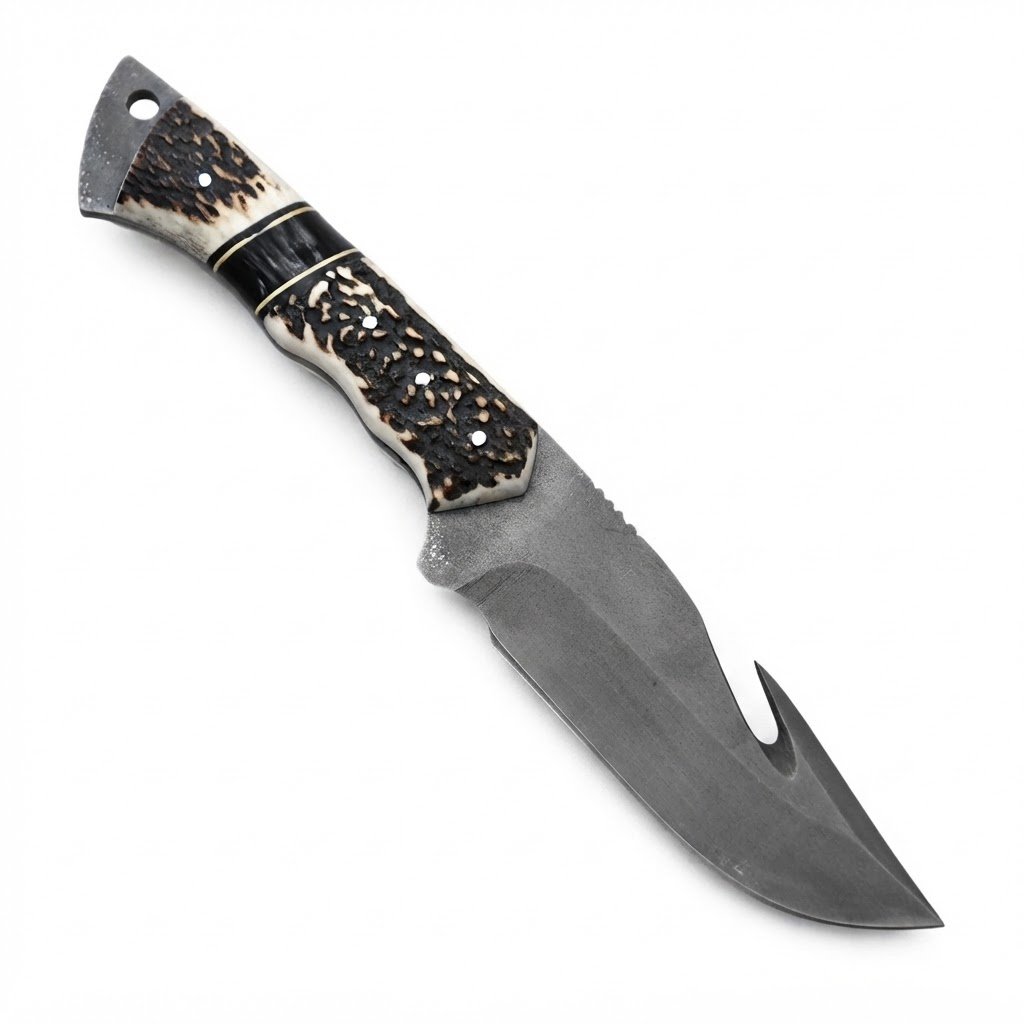
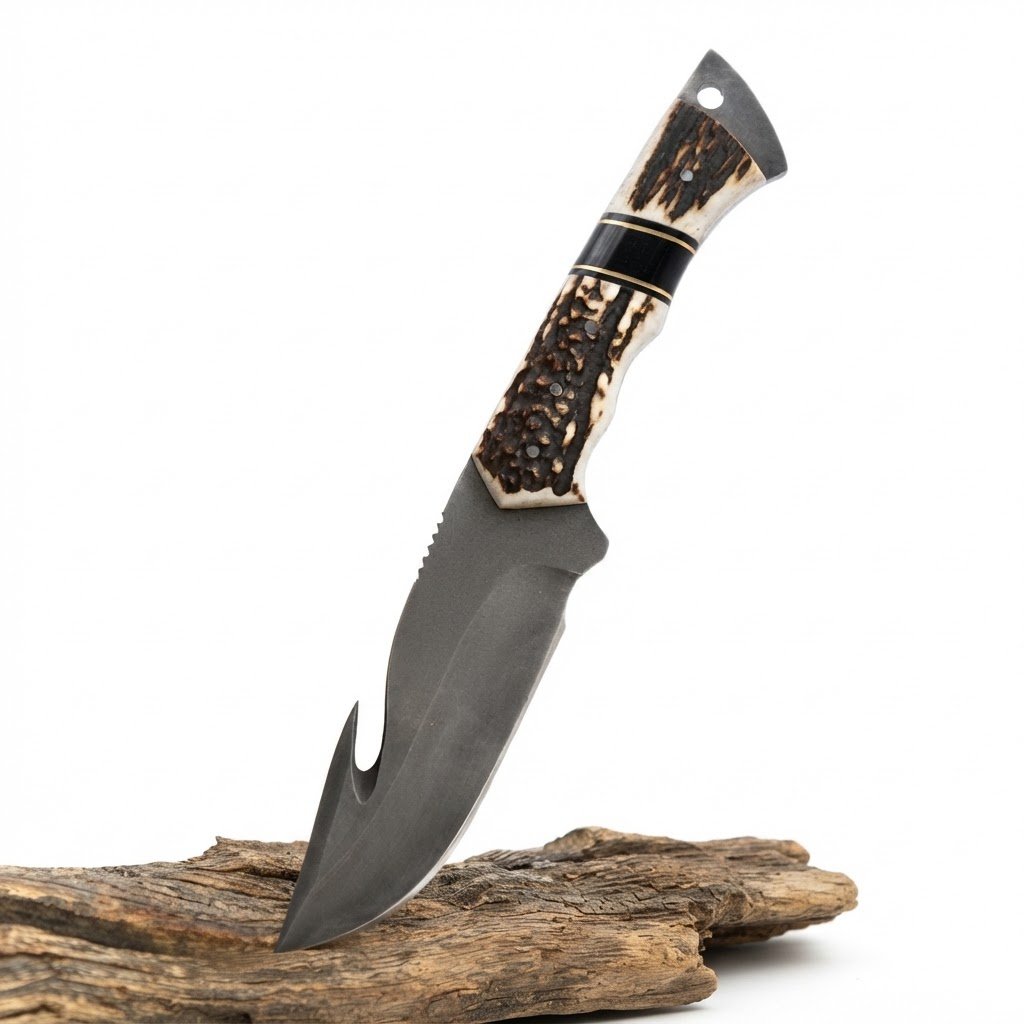
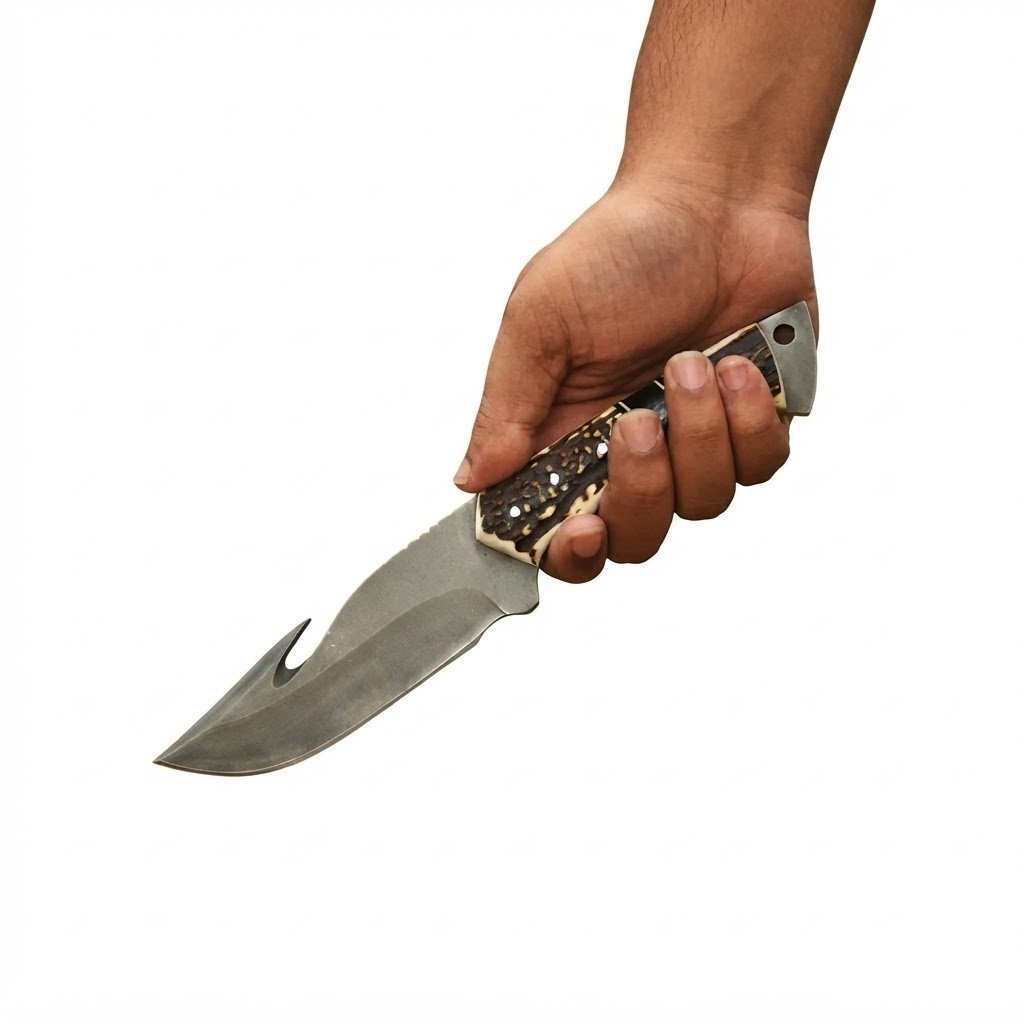
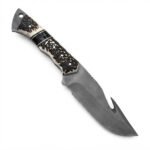
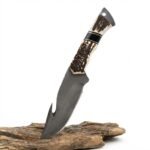
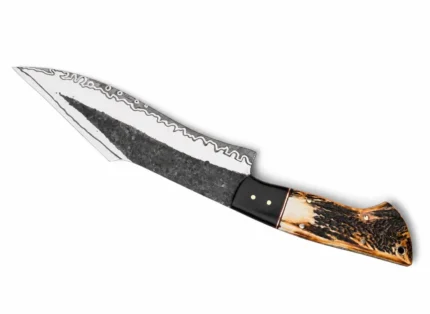
The Gut Hook Hunting Knife features a distinctive combination of hunting-inspired blade geometry, a dark gray metallic finish, and an antler-style handle with natural-looking black and cream coloration. Designed around a broad curved blade profile, this fixed-blade knife has a pronounced gut hook near the tip and a textured handle with decorative contrasting sections.
The blade’s upward-curving hook gives the knife its recognizable appearance, while the broad cutting section and pointed tip distinguish it from ordinary utility knives. Its handle adds a traditional hunting aesthetic, combining textured antler-like sections with a smooth black central spacer, narrow gold-colored accent lines, and a metallic butt cap.
This combination makes the knife appealing to hunting knife collectors, outdoor equipment enthusiasts, and customers searching for distinctive fixed-blade designs.
The specific material grade, blade hardness, overall length, and performance characteristics should be confirmed with the manufacturer before publication as technical specifications.
Distinctive Gut Hook Blade Design
A defining feature of this hunting-style knife is the upward-facing hook positioned along the upper section of the blade near the tip.
Gut hooks are traditionally associated with specialized hunting and field-dressing knives. Their curved profile distinguishes them from conventional straight-backed knife designs.
On the photographed product, the hook rises from the blade’s upper edge and creates an open curved recess.
The main blade has a broad profile that narrows toward a pointed end. Its lower cutting edge forms a smooth curve, while the upper section transitions into the raised hook.
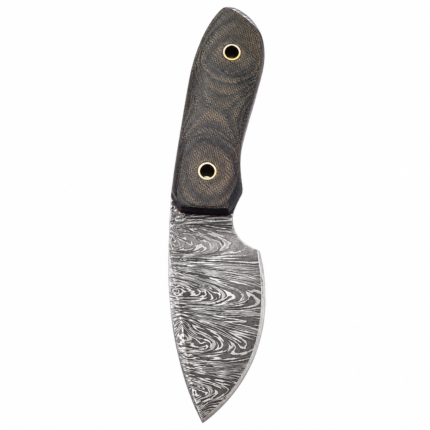
The dark gray blade surface has a matte, slightly textured appearance. A separate bevel is visible along the main cutting edge.
These features create a practical-looking hunting knife profile without excessive decoration on the blade itself.
The actual sharpness of the gut hook, steel grade, blade thickness, and cutting performance cannot be determined from the image.
Traditional Antler-Style Handle
The Gut Hook Hunting Knife features a distinctive handle with a natural antler-inspired appearance.
The handle combines cream-colored surfaces with irregular dark brown and black textured areas. These contrasting sections resemble the natural variations often found in stag-antler handles.
The textured appearance is particularly noticeable near the blade and toward the rear of the handle.
A smooth black section separates the two antler-style areas. Thin gold-colored lines frame this black spacer, creating a subtle decorative transition.
Small silver-colored pins are visible along the handle.
The handle is slightly contoured rather than completely straight. Its shape follows the natural outline of the decorative scales, giving it an appealing traditional profile.
Because the handle’s material has not been verified, it should be described as antler-style rather than genuine stag horn.
This ensures customers receive an accurate description without unsupported material claims.
Dark Gray Blade Finish
The blade has a dark, non-mirror finish that contrasts with the lighter handle sections.
Instead of a highly polished silver appearance, the surface features a muted gray tone.
This gives the knife a rugged, understated look commonly associated with outdoor cutlery.
The blade surface also appears to have slight textural variation, particularly around the upper section and the transition toward the handle.
The cutting bevel is visually distinct from the main blade surface.
This contrast helps define the blade profile and emphasizes its curved cutting edge.
The photograph does not confirm whether the finish is stonewashed, bead-blasted, forged, coated, or produced using another finishing process.
Those terms should only be used when confirmed through supplier specifications.
Curved Cutting Edge and Pointed Tip
The knife features a broad blade that gradually tapers toward the point.
Its main cutting edge follows a curved profile, while the hooked section rises along the upper edge near the tip.
These design elements distinguish it from straight-edged utility knives.
The curved profile is visually associated with traditional skinning and hunting knife designs.
However, suitability for specific cutting applications depends on blade sharpness, steel composition, edge geometry, and user technique.
Those characteristics require physical inspection or manufacturer documentation.
For product comparison purposes, buyers should review the actual blade length, thickness, edge configuration, and total weight.
These measurements are not available from the image alone.
Decorative Black Spacer and Metallic Accents
The handle includes a glossy black center section positioned between two textured antler-style areas.
This black spacer creates a strong visual contrast against the cream and dark brown surrounding materials.
Thin gold-colored lines separate the black section from the adjoining handle components.
The knife also features several light-colored circular pins along the handle.
At the rear is a gray metal-colored butt cap with a round opening.
The opening resembles a lanyard attachment point, although its exact construction and compatibility have not been verified.
These small details contribute to the knife’s traditional appearance.
The decorative accents are visible, but their metal composition and attachment methods are not confirmed.
Hunting-Inspired Outdoor Design
Gut hook knives are a recognizable category of hunting cutlery.
Their specialized blade profiles are commonly associated with outdoor and field-dressing applications.
This knife incorporates those familiar design elements into a visually distinctive fixed-blade configuration.
The dark blade, antler-style handle, and curved hook produce a coordinated appearance suitable for a hunting-knife product collection.
For buyers considering the knife for actual outdoor work, verified steel specifications and manufacturer recommendations remain essential.
Appearance alone does not establish whether a knife is suitable for demanding applications.
Its cutting performance, corrosion resistance, and durability depend on factors that cannot be assessed from the photograph.
An Appealing Addition to Hunting Knife Collections
Many collectors appreciate knives that combine traditional handle designs with unusual blade profiles.
The antler-inspired handle provides a classic visual element, while the curved gut hook gives this knife a specialized appearance.
Its black spacer and gold-colored accent lines add subtle contrast without overwhelming the design.
The overall shape makes it visually different from standard drop-point, clip-point, and straight-backed fixed-blade knives.
Collectors who appreciate hunting-themed cutlery may find this model interesting because of its combination of traditional and contemporary styling.
The photograph does not show a maker’s mark, serial number, packaging, or authentication documentation.
Therefore, claims about handmade construction, manufacturer identity, limited-edition status, or country of origin should be verified separately.
Fixed-Blade Construction
The photographed knife has a fixed-blade configuration, meaning the blade does not appear to fold into the handle.
Unlike a folding knife, its blade remains extended.
This construction gives the knife a conventional hunting-style silhouette.
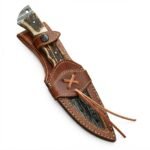
A fixed-blade knife also requires an appropriate sheath or protective storage method when not in use.
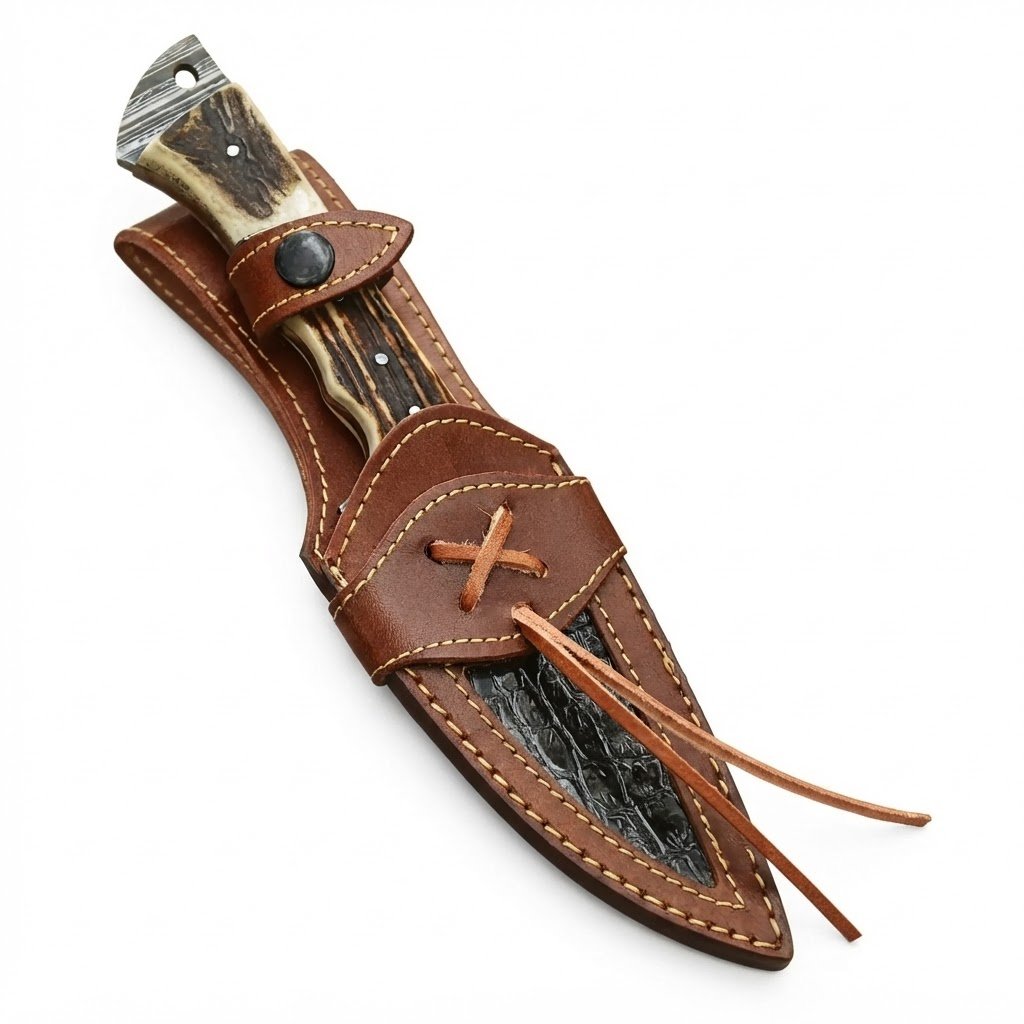
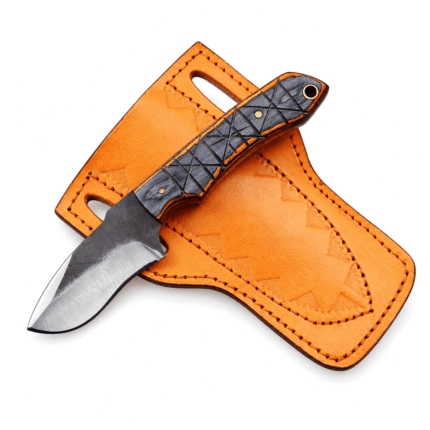
No sheath is visible in the uploaded image.
Therefore, the product listing should not claim that a leather sheath or carrying case is included unless the supplier confirms this.
The internal tang configuration is also unknown.
Although pins are visible along the handle, their presence does not prove that the knife has a full tang.
Buyers who need a particular tang construction should request the manufacturer’s specifications.
Handle Shape and Appearance
The handle has a gently curved profile with a broader rear section.
Its textured decorative surfaces create a distinct appearance compared with smooth plastic or plain wooden handles.
The black central spacer adds a contrasting design element, while the small metallic pins provide additional visual detail.
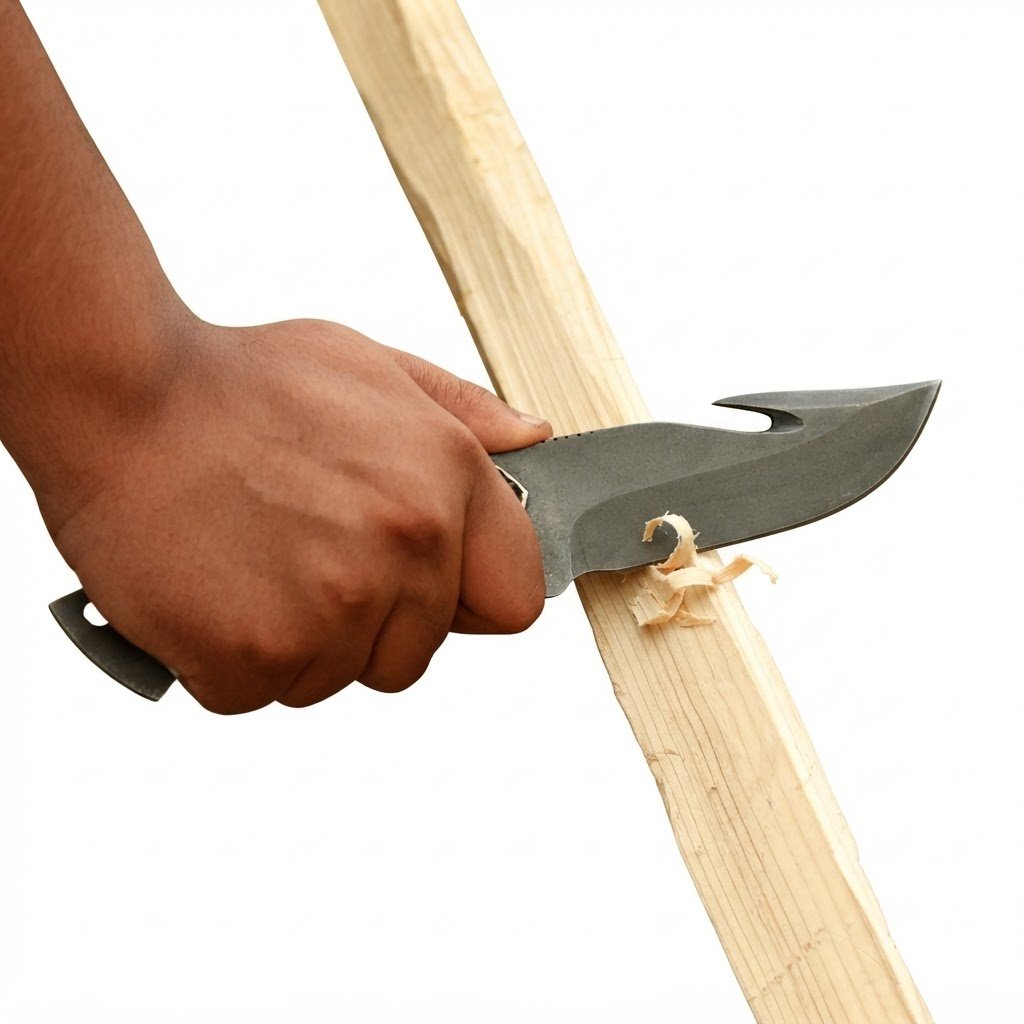
The handle’s overall shape suggests a design intended to be held in one hand.
However, actual comfort and grip security cannot be established from a photograph.
These characteristics depend on hand size, handle dimensions, surface finish, and the way the knife is used.
For accurate product information, the manufacturer should provide handle length, thickness, weight, and material composition.
Understanding Blade Steel and Material Specifications
Steel composition plays an important role in the performance and maintenance of hunting knives.
Different steel grades offer different characteristics in terms of hardness, toughness, wear resistance, and corrosion resistance.
Some hunting knives use stainless steel, while others feature carbon steel or specialized alloys.
The photographed blade has a gray metallic appearance, but this does not establish its precise steel composition.
It would be inaccurate to describe the knife as Damascus steel, high-carbon steel, D2 steel, or stainless steel without supplier confirmation.
Similarly, the photograph cannot establish a Rockwell hardness rating or blade thickness.
These specifications should be supplied by the manufacturer.
Clear technical information allows customers to compare knives based on actual construction rather than appearance alone.
General Cleaning and Maintenance
Proper knife care helps maintain the appearance of the blade and handle.
After appropriate use, clean the blade according to the manufacturer’s instructions.
For many fixed-blade knives, gentle hand cleaning is preferable to aggressive abrasive treatment.
Use a soft cloth and suitable cleaning materials.
Dry the blade thoroughly before storage, particularly if its corrosion resistance has not been established.
Avoid leaving moisture around the handle joints, decorative spacer, or metallic components.
The antler-style handle may require specific care depending on whether it is made from natural antler, synthetic material, or a composite.
Until the material is confirmed, avoid strong solvents, prolonged soaking, and harsh chemicals.
Sharpening should follow the manufacturer’s recommended edge geometry.
The main edge and hooked portion may require different maintenance methods.
For safe storage, keep the knife protected in an appropriately fitted sheath or secure case.
Choosing the Right Hunting Knife
Customers comparing hunting knives should evaluate several important specifications.
Blade geometry is one consideration.
Some knives feature straight edges, while others use curved blades or specialized hook configurations.
Handle material and dimensions are also important.
A comfortable, properly fitted handle is essential for controlled handling.
Other considerations include overall knife length, blade thickness, total weight, and the availability of a suitable sheath.
The Gut Hook Hunting Knife offers an attractive visual combination of a curved blade, dark finish, and textured antler-style handle.
However, buyers should confirm technical specifications before selecting it for demanding field applications.
Product Appearance and Visible Features
The image confirms the following design details:
-
Fixed-blade hunting-style knife with a broad curved blade
-
Upward-facing gut hook positioned near the blade tip
-
Dark gray metallic blade surface
-
Visible cutting-edge bevel
-
Antler-style handle with cream, brown, and black coloration
-
Glossy black central spacer with thin gold-colored accent lines
-
Multiple light-colored handle pins
-
Metal-colored rear cap with a circular opening
-
No sheath or additional accessories shown
These features provide a reliable foundation for the product description.
Exact measurements, materials, and performance ratings remain subject to supplier verification.
Suitable Customers and Product Applications
This knife may appeal to several customer groups.
Hunting knife enthusiasts may appreciate the specialized gut hook profile and traditional-inspired handle.
Collectors may be interested in the distinctive blade geometry and contrasting decorative materials.
Outdoor cutlery buyers may value its fixed-blade configuration and unique appearance.
Customers looking for decorative knife designs may also appreciate the cream and dark antler-like handle finish.
Actual suitability for field use should be assessed through confirmed technical specifications and the manufacturer’s intended-use guidance.
The knife should not be marketed as suitable for heavy-duty survival work or specialized professional applications without evidence.
A Distinctive Hunting Knife Design
The Gut Hook Hunting Knife combines a dark curved blade, prominent hook detail, and traditional antler-inspired handle styling.
Its black center spacer, subtle metallic accents, and contoured handle produce a recognizable design.
For collectors and outdoor cutlery enthusiasts, the knife offers an interesting alternative to conventional fixed-blade models.
Before purchase, customers should review the confirmed dimensions, blade material, handle composition, and included accessories.
Explore this gut hook hunting knife for its distinctive appearance and traditional hunting-inspired design.






Reviews
There are no reviews yet.