



Four blade widths for woodworking projects
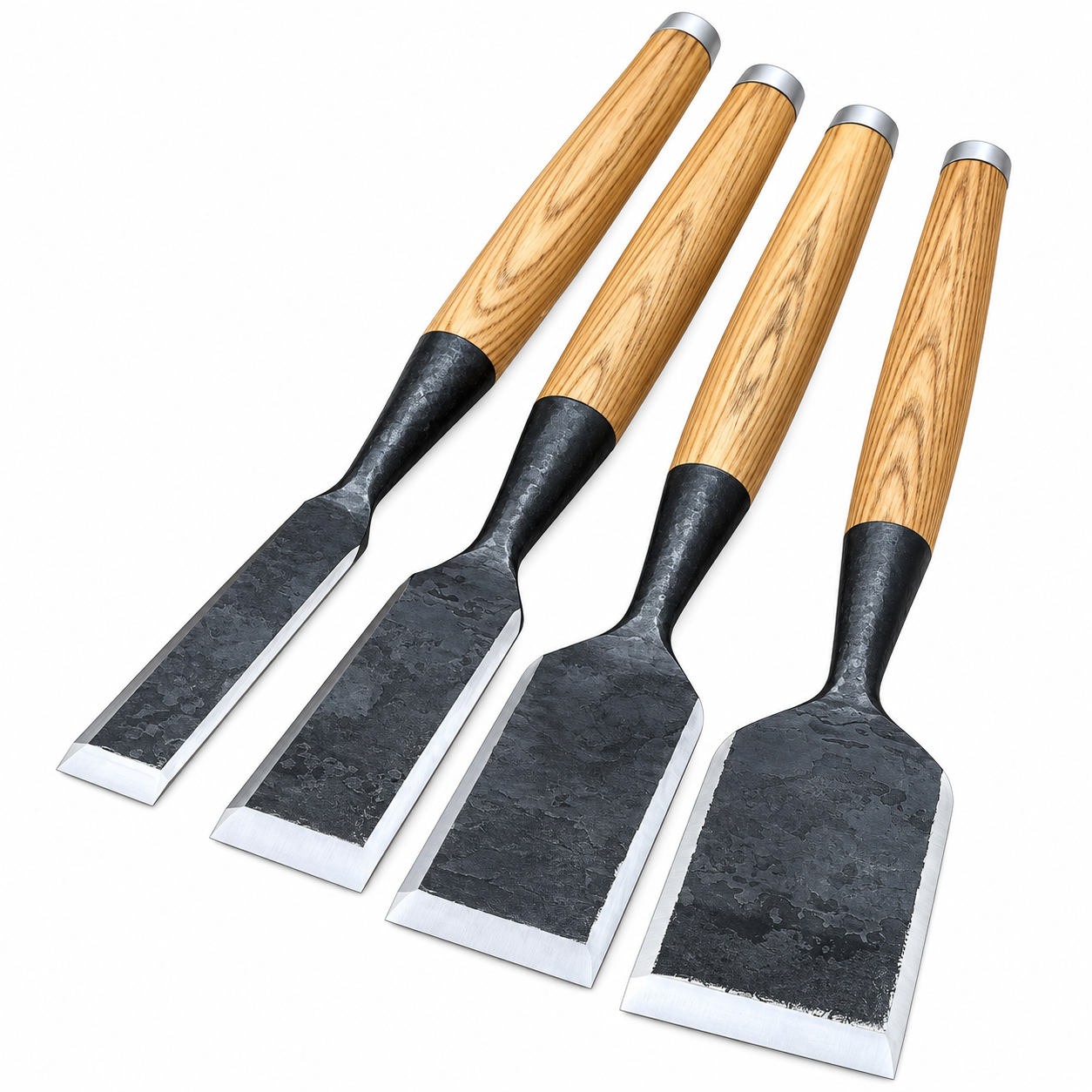
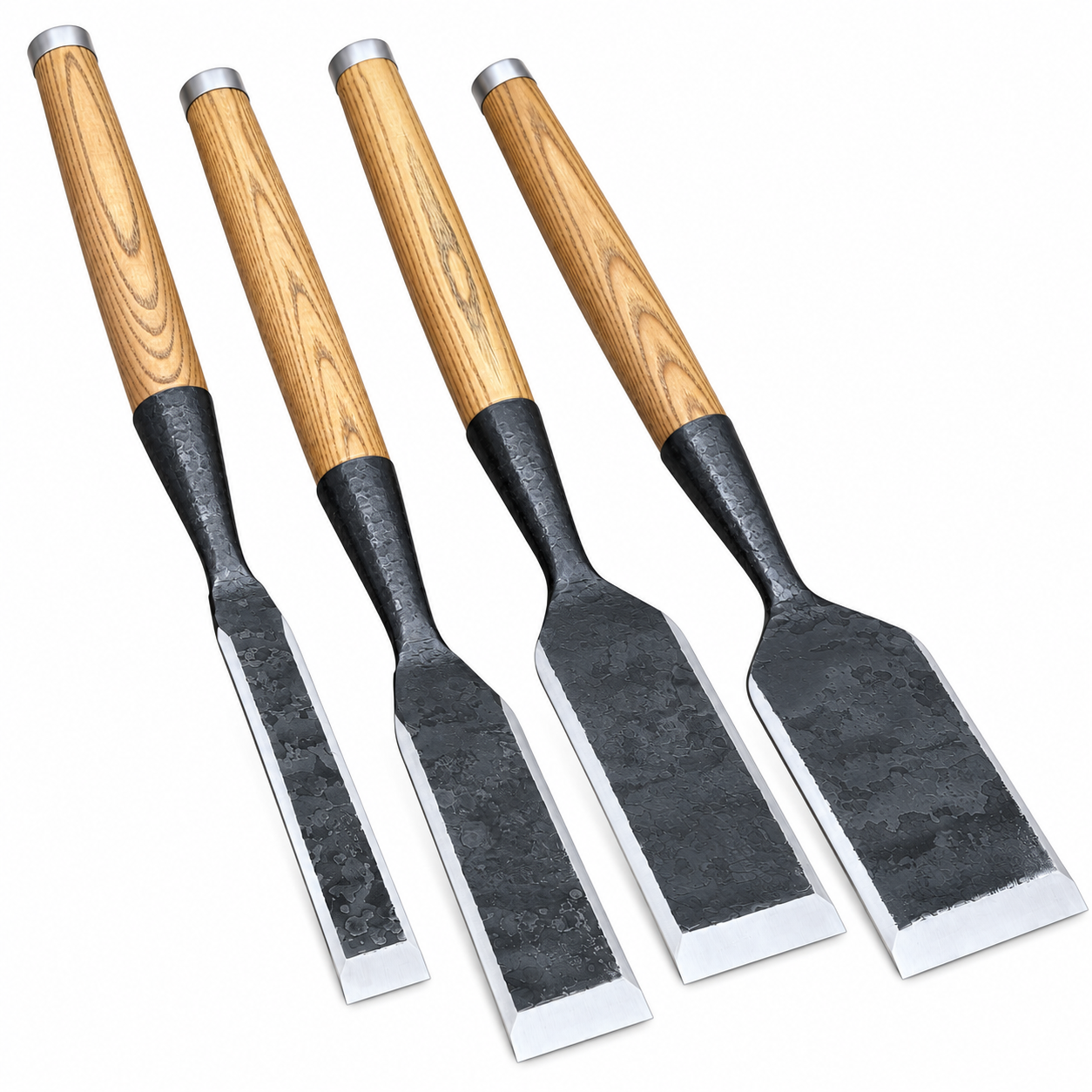
This 4-piece woodworking chisel set brings together four straight-edged chisels with visibly different blade widths. Each tool combines a light brown wood-grain handle, a dark textured blade body, and a bright silver-coloured cutting bevel. The coordinated appearance makes the set easy to recognise while allowing each blade’s width to stand out.
The selection progresses from a narrow blade to broader profiles, giving woodworkers different options to consider when matching a tool to a work area. A narrower chisel can access spaces that a wider blade cannot, while broader edges can span a larger section of a surface.
The photograph confirms four tools and their visible design. Exact measurements, blade material, handle composition, hardness, and supplied sharpening condition have not been verified. Those specifications should be checked before selecting the set for a particular project.
A traditional hand-tool appearance
The set has a traditional workshop look, with warm handle colours contrasting against dark blade surfaces. The handles show long grain-like lines, and the blade bodies have an irregular, hammered-looking texture. Silver-tone bands at the handle ends add a matching detail across all four tools.
This consistent styling gives the set a unified appearance without making the tools look identical. Differences in blade width remain clear, and the handle markings vary from one tool to the next.
The texture does not, by itself, establish hand forging or a particular manufacturing method. Similarly, the grain appearance does not identify the handle’s wood species. The design can be appreciated for what is visible while material and production claims remain subject to supplier confirmation.
Narrower blades for confined areas
The narrowest chisel has a long, slim blade profile compared with the other three tools. This shape is relevant when considering work around smaller recesses, restricted openings, or narrower sections of a woodworking project.
In general woodworking, choosing a blade that fits the available space helps avoid using an unnecessarily wide tool. Having a narrower option within a set can therefore be useful when a project includes areas of different sizes.
The photograph does not establish this blade’s exact width, thickness, or reach. Before purchasing for a measured recess or joint, compare the confirmed dimensions with your requirements. A visual size comparison within the image is useful, but it cannot replace measurements in millimetres or inches.
Broader blades for wider surfaces
The remaining chisels have progressively broader-looking blade faces. Their cutting ends extend across more width than the narrowest tool, providing a different contact area for suitable woodworking tasks.
Broad chisels are commonly considered for paring and trimming across wider sections of wood. Selecting a blade that suits the work area can make it easier to approach a surface consistently, although results still depend on the tool’s preparation, the wood, and the user’s technique.
These tools resemble framing or slick-style chisels in their general proportions, but their exact classification and intended working method require confirmation. The photograph alone does not establish that they are suitable for heavy timber framing, deep mortising, or forceful chopping.
Straight cutting edges
All four tools show straight cutting edges across their tips. Their profiles differ from curved gouges or V-shaped carving tools, making this a set of flat-edged chisels rather than a mixed collection of carving shapes.
That distinction matters when choosing tools for a project. Straight-edged chisels are associated with tasks such as trimming flat areas, refining shoulders, and cleaning suitable recesses. Curved carving work may call for a different tool profile.
The image shows the shape of the cutting ends, but not their condition under close inspection. Edge straightness, bevel angle, and readiness for use should be confirmed separately. No claim of factory-ready sharpness or a particular cutting performance is made from the photograph.
Bright bevels against dark blade faces
A bright silver-coloured bevel appears at the cutting end of each chisel. These areas contrast clearly with the dark blade faces and make the cutting ends easy to distinguish in the image.
The visible transition between the textured body and brighter bevel gives each tool a defined appearance. Narrow silver-coloured areas are also visible along portions of the blade sides, adding another contrast against the dark finish.
A bright bevel does not establish the steel grade, heat treatment, or quality of sharpening. It also does not confirm whether further honing or preparation is needed. Buyers should ask how the tools are supplied and whether any setup is recommended before their first woodworking project.
Dark textured blade bodies
The blade bodies and necks have an uneven dark surface with lighter markings scattered across them. This texture is consistent across the set and contributes strongly to its rustic appearance.
Customers who prefer visibly textured tools may find this finish appealing alongside the warmer handle colour. It gives the chisels a different look from uniformly polished or brightly coated workshop tools.
The surface should not be described as rustproof, corrosion-resistant, or protective without supporting specifications. It may resemble a forged finish, but the method used to create it is not confirmed. The listing therefore describes the texture and colour rather than assigning a treatment or performance benefit.
Light wood-grain handles
Each chisel has an elongated handle with a light golden-brown appearance and darker grain-like lines. The markings run mainly along the handle length, with curved formations visible in several areas.
The handles have a rounded appearance rather than a strongly faceted or moulded profile. They provide a visual contrast to the flatter blade faces and maintain a consistent style across the four tools.
The exact handle material remains unverified. Although the image resembles natural wood, it does not establish ash, oak, beech, or another species. It also cannot confirm a protective finish, moisture resistance, or the way the handles are secured internally to the blade bodies.
Silver-tone handle-end bands
A silver-tone band or cap appears at the end of every handle. This repeated feature gives the set a coordinated finish and marks the rear of each tool clearly.
Such fittings can have different functions depending on the tool’s construction. Their presence in this photograph does not establish a striking rating or confirm compatibility with a hammer or mallet.
Before selecting a driving method, obtain the manufacturer’s instructions. Some woodworking tools are intended primarily for controlled hand pressure, while others are designed for particular striking tools. The correct method depends on the actual construction and intended use of the supplied chisels.
Choosing the set for your workshop
A four-piece selection may suit someone who wants several blade widths within one coordinated group. It gives the buyer a manageable range to compare without introducing many different blade shapes.
For an existing workshop, check whether these widths would fill gaps in your current tools. For a first purchase, consider the projects you intend to undertake and the level of preparation the chisels require.
The set should not be described as a complete woodworking kit. No sharpening equipment, measuring tools, mallet, storage roll, or workholding accessories are visible. Its value to your workshop depends on the confirmed sizes and how those tools fit into your existing setup.
Relevant woodworking applications
Flat-edged chisels are generally used for controlled removal and refinement of wood. Depending on their dimensions and construction, suitable tasks can include trimming, paring, fitting components, and cleaning areas left by other woodworking operations.
The different widths shown offer options for comparing the blade to the space being worked. A small opening and a broad flat section do not necessarily call for the same cutting width.
These are general applications of the tool category, not verified performance claims for this set. Before using the chisels for demanding joinery, structural timber work, or repeated striking, confirm their intended applications and technical specifications with the supplier.
Measurements worth checking
Blade width is the first measurement to confirm for each of the four tools. Overall length, usable blade length, blade thickness, and handle dimensions also matter when comparing the set with your project requirements.
These figures affect access, reach, storage, and how the tool feels in the hand. The image shows relative differences but provides no ruler or dependable scale reference.
A clear specification sheet should identify each chisel separately rather than giving only one general measurement for the set. This is especially important if you are buying to fit a particular recess, replacing an existing tool, or choosing a compatible holder or storage case.
Preparation and maintenance
The supplied sharpening condition has not been established. Ask whether the chisels need initial honing, back preparation, or other setup before use, and follow the manufacturer’s recommendations for the actual blade material.
Maintenance requirements also depend on the confirmed steel and handle finish. A dark blade surface does not establish corrosion resistance, and a wood-grain handle does not reveal which cleaning or conditioning products are suitable.
Storage should keep the cutting edges protected from contact with other tools. No edge guards or fitted case are shown, so confirm whether protective accessories are included. If purchasing storage separately, use the verified tool dimensions to select an appropriate fit.
What the photograph includes
The supplied image shows four chisels arranged diagonally against a white background. Each has a light wood-grain handle, a silver-tone end band, a dark textured neck and blade body, and a bright cutting bevel.
No packaging, sheath, roll, case, or additional accessory is visible. The photograph supports a four-tool presentation, but the seller’s package contents should confirm that all four are supplied together.
There are no readable size markings or brand identifiers in the image. This description therefore focuses on the visible configuration and avoids assigning a model, country of origin, steel specification, or manufacturer that has not been verified.
A coordinated selection for your next project
The main appeal of this set is its combination of four blade widths and a consistent traditional appearance. The narrow and broad profiles offer different options to assess, while the matching handles and textured blade bodies bring the tools together visually.
For a practical purchase, the next step is to compare verified dimensions, materials, and intended applications with the work you have planned. Those details will establish whether the set meets your needs beyond its appearance.
Review the individual sizes and supplied condition, then choose this 4-piece woodworking chisel set if its confirmed specifications suit your workshop and next woodworking project.



Reviews
There are no reviews yet.