




A patterned starting point for a custom handle project
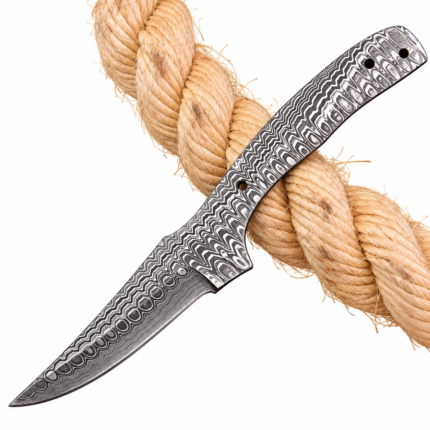
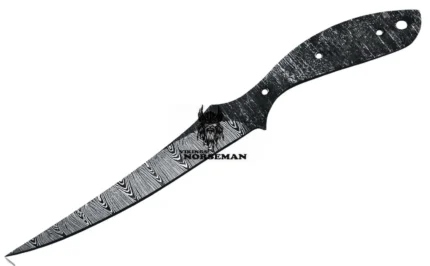
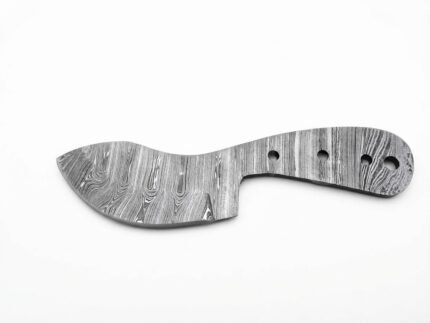
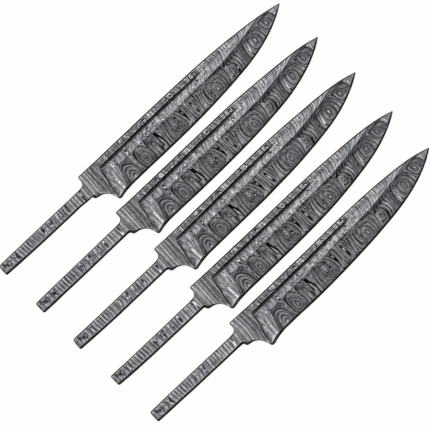
This raindrop pattern knife blank combines a sweeping blade profile, an exposed contoured tang, and a contrasting gold-tone guard. Across the visible surface, dark and silver-tone lines form concentric rings and flowing waves. The result is a distinctive appearance that gives a future handle project a clear visual starting point.
The product is shown without handle scales, leaving the outline and openings of the tang visible. That makes it relevant to buyers looking for a blade component for a custom project rather than a knife with a completed grip. Its appearance brings together decorative detail and a recognisable fixed-blade silhouette.
The photograph establishes the visible design, but it does not confirm the steel specification, dimensions, heat treatment, or supplied edge condition. Those details should be checked before choosing the blank for a particular application. Here, “raindrop pattern” describes the visible surface design; it does not certify the material or manufacturing method.
Concentric rings and flowing surface detail
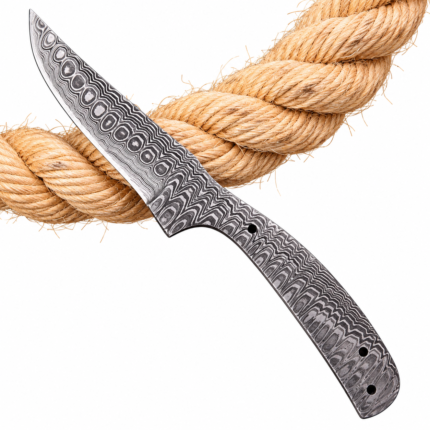
The most noticeable feature is the pattern covering the blade and exposed tang. Small circular forms sit alongside larger irregular rings, creating a layered visual effect. Some areas resemble ripples spreading across water, while others contain closely spaced lines that follow a longer, more flowing direction.
The pattern changes across the blade face. Near the upper portion, the rounded forms are especially prominent. Toward the lower blade surface, finer waves become more noticeable. These changes give the photographed piece visual variety without relying on added lettering, bright paint, or a separate decorative graphic.
For a buyer comparing patterned blanks, this combination is worth examining closely. A design dominated by circular forms creates a different impression from a straight ladder pattern or a tightly twisted appearance. Here, the rounded motifs are a central part of the product’s identity and help distinguish it from a plain-looking blank.
The surface has a Damascus-style appearance. However, genuine pattern-welded construction, particular steel combinations, and layer counts cannot be established from the image. If those properties are essential to your purchase, request documentation for the actual item rather than relying on the decorative pattern alone.
A blade profile with a pronounced curve
The blade is broad near the guard and narrows toward a defined point. Its lower outline follows a long curve, giving the profile a sweeping appearance. The upper outline is comparatively straighter through much of its length before approaching the tip. Together, these lines create a clear, continuous silhouette.
This profile provides a strong visual contrast with the smaller curves along the tang. The blade has an extended flowing outline, while the handle area contains more frequent changes in shape. When planning a finished design, both parts deserve attention because the handle will become part of the same overall composition.
A visible transition on the blade face separates areas with different surface appearances. This helps show the shaping already present in the photographed component. It does not, by itself, establish the precise grind geometry, edge angle, thickness behind the edge, or whether additional finishing is required.
Choose the profile because it suits your intended design, then confirm the technical details separately. The photograph is useful for judging shape and visual proportion, but it provides no reliable scale for determining how large the blade will feel in person.
A contrasting gold-tone guard
A gold-tone guard sits between the blade and exposed tang. Its relatively plain surface creates a visual break in the surrounding pattern. This contrast gives the transition between blade and handle a defined appearance and introduces a warmer colour into the otherwise dark and silver-tone design.
The guard projects beyond the lower outline at the front of the handle area. Its visible shape is gently curved and tapers toward the projecting end. Compared with the detailed surface around it, the guard looks restrained, allowing its colour and outline to provide the main decorative effect.
The photograph shows the guard in position, which is useful when considering the appearance of a completed handle. The front of any proposed handle design will need to relate to this existing feature. Its shape, width, and attachment should be checked before selecting materials or assuming a particular fitting arrangement.
“Gold-tone” describes colour only. The image does not establish whether the guard is brass, another alloy, or a coated material. It also does not verify how the guard is secured. Buyers who need a particular metal or construction method should confirm both directly with the seller.
An exposed tang with a shaped outline
Behind the guard, the exposed tang extends through the visible handle area. Its broad outline is consistent with a full-tang-style layout, rather than a narrow tang intended to disappear inside a complete handle. The photographed piece has no handle scales covering either side of the visible grip area.
Several curved recesses appear along the underside. These give the tang a shaped profile rather than a simple rectangular outline. The rear section broadens again, producing a defined end to the handle area. This contour is a significant part of the design and should be considered when planning a compatible grip.
The exposed surface makes it possible to examine the relationship between the guard, the middle of the tang, and the rear opening. That visibility is useful during initial design selection. It gives a clearer impression of the underlying outline than a photograph of an already assembled handle would provide.
Actual comfort will depend on more than this outline. Finished handle thickness, edge rounding, materials, and overall dimensions all influence how a completed piece feels. The visible contours should therefore be treated as design information, rather than proof of a comfortable or universally suitable grip.
Multiple openings along the handle area
The tang contains several smaller circular openings and a larger opening near the rear. Their positions are visible because the handle area is uncovered. These openings are relevant when assessing possible handle construction and comparing the blank with the materials or components intended for a project.
Hole diameter and spacing matter as much as the number of openings. A photograph can show the layout, but it cannot reliably establish measurements or tolerances. Existing pins, fasteners, or other components should not be assumed to fit simply because their proportions look similar on screen.
The larger rear opening is a noticeable part of the design. Its intended function is not specified in the available product information, so it should not automatically be treated as a confirmed lanyard fitting. If using that opening is important to your plans, check its dimensions and intended purpose.
For a buyer, the practical advantage of the exposed layout is visibility. You can see where openings are positioned in relation to the contours before requesting measurements. That helps make a compatibility discussion more specific and reduces reliance on a generic description such as “universal knife blank.”
Understanding the product’s stage of completion
The image presents a shaped blade component with a guard and an uncovered tang. It is more visually developed than a simple rectangular metal billet, but it is not shown as a knife with a finished handle. This distinction is important when deciding whether the product matches the kind of project you want.
A blank may be supplied at different stages of preparation. The word alone does not establish whether heat treatment, final sharpening, surface finishing, or other work has been completed. The photographed appearance should not be used as a substitute for a clear statement of the supplied condition.
Before purchasing, establish which tasks remain and whether they fall within your experience or the services available to you. Someone planning only a handle project may have different requirements from someone seeking a component that needs more extensive preparation. Both buyers need accurate information about the starting condition.
This product is best considered as a potential component for a custom handle project, subject to that confirmation. Its appeal lies in the visible combination of pattern, profile, guard, and exposed tang. Readiness for any finished use must be established separately.
Planning a handle that complements the blade
The uncovered tang leaves room to develop a handle appearance around the existing design. Because the blade already contains a strong pattern, a relatively simple handle could allow that detail to remain the focal point. A more decorative handle could create a different result, depending on your preferences.
Dark colours might visually connect with the darker areas of the blade. Warm brown tones could relate to the gold-tone guard, while a lighter handle could create a stronger contrast with the patterned surface. These are styling possibilities, not supplied variations or confirmed material options for this product.
The relationship between handle shape and tang shape is equally important. The curved underside and wider rear section create an outline that a proposed handle must accommodate. A material selected for its appearance still needs suitable dimensions and a fitting approach appropriate to the actual component.
Think about the completed design as a whole before buying separate parts. The guard already introduces a colour and shape decision. Working with those existing features can help produce a coherent appearance without needing every part of the project to carry an equally strong decorative pattern.
Checking dimensions before selecting components
No scale or measurement reference appears in the photograph. Overall length, blade length, blade width, tang length, and thickness remain unconfirmed. A large product image can make a relatively small component look substantial, so visual proportions should not be treated as measurements.
For handle planning, the tang’s maximum width and its shape near the guard are particularly useful details to request. Hole positions and diameters are also relevant. A dimensioned drawing or measurements of the actual piece can provide information that an attractive product photograph cannot.
Thickness deserves its own check. A face-on image mainly shows the outline and surface, not the full cross-section. Thickness can affect component selection, the intended finished proportions, and the amount of work involved. It should be confirmed directly rather than borrowed from a similar-looking supplier listing.
A useful buying decision combines the visual information with these practical measurements. The image helps you decide whether the design appeals to you. Confirmed dimensions help you decide whether it fits the project you actually intend to complete.
Material information and performance expectations
The photographed surface has a metallic appearance with a high-contrast pattern. That supports a description of its colour and design, but not a specific steel grade. It does not establish carbon content, stainless properties, hardness, or the way the different visible tones were produced.
Those distinctions matter because buyers may have very different expectations for a decorative project, a collection piece, or a component intended for eventual practical use. A pattern is an aesthetic feature; performance depends on material, processing, geometry, and the condition of the finished item.
If the seller describes the blank as Damascus steel, ask what that means for the exact product being supplied. Relevant information could include the stated steel composition and heat-treatment condition. Any such details should relate to this item, rather than a supplier’s broader range of patterned products.
The same approach applies to claims such as handmade, hand-forged, corrosion-resistant, or ready to use. None is confirmed by the photograph. Keeping those claims separate from the visible design helps you compare products on a sound basis and choose according to your own requirements.
Who may appreciate this design
This blank may interest hobby knife makers and buyers planning a custom handle project who prefer a patterned blade over a plain appearance. Its exposed tang allows the underlying handle outline to remain visible during selection, while the guard provides an existing feature around which to plan the design.
It may also appeal to people who enjoy coordinating materials and colours in workshop projects. The contrast between the dark pattern and warm guard offers several possible visual directions. The final choice can be understated or more decorative, depending on the handle selected and the desired overall appearance.
For someone buying a project component as a gift, compatibility matters more than appearance alone. The recipient’s preferred dimensions, materials, and expected preparation stage should guide the choice. A visually appealing blank may still be unsuitable if it requires work outside the recipient’s plans or experience.
Buyers seeking an immediately usable knife should first confirm the supplied state and the work still required. The photograph shows no completed grip. It therefore makes sense to assess this item as a project component, with the necessary technical and package details established before ordering.
Package contents and additional components
The photograph shows the patterned blank with its gold-tone guard in position. It does not show handle scales, pins, screws, a sheath, a presentation box, or assembly accessories. Their absence from the photograph does not establish the final package contents, but none should be assumed to be included.
A clear packing list is useful before comparing prices. One supplier may offer a bare component, while another may include additional parts. Two visually similar listings can therefore represent different purchases even when the main photographed item looks much the same.
If you already own handle materials or hardware, check compatibility before treating them as usable with this blank. If you plan to buy them separately, confirm the necessary measurements first. This helps keep the project scope clear and gives a more realistic view of the total purchase.
For the same reason, ask whether the guard is supplied exactly as pictured and whether the photograph represents the selected variation. Small differences in outline or fittings can affect a planned design, even when the general blade pattern is similar.
Looking after the surface
Product-specific care instructions are not available from the photograph. Appropriate cleaning and storage depend on the actual blade material, surface treatment, and guard composition. Obtain the seller’s instructions for those materials before selecting cleaning products or applying any treatment to the patterned surface.
This is particularly relevant when the appearance is a major reason for buying the product. A cleaning method suited to one metal or finish may not suit another. The visible pattern should not be taken as evidence that the surface can tolerate a particular polish, abrasive, or chemical.
Ask whether the seller recommends any protective treatment during storage and whether that guidance also applies to the guard. If the blank is awaiting completion as part of a longer project, knowing its storage requirements in advance can help preserve its supplied condition.
Once a handle is added, its material may introduce separate care requirements. Keeping the blade, guard, and handle specifications together provides a more useful basis for maintaining the finished piece than relying on general instructions for a different type of knife.
Choosing this blank for your project
The key reasons to consider this design are visible: a pronounced raindrop-style pattern, flowing detail across the blade face, a curved blade outline, a gold-tone guard, and an exposed tang with multiple openings. Together, they offer a distinctive starting point for a carefully planned handle project.
The most useful next step is to pair those visual qualities with confirmed specifications. Dimensions, material, preparation stage, and package contents will determine whether the product meets your practical needs. A matching appearance is a starting point for comparison, not a substitute for those details.
Consider how much of the existing design you want to carry into the finished result. The patterned blade can remain the main feature, while the handle supports its colours and proportions. Alternatively, a more decorative handle may suit your personal style, provided the chosen components are compatible.
Explore this raindrop pattern knife blank as the foundation for your next custom handle project, and confirm the specifications needed to turn its distinctive appearance into a well-planned purchase.








Reviews
There are no reviews yet.