





A distinctive starting point for a custom knife project
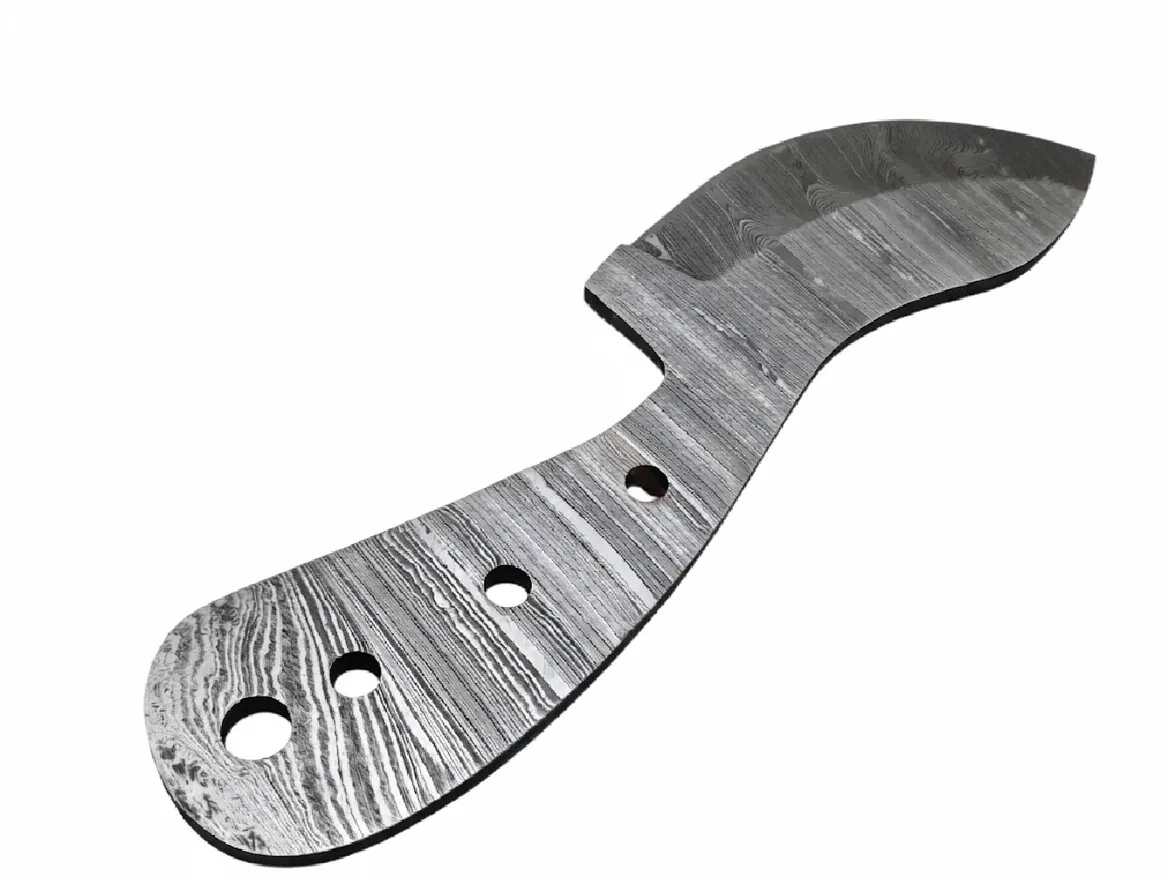
This wide belly knife blank brings together a broad curved blade, a flowing silver-gray pattern, and an exposed full tang. Its outline has a rounded, substantial appearance, with the blade sweeping outward below the narrower handle area. The patterned surface continues across both sections, giving the blank a coordinated appearance from its forward tip to its rounded rear.
Shown without fitted handle scales, this product is intended for buyers considering a knife-making or handle-fitting project. The photograph presents the underlying blade-and-tang profile clearly, making its overall shape and hole arrangement easy to examine. Three smaller openings run along the tang, while a larger opening sits near the rear. These visible details help distinguish this blank from designs with straight handles, narrow blades, or skeletonized tangs.
Its strongest visual feature is the relationship between the generous blade belly and the curved handle outline. For a maker who wants the blade shape to contribute as much character as the eventual handle, this is a design worth exploring.
A broad blade with a sweeping lower edge
The blade is visibly wider than the tang and has a pronounced curved lower outline. Toward the front, that curve rises to meet a short, tapered tip. Moving back toward the handle, the lower edge becomes less rounded before reaching the blade heel. This creates a profile that looks broad and flowing rather than long and slender.
Above the blade, the spine follows a different curve. It rises gently near the forward section and then dips toward the transition into the tang. Together, these upper and lower lines give the blank its recognizable silhouette. The broad face also provides plenty of visible space for the surface pattern.
The shape resembles a wide-bellied skinner-style blank, although the photograph does not establish a manufacturer-approved application. Buyers planning a working knife should evaluate the actual dimensions, steel specification, and finished edge geometry against their intended use. The visible outline is a useful starting point for that decision, while performance depends on information beyond appearance.
Flowing detail across the blade face
Fine light and dark lines cover the visible face of the blank. Across the blade, these lines bend into elongated loops and nested curves. Some sections look closely spaced and almost straight; others open into broader, rounded formations. This variation gives the surface movement without requiring colored coatings or separate decorative fittings.
The pattern is especially noticeable across the broad forward half. Near the blade heel, a small angular formation interrupts the surrounding flow, adding another point of visual interest. Along the tang, the lines become more upright before curving around the rounded rear.
These markings resemble the appearance commonly associated with Damascus-pattern blades. However, the image alone cannot verify layered construction, the alloys used, or how the pattern was produced. Describing the product as patterned preserves what is clearly visible without assigning an unsupported material specification. Buyers specifically seeking verified Damascus steel should obtain the maker’s material details before ordering.
A restrained silver and charcoal color palette
The blank’s appearance is built around silver, medium gray, and darker charcoal lines. That neutral palette allows the surface pattern to remain the central visual feature. There are no fitted colored scales, painted handle sections, or contrasting bolsters shown in the photograph.
For a future handle project, this understated color scheme provides a flexible visual starting point. A dark handle could keep the overall appearance subdued, while a lighter handle could create a stronger contrast with the patterned blade. Those are styling possibilities for a separately planned build, rather than included variations of this product.
Lighting can influence how strongly the pattern appears. Bright areas in the photograph look more silvery, while recessed-looking lines read as darker gray. The image therefore provides a guide to appearance, rather than an exact color standard. If matching the blank to existing fittings or handle material matters, additional photographs under neutral lighting would be useful.
Full tang profile visible from blade to rear
The exposed tang extends through the entire pictured handle outline. Its perimeter is visible along the top, underside, and rounded rear, making the full tang layout easy to identify. There is no fitted handle covering the central portion, and no narrow hidden stem is shown.
The tang widens toward the rear after the narrower transition behind the blade. Its upper boundary rises gently, while the underside follows a shallow curve. This creates a handle outline with a broader back section and a more defined forward transition.
For someone comparing blanks, seeing this complete profile helps with early handle planning. It shows the area that fitted scales would need to follow and reveals how the handle shape relates to the blade. Actual fit still depends on measurements, thickness, and the chosen components. The photograph supports the construction layout, but it does not establish strength ratings or the finished knife’s balance.
Four visible openings along the tang
Four openings are visible in the handle section. Three smaller holes are positioned along the tang, with the third closer to the rear. A larger opening sits behind them near the rounded end. Their arrangement is an important identification detail when comparing this blank with another supplier’s design.
The openings provide useful reference points for planning compatible handle components. They also make it clear that this is a prepared tang profile rather than an undrilled rectangular extension. However, their diameters and spacing cannot be measured accurately from this image.
The larger rear opening may be intended for a lanyard arrangement or another fitting, but that purpose requires confirmation. Similarly, the smaller holes should not be described as compatible with a particular pin size without measurements. If you already have handle hardware, compare its specifications with the blank’s actual hole dimensions before treating the parts as a matched set.
A curved handle outline with a rounded end
The tang has a smooth, rounded rear rather than a pointed or sharply squared end. Its silhouette broadens behind the middle section, creating a noticeable difference between the narrower forward handle area and the fuller rear. This contributes to the blank’s overall curved appearance.
At the front of the tang, the underside turns upward from the blade heel into the handle area. The resulting recess makes the blade-to-handle transition visually distinct. There is no separate guard or bolster fitted in the photograph.
The outline may appeal to makers who prefer a handle with visible contour rather than parallel straight sides. How that shape feels in use will depend on the final scale thickness, edge rounding, surface finish, and the user’s hand size. A flat photograph can show the intended outline, but it cannot confirm comfort. Reviewing actual measurements is the best way to decide whether the profile suits your proposed handle.
An unhandled component for a planned build
The product is pictured as a single knife blank. No scales, fasteners, adhesive, sheath, or presentation box appear beside it. This makes the image useful for examining the component itself, without accessories obscuring its shape.
For buyers who enjoy choosing their own handle appearance, an unhandled blank offers room to make those design decisions separately. The blade profile and tang arrangement provide the starting structure, while the completed handle would depend on the materials and fittings selected for the project.
That flexibility should be considered alongside the product’s finishing status. A blank may require different amounts of additional work depending on how it is supplied. The photograph does not confirm whether this example has received its final heat treatment, edge finishing, or other preparation. Before choosing it for a particular project, establish which stages have already been completed and which remain the buyer’s responsibility.
Choosing a handle appearance that complements the blade
The patterned blade already has a detailed visual character, so the eventual handle can either balance that detail or add another decorative element. A plain handle surface would leave the flowing blade lines as the main focus. A more expressive handle could create a stronger visual contrast.
Brown, black, cream, and muted colored handle materials are possible directions to explore when planning the look. These are design ideas, not verified supplier options or materials included with the blank. Any selection should be made after checking dimensions and suitability for the finished project.
The tang’s rounded rear and curved underside also influence how a finished handle will look. A design that follows those contours can preserve the silhouette visible in the photograph. Before purchasing separate components, consider both their appearance and their physical fit. A pleasing color combination is only part of a successful match; the blank and handle components must also be compatible.
Who may find this blank appealing
This design may interest knife-making hobbyists, handle makers, and buyers commissioning a custom build. Its broad blade and continuous pattern give it an identifiable appearance before a handle has been added. Someone seeking a visually distinctive project base may find that combination appealing.
It may also suit buyers who prefer to discuss handle details with a maker rather than select a finished knife with fixed styling. Starting with an exposed blank allows the conversation to focus on the blade outline, the proposed handle, and the overall appearance of the completed piece.
Suitability for beginners cannot be established from the photograph. That depends on the blank’s actual condition and the work required to finish it. An experienced maker can help assess whether the product fits the buyer’s skills, available equipment, and intended result. For someone seeking an immediately usable knife, the absence of a fitted handle is an essential distinction to understand before purchasing.
Understanding the size before ordering
The photograph does not include a ruler or another reliable size reference. Although the blade looks broad relative to the tang, that relationship does not establish an overall length or handle size. A close-up image can make a small component appear substantial.
Useful measurements include overall length, blade length, maximum blade width, tang length, and material thickness. These dimensions help establish whether the blank fits the intended project and whether separately sourced handle materials provide sufficient coverage.
Hole diameters and center-to-center spacing are equally useful when selecting compatible hardware. A side view would also help clarify the blank’s thickness and the visible edge profile. Together, these details provide a more complete basis for comparison than the main photograph alone. If size is a deciding factor, request measured specifications rather than estimating from proportions or borrowing dimensions from a similar-looking supplier listing.
Confirming material and finishing specifications
The patterned face is visible, but the underlying material specification remains unconfirmed. A reliable product specification should identify the steel or steel combination and explain the blank’s supplied condition. These details matter when assessing how the component can be completed and maintained.
Heat-treatment status and hardness are separate questions from appearance. A patterned surface does not demonstrate that a blank has been hardened, tempered, or tested to a particular value. Likewise, a clearly defined lower edge does not confirm that the product arrives sharpened and ready to use.
For a working project, ask for the maker’s documented specifications and any relevant finishing information. If the supplier offers several versions, ensure those details apply to the exact version being ordered. Matching the photograph to the correct specification avoids confusion between similar shapes that may differ in alloy, thickness, treatment, or supplied finish.
Evaluating the blank as part of a complete project
A knife blank is one part of a larger project. When deciding whether this design fits your needs, consider the proposed handle, required fittings, finishing services, and eventual storage arrangement together. The photograph establishes the starting appearance, while those later decisions determine the finished result.
The blade’s generous belly will influence the overall shape of the completed piece. The curved tang will influence the handle outline, and the four openings will affect component selection. Reviewing these features as a group can make comparisons more meaningful than choosing solely by surface pattern.
A project budget should also account for any separately purchased parts or professional work. The cost of the blank alone does not represent the cost of a finished knife. Confirming the supplied condition early helps you compare options fairly and reduces the chance of choosing a component that requires more work than expected.
Checking accessories and package contents
Only one blank is shown in the uploaded image. There is no visible evidence of included handle material, mounting hardware, sheath, or other accessories. The final order description should specify package contents explicitly.
This is particularly useful when comparing suppliers. One offer might cover a single blank, another might include a sheath, and another could be a mixed selection of shapes. Similar product titles do not necessarily describe equivalent packages.
If you plan to have a sheath made, the finished blade and handle dimensions will matter. A generic sheath shown with another supplier’s blank should not be assumed to fit this design. The same principle applies to handle scales and fittings. Checking the contents and compatibility of each component helps keep the purchase aligned with the project you actually want to complete, rather than a loosely similar example.
Care information should match the confirmed material
A material-specific care routine is not supplied with the photograph. Because the alloy and surface treatment remain unknown, this listing does not assign a particular oiling schedule, cleaning chemical, or sharpening method to the blank.
The appropriate instructions should come from the maker and apply to the exact supplied version. They should explain how to protect the surface, whether the material requires corrosion prevention, and which treatments could alter the visible pattern.
Care requirements may also change after a handle is fitted. The completed knife will combine the blade material with the chosen handle material and fittings, each of which may have its own maintenance needs. Keeping the maker’s specifications with the project provides a useful reference for both the person completing the build and its eventual owner. This is especially helpful when the finished piece is commissioned or given as a gift.
A closer look before making your choice
The available photograph gives a clear view of the blank’s main face and overall outline. It shows the broad curved blade, flowing gray pattern, full tang, rounded rear, and four openings. These are the strongest confirmed features on which to base an initial selection.
Additional views would answer different questions. A photograph of the opposite face would show its pattern and finish. A side view would clarify thickness and edge preparation. A measured photograph would help establish scale. None of those views should be replaced by assumptions drawn from a comparable product.
For buyers choosing between several blanks, these details can make the decision more straightforward. Compare the dimensions and supplied condition first, then consider which outline and pattern best suit your preferred appearance. That approach keeps the visual appeal connected to the practical needs of the project.
Bring your handle concept together
This wide belly knife blank offers a clear visual foundation: a sweeping blade profile, contrasting gray lines, and an exposed tang with a curved outline. Its appearance is distinctive enough to guide the style of a future handle while leaving the handle material and finish open for a separately planned build.
The broad blade face emphasizes the pattern, and the rounded rear keeps the overall silhouette consistent. For a maker or buyer who appreciates curved forms and visible surface detail, those features give the design a strong identity.
Review the confirmed dimensions, material specification, finishing stage, and package contents before selecting the blank for your project. Once those details match your requirements, explore how this patterned profile could work with your chosen handle design and the finished piece you have in mind







Reviews
There are no reviews yet.