

Black Forge Finish Full Tang Knife Blank
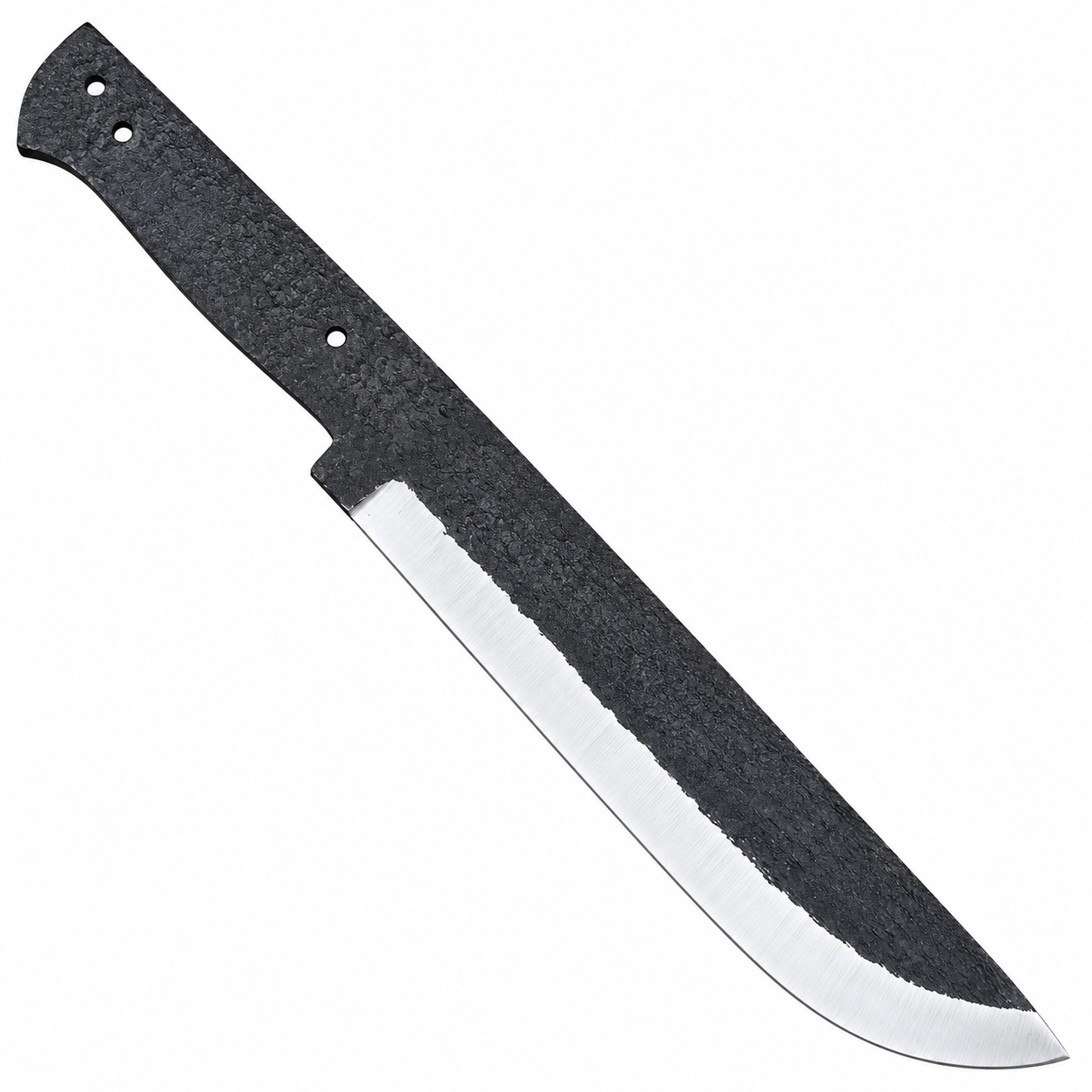
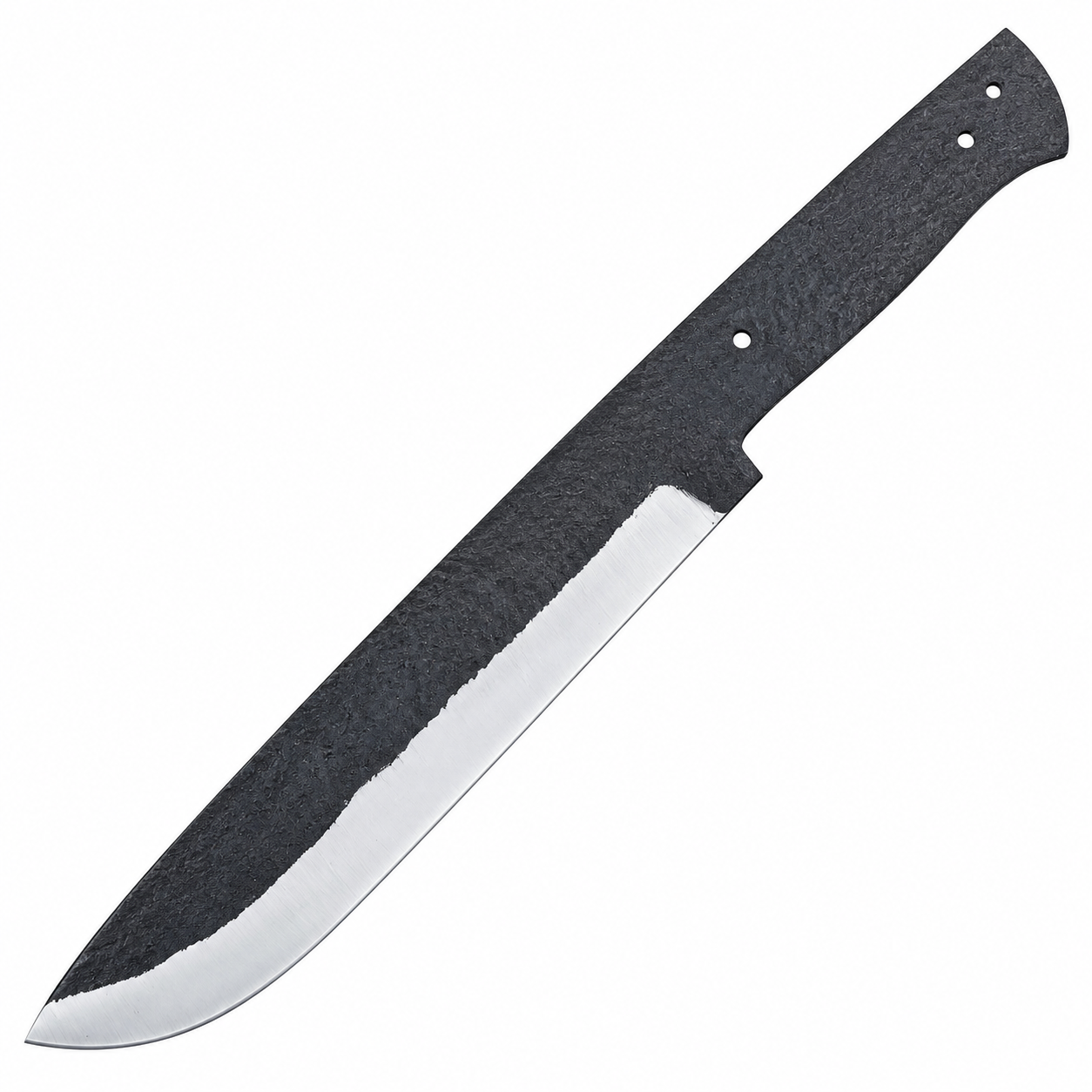
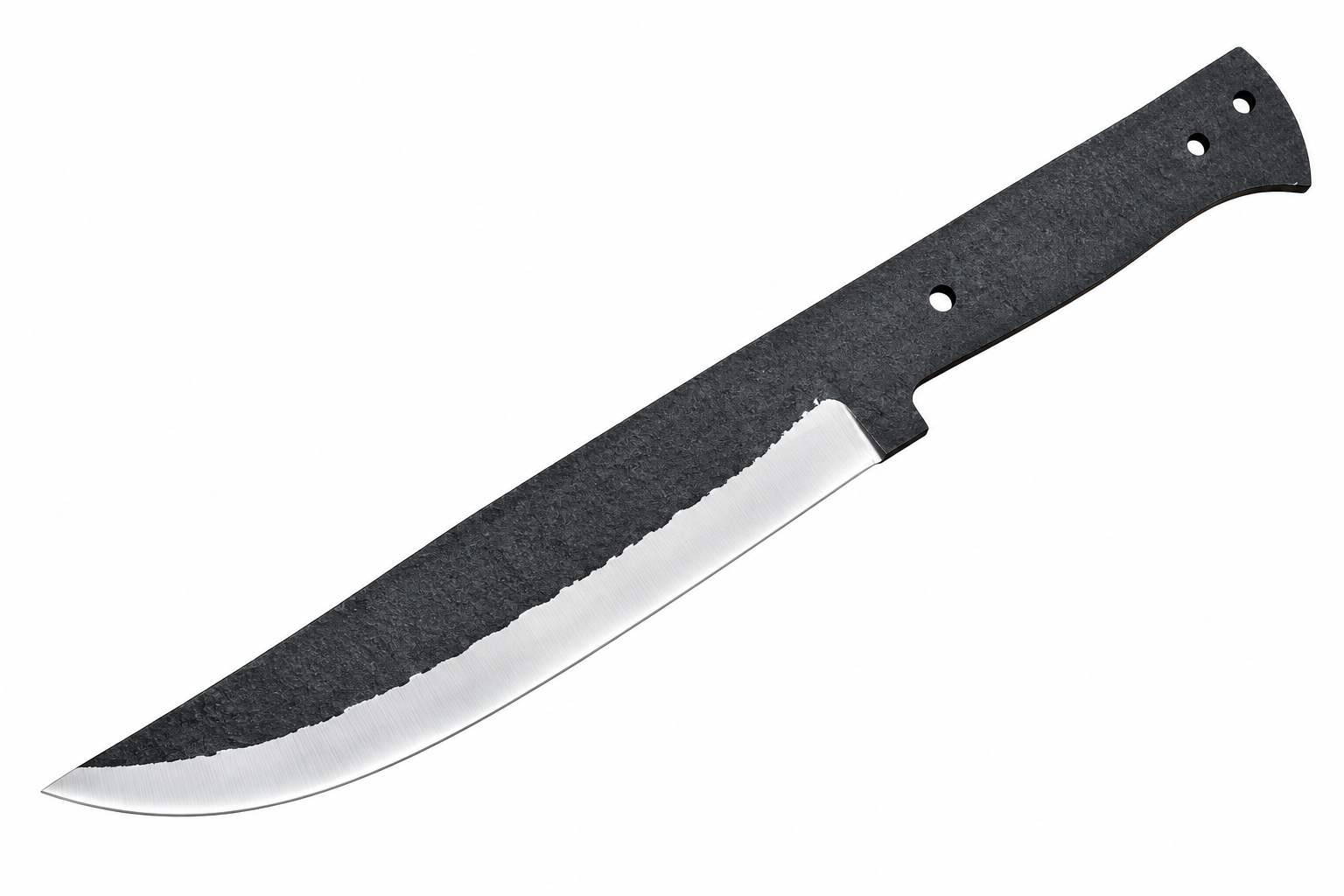
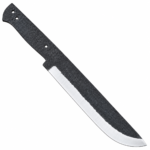
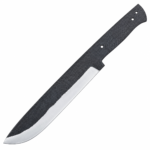
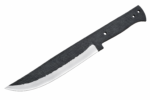
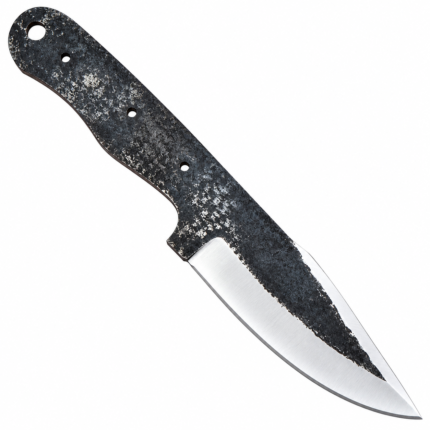
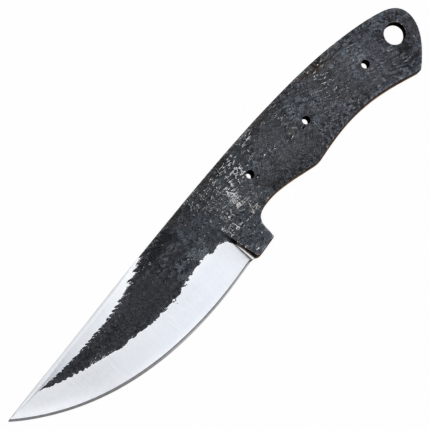
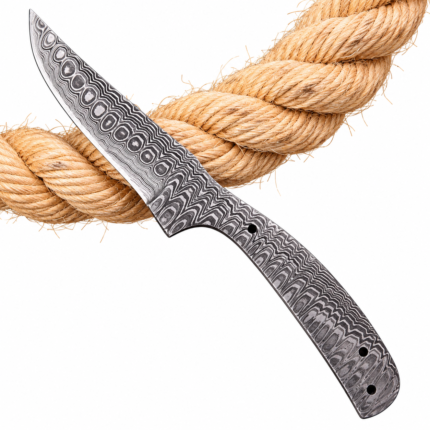
Black Forge Finish Knife Blank features a distinctive dark textured blade surface, a bright silver-colored cutting bevel, and an unfinished full tang handle with three visible mounting holes. This curved blade blank is suitable for knife-making projects where the customer requires an exposed metal profile for further finishing. Its black-and-silver appearance gives it a traditional forge-inspired look.
Black Forge Finish Knife Blank Features
The Black Forge Finish Knife Blank combines a broad, gently curved cutting profile with a textured dark upper surface. The exposed handle section provides three circular openings, while the smooth silver-colored bevel creates a strong visual contrast. The exact steel grade, dimensions, and heat-treatment condition should be confirmed before purchase.
The Black Forge Finish Full Tang Knife Blank features a distinctive combination of a dark textured metal surface and a bright, silver-colored cutting bevel. Designed as an unfinished knife component, it has a continuous metal profile extending from the broad blade into an exposed handle section with three visible mounting holes.
Its long, slightly curved blade, dark surface texture, and unfinished handle make it visually different from completed knives fitted with wooden, synthetic, or composite grips. The product is presented as a bare knife blank, allowing customers to assess its shape and visible construction without the distraction of additional accessories.
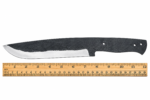
This style of knife blank is generally of interest to knife makers, hobbyists, and collectors of unfinished knife components. The image provides a clear view of the blade outline, handle-hole arrangement, contrasting surface treatment, and overall proportions.
Before purchasing for a specific knife-making project, customers should confirm the steel composition, dimensions, heat treatment, and intended finishing requirements with the supplier.
Distinctive Black Forge-Style Finish
One of the most noticeable features of this knife blank is its dark charcoal-black surface.
The darker portion covers the upper blade face and continues into the exposed handle section, producing a consistent appearance across the metal profile.
Rather than appearing completely smooth, the surface has a subtle textured look that resembles the finish commonly associated with forged metal components.
Small irregularities in the visible surface create a rustic appearance that contrasts with the smoother, bright cutting bevel.
This textured finish contributes significantly to the blank’s appearance.
The black and silver combination makes the blade profile easy to recognize and gives it an understated industrial character.
Although the surface resembles a forge finish, the photograph does not verify whether it was created through forging, coating, oxidation, or another manufacturing process.
For this reason, the finish is described as forge-style rather than confirmed hand-forged construction.
Customers seeking a specific manufacturing process should request written confirmation from the supplier.
Broad Curved Blade Profile
The blade has a relatively long and broad outline.
Its cutting side forms a gradual curve toward a pointed tip, while the opposite side follows a straighter profile through much of the blade’s length.
This combination produces a recognizable outdoor-style knife silhouette.
The blade becomes wider near its central region before narrowing into the point.
A distinct transition is visible where the blade connects with the exposed handle section.
The overall profile differs from narrow utility knife blanks and compact pocket knife blades.
Its comparatively broad shape may interest customers developing larger fixed-blade knife designs.
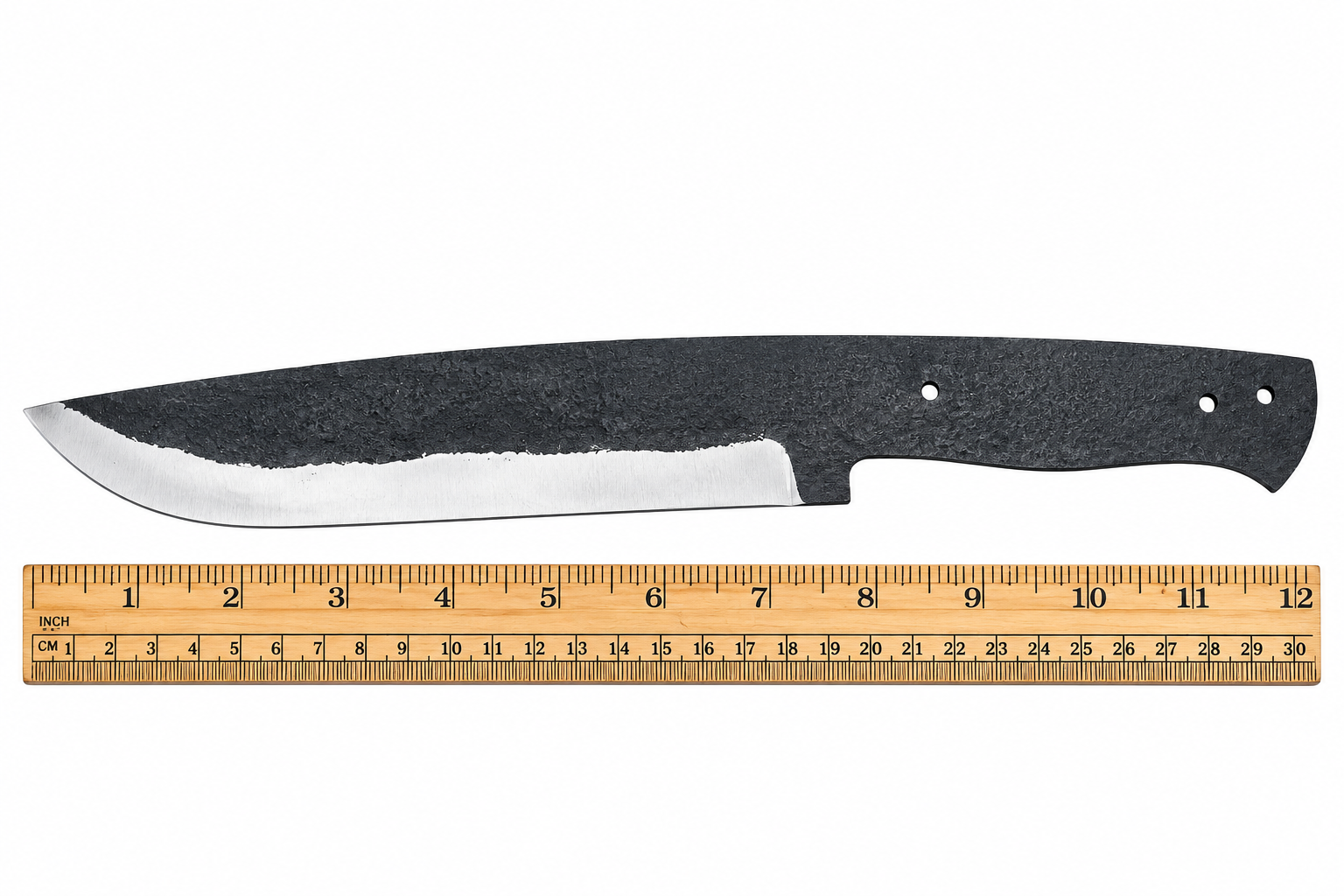
The image, however, does not establish the blade’s exact length, thickness, weight, or intended performance.
These measurements are important for selecting a suitable blank for a particular project.
The actual cutting capability depends on the steel, bevel geometry, edge condition, heat treatment, and final preparation.
Bright Silver-Colored Cutting Bevel
The lower portion of the blade has a clearly visible silver-colored bevel.
This bright section follows the curved edge and extends toward the pointed tip.
Its smoother surface contrasts with the dark, textured upper blade.
The difference in color and texture gives the knife blank a two-tone appearance.
The reflective bevel also makes the cutting-edge profile more visible against the white background.
A gradual transition between the dark upper face and bright lower section can be seen along the length of the blade.
This is a defining design characteristic.
Although the bevel appears ground and polished, the photograph cannot verify whether the edge has received final sharpening.
Customers should not assume that the blank is ready for immediate use.
The supplier should confirm whether additional edge preparation, finishing, or heat treatment is required.
Full Tang Handle Profile
The knife blank has a continuous metal silhouette extending from the blade into the handle area.
This is consistent with a full-tang-style construction.
Unlike a finished knife, the handle section has no separate grip scales attached.
The exposed metal makes the outline of the handle easy to inspect.
Its shape gradually widens toward the end, with a slightly curved lower edge and a broader terminal section.
The handle profile is visually simple, without finger grooves or an attached guard.
This provides a straightforward appearance that complements the blade’s relatively plain outline.
The image does not reveal the metal’s internal properties or confirm specific strength characteristics.
The continuous profile can be described from the photograph, but any claims concerning structural performance require manufacturer specifications or testing.
Three Visible Handle Holes
The handle section contains three circular openings.
Two holes appear close to the wider end of the handle, while the third is positioned farther toward the blade.
The openings are clearly visible against the white background.
Their arrangement is an important product-identification detail.
On unfinished knife blanks, holes of this kind are commonly associated with handle attachment or component assembly.
However, the exact hole diameters and intended fitting types are not established by the image.
Customers planning a handle-finishing project should confirm those dimensions before selecting compatible handle components.
The spacing between the holes should also be checked against the intended design.
The photograph does not establish compatibility with particular rivets, pins, or other fastening hardware.
No separate handle attachment components are shown as included.
An Unfinished Knife Component
A major difference between this product and a completed fixed-blade knife is the absence of fitted handle scales.
The supplied image shows the metal blank itself.
There is no completed wooden handle, decorative grip, leather sheath, or protective presentation case.
This distinction is important for accurate product listings.
Customers purchasing an unfinished knife component may have different expectations from customers buying a ready-to-use knife.
The exact stage of completion needs to be confirmed by the supplier.
A blade blank may be supplied in different conditions depending on the manufacturing process.
Some knife blanks may already have their primary bevels prepared, while others require additional manufacturing or finishing.
The image alone does not establish its heat-treatment status or edge readiness.
These details should be clearly documented before the product is marketed for a particular application.
Minimalist Industrial Appearance
The design uses two prominent tones.
The upper surface is dark gray to black, with visible texture.
The cutting bevel is bright silver.
This contrast creates a clean, uncomplicated appearance.
There are no visible logos, inscriptions, ornamental engravings, or multicolored handle components.
The overall effect is relatively minimalist.
The black surface emphasizes the blade’s outline, while the silver section defines the cutting edge.
The three circular handle holes add functional-looking detail without making the design visually busy.
Customers who appreciate bare-metal tools and unfinished knife components may find the appearance appealing.
The simple presentation also makes the blank suitable for product catalogs that focus on construction details rather than decorative accessories.
Knife-Making and Hobbyist Interest
Knife blanks are commonly purchased by people interested in understanding knife construction and completing custom knife-making projects.
A blank without a finished handle allows the underlying metal profile to remain visible.
Customers can assess the shape, proportions, hole placement, and surface finish before deciding whether the component suits their requirements.
This particular design offers a broad curved blade and a relatively long exposed handle section.
Those features distinguish it from smaller utility blanks and narrow craft blades.
However, suitability for a particular project depends on information that cannot be established from the photograph.
Before purchasing, customers should verify the exact dimensions, steel grade, heat-treatment condition, and required finishing work.
The manufacturer’s specifications should also identify whether the blank is intended for decorative, educational, or functional applications.
Understanding Steel Selection
Different knife steels have different mechanical and maintenance characteristics.
Some prioritize corrosion resistance, while others are selected for particular hardness or toughness requirements.
The correct choice depends on the intended application and manufacturing process.
A black surface finish does not establish a particular steel composition.
Similarly, the bright silver-colored bevel does not confirm that the metal is stainless steel.
The product’s surface appearance should not be used to assign a steel grade.
Customers should request the manufacturer’s material designation.
Where available, supporting documentation can help establish the blade composition and processing history.
Reliable material information is especially important when buying unfinished components.
Without it, claims about edge retention, hardness, strength, or corrosion resistance would be speculative.
Blade Finish and Surface Details
The knife blank has a textured surface that extends from the blade into the handle.
The bright bevel appears smoother than the upper portion.
This creates a visible separation between two surface treatments.
The transition is not completely uniform in appearance, which contributes to the rustic forge-style character.
The dark section resembles metal that has retained a textured finish after processing.
However, photographic appearance alone cannot confirm that any particular forging technique was used.
The finish also does not establish protective properties.
For example, it would be inaccurate to describe the dark surface as rustproof, scratchproof, or chemically treated without manufacturer confirmation.
Customers who prioritize specific surface properties should request technical documentation.
Handle Material Is Not Included
The photograph shows an exposed metal handle area.
There are no attached wooden, synthetic, or composite grip scales.
Although completed knives may use different handle materials, none can be advertised as included with this blank.
This is an important distinction for the WooCommerce product page.
The product should not be described as having an ergonomic wooden handle, a leather-wrapped grip, or a decorative resin handle.
Those components are not present in the uploaded image.
Likewise, the listing should not imply that pins, fasteners, or adhesives are included.
Any additional components supplied by the manufacturer should be confirmed separately.
The most accurate description is an unfinished full-tang knife blank with three handle holes.
Blade Geometry and Proportions
The blade’s geometry is one of its most recognizable characteristics.
A long cutting section follows a slightly curved path toward the pointed tip.
The blade body has enough visible width to create a bold silhouette.
Near the handle, the blade transitions into a narrower connection before continuing into the full-length metal grip section.
This design gives the blank a balanced visual relationship between blade and handle.
However, the photograph cannot establish the actual center of balance or total weight.
Even when two knife blanks have similar outlines, differences in thickness, steel density, and dimensions can affect their handling characteristics.
Customers comparing products should therefore use verified measurements rather than judging physical properties solely by appearance.
Care Before and After Purchase
Proper care of unfinished metal components depends on the material and surface treatment.
Until the manufacturer provides specific instructions, general precautions are appropriate.
Keep the blank dry and protect it from prolonged exposure to moisture.
Avoid leaving the metal in wet packaging or damp storage conditions.
Handle the exposed blade carefully, since the degree of edge sharpness is not confirmed.
Use protective packaging that prevents contact with the blade edge and tip.
Avoid abrasive cleaning products unless the supplier confirms their compatibility with the finish.
For long-term storage, follow any corrosion-prevention recommendations supplied by the manufacturer.
The exact cleaning and maintenance requirements should ultimately be determined by the confirmed steel grade and finishing process.
Important Product Specifications
The following information should be verified before publishing detailed technical attributes.
Product type: Unfinished fixed-blade knife blank
Visible finish: Dark textured surface with a silver-colored cutting bevel
Construction appearance: Continuous full-tang-style metal profile
Handle holes: Three visible circular openings
Blade profile: Broad, gently curved blade with pointed tip
Handle material: No separate handle scales shown
Sheath: Not shown
Steel grade: Not confirmed
Blade hardness: Not confirmed
Blade length: Not confirmed
Overall length: Not confirmed
Blade thickness: Not confirmed
Weight: Not confirmed
Heat-treatment status: Not confirmed
Edge sharpness: Not confirmed
Manufacturing process: Not confirmed
Confirming these details allows buyers to make a better-informed decision.
Why This Knife Blank Stands Out
The Black Forge Finish Full Tang Knife Blank has a recognizable combination of features.
Its long, broad blade presents a distinctive outline.
The dark textured metal finish creates a rustic appearance.
The smooth, silver-colored bevel adds visual contrast.
The exposed handle section displays three circular holes and a gently widening profile.
Together, these details distinguish it from completed knives and from unfinished blanks with entirely polished surfaces.
Its simple construction appearance may interest customers looking for a specific blank shape or finish.
The uncluttered design makes it easy to inspect the features visible in the product photograph.
For buyers comparing different knife blanks, this visual clarity is useful.
Explore the Black Forge Finish Full Tang Knife Blank
The Black Forge Finish Full Tang Knife Blank brings together a broad curved blade, dark textured surface, bright ground bevel, and three-hole handle section.
Its unfinished appearance makes the metal profile the central feature of the product.
Whether you are comparing knife-making components or looking for a particular fixed-blade blank design, this product offers a distinctive black-and-silver appearance.
Explore the design and request the complete manufacturer specifications to confirm its suitability for your intended project.






Reviews
There are no reviews yet.