



A Fixed Blade Knife with a Distinctive Honeycomb Accent
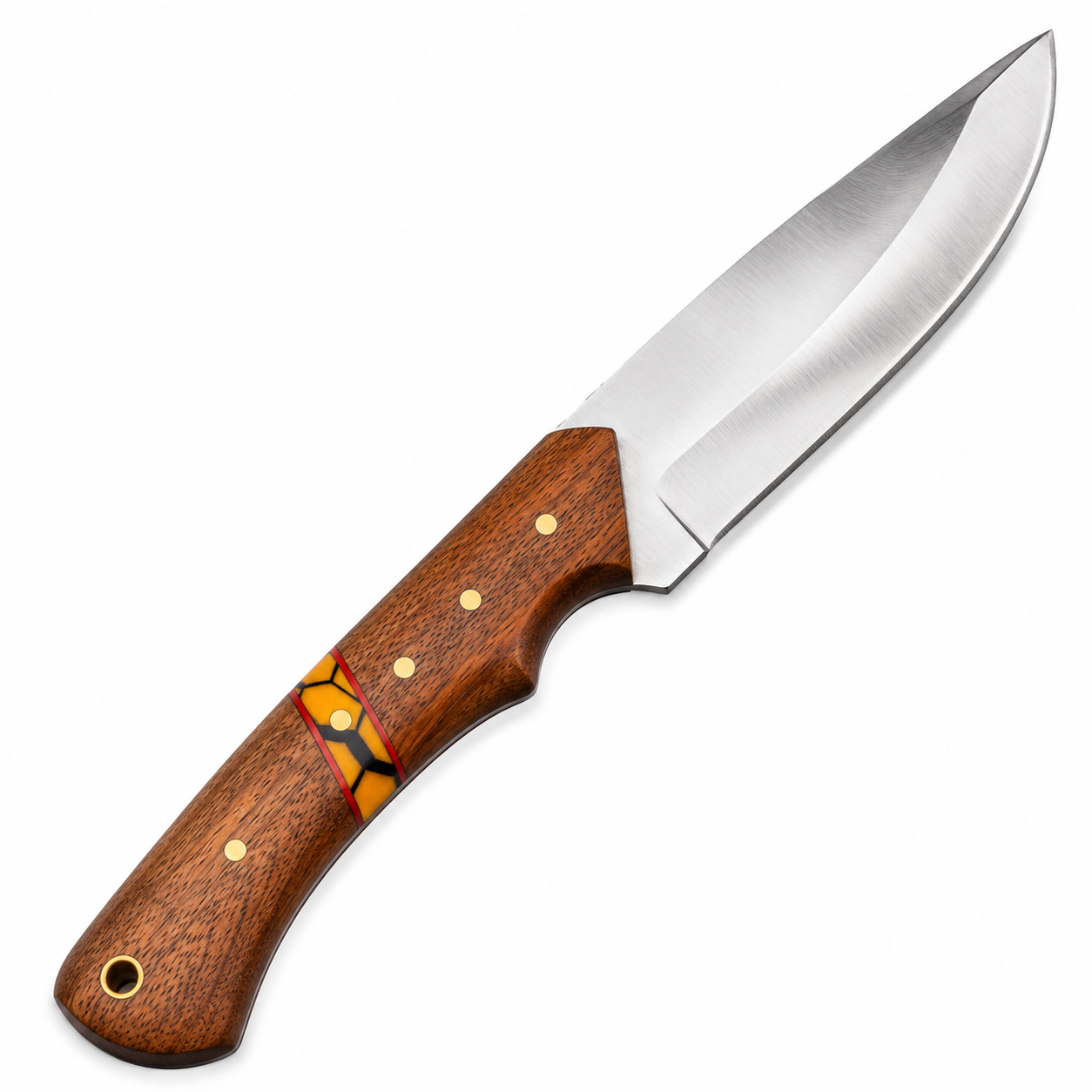
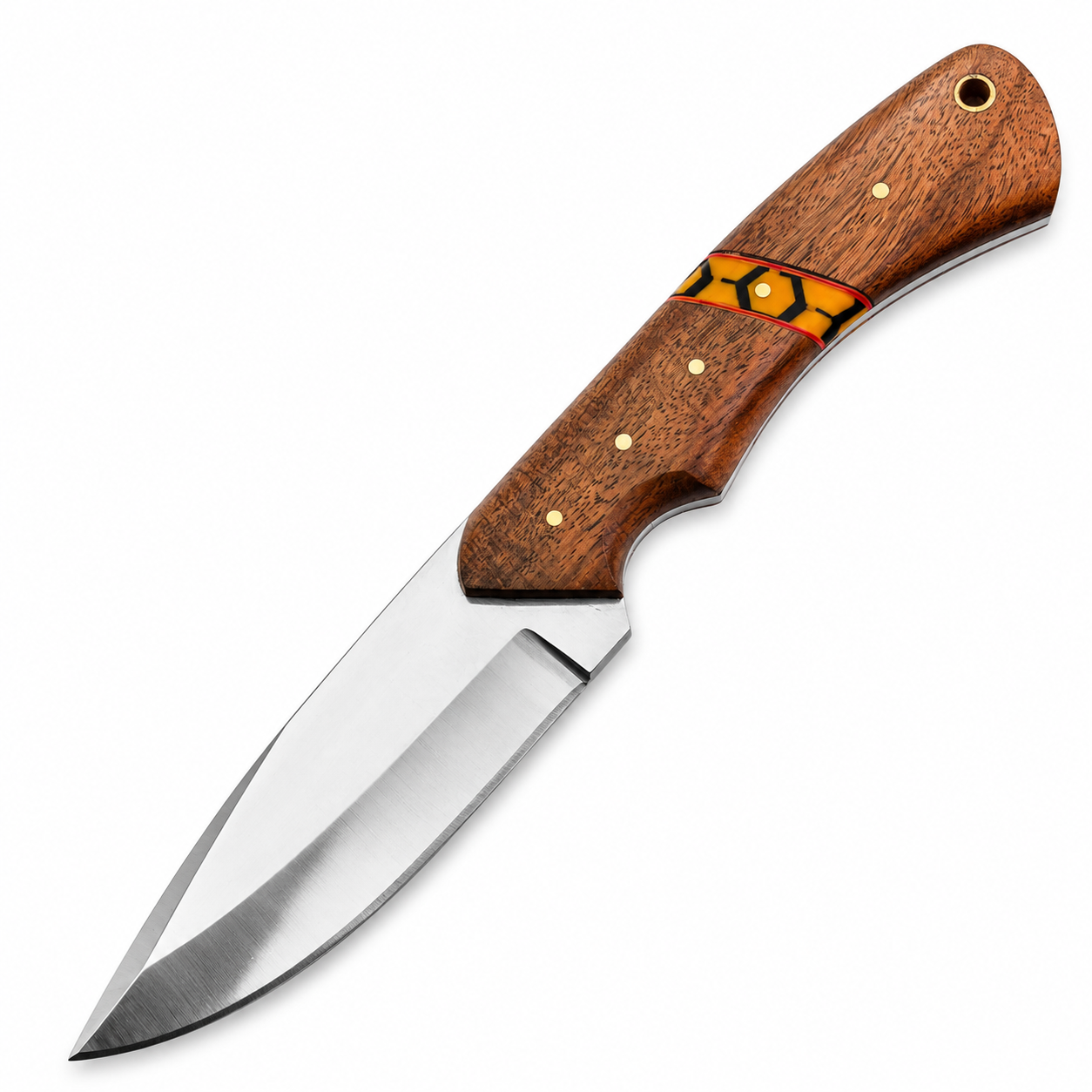
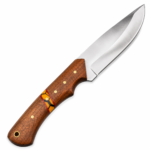
This honeycomb accent fixed blade knife combines a silver-tone blade with a warm brown handle and a striking yellow-and-black decorative band. The blade has a broad face, a continuous plain edge, and a curved belly that rises toward a pointed tip. Behind it, the shaped handle brings together grain-like markings, small gold-tone fittings, and a contrasting geometric detail.
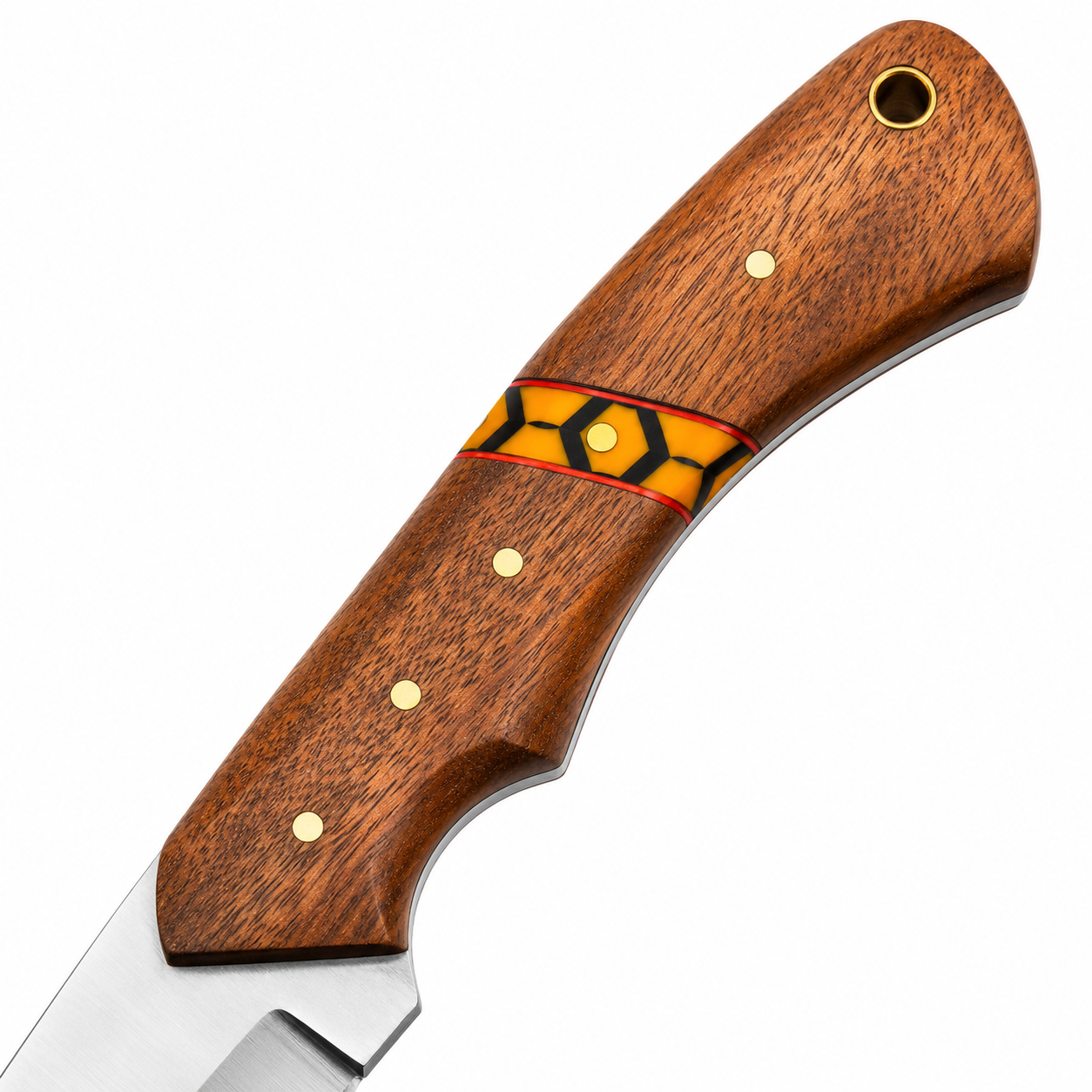
The yellow band is the most distinctive part of the design. Black lines divide it into honeycomb-like cells, while thin red borders separate it from the brown sections on either side. This creates a clear focal point without covering the whole grip in a bright pattern.
The result is a knife with a traditional-looking brown handle and a more contemporary accent. It may appeal to buyers who prefer the appearance of wood-grain cutlery but want something more individual than an entirely plain grip.
Its fixed-blade form and broad cutting profile place it among general outdoor and utility-style knives. Specific working capabilities depend on specifications that are not supplied with the image, including the blade material, dimensions, heat treatment, and edge geometry.
A Broad Blade with a Curved Cutting Profile
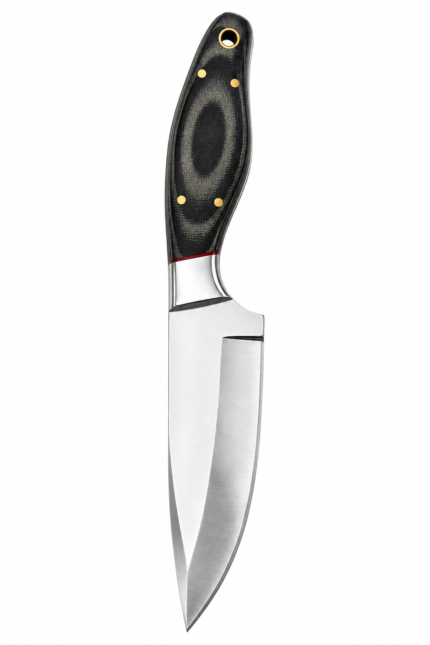
The blade has a relatively broad face near the handle and narrows toward the tip. Its lower edge follows a smooth curve, creating a visible belly rather than remaining straight along its entire length.
That curved section is an important part of the knife’s profile. In general, a curved edge offers a changing point of contact during a slicing movement. Whether this particular knife is suitable for a specific cutting task still depends on its actual sharpening and construction.
The upper outline slopes toward the point, giving the front of the blade a tapered appearance. A narrow angled surface is visible near the spine toward the tip, but the photograph does not establish whether that surface is sharpened. It is therefore not described as a second cutting edge.
The blade’s overall shape is more substantial than the long, narrow profile of a fillet knife. It also differs from a cleaver’s broad rectangular outline. For buyers comparing fixed blades, this provides a useful visual distinction before considering measurements and materials.
Plain Edge and Defined Bevel
The visible cutting edge is continuous and non-serrated. There are no saw-like teeth or a gut hook interrupting the blade’s outline.
A broad bevel runs above the edge, with a clearly defined transition into the upper blade face. Fine directional marks are visible within this bevel, giving it a brushed appearance in the photograph. The upper face reflects light differently, which makes the blade’s geometry easy to distinguish.
This contrast contributes to the knife’s clean appearance. Rather than a patterned or heavily textured blade, the design uses changes in surface angle and reflected light to create visual interest.
The photograph does not identify the precise grind type or sharpening angle. It also cannot establish sharpness, edge retention, or cutting resistance. Those details should be confirmed through the seller’s specifications rather than inferred from the appearance of the bevel.
For shoppers who prefer a plain blade face and an uninterrupted edge, the visible design offers both. It leaves the decorative emphasis on the handle while maintaining a clearly defined cutting profile.
Silver-Tone Finish with a Clean Appearance
The blade appears silver-gray, with brighter reflections across the upper surface and a slightly darker brushed area along the bevel. No colored coating, printed branding, or Damascus-style pattern is visible.
This gives the knife a straightforward blade appearance that contrasts with the more detailed handle. The silver tone also connects visually with the metallic strip visible around portions of the grip.
A reflective finish does not identify the alloy. Stainless steel, carbon steel, and other blade materials can have similar appearances in a product photograph. The listing therefore describes the visible finish without assigning a steel grade.
The same applies to corrosion resistance. A clean silver surface in a photograph is not evidence of rust resistance, a protective coating, or a particular maintenance requirement.
From a design perspective, the plain face keeps the overall composition balanced. The blade supplies the strong outline, while the handle introduces color, grain-like detail, and smaller decorative elements.
Brown Grain-Look Handle Sections
Most of the handle has a medium-to-dark brown appearance with fine black markings and longer grain-like lines. These details vary across the surface, giving the grip more visual texture than a uniform solid color.
The front section extends from the blade junction toward the honeycomb band. The rear section continues from that band to the rounded butt. Together, they create the impression of a coordinated handle divided by a contrasting central accent.
The material has a wood-like appearance, but its composition and species are not confirmed. It should not be identified as walnut, rosewood, oak, or another specific timber from the photograph alone. A stabilized treatment or protective finish is also unverified.
What is clear is the warm color and detailed surface appearance. These qualities may suit buyers who prefer brown handles to black or brightly colored grips.
The photograph shows one side of one knife. It does not establish the reverse-side pattern or whether every production piece has the same markings. If pattern consistency matters, photographs of the actual item would be useful.
Yellow-and-Black Honeycomb Band
The decorative band crosses the handle between the two brown sections. Its yellow-orange background is divided by irregular black lines that resemble honeycomb cells.
This is a small area of the grip, but it has a strong visual effect. The surrounding brown tones allow the yellow to stand out, while the black pattern relates to the darker markings elsewhere on the handle.
A gold-tone pin sits within the band, connecting it visually to the other handle fittings. Thin red lines border the accent at both ends, making the separation between the materials or sections especially clear.
The pattern can accurately be called honeycomb-style, but the image does not prove that the band contains actual honeycomb reinforcement or a particular resin. Its composition should be confirmed before making a material claim.
For customers choosing primarily by appearance, this band is the detail that most clearly separates the knife from a conventional brown-handled fixed blade. It adds a concentrated area of color without changing the overall warm, restrained palette.
Thin Red Borders and Warm Metallic Details
The narrow red borders are easy to overlook at first, yet they help define the handle’s layout. They frame the honeycomb band and prevent its yellow background from blending directly into the brown sections.
Their slim proportions keep them secondary to the larger color areas. The red functions as an outline rather than a dominant handle color.
Five circular gold-tone pins are visible across the photographed side. Three appear in the front brown section, one lies within the honeycomb band, and one sits in the rear brown section.
Their spacing follows the handle’s length and gives the surface a repeated detail. Because the pins are small and plain, they complement the grain-like markings instead of competing with them.
The gold-tone appearance is not confirmation of brass or another specific metal. Describing these fittings by their visible color keeps the listing accurate while still explaining their contribution to the design.
Contoured Handle and Front Finger Recess
The handle has a shaped outline rather than straight, parallel sides. Near the blade, its lower edge forms a pronounced finger recess. The grip then continues through a narrower middle area before widening toward the rear.
This creates clearly defined sections for evaluating the handle’s shape. The front recess marks the transition between the grip and blade, while the broader rear section gives the handle a flared ending.
These contours may be relevant to customers comparing different grip styles. Some prefer a straight handle that allows several hand positions; others look for a more shaped profile with a distinct front recess.
Comfort cannot be confirmed from a side photograph. Handle thickness, edge rounding, overall size, and the wearer’s hand all affect how a knife feels. The visible contour should therefore be treated as a design feature rather than proof of ergonomic performance.
If you intend to use the knife regularly, compare its measured handle length and thickness with a knife you already find comfortable. Those measurements will be more informative than appearance alone.
Rounded Butt and Lined Lanyard Hole
The rear of the handle widens into a rounded butt. A circular hole near this end has a gold-tone lining that matches the visible pins.
The opening appears intended for attaching a lanyard. No cord is shown, and its internal diameter is not supplied. Compatibility with a particular cord or fitting should be checked before purchasing an accessory.
Visually, the lined hole finishes the handle neatly. Its circular shape contrasts with the honeycomb cells and echoes the smaller round pins farther forward.
The photograph also shows a metallic-looking strip along portions of the handle’s lower perimeter. Although this is a visible construction detail, it does not by itself establish the entire internal structure of the knife. A full-tang specification should be confirmed through the manufacturer or a clearer construction view.
The overall rear profile is broader than the middle of the handle, giving the grip a recognizable silhouette even when viewed without its surface details.
A Fixed-Blade Format for Buyers Comparing Outdoor Knives
The knife is shown in a fixed-blade configuration, with no folding joint or opening mechanism visible. Its blade remains extended from the handle.
That format is relevant to buyers looking for a knife that does not require unfolding before use. It also means storage and transport need to accommodate the exposed blade’s full length.
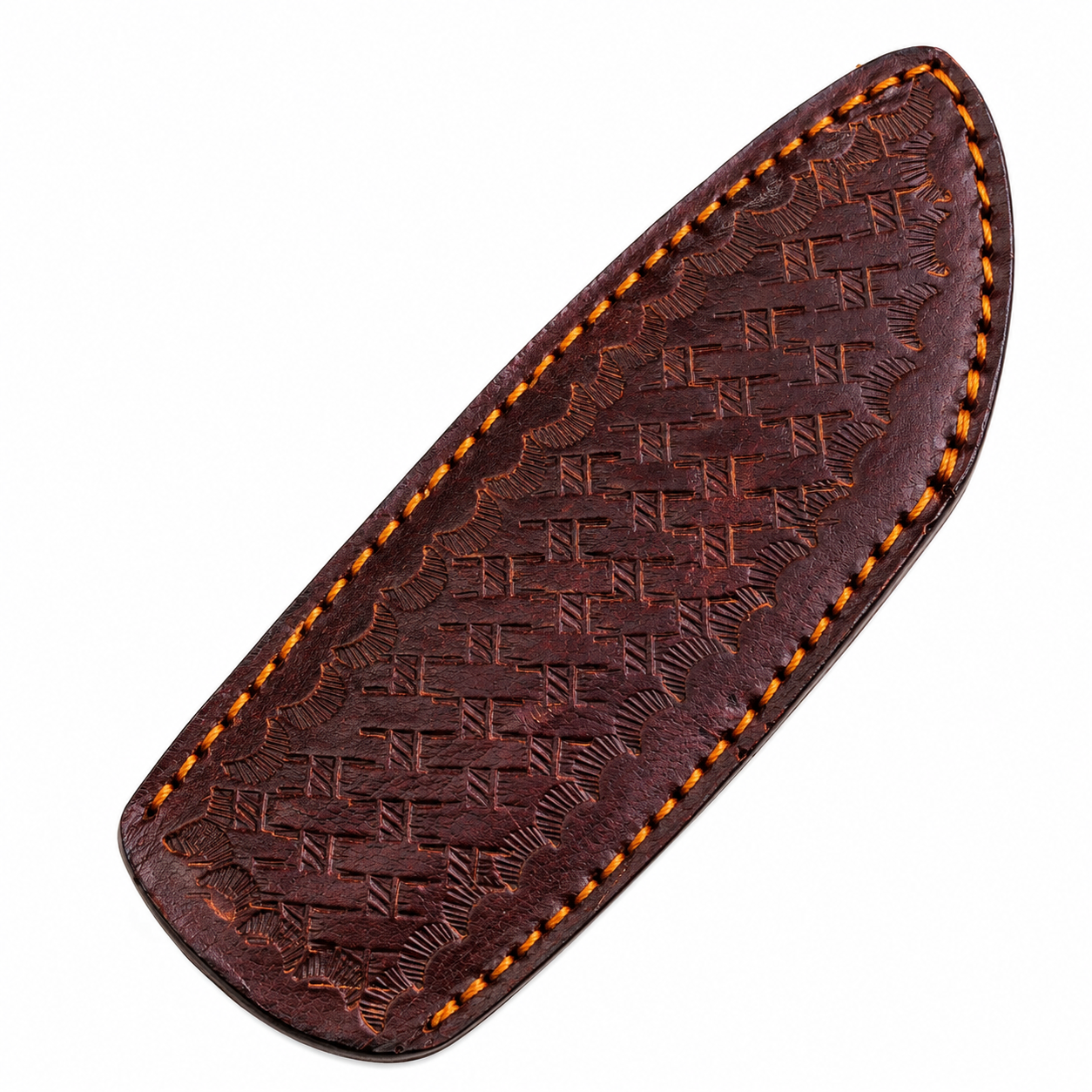
No sheath or protective cover appears in the supplied image. This listing therefore does not promise a sheath, belt loop, carry system, or storage pouch.
Before choosing the knife for an outdoor kit, confirm what protection is available and whether it is designed for this exact blade profile. Overall length alone is not enough to establish sheath compatibility; blade width, thickness, handle junction, and retention also matter.
The broad blade and curved edge make this a relevant design to consider within outdoor and utility knife categories. They do not establish suitability for heavy impact, prying, or other demanding tasks.
Choosing the Right Size for Your Needs
The photograph offers a clear view of the knife’s proportions but does not include a scale reference. Its blade length, handle length, and overall dimensions cannot be measured reliably from the image.
Start with the cutting length when comparing it with another knife. This is different from overall length, which includes the handle and determines how much storage space the knife needs.
Maximum blade width and spine thickness also matter. Two knives with the same length can feel and perform differently if one has a wider or thicker blade.
Handle measurements deserve equal attention. The pronounced front recess and flared rear may look appealing, but their usefulness depends on how the grip fits your hand.
Weight and balance are also unconfirmed. The knife should not be described as lightweight, heavy-duty, or perfectly balanced without supporting information. Requesting measurements gives you a practical basis for deciding whether the design suits your preferences.
Matching the Knife to an Intended Use
A good purchase begins with a clear idea of what you want the knife to do. Buyers considering this design may be looking for a general cutting tool, an outdoor-style fixed blade, or a visually distinctive addition to a knife collection.
For working use, prioritize the steel specification, hardness information where available, edge geometry, dimensions, and maintenance requirements. These determine more about performance than the decorative handle band.
For a collection, appearance may carry more weight. The brown grain-look sections, honeycomb accent, red borders, and gold-tone fittings provide several details to examine and compare.
The blade’s curved belly and pointed tip are visible, but specialized use claims remain unverified. It should not automatically be advertised as a dedicated skinner, bushcraft knife, or survival knife simply because similar products use those names.
Choose it for an intended task only after the seller confirms that its construction and specifications support that use. This keeps the buying decision focused on the actual product.
A Distinctive Design for a Collection or Gift
The handle’s combination of warm brown, bright yellow, black, red, and gold-tone details gives the knife a recognizable identity. It may appeal to someone who enjoys cutlery with decorative accents but prefers a plain blade.
Its design offers a different visual balance from an all-black knife or a knife with a fully patterned blade. Here, the largest decorative feature is confined to a narrow handle band, leaving the rest of the object relatively restrained.
For a gift, consider the recipient’s existing preferences. A person who chooses brown handles and plain blade finishes may appreciate this combination more than someone who prefers minimal, undecorated equipment.
Presentation packaging, engraving, and gift services are not confirmed. Neither is a warranty or a particular country of manufacture. Those details should be checked separately if they are important to the purchase.
The absence of visible branding allows the listing to focus on the knife’s design without assigning an unsupported maker or model.
Materials and Care Information to Confirm
The photograph does not provide enough information for a material-specific care guide. The blade alloy, handle composition, decorative band material, and surface treatments remain unknown.
Ask for those details before selecting cleaners, oils, or polishing products. Care appropriate for one material may not be suitable for another, particularly where a handle combines several sections.
Dishwasher compatibility, waterproofing, and stain resistance are not verified. The knife should not be promoted with those claims based on its appearance.
Sharpening requirements also need confirmation. The visible bevel does not reveal the recommended sharpening angle or whether the edge has any particular maintenance requirement.
If a sheath is available separately, request its material and care instructions as well. Storage recommendations should account for both the knife and its cover rather than relying on generic statements about similar products.
Written specifications and care guidance will help buyers understand what ownership involves beyond the initial appearance of the knife.
Product Details to Review Before Ordering
A complete specification sheet should establish the blade material, cutting length, overall length, maximum blade width, spine thickness, handle dimensions, and weight.
For this design, the handle information should identify both the brown sections and the honeycomb-style band. The gold-tone pins and lanyard-hole liner may also have separate material specifications.
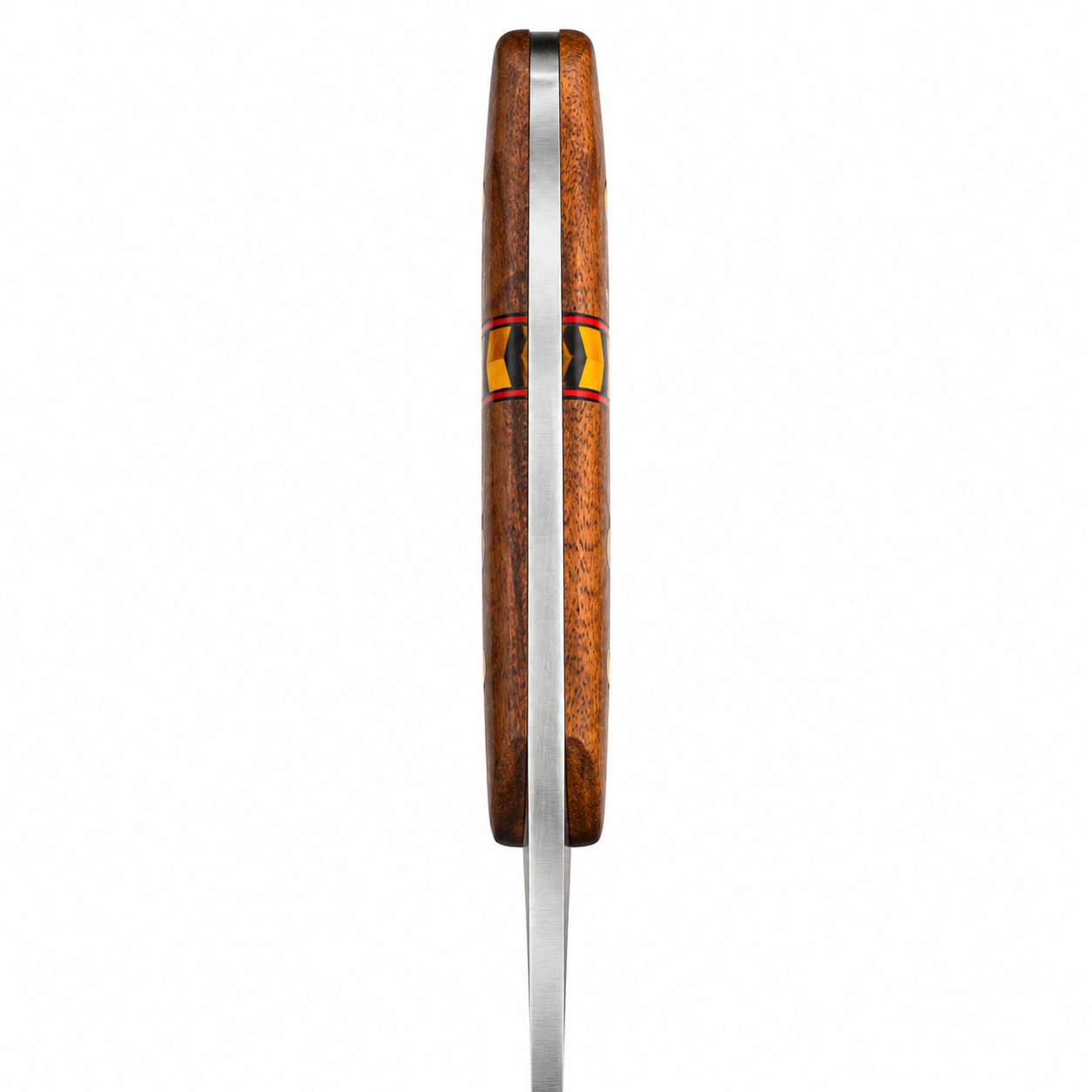
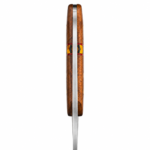
Additional photographs would help answer questions left open by the supplied view. A reverse-side image could show whether the decorative arrangement continues on the other side. A spine view could clarify thickness and handle construction.
Package contents should be stated clearly. The current image shows one knife only, so a sheath, lanyard, presentation box, or maintenance accessory should not be assumed.
If ordering several pieces, ask whether the grain-like markings and honeycomb pattern vary. That is especially relevant when choosing a knife partly for its decorative appearance.
Explore the Handle Detail and Blade Profile
This honeycomb accent fixed blade knife brings together a broad silver-tone blade, a shaped brown grain-look grip, and a vivid yellow-and-black band. Thin red borders, five gold-tone pins, and a lined lanyard hole complete the visible design.
Its appeal is easy to identify: a plain blade paired with a handle that has warmth, contrast, and a distinctive geometric accent. The shaped grip and curved cutting profile provide further points of comparison for buyers exploring fixed-blade knives.
Review the close-up details, confirm the materials and dimensions, and choose this design if its specifications match the way you intend to use or display it.







Reviews
There are no reviews yet.