

A Fillet Knife with a Distinctive Blue-Gray Handle
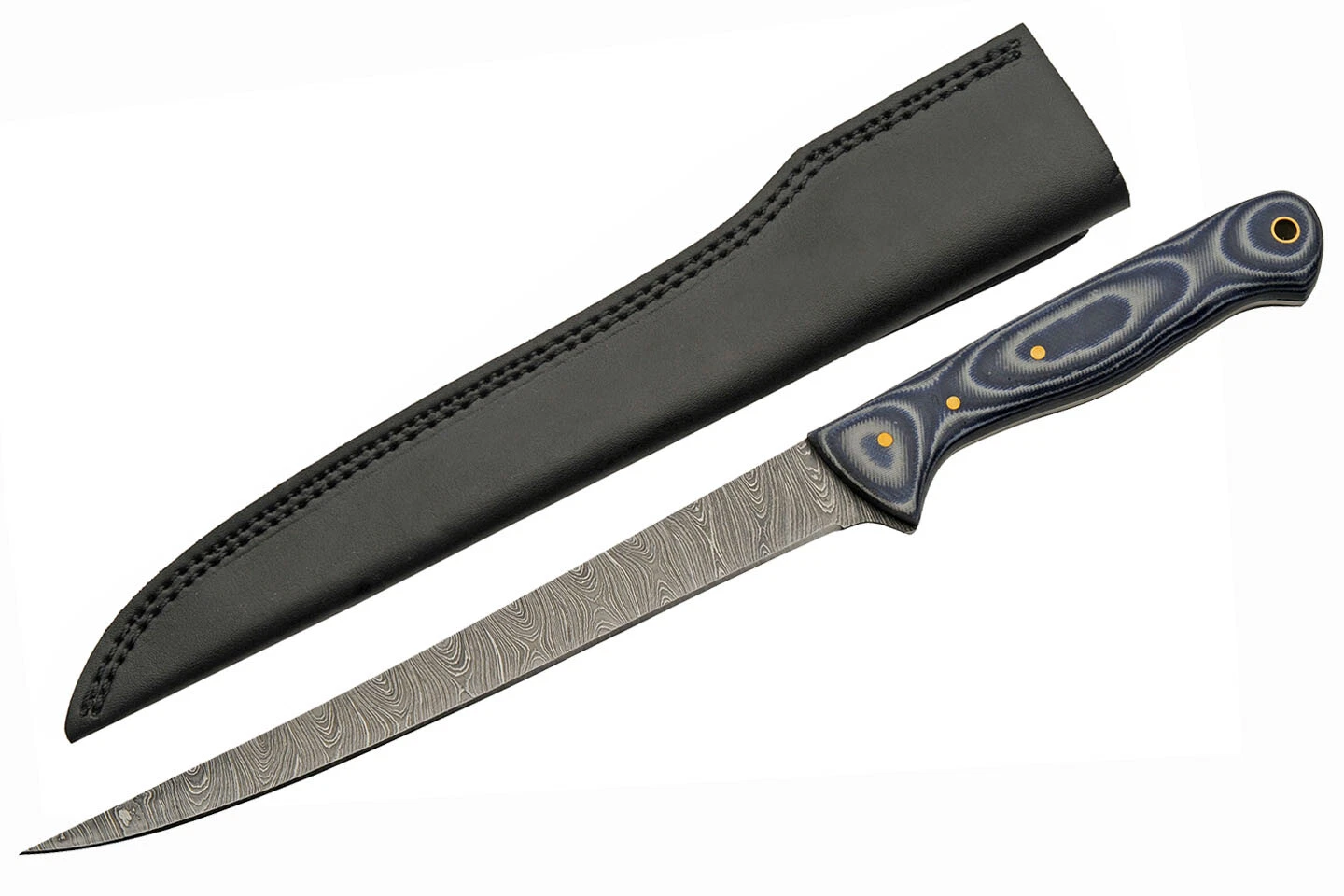
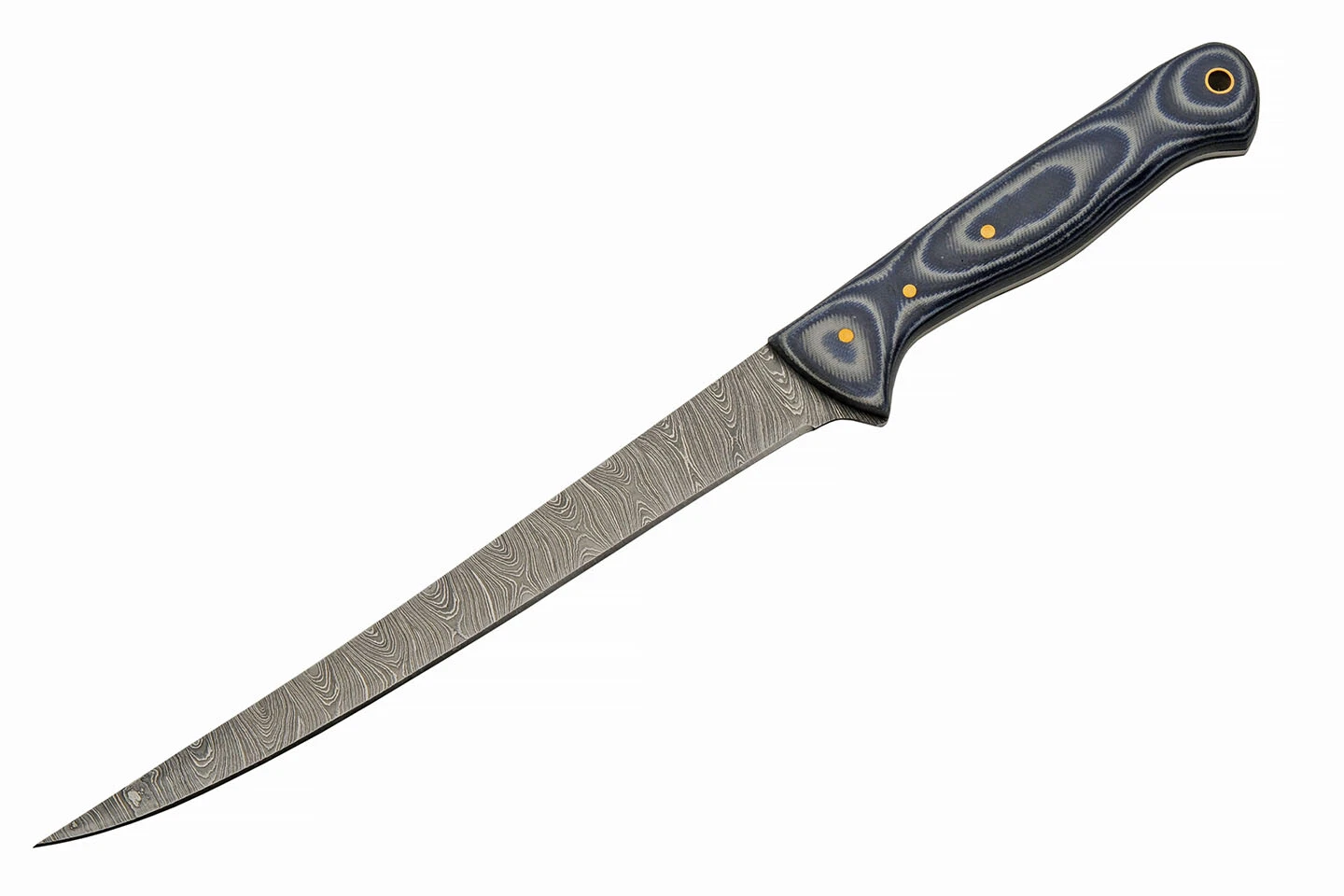
This blue gray handle fillet knife combines a long, narrow blade with a contoured grip and contrasting gold-tone details. Fine silver-gray lines cover the blade face, while larger oval patterns run through the darker handle. The two patterned surfaces give the knife a coordinated appearance without relying on bright colors or prominent branding.
Its overall profile is characteristic of a fillet knife: an elongated blade, a gradual taper, and a fine pointed tip. The cutting edge appears continuous and non-serrated, with a gentle curve toward the point. This shape places it in the category of knives shoppers consider for fish preparation and controlled slicing, rather than broad-bladed chopping.
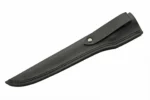
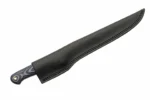
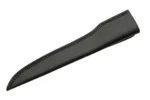
A black stitched sheath is pictured alongside the knife. Its plain surface provides a visual contrast to the detailed blade and handle. The photograph presents the two together, although the package contents need confirmation before the sheath can be described as included.
For buyers who want more visual character than a plain blade and a single-color handle, this knife offers several distinguishing details. Its appeal lies in the slim silhouette, muted palette, flowing blade pattern, and carefully defined handle shape.
A Long, Narrow Blade Profile
The blade is noticeably longer than the handle and remains relatively narrow along its length. It gradually tapers toward a fine point, creating an extended working profile rather than a short, broad cutting surface.
That outline is relevant when comparing fillet knives. A narrow blade generally allows a different approach to positioning and slicing than a wide chef’s knife. It leaves less blade height between the cutting edge and spine, which is one reason this style is associated with fish preparation.
However, blade shape alone does not establish cutting performance. The photograph does not reveal the steel grade, edge geometry, thickness, heat treatment, or flexibility. Those specifications determine how a knife behaves during use and should be checked before choosing it for a particular task.
The visible proportions provide a useful starting point. If you prefer an elongated blade with a gradual taper, this design is worth examining. If your priority is a particular blade length or level of flex, ask for those measurements and specifications rather than estimating them from the image.
A Fine Point and Gently Curved Edge
The blade ends in a narrow point, with the lower edge sweeping upward as it approaches the tip. The curve is restrained rather than forming the deep belly seen on many hunting knives.
This gives the knife a slender appearance from heel to point. Most of the blade follows a relatively gradual line, while the tip completes the taper without a broad or rounded end.
The edge is visibly non-serrated. Buyers looking for a plain-edge fillet knife can therefore distinguish this design from serrated utility knives or fish-processing tools with toothed edges.
A plain edge describes the edge type, not its sharpness. The photograph cannot establish how the knife arrives sharpened, the angle of the bevel, or how long it will retain an edge. Those details should come from the actual product specifications.
The point is also a feature to consider when selecting storage. Any sheath intended for this knife needs to accommodate the full blade length and tip. The pictured sheath appears to follow a similarly elongated outline, but its fit and retention have not been demonstrated.
Flowing Detail Across the Blade Face
Fine, closely spaced lines extend across the visible blade face. The pattern alternates between light and dark gray, forming narrow waves, arcs, and nested shapes.
Unlike a plain polished blade, this surface gives the eye detail to follow along the knife’s length. Some areas have lines that run close to the cutting edge; elsewhere, the pattern changes direction and forms more pronounced curves.
The effect resembles the layered appearance commonly associated with Damascus-style blades. In this listing, that comparison refers only to the visible pattern. It does not confirm genuine pattern-welded Damascus steel, a particular layer count, or a specific manufacturing process.
That distinction is useful when comparing products online. Similar-looking patterns may be produced through different methods, and appearance alone does not establish the underlying steel or its performance.
The pattern can still be appreciated as a design feature. It adds visual texture to the blade and connects with the layered-looking detail of the handle, making the knife look more cohesive than a combination of unrelated finishes.
A Blue-Gray Handle with Oval Patterns
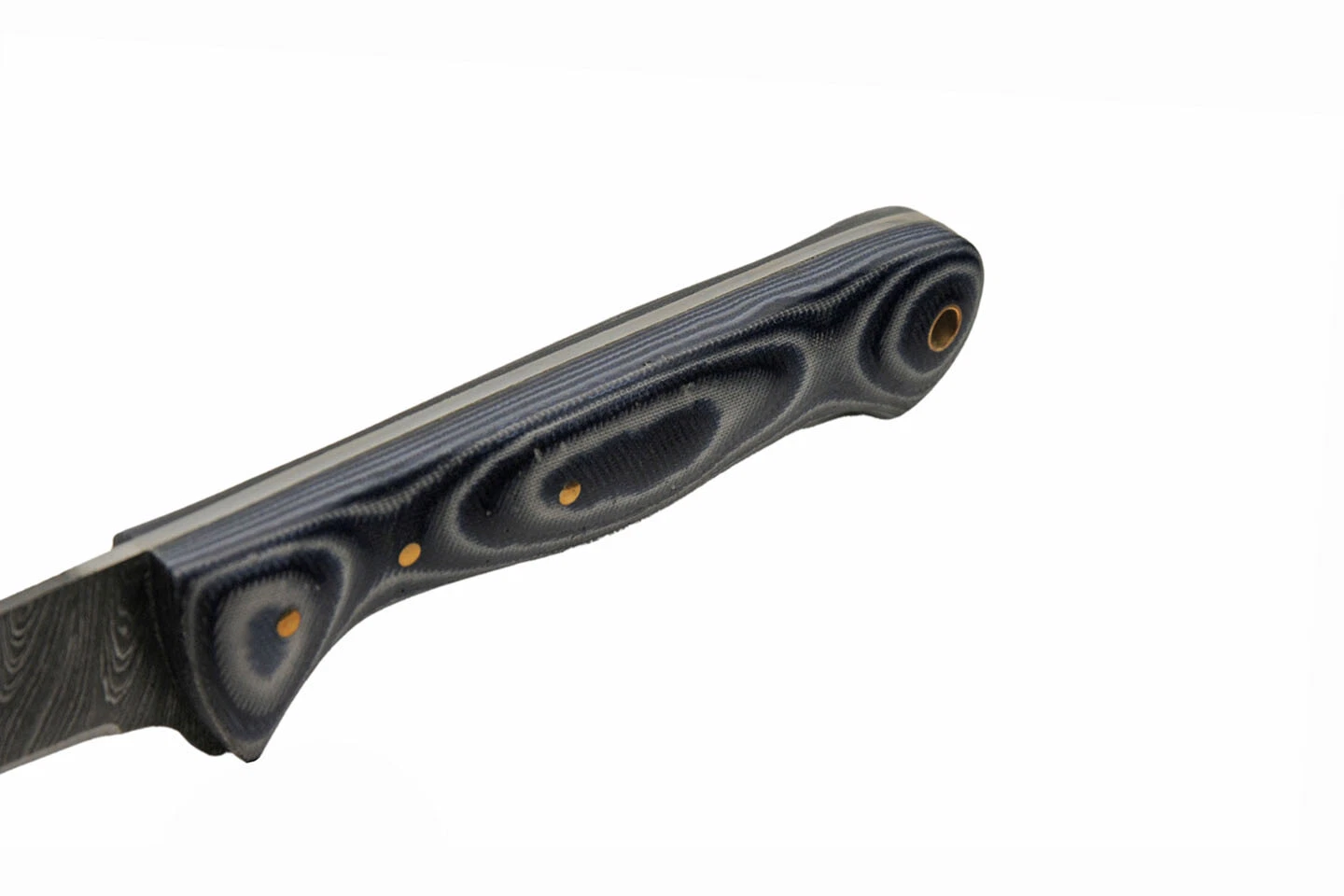
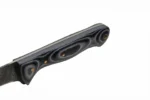
The handle is predominantly dark blue and charcoal, with lighter gray lines forming elongated oval shapes. These contours vary across the grip, becoming rounded near the butt and more angular near the blade.
Its color is subdued. Rather than a vivid blue accent, it introduces a cooler tone that sits naturally alongside the gray blade and black sheath. The gold-tone fittings provide the strongest color contrast.
The pattern has a layered appearance, but the exact material is unverified. It should not be described as Micarta, G10, stabilized wood, or another composite solely from the photograph. Several handle materials can produce broadly similar visual effects.
For the customer, the confirmed benefit is visual distinction. The handle has more detail than a uniform black grip while maintaining a restrained palette. It may appeal to someone who enjoys patterned cutlery but prefers darker colors.
The photograph shows one side of one knife. Matching pattern placement on the reverse, consistency across production pieces, and alternative color options remain unconfirmed.
Contoured Grip with a Defined Front Recess
The handle changes width along its length instead of following a straight, cylindrical form. Near the blade, its lower edge creates a pronounced recess before widening into the main grip.
Farther back, the handle narrows and then flares toward a rounded butt. This gives the grip a shaped outline with visually distinct front, middle, and rear sections.
The front recess provides an identifiable location for the hand relative to the blade. The rear flare also creates a clear end to the grip. These are visible design features, although their comfort and effectiveness depend on the handle’s actual dimensions and the user’s hand.
Terms such as “non-slip,” “fatigue-free,” or “perfectly balanced” would require more evidence than this image provides. Surface texture, cross-sectional shape, weight distribution, and wet-hand performance are not established.
If handle fit is an important part of your buying decision, ask for its length and maximum thickness. A side photograph can show the outline clearly while leaving the depth of the grip difficult to judge.
Three Gold-Tone Pins and a Lined Lanyard Hole
Three small circular gold-tone pins are visible along the handle. One sits near the front, a second lies closer to the narrower section, and the third appears farther back within an elongated oval pattern.
Their warm color contrasts with the cool blue-gray grip. This adds detail without introducing a large decorative fitting or an elaborate bolster.
A circular hole near the butt has a matching gold-tone lining. It appears positioned for a lanyard, although no cord is pictured. Its internal diameter and compatibility with a particular cord size are not supplied.
These fittings should be described by color rather than assumed composition. The photograph does not prove that the pins or liner are brass, bronze, or another specific metal.
A narrow metallic-looking strip is also visible along parts of the handle perimeter. That detail alone is not sufficient to verify the complete tang construction. A full-tang claim should be supported by the manufacturer or a clearer construction view.
The Black Stitched Sheath Shown in the Image
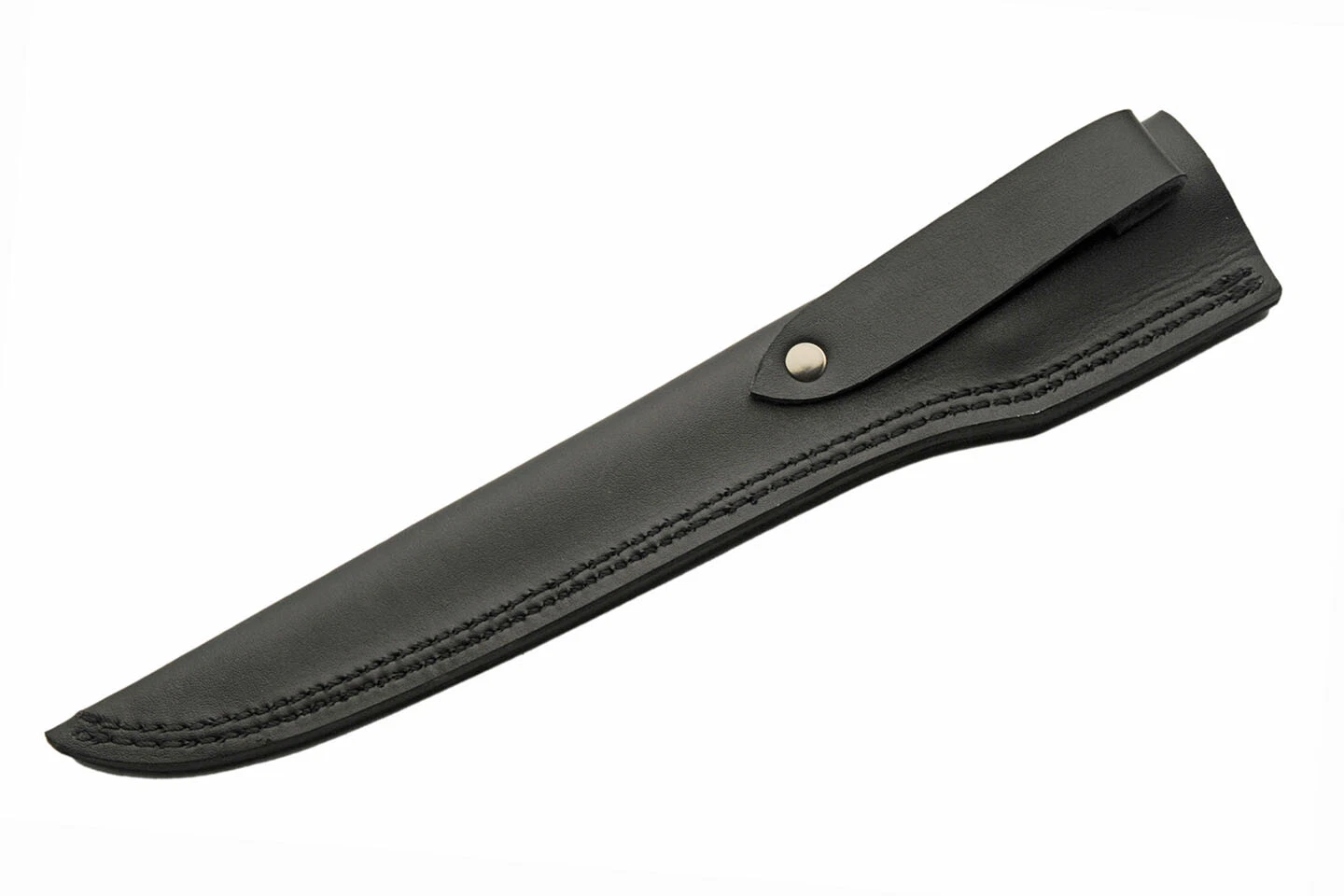
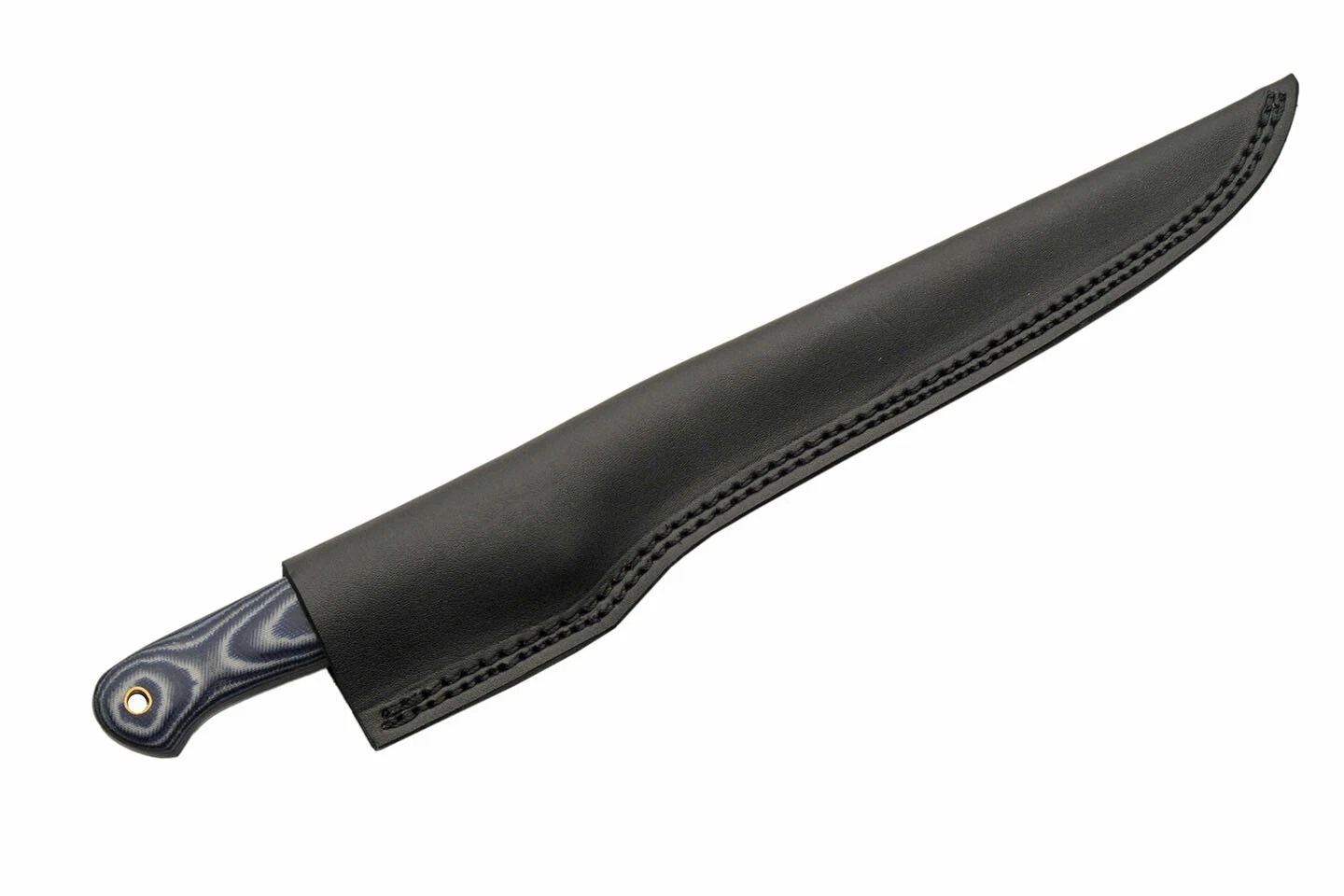
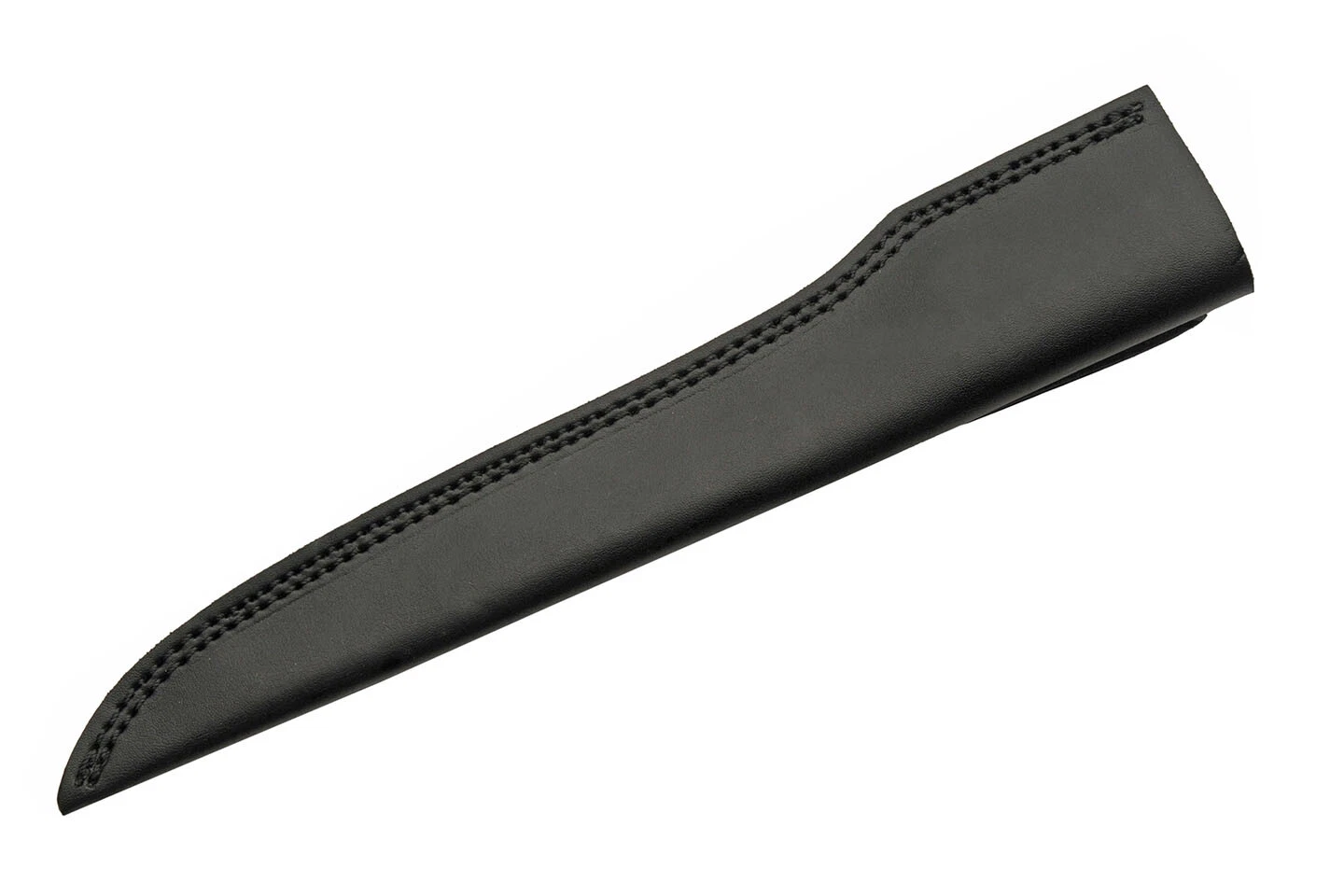
The pictured sheath has a long, tapered profile with a broader opening and a pointed lower end. Dark stitching follows the outer contour, while the face remains largely plain.
Its surface has a leather-like appearance, but genuine leather is not confirmed. The image also does not establish material thickness, lining, closure, retention, or the construction of the reverse.
The sheath’s simple appearance complements the knife. With no large visible logo or contrasting decoration, it leaves the patterned blade and handle as the main visual features of the photograph.
For purchasing purposes, the important question is whether this exact sheath comes with the knife. A photographed accessory should not automatically be treated as part of the order.
If it is included, confirm how the knife is retained and whether the sheath is intended for storage, belt carry, or both. The supplied view does not clearly demonstrate a belt attachment, so belt compatibility is not claimed here.
Intended Use and What the Shape Suggests
The narrow blade and fine point identify this as a fillet-style design. It is therefore relevant to shoppers comparing knives for fish preparation, trimming, and controlled slicing.
Its suitability for a specific job depends on more than its silhouette. Blade length affects reach, thickness affects how the blade behaves under pressure, and flexibility influences how closely it can follow a curved surface.
The photograph does not show the blade bending, and a slim appearance is not proof of flexibility. Buyers seeking a flexible fillet knife should request a clear specification or demonstration from the seller.
Likewise, the patterned finish does not establish corrosion resistance or suitability for saltwater use. Those properties depend on the actual steel and any verified treatment.
The most accurate way to consider this product is as a visually distinctive fillet knife whose working specifications still need confirmation. Its appearance is clear; its performance should be assessed through product data rather than promotional assumptions.
Choosing Blade Length for Your Preparation Routine
Before ordering, compare the knife’s measured cutting length with the knives you already use. The photograph makes the blade look elongated, but it provides no reliable scale.
A useful comparison is the distance from the beginning of the cutting edge to the tip. Overall length is a separate measurement that includes the handle and helps you plan storage.
Your preferred blade length may depend on the size of the fish or ingredients you normally prepare, your working space, and the amount of control you want near the tip. There is no single ideal length for every buyer.
Handle length matters too. A blade that suits your preparation tasks can still be a poor fit if the grip is too short or too bulky for your hand.
Ask for the blade length, handle length, overall length, maximum blade width, and spine thickness together. These measurements provide a much clearer picture than a description such as “large,” “professional,” or “lightweight.”
Comparing This Design with Other Kitchen Knives
This knife has a different visible profile from a general-purpose chef’s knife. Its blade is narrower and lacks the broad face commonly used for guiding ingredients or transferring chopped food.
It also differs from a cleaver. Nothing in the image establishes suitability for chopping bones, heavy impact, or other forceful work. Its long, tapered outline is more consistent with slicing-oriented knife categories.
Compared with a shorter boning knife, this design appears more elongated. However, exact classification boundaries can overlap, and the seller’s intended use should be confirmed alongside dimensions and flexibility.
For someone expanding an existing knife collection, the practical question is whether this shape fills a need that their current knives do not. A distinctive pattern can make a knife appealing, but the working specifications should support the intended purchase.
Consider the blade profile, handle fit, maintenance requirements, and storage arrangement together. That gives a more useful comparison than choosing on appearance or a material name alone.
A Distinctive Option for Anglers and Home Cooks
An angler looking for a dedicated preparation knife may be drawn to the slim blade and pictured sheath. A home cook may be more interested in the narrow profile and contoured handle.
Both buyers would benefit from the same core information: confirmed dimensions, steel composition, flexibility, and care requirements. These details help determine whether the knife belongs in a kitchen setup, a fishing kit, or a collection.
The design may also appeal to people who enjoy patterned knives as objects of craftsmanship and visual interest. The blade’s fine lines contrast with the handle’s larger oval forms, creating detail at two different scales.
There is no visible brand mark in the supplied photograph. This listing therefore describes the product without assigning a maker, model, country of origin, or production method.
For someone considering it as a gift, confirm the recipient’s preferred knife size and maintenance habits. Packaging, engraving, warranty, and presentation-box options are not established by the image.
What to Confirm About Materials and Maintenance
The steel grade is the most important missing material detail. It affects maintenance requirements and provides context for other specifications, including hardness and corrosion resistance.
The handle material should also be confirmed. Its layered appearance does not establish how it responds to prolonged moisture, cleaning products, or changes in temperature.
For that reason, this listing does not claim dishwasher compatibility, rust resistance, waterproof construction, or a particular cleaning method. Product-specific care instructions should follow verified materials and the manufacturer’s guidance.
Sharpening information is another useful detail to request. The recommended angle, edge configuration, and maintenance approach cannot be read from the photograph.
The sheath requires separate care information if it is included. A leather sheath and a synthetic sheath may need different treatment, so its material should be identified before applying cleaners or conditioners.
These questions help turn a visually appealing listing into an informed purchase. They also prevent an attractive finish from being mistaken for evidence of performance or durability.
A Clear View of the Product Before Purchase
The supplied image is useful for judging the side profile, color combination, visible pins, lanyard opening, and sheath appearance. Additional views would help complete the picture.
A reverse-side photograph could show the other handle scale and blade face. A spine view could clarify thickness and handle construction. A photograph beside a ruler would make the dimensions easier to understand.
For a working fillet knife, a short demonstration or verified flexibility specification would be especially valuable. The degree of flex should be stated clearly rather than inferred from the blade’s narrow width.
If ordering more than one piece, ask whether the pattern and handle colors vary between knives. The photograph represents one example and does not establish production consistency.
Also confirm the exact package contents. The knife, sheath, lanyard, care instructions, and any packaging should be listed individually so there is no uncertainty about what arrives.
Explore the Pattern and Choose the Right Fit
This blue gray handle fillet knife stands out through its long patterned blade, shaped grip, three gold-tone pins, and matching lanyard-hole liner. The pictured black sheath adds a simple visual counterpart to the detailed knife.
Its slim profile makes it relevant to buyers exploring fillet knives, while its muted colors offer a distinctive alternative to plain-handle designs. The final decision should combine that visual appeal with confirmed measurements and working specifications.
Take a closer look at the blade shape and handle detail, confirm the materials and package contents, and choose it if those specifications match your preparation needs.






Reviews
There are no reviews yet.